FREE! Click here to
Join FunTrivia. Thousands of games, quizzes, and lots more!

Xenarthrans (Sloth, Anteater, etc) Trivia Questions and Answers
Fun Facts & Interesting Information
Fun Trivia Question Usage
You are welcome to use the questions in this section for non-commerical purposes: quizzing friends/coworkers, classrooms, newsletters, trivia nights, events, etc. Questions may
not be used for websites or in apps, and may not be resold. You use the questions at your own risk, and FunTrivia is not responsible for errors, etc in the content.
Please
link to or
credit FunTrivia textually (http://www.funtrivia.com) if you use any of these questions. Thanks!
Visit our
Trivia Question Store to buy question packs for commercial or for-profit ventures.
1. Three-toed sloths live in South and Central America, but in what places?
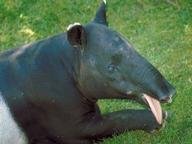
Answer: in trees, rarely descending, spending days aloft
Interesting Information:Sloths live in trees, eating, sleeping, hanging rightside up, hanging upside down, having babies, sometimes even clinging there after death. They're remarkably adapted, with necks that can turn like owls' necks, to see the world rightside up, and lungs and internal organs attached inside so they won't be a burden either rightside up or upside down. Their food is leaves, and their water can come from wet leaves. Their whole lifestyle is geared toward moving little, doing little, and staying as safe as possible in the treetops.
Difficulty: Average.
From Quiz: The Laid-back Life of the Three-Toed Sloth
Some incorrect choices:
in burrows, spending up to 22 hours a day underground, on the forest floor, spending most time in leaf nests, in natural caves in cliffs, climbing out daily to eat
2. Female armadillos have been known to give birth over two years after being in captivity - how is this possible?
Answer: Females can delay starting a pregnancy in times of stress
Interesting Information:In times of stress, armadillos can delay gestation (which actually lasts 120-150 days) up to two and a half years. Parthenogenesis, or reproduction without male fertilisation, takes place in some invertebrates and also in certain reptiles, fish and birds, but not in armadillos. As far as I know, armadillos are not Houdinis.
Difficulty: Hard.
From Quiz: Armadillos
Some incorrect choices:
The gestation period for an armadillo is three years, They escape and mate, returning to their cages afterwards, Armadillos conduct parthogenesis
3. What disease can armadillos contract that can help doctors study the disease in humans?
Answer: Leprosy
Interesting Information:Because of an armadillo's low body temperature and bad immune system, the mammals are more susceptible to diseases. Doctors can study leprosy in armadillos in order to treat the disease in humans. Other mammals that can contract leprosy are monkeys, rabbits and mice.
Difficulty: Hard.
From Quiz: The Armadillo Quiz
Some incorrect choices:
Syphilis, AIDS, Measles
4. Brady wakes up in the same old tree he does every single day. It's dusk, and he knows that it should rain later on in the forest. Yes sir, life around Manaus sure can be exciting. Where does our unlikely hero live?
Answer: In the South American rainforests
Interesting Information:Sloths are mainly nocturnal, although they do sometimes wander about the trees during the day-time. They sleep for up to 15 hours at a time, but hardly ever expend any energy.
Difficulty: Average.
From Quiz: A Day in the Life of Brady P. Sloth
Some incorrect choices:
In central Africa, On the islands of Australasia, Northern Europe, with the reindeer
5. Two-toed sloths belong to the order Edentata. What does this name mean?
Answer: without teeth
Interesting Information:Although all of these things are true about two-toed sloths, the name only means "without teeth". The sloths, along with armadillos and anteaters, have no front, canine or incisor teeth. They only have peg like side teeth which contain no enamel and are continually growing. Because they do have teeth, some scientists have put them in the order Xenarthra which means "strange joints".
Difficulty: Hard.
From Quiz: Two-Toed Sloths
Some incorrect choices:
long claws, no external ears, tree dwelling
6. Some people want to call them three-fingered sloths, and to call the other kind two-fingered sloths. Why?
Answer: all sloths have three hind toes, but two-toed sloths have only two fingers (front digits)
Interesting Information:All sloths have three toes on each hind leg, so the difference between two-toed and three-toed sloths is in the front toes only. Some people consider the sloth's front limbs to be arms rather than legs. Arms have hands, and hands have fingers, so they should be called fingers. And yes, some people, including those at the Sloth Conservation Foundation in Costa Rica, do exactly that, calling sloths two-fingered or three-fingered for more precision. But the change is catching on at the usual speed that things move in the sloth world.
Difficulty: Easy.
From Quiz: The Laid-back Life of the Three-Toed Sloth
Some incorrect choices:
it sounds cuter, it would cleverly include the discoverer's name, Gregor Fingeri, it would use the double meaning of finger to steal, because sloths are known for theft
7. Armadillos are mostly found in South America. How did the nine-banded armadillo get to North America?
Answer: They migrated using the Isthmus of Panama
Interesting Information:During the Pleistocene era, the nine-banded armadillo migrated into North America via the Isthmus of Panama. Because their armor is so effective the animal is rarely threatened by predators, so the armadillo's North American range is constantly expanding. All extant species of armadillo are still found in South America.
Perhaps they'll even make it to sunny California someday, but they don't do well in cold weather, so getting over the Rocky Mountains could be a problem. Even short periods of cold weather can kill an armadillo.
Difficulty: Hard.
From Quiz: Armadillos for Dummies!
Some incorrect choices:
Research animals were inadvertantly released into the wild, Greyhound bus, They were deliberately introduced as a pest-control experiment
8. When I started my first family of four "pups", my parents were not surprised. They had been expecting that many grandchildren all along. What caused them to think that Arnold, Andrew, Albert and Alex would be my first four children?
Answer: armadillos nearly always have four offspring per mating
Interesting Information:My species almost always has one egg that divides itself into four identical components; so four is a very common number of babies for us to produce. There is one litter of four quadruplets per year, (always of the same sex), usually born around April.
Additionally, we have the ability to choose when to get pregnant, even delaying the pregnancy by months or even years AFTER we have mated.
In case of food shortages, water shortages or dangerous conditions, we may delay the egg fertilization process until we no longer feel stressed with environmental concerns.
Now, how many other animals can manage to do THAT?
Difficulty: Easy.
From Quiz: Amanda The Armadillo: All In The Family
Some incorrect choices:
our family usually has four offspring on the first try; later we have more, they were extremely lucky guessers, we only reproduce four children if we become pregnant in the summer
9. What is the smallest species of armadillo?
Answer: The pink fairy armadillo
Interesting Information:This is my favourite name for an animal! The pink fairy armadillo is found in central Argentina and is, sadly, an endangered animal because of habitat destruction. Unfortunately, they have never been known to live more than four years in captivity, so their outlook is bleak. They stand 6 inches high and are 3 and a half to four inches long without their tail. Yes, they are pink. I made all the wrong answers (which you may think sound more likely) up.
Difficulty: Hard.
From Quiz: Armadillos
Some incorrect choices:
The rainbow armadillo, The lesser spotted armadillo, The leopard armadillo
10. What is another name for the tree pangolin?
Answer: white-bellied pangolin
Interesting Information:The tree pangolin (also known as the white-bellied pangolin), Manis tricuspis, has a tail longer than its body. The average length is approximately 2.5 feet (0.8 meters). It has long-toed hind legs with claws for climbing, and it is covered in many thin scales. As a point of interest, a pad is located at the tip of its tail for tree-climbing. The long-tailed pangolin is Manis tetradactyla, and the gray-bellied and forest pangolins are nonexistent.
Difficulty: Hard.
From Quiz: Panegyrical Pangolins
Some incorrect choices:
gray-bellied pangolin, forest pangolin, long-tailed pangolin
11. During the Great Depression, what nickname did the armadillo have?
Answer: Hoover hog
Interesting Information:During the Great Depression, President Herbert Hoover promised people that they would have a "chicken in every pot". When people couldn't afford chicken, they ate armadillos. A full grown armadillo can weigh up to seventeen pounds and when cooked the meat tastes like pork.
Difficulty: Hard.
From Quiz: The Armadillo Quiz
Some incorrect choices:
Roosevelt turkeys, Harding hot dogs, Coolidge cats
12. Brady is completely awake now, so he decides to do what he does every day, and what sloths are best at. What are sloths, be they Bradypus or Choloepus, best at?
Answer: Moving slowly around trees and eating leaves
Interesting Information:Slowly but surely, sloths traverse the trees. They move very slowly, and so have a minimal rate of metabolism and a very low body temperature. This can often be as low as 91 degrees Fahrenheit.
Difficulty: Easy.
From Quiz: A Day in the Life of Brady P. Sloth
Some incorrect choices:
Playing energetically with the other animals in the forest, Diving in the rivers to catch their prey (fish), Macramé
13. What gives a three-toed sloth its green color?
Answer: algae and fungus growing on its fur
Interesting Information:If a rolling stone gathers no moss, sloths are an example of a stone that doesn't roll fast enough. Each hair contains a groove to hold water and encourage algae and fungus growth. They're real-life chia pets, but the coloration helps them. Gray-green sloths blend into the leaves and the camouflage helps protect them from predators.
Difficulty: Easy.
From Quiz: The Laid-back Life of the Three-Toed Sloth
Some incorrect choices:
a diet of rare rainforest plants, natural fur coloration, chlorophyll for photosynthesis
14. For what does the armadillo use its long, sharp claws?
Answer: To dig for food and to dig dens
Interesting Information:An armadillo's diet consists mostly of insects which it digs out of the ground. Some species are picky eaters, and only go for ants and termites, but most will also eat fruits and veggies, small vertebrates, and carrion. Armadillos dig snug burrows, only as wide as the width of their bodies, since the solitary animals don't bunk up together.
The armadillo's burrowing habits land it firmly in the "destructive pests" category. Their search for food leaves behind holes and mounds on lawns and can even kill young orchard trees. Solutions range from calling in a professional exterminator or trapper (best bait to trap them with is earthworms), to home remedies such as mixing equal parts ammonia and human pee, adding red pepper flakes, and sprinkling it all over your yard. This mixture also repels visitors and attracts social workers.
Difficulty: Very Easy.
From Quiz: Armadillos for Dummies!
Some incorrect choices:
To fight other armadillos during mating season, To scratch other armadillos' backs, To steal stuff out of vending machines
15. Of which state in the USA is the nine-banded armadillo the state animal?
Answer: Texas
Interesting Information:The nine-banded armadillo is the only armadillo that has expanded as far north as the United States. By 1995 it had got as far north as Arkansas, and projections suggest it could get as far as Massachusetts. Not quite as far as Maine yet! Texas's large state mammal is the Texas longhorn, and its small one is indeed the armadillo, which is ironically considered a pest.
Difficulty: Hard.
From Quiz: Armadillos
Some incorrect choices:
New Mexico, Arkansas, Maine
16. Where can two-toed sloths be found?
Answer: northern South America & Central America
Interesting Information:Two-toed sloths live in rain forests in northern South America and Central America. Deforestation of rain forests is destroying the habitats of two-toed sloths but they are not in danger of extinction yet. Three-toed sloths can also be found in the rain forests. One species of three-toed sloth, the maned three-toed sloth, is an endangered species because of the loss of habitat from deforestation. Hopefully they will not become extinct.
Difficulty: Hard.
From Quiz: Two-Toed Sloths
Some incorrect choices:
southern South America, northern Africa, southeast Asia & parts of Africa
17. How do three-toed sloths poop? (It's a common question, because people have heard unusual rumors.)
Answer: once a week, deposited on the ground
Interesting Information:Sloths are safest from predators and closest to their food when they're in the treetops, but once a week, they expend all the energy and risk, just to climb down and poop under their favorite tree. Why? Scientists say the timing is due to slow digestion. But they don't know why they climb down. The scientists don't know, I mean. Surely the sloths know. Scientists say it may have something to do with mating, pheremone signals and such, but we'll have to wait for more research, to get a definite answer.
Difficulty: Hard.
From Quiz: The Laid-back Life of the Three-Toed Sloth
Some incorrect choices:
nothing unusual, once a day, dropped from treetops, once a day, deposited in flowing water, on the ground every other day, and they reconsume it (yuk!)
18. In what language does "armadillo" mean "little armored one"?
Answer: Spanish
Interesting Information:Armadillos have a leathery shell consisting of overlapping, dermal-bone scales called scutes. It serves the same purpose as plate armor worn by medieval knights, except knights couldn't roll up inside their armor to present an impregnable ball to the enemy! Not all armadillos can roll themselves up; only one species, the South American three-banded armadillo, can actually perform that cartoon trick.
Difficulty: Easy.
From Quiz: Armadillos for Dummies!
Some incorrect choices:
Latin, Armadillo Latin, Italian
19. Some say that we're kind of ugly; others think that we're cute. Nearly everyone thinks that we are unusual little critters with big eyes but poor eyesight.
What types of animals are we most closely related to?
Answer: sloths and aardvarks
Interesting Information:We like to eat small things like ants, beetles, grubs and termites, but we also enjoy snakes, worms, snails, roots, bird eggs, frogs and fruit and sometimes even dead animals. If you have adopted us, we will eat cat food along with as much of our regular diet as you will feed us, but be forewarned, we don't necessarily make good pets due to the fact that we just LOVE to dig our way out of your accomodations!
P.S.
(...and we DON'T like being called "'possum-on-the-half-shell!")
Difficulty: Hard.
From Quiz: Amanda The Armadillo: All In The Family
Some incorrect choices:
bats and panthers, pigs and tapirs, porcupines and opossums
20. What is the armadillo's 'shell' made of?
Answer: Bone
Interesting Information:The armadillo's shell is actually made of bone, which is obviously not very flexible, making the three-banded armadillo the only armadillo that can actually roll itself into a ball. Or the wrong answers, keratin (which is what forms our hair and nails) is what rhino horns are made of, chitin forms the exoskeletons of arthropods and nacre is also known as mother-of-pearl. Baby armadillos are born 'soft' (like fingernails) and gradually ossify.
Difficulty: Hard.
From Quiz: Armadillos
Some incorrect choices:
Keratin, Chitin, Nacre
21. What is the word "pangolin" derived from?
Answer: pengguling
Interesting Information:"Pangaré" is the Portugese word for pangolin, but it is not what "pangolin" came from. "Paennilen" is not actually a word at all, and "penya" is a Quenya Elvish word that means "lacking." "Pengguling" is actually a Malay word meaning "curling" from which pangolin was formed. This is because curling is a pangolin's defense against attack from another creature. Its sharp, overlapping scales protect it from harm.
Difficulty: Hard.
From Quiz: Panegyrical Pangolins
Some incorrect choices:
pangaré, paennilen, penya
22. What is NOT in an armadillo's diet?
Answer: Fish
Interesting Information:Armadillos come from the same family as anteaters which means that they are insectivores, insect-eating animals. Like the anteater, the armadillo catches its prey with its sticky tongue and slurps the food into its mouth.
Difficulty: Easy.
From Quiz: The Armadillo Quiz
Some incorrect choices:
Ants, Worms, Slugs
23. What do two-toed sloths rely on for protection from predators?
Answer: camouflage
Interesting Information:Two-toed sloths have and can do each of these things but they rely on camouflage for protection. Two-toed sloths have short fine fur which is covered by a coat of long coarse hairs. In these hairs are grooves that two species of algae grow in, coloring the sloth's fur. In dry weather the algae is yellow and in wet weather the algae turns blue-green in color. This camouflages the sloths to match the surrounding foliage from season to season. Since sloths are so slow and hardly move this is a great way to fool predators.
Difficulty: Hard.
From Quiz: Two-Toed Sloths
Some incorrect choices:
acute sense of smell, hanging onto small branches high up in trees, ability to turn its head 180 degrees
24. Armadillos are able to contract a disease that most animals can't, making them a useful animal for scientific research. What is the disease?
Answer: Hansen's disease, better known as leprosy
Interesting Information:The armadillo's low body temperature (34 °C (93 °F)) provides the perfect environment for the leprosy bacterium, Mycobacterium leprae. It is possible to contract leprosy from eating armadillo meat or handling the animals.
Armadillos can also be a host for Chagas disease. Many now believe that the symptoms that tormented Charles Darwin were due to Chagas disease; he did not contract it from an armadillo, but from the more usual source: a "kissing bug".
Difficulty: Average.
From Quiz: Armadillos for Dummies!
Some incorrect choices:
Androgenic alopecia, better known as male pattern baldness, Yersinia pestis infection, better known as the plague, Acquired Immune Deficiency Syndrome
25. According to the writer Rudyard Kipling in 'Just So Stories', which two animals was the armadillo formed by?
Answer: Hedgehog and tortoise
Interesting Information:Whilst trying to escape a leopard, the tortoise practised rolling in a ball and the hegehog practised swimming, melting his prickles into scales. They both became the first armadillos. In actual fact, armadillos belong to the order Cingulata, family Dasypodidae and are descended from Glyptodon and Panochthus, huge bony-shelled animals.
Difficulty: Hard.
From Quiz: Armadillos
Some incorrect choices:
Tortoise and snake, Porcupine and turtle, Turtle and rabbit
26. Ground-dwelling pangolins have a special way of cleaning themselves. What creature is an important part of their hygiene?
Answer: the ant
Interesting Information:Pangolins take "ant baths" by venturing into an ant nest and lifting their scales, thus allowing the ants free access. Upon entrance, the ants are crushed as the pangolins flatten their scales and rustle them. Afterwards, they head into the water to rinse themselves where they simply lift their scales and allow the ants to float away. This procedure is very beneficial for cleaning purposes because the exoskeletons of the ants scrub beneath the scales and dislodge any debris which may still be lodged.
The Oriental dotterel (or plover) feeds on insects and can be found in Southeast Asia and is a close relation of the Caspian plover. The remora is a bony fish that suctions onto sharks with its dorsal fin to eat leftovers, and the sharks leave it alone because of their symbiotic relationship. The red-billed oxpecker (also called a tickbird) eats the insects that prey upon rhinos and other large hoofed animals.
Difficulty: Hard.
From Quiz: Panegyrical Pangolins
Some incorrect choices:
the remora, the red-billed oxpecker, the Oriental dotterel
27. Where did armadillos originate?
Answer: South America
Interesting Information:Armadillos originated in South America. The mammals are from the Xenartha order and the Dasypodidae family. A Mayan legend states that armadillos were created to humiliate two gods. After watching two gods arguing all day, Kinich Ahau, the Mayan sun god, sat them down on a bench in front of several other gods. The bench suddenly turned into a pair of armadillos that got scared and jumped up in the air making the two gods fall to the ground in humiliation.
Difficulty: Hard.
From Quiz: The Armadillo Quiz
Some incorrect choices:
United States of America, China, India
28. It's hard to find a salon in the rainforest, especially for someone as ugly as our poor Bradypus. His fur is long, tangled, and has a distinct green sheen to it. What is this green most likely to be?
Answer: Algae
Interesting Information:The algae can camouflage the sloths while in the trees, leaving them much less exposed and therefore less likely to be attacked by their predators. As sloths move so slowly, their camouflage is often very effective.
Difficulty: Hard.
From Quiz: A Day in the Life of Brady P. Sloth
Some incorrect choices:
Moon dust, Leaf matter, Bacteria colonies
29. What other creatures do three-toed sloths host in their fur?
Answer: beetles and moths
Interesting Information:The small insects lay their eggs in sloth feces, and eat other life in the sloth's hair. The Sloth Conservation Foundation says 950 moths and beetles can live in a single three-toed sloth's fur, and some are types found nowhere else. There's a whole ecosystem taking advantage of the sloth's lazy grooming habits.
Difficulty: Average.
From Quiz: The Laid-back Life of the Three-Toed Sloth
Some incorrect choices:
none; they're quite clean, lizards, salamanders and other amphibians , mice, voles and other small mammals
30. How does the armadillo stay afloat?
Answer: They swallow air
Interesting Information:Because of the heavy shell, an armadillo would sink unless it could do something to increase its buoyancy. The animal swallows air, inflating its stomach to twice normal size. This allows the armadillo to swim across small streams and ponds. They can also stay completely submerged for up to six minutes.
Difficulty: Hard.
From Quiz: Armadillos for Dummies!
Some incorrect choices:
They are natural swimmers, Payday loans, They cannot swim
31. What do armadillos' teeth lack?
Answer: Enamel
Interesting Information:Armadillos not only lack enamel, they also do not have canine or incisor teeth. They are in fact, classified as edentates (toothless), even though some armadillos have up to 100 molars, more than any other mammal! With their diet of bugs, soft plants and decaying meat, the canines and incisors are not needed for tearing.
Difficulty: Hard.
From Quiz: Armadillos
Some incorrect choices:
Pulp, Dentin, Centum
32. The first thing that Pam wants to do today is find food. As today is just like every other day, she'll do what she normally does (makes sense). Where will a small-scaled tree pangolin look for food, though?
Answer: They hunt on the ground. They are well protected by their scales.
Interesting Information:Pangolins eat social insects such as termites and ants, which are more often than not found in nests or colonies on the ground. With their sharp claws and long tongues, pangolins can easily rip open nests and lick out the insects inside, much like giant anteaters. Although such social insects can be found in trees, a pangolin would never eat leaves. They have no teeth to chew the leaves with.
Difficulty: Hard.
From Quiz: A Day in the Life of Pam Golin
Some incorrect choices:
In trees. They are an arboreal species, and as such, they prefer to stay in the trees, and eat leaves., They pick up the phone and order a pizza. Even pangolins like the better things in life., They knock bananas from the trees, and eat them with the skins still on. Delicious!
33. Two-toed sloths have an ancestor called the giant ground sloth, Megatherium americanum. They lived around 10,000 years ago. About how big were these giant ground sloths?
Answer: size of an elephant
Interesting Information:The ancestors of the two-toed sloths were very large, almost rivaling the mammoths. When standing on their hind legs, the giant ground sloths were as tall as modern day giraffes. The giant ground sloths survived very well through the Pleistocene period, which was part of the great ice age. Sometime after, for unknown reasons, they became extinct.
Difficulty: Hard.
From Quiz: Two-Toed Sloths
Some incorrect choices:
size of a hippopotamus, size of a human being, size of a gorilla
34. Three-toed sloths usually have one baby. What's its childhood like?
Answer: eyes open, holding onto mama, nibbling leaves within a week, grown up in a year
Interesting Information:Sloth babies come out fairly well developed, though still drinking mother's milk like typical mammals. When the baby nibbles leaves near mama's mouth, it is learning which are safe and nutritious. Babies have an instinct to hold on, but are able to survive surprisingly high falls, up to 90 feet according to the Sloth Conservation Foundation. Mothers stay with their babies till they're grown, then give them the territory where they were born and move on.
Difficulty: Hard.
From Quiz: The Laid-back Life of the Three-Toed Sloth
Some incorrect choices:
blind, pink and helpless, held under mama's arm for the first month, abandoned with other babies in two weeks to survive in their own tree, raised mostly by the father, who even shares producing milk
35. What do most armadillos of the genus Dasypus have in common with the parents of the Smith quadruplets?
Answer: Giving birth to four identical young
Interesting Information:In other words, four monozygotic young! Most armadillos give birth to from one to eight young, but armadillos of the genus Dasypus usually give birth to a litter of four genetically identical young. This is also a boon to research scientists who need to use identical test animals for certain experiments.
The Smith quads were born in Kinsale, Ireland in 1750, and didn't have a chance to hear The Who's "QUADrophenia".
Difficulty: Hard.
From Quiz: Armadillos for Dummies!
Some incorrect choices:
They are all fans of The Who, Dasypus armadillos have two males & two females at a time, The Smith quadruplets were born in Texas, the home of most North American armadillos
36. Which acid do pangolins obtain from their diet that is very important for digestion?
Answer: methanoic
Interesting Information:Methanoic acid (also known as formic acid) obtained from ants also abets digestion and is indeed probably imperative for the whole digestive process; there is cause to believe that pangolins would be unable to assimilate nutrients properly without it. Since they lack teeth, the process would not be complete without the consumption of small stones and sand to assist the grinding process. This procedure is akin to the process that takes place in the gizzard of a bird. Acetic acid (or ethanoic acid) is a transparent organic acid with a sharp smell that is used as a solvent and in the making of rubber, plastics, pharmaceuticals, etc. Bile acid is a group of steroid acids made in the liver that make up bile.
Difficulty: Hard.
From Quiz: Panegyrical Pangolins
Some incorrect choices:
acetic, bile, tormic
37. Which type of armadillo can roll itself into a ball for protection?
Answer: Three-banded armadillo
Interesting Information:Even with a hard shell covering its body, the three-banded armadillo can roll into ball in order to protect itself. The shell on the three-banded armadillo is not attached on the side of its body so it can fit its legs and head inside the ball. Armadillos can swim, but the mammals have to inflate their stomachs with air so they don't sink from the weight of their shells.
Difficulty: Hard.
From Quiz: The Armadillo Quiz
Some incorrect choices:
Nine-banded armadillo, Two-banded armadillo, Six banded armadillo
38. What is the only reason two-toed sloths will go to the ground?
Answer: to pass feces and urine
Interesting Information:Slow metabolism and a compartmented stomach like cattle causes slow digestion of food. It can take a month to digest a single meal. This is why two-toed sloths only have to pass feces and urine once a week. The sloths will descend to the ground and dig a small hole at the base of the tree. When done, they will cover the hole with dirt and go back up the tree.
Difficulty: Hard.
From Quiz: Two-Toed Sloths
Some incorrect choices:
to mate, to find water, to give birth
39. What sound do three-toed sloths make?
Answer: an amazingly loud aye-ee sound, plus chirps
Interesting Information:The maned three-toed sloth in Brazil, and maybe some other species, are called "ai" by their human neighbors, who hear their cry. It's uttered during mating season in particular. Baby sloths make adorable little noises that are in videos all over the internet, tempting people to adopt sloths, but don't do it. Wild animals don't fit well in human homes, especially when they grow up and start screaming "aye-ee."
Difficulty: Hard.
From Quiz: The Laid-back Life of the Three-Toed Sloth
Some incorrect choices:
little twitters and squeaks, growls and roars to mimic large predators, no sound at all, no vocal chords
40. What can you make from an armadillo shell?
Answer: A ten-stringed Andean musical instrument, called the 'charango'
Interesting Information:The back of the charango was traditionally made from a dried armadillo shell, the front and neck from wood. Now the entire guitar-shaped instrument is made from wood, which produces a better tone. The five pairs of strings are tuned in the "my dog has fleas" ukelele style, with an additional pair of E strings (GCEAE).
You may wonder about the sweet music made by live armadillos. Depending on the species, they can produce soft hissing noises, grunts, snarls, and screams. The "screaming hairy armadillo" makes a very loud noise that sounds like a cross between a duck's quack and a pig's squeal.
Difficulty: Hard.
From Quiz: Armadillos for Dummies!
Some incorrect choices:
The ground shells are used as an ingredient in pottery glazes, Chocolate chip cookies, Some North American aborigines fashioned shoes from the shells
Please remember to credit FunTrivia.com, add links on your website or newsletters, or otherwise spread the word about our website. Thank you very much, and we hope these questions have been useful!
|