FREE! Click here to
Join FunTrivia. Thousands of games, quizzes, and lots more!

Sheep Trivia Questions and Answers
Fun Facts & Interesting Information
Fun Trivia Question Usage
You are welcome to use the questions in this section for non-commerical purposes: quizzing friends/coworkers, classrooms, newsletters, trivia nights, events, etc. Questions may
not be used for websites or in apps, and may not be resold. You use the questions at your own risk, and FunTrivia is not responsible for errors, etc in the content.
Please
link to or
credit FunTrivia textually (http://www.funtrivia.com) if you use any of these questions. Thanks!
Visit our
Trivia Question Store to buy question packs for commercial or for-profit ventures.
1. What is the relationship between sheep and rams? Hint: think stallion.
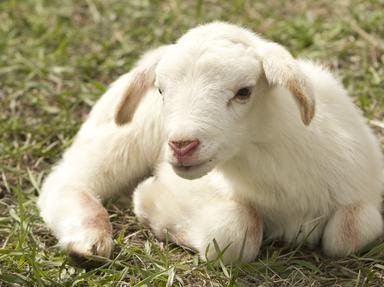
Answer: Rams are uncastrated male sheep
Interesting Information:Rams are male sheep with their genitals still intact, meaning that they will be able to mate with ewes. "Sheep" is a general term for members of the genus Ovis, or more specifically the species Ovis aries. "Sheep" can refer to male, female, young, and old members of the species. Castrated male sheep are called wethers, and female sheep are called ewes.
The parallel between rams and stallions are that they are names pertaining to male, uncastrated members of their respective species. Stallions belong under horses. Geldings are the "wethers" of the horse family, and mares are the horse equivalent of ewes.
Difficulty: Easy.
From Quiz: Download MORE Ram!
Some incorrect choices:
Sheep are uncastrated male rams, Rams are actually male goats, not sheep , Rams are castrated male sheep
2. Which native "fat tail" sheep of Asia was brought to the United States in the early 1900s to satisfy those who were not only fashion conscious but wealthy as well?
Answer: Karakul
Interesting Information:Now considered a rare breed, the American Karakul sheep is distinct for many reasons. For example, they store fat in their tails as do camels and they are the only sheep born with a "fur" fleece coat- usually a deep black in color. Unfortunately for the Karakul, this early soft coat cannot be shorn off like a regular fleece but must be harvested by killing and skinning a lamb within 2 days of its birth.
Difficulty: Hard.
From Quiz: What do EWE know about Sheep Breeds?
Some incorrect choices:
East Friesan, Katahdin, Targhee
3. An intact adult male sheep is called?
Answer: Ram
Interesting Information:Ram is the adult male sheep.
Difficulty: Very Easy.
From Quiz: Basic USA Sheep
Some incorrect choices:
Wether, Studly, Stallion
4. What is another name, mainly used by the British, for rams? Hint: it looks like a shortened version for a word meaning two pennies.
Answer: Tup
Interesting Information:"Tup" is a solely British term for rams. "Buck", a term that describes the male of deer, goats, and other animals, can also refer to rams.
"Tuppence", a variant spelling of the word "twopence", which is a word in its own right, is a British coin equating to two British pence.
The other two answers, "Tupp" and "Tuppy", are not words.
Difficulty: Hard.
From Quiz: Download MORE Ram!
Some incorrect choices:
Tupp, Tuppence, Tuppy
5. Haemonchus contortus is better known as which worm?
Answer: Barber's pole
Interesting Information:Barber's pole mainly occurs in areas that have signigicant rain during warm weather and pastures that have areas that stay green over the hotter months of the year.
Difficulty: Hard.
From Quiz: Worms in Sheep
Some incorrect choices:
Brown stomach worm, Thin necked intestinal worm, Black scour worm
6. How many legs does a Pacific Coast Tick have?
Answer: 8
Interesting Information:Ticks are mature external parasites that are often easily hidden in dense fleece.
Difficulty: Hard.
From Quiz: Do Ewe Know Your Sheep Freeloaders?
Some incorrect choices:
6, 4, they don't have legs
7. Which sheep is the most common in the U.S. to be used to produce milk?
Answer: East Friesan
Interesting Information:Newly imported from northern Germany and the Netherlands in the 1990s, this all-white dairy breed has been improved by man to yield between 1,100 and 1,700 pounds of milk yearly. Sheep milk is most commonly used in the production of cheese and is higher in fat content than cow or goat milk.
Difficulty: Hard.
From Quiz: What do EWE know about Sheep Breeds?
Some incorrect choices:
Jacob, Border Leicester, Columbia
8. A castrated male sheep is a?
Answer: wether
Interesting Information:This process keeps ram lambs' minds on eating grass and not on fighting.
Difficulty: Average.
From Quiz: Basic USA Sheep
Some incorrect choices:
steer, polled, ram lamb
9. What type of internal parasite lives in a sheep's intestines and constantly "passes" segments of itself via the sheep's feces?
Answer: tapeworm
Interesting Information:While tapeworms rarely cause death, they often stunt the growth of new lambs and debilitate older sheep.
Difficulty: Hard.
From Quiz: Do Ewe Know Your Sheep Freeloaders?
Some incorrect choices:
liver fluke, common stomach worm, coccidiosis
10. What breed of sheep was developed in Arizona, New Mexico, and Utah to perform well in the harsh desert conditions of that region?
Answer: Navajo-Churro
Interesting Information:Navajo Indians are credited for domesticating and adapting the Spanish Churro to thrive in the southwest. These sheep lamb easily, often have twins, and are excellent mothers. Females sometimes sprout horns and males commonly develop two or four horns in large, curling spirals. Like the Karakul, they have coarse wool, graded as "carpet wool" and it is the basis of the famed Navajo Indian blanket.
Difficulty: Hard.
From Quiz: What do EWE know about Sheep Breeds?
Some incorrect choices:
Polypay, Southdown, Gulf Coast Native
11. Registration identification of almost all USA sheep is done by which method?
Answer: Ear tags
Interesting Information:Purebred organizations have their own tags to put into ears.
Difficulty: Hard.
From Quiz: Sheep Identification
Some incorrect choices:
Electronic chip implants, Ear tattoos, Lip tattoo
12. Most sheep that graze on open graze land are a breed called?
Answer: Rambouillet
Interesting Information:They are gregarious and will be able to be herded together.
Difficulty: Hard.
From Quiz: Basic USA Sheep
Some incorrect choices:
Suffolk, Dorset, Hampshire
13. Sheep have a high tolerance for pain and a weak or sick sheep will "pretend" to be healthy for its own protection, however which following would indicate a sheep in distress?
Answer: displaying its "hang head" posture
Interesting Information:Sheep have a very high tolerance for pain and, unlike us, do not cry out. When a sheep is injured it will "suffer in silence". Sheep are smart enough to know they are potential food for predators. Not showing pain is a means of survival for them.
A sheep that has over eaten and is starting to bloat, will stand quietly, but the "hang-head posture" is a warning sign that it is in distress. Sadly, sheep are so good at masking their symptoms in some cases by the time illness is discovered it is too late for treatment.
Difficulty: Hard.
From Quiz: Not So Sheepish Sheep
Some incorrect choices:
confusion and/or straying from the flock , unusual aggression, antisocial behavior
14. Rams have these because they provide the rams with good traction. What are they? Hint: Bible - unclean versus clean animals.
Answer: Cloven hooves
Interesting Information:A cloven hoof is a hoof cleft in two, forming two toes, called claws. Cloven hooves are found on even-toed ungulates (Artiodactyls), but not odd-toed ungulates. For rams, cloven hooves can be vital to survival in some environments, such as those that have the rough terrain that mountain sheep live on. The cleft and toes provide traction and grip for animals.
Cloven hooves and ruminating are what marks an animal as "clean" as stated in the Biblical books "Leviticus" and "Deuteronomy".
Difficulty: Easy.
From Quiz: Download MORE Ram!
Some incorrect choices:
Split soles , High heels , Paws with claws
15. What is the reason for using a salt solution (water with salt mixed into it until no more salt will dissolve in the water) in a worm egg count test?
Answer: All of these
Interesting Information:In just water the eggs stay at the bottom with all the faecal matter because they are more dense than water. This makes them harder to see under the microscope with all the faecal matter. With the salt solution the eggs become less dense and they float making them easier to see.
Difficulty: Hard.
From Quiz: Worms in Sheep
Some incorrect choices:
The eggs float in it., It makes the eggs easier to see., It separates the eggs from the faecal matter.
16. What is something that would NOT help you to get rid of a lice infestation in your flock?
Answer: combing out the lice eggs
Interesting Information:A lice infestation can greatly devalue a sheep's fleece and is very difficult to deal with in general. If your sheep seem to be doing more than a little casual rubbing on trees or barn corners- take a close look for these almost transparent yellow creatures- FAST! The quicker you attack an infestation the easier it will be to rid your flock of them.
Difficulty: Hard.
From Quiz: Do Ewe Know Your Sheep Freeloaders?
Some incorrect choices:
closely shearing your sheep's fleece, applying a delouser to your sheep, avoiding confinement of sheep in close quarters
17. Specialty breeds are great, but which American sheep breed is the largest?
Answer: Suffolk
Interesting Information:Suffolk sheep are well-known for their large size and quick growth weight. While mature rams commonly tip the scales at over 250 pounds, these white-fleeced sheep with black head and legs are usually slaughtered for their meat as lambs.
Difficulty: Hard.
From Quiz: What do EWE know about Sheep Breeds?
Some incorrect choices:
Southdown, Cheviot, Karakul
18. What is parturition in sheep called?
Answer: lambing
From Quiz: Basic USA Sheep
Some incorrect choices:
farrowing, eweing, fouling
19. Liver flukes are an internal parasite that requires the help of another creature in order to multiply outside the sheep's body before reinfesting the sheep. Name the helpful creature.
Answer: snail
Interesting Information:Once fluke eggs are passed through the sheep's feces, they hatch and penetrate snails where they multiply and mature. Seems like everyone's trying to hop on, or should I say, IN to the sheep "gravy train".
Difficulty: Hard.
From Quiz: Do Ewe Know Your Sheep Freeloaders?
Some incorrect choices:
snake, toad, fly
20. Which South African import is either a solid white or an unusual white-bodied and black-headed hair sheep?
Answer: Dorper
Interesting Information:Created by crossing a Blackhead Persian with a Dorset Horn sheep, Dorpers are commonly used for meat. They do not require shearing, grow rapidly, and have been found to be highly adaptable to any American farm setting.
Difficulty: Hard.
From Quiz: What do EWE know about Sheep Breeds?
Some incorrect choices:
Dorset, Holstein, Delaine-Merino
21. When distinguishing sheep from goats, which feature is a sheep more likely to have than a goat?
Answer: a downward hanging tail
Interesting Information:Goats' tails tend to be upright while sheep tails hang downwards. Most domestic sheep do not have horns.
Difficulty: Hard.
From Quiz: Sheep Identification
Some incorrect choices:
a beard, horns on both male and female, a noticeable smell
22. How long is the gestation of a sheep?
Answer: 147 days
From Quiz: Basic USA Sheep
Some incorrect choices:
4 weeks, 9 months, 6 months
23. Why are sheep reluctant to go where they can't see?
Answer: poor depth perception
Interesting Information:Poor depth perception, i.e., three dimensional vision is why they will often stop to examine something more closely. Sheep have difficulty picking out details and also avoid shadows and contrast between light and dark.
Difficulty: Hard.
From Quiz: Not So Sheepish Sheep
Some incorrect choices:
no one really knows, they are naturally stubborn, they are waiting to be led
24. Rams have a lot of this reproductive hormone, generally more than wethers. What is it? Hint: The word is derived from the Greek word for "male".
Answer: Androgen
Interesting Information:An androgen is a male hormone, responsible for the production of male reproductive parts while the animal is developing in the uterus. Androgens are responsible for the maintenance of male characteristics throughout life. During mating season, testosterone levels are elevated as it is the most important androgen.
The Greek word for male, when written in the English alphabet, is "andros". "Andro" in English is a prefix also meaning "male".
Difficulty: Average.
From Quiz: Download MORE Ram!
Some incorrect choices:
Androigene , Genedroid , Genadroie
25. Where in the sheep does barber's pole occur?
Answer: Abomasum.
Interesting Information:The abomasum is also the fourth stomach, the caecum is known as the blind gut.
Difficulty: Hard.
From Quiz: Worms in Sheep
Some incorrect choices:
Caecum., Small intestine., Large intestine.
26. The barberpole worm is one parasite in particular that has a life cycle that is defined as "direct". The definition of a "direct" life cycle is one that:
Answer: doesn't require any other animals to be completed
Interesting Information:Once barberpole worm eggs are passed via the sheep's feces they hatch and develop in a period of time (5 days to several months) that depends a lot on the weather. Moist, warm conditions are favorable for eggs/larvae- this is probably one reason that this type of parasite is less of a problem in arid areas of the country.
Difficulty: Hard.
From Quiz: Do Ewe Know Your Sheep Freeloaders?
Some incorrect choices:
leads directly to death, does not require food or water, does not require any plants to be completed
27. Which long wool breed was featured in the movie "Babe," the story of a pig who thought he was a sheep dog?
Answer: Border Leicester
Interesting Information:This "famous" all-white breed is commonly found in high-rainfall, good pasture northern areas of the US. Originally imported from England, they produce an excellent quality spinning wool.
Difficulty: Hard.
From Quiz: What do EWE know about Sheep Breeds?
Some incorrect choices:
Cheviot, Welsh Mountain, Coopworth
28. Which breed of sheep was developed in the USA in the early twentieth century?
Answer: Columbia
Interesting Information:A cross between a Lincoln and Rambouillet, the Columbia was bred to be raised in the Western USA.
Difficulty: Hard.
From Quiz: Sheep Identification
Some incorrect choices:
Enterprise, Endeavour, Challenger
29. What is the difference between a sheep and a goat- Sheep have?
Answer: oil glands between toes
From Quiz: Basic USA Sheep
Some incorrect choices:
wool, horns, two milk teats
30. On average, do rams mature sexually faster or slower than ewes? Hint: think humans.
Answer: Slower
Interesting Information:Rams mature sexually between six and eight months old, whereas ewes could mature sexually as early as four months of age. This varies between species and breeds.
While statistics vary in humans, girls reach puberty by about 10-12 years old, while boys take longer, anywhere from ages 11-14.
The reason for this is not known, what is known is that males and females mature differently, with different growth hormones stimulating them. For males, androgens, and females, estrogens.
Difficulty: Hard.
From Quiz: Download MORE Ram!
Some incorrect choices:
Faster , The same, They are already sexually mature when they are born
31. Trichuris is also known as what worm?
Answer: Whipworm
Interesting Information:These worms are found in the blind gut. Whipworm can be a problem in sheep during drought. Sheep with heavy infections of whipworm have diarrhoea with mucous and may die.
Difficulty: Hard.
From Quiz: Worms in Sheep
Some incorrect choices:
Coccidia, Tapeworm, Lungworm
32. A very high number of internal parasites can lead to death in sheep. Infected animals might display an obvious symptom called_______________ shortly before death.
Answer: bottle jaw
Interesting Information:The effect of "bottle jaw" is created by fluids accumulating in the animal as a result of internal blood loss; most commonly a voracious blood sucker named "Haemonchus contortus". Unfortunately, once animals display bottle jaw it is usually too late to save them.
Difficulty: Hard.
From Quiz: Do Ewe Know Your Sheep Freeloaders?
Some incorrect choices:
fly strike, foot rot, stomach puffage
33. What breed is easily distinguished by its red or tan face and legs and white body?
Answer: Tunis
Interesting Information:Originating in North Africa and imported to the US in 1799, this medium-sized sheep is naturally polled (no horns on either sex) and has a fat tail similar to the Karakuls. Their ability to breed out-of-season and tendency to be great mothers led to their popularity in the U.S. However, Tunis farms were most prevalent in the South and nearly eliminated during the Civil War. They are still considered a rare breed.
Difficulty: Hard.
From Quiz: What do EWE know about Sheep Breeds?
Some incorrect choices:
Texel, Targhee, Irish Red Face
34. Suffolk sheep were originally bred in which country?
Answer: England
Interesting Information:This large breed, used for meat and wool, was developed by crossing Southdown rams with Norfolk Horned ewes.
Difficulty: Hard.
From Quiz: Sheep Identification
Some incorrect choices:
Scotland, USA, Australia
35. While most sheep produce a single lamb, some are known to bear twins or even triplets consistently. Only one breed, however, commonly bears litters, usually 3-5 lambs at a time. Which breed accomplishes this feat?
Answer: Finnish Landrace
Interesting Information:The fine-boned Finnish Landrace, or Finnsheep, is commonly used to cross with other breeds of sheep to increase prolificacy (number of lambs per birth). While all-white sheep were originally imported (from Finland- shocker!) their tightly crimped fleeces are popular with hand-spinners and they've been bred to include virtually every color combination known.
Difficulty: Hard.
From Quiz: What do EWE know about Sheep Breeds?
Some incorrect choices:
Hampshire, Icelandic, Rambouillet
36. The Ouessant sheep, one of the smallest breeds in the world, is also known by which name?
Answer: Breton Dwarf
Interesting Information:The breed comes from the island of Oussant located off the coast of Brittany, which is where the alternative name comes from.
Difficulty: Hard.
From Quiz: Sheep Identification
Some incorrect choices:
Skye Dwarf, Newfoundland Dwarf, Tasmanian Dwarf
37. What is the name of meat from sheep over two years old?
Answer: mutton
From Quiz: Basic USA Sheep
Some incorrect choices:
veal, lamb, carne
38. In what ancient civilization were rams held sacred? Hint: they worshipped many gods and animals.
Answer: Egyptian
Interesting Information:The Egyptians worshipped rams; rams were one of the many sacred animals. Khnum, one of the three parts of the sun god Ra, is generally portrayed as a ram or with a ram's head. He was also known as Banebdjedet, which means The Ram Lord of Djedet. Hashfai and Amun are also other ram gods.
Difficulty: Average.
From Quiz: Download MORE Ram!
Some incorrect choices:
Babylonian , Carthaginian, Roman
39. Sometimes adult flies lay eggs on the wool and in the tissues of a sheep's wounds due to: accidents, docking, shearing, etc. Once the eggs hatch they burrow into the sheep causing this disgusting and painful ailment:
Answer: fly strike
Interesting Information:Once the fly eggs begin to hatch under the skin, the sheep's immune system tries to fight them off and the sheep's internal temperature rises considerably. This fever in conjunction with increased heart and breathing rate often leads to death.
Difficulty: Hard.
From Quiz: Do Ewe Know Your Sheep Freeloaders?
Some incorrect choices:
fly dinner party, fly carnivores, fly carcassing
40. Which hardy hill breed is known for the water shedding properties of its fleece, specifically its lamb birthcoats?
Answer: Scottish Blackface
Interesting Information:Uncommon in the US, these sheep are easily recognized by their coarse, carpet quality fleeces and white and black speckled face and legs. Awesomely adapted to life on their own under hilly pasture conditions, the protective rams usually sport horns and ewes are excellent mothers.
Difficulty: Hard.
From Quiz: What do EWE know about Sheep Breeds?
Some incorrect choices:
Shetland, Border Leicester, Cotswold
Please remember to credit FunTrivia.com, add links on your website or newsletters, or otherwise spread the word about our website. Thank you very much, and we hope these questions have been useful!
|