FREE! Click here to
Join FunTrivia. Thousands of games, quizzes, and lots more!

Worms Trivia Questions and Answers
Fun Facts & Interesting Information
Fun Trivia Question Usage
You are welcome to use the questions in this section for non-commerical purposes: quizzing friends/coworkers, classrooms, newsletters, trivia nights, events, etc. Questions may
not be used for websites or in apps, and may not be resold. You use the questions at your own risk, and FunTrivia is not responsible for errors, etc in the content.
Please
link to or
credit FunTrivia textually (http://www.funtrivia.com) if you use any of these questions. Thanks!
Visit our
Trivia Question Store to buy question packs for commercial or for-profit ventures.
1. What is another commonly used name for nematodes?
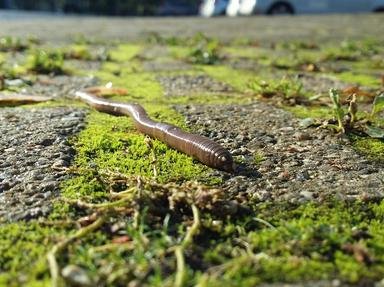
Answer: Roundworms
Interesting Information:Nematodes are a category of cylindrical, unsegmented (the body is not divided into specific segments) worm. Their body is triploblastic which means it has three layers of cells (ectoderm, mesoderm, and endoderm). Plant-parasitic nematodes are known as eelworms.
Difficulty: Easy.
From Quiz: Nematodes Might Outlive Us All!
Some incorrect choices:
Gastropods, Termites, Harvestmen
2. The earthworm belongs to which phylum?
Answer: Annelida
Interesting Information:Earthworms are found on every continent except Antarctica. They are widely used as bait in fishing. Other annelids are ragworms and leeches.
Difficulty: Easy.
From Quiz: Species of Worms
Some incorrect choices:
Arthropoda, Nematoda, Tardigrada
3. What clade or group are nematodes classified as?
Answer: Ecdysozoa
Interesting Information:Ecdysozoa include insects, crustaceans, chelicerata (includes sea spiders, arachnids, scorpions and horseshoe crabs), myriapods (includes millipedes and centipedes) and nematodes. This group is characterized by a molting process called ecdysis whereby a cuticle is shed for a new one. This molting process gives the group its name.
Difficulty: Hard.
From Quiz: Nematodes Might Outlive Us All!
Some incorrect choices:
Chordata, Hymenoptera, Salmonidae
4. Which hemisphere is most suitable for velvet worms?
Answer: Southern Hemisphere
Interesting Information:The Southern Hemisphere's tropical climate creates excellent conditions for breeding. Velvet worms are known to "shoot slime" at their prey in order to capture it.
Difficulty: Hard.
From Quiz: Species of Worms
Some incorrect choices:
Western Hemisphere, Northern Hemisphere, Eastern Hemisphere
5. A 2013 survey in the journal "Zootaxa" put the number of nematode species at how many?
Answer: 25,000
Interesting Information:There has been some debate about the actual number of nematode species because it can be hard to tell the difference between one species and another. Due to that fact, the number often changes depending on the source and the author. In 2013, there was a survey on animal biodiversity in the megajournal "Zootaxa" that put the number at over 25,000. In 1993 the number was estimated at over one million which was followed by an article putting the number at somewhere around 40,000. Processes such as DNA barcoding and rarefaction curves have put the figure actually somewhere around one million.
Difficulty: Hard.
From Quiz: Nematodes Might Outlive Us All!
Some incorrect choices:
5,000, 500, 50
6. In which environment will you find ribbon worms?
Answer: Marine
Interesting Information:Ribbon worms are usually found in marine environments due to advantages in feeding and camouflage. When extremely hungry, ribbon worms have been known to eat themselves!
Difficulty: Hard.
From Quiz: Species of Worms
Some incorrect choices:
Desert, Woodland, Mountains
7. In what environments do nematodes live?
Answer: Nearly every ecosystem on Earth
Interesting Information:Nematodes have been able to adapt to just about any environment. They are found in fresh and saltwater, in deserts, in forests, in mountains and low regions, in polar regions and tropical regions. They've been found deep below the surface of the Earth and they make up approximately ninety percent of all animals on the ocean floor. Because of their diversity, and because there are just so many of them, they represent about eighty percent of all individual animals on Earth and play a critical role in many environments.
Difficulty: Hard.
From Quiz: Nematodes Might Outlive Us All!
Some incorrect choices:
Deserts, Marine and fresh water, Soils
8. In what damp environment do horsehair worms live?
Answer: Streams and puddles
Interesting Information:Horsehair worms live in damp environments like streams and puddles. They are called 'horsehair' because they closely resemble the hair of horses. Horsehair worms are very similar to tapeworms and are parasitic.
Difficulty: Hard.
From Quiz: Species of Worms
Some incorrect choices:
Oceans, Gardens, Woodlands
9. One of the more populous species of worms is the roundworm. These creatures are both parasitic and non-parasitic. They live in all habitats, including soil. What is the name of the longest roundworm?
Answer: Guinea Roundworm
Interesting Information:Roundworms that live in soil mainly eat plants. Among the more common roundworms is the eelworm. This creature mainly eats the roots of tomato plants, potato plants, and sugar beets. There may be up to half a million roundworms in a single spadeful of garden soil!
Difficulty: Hard.
From Quiz: The Wonderful, Wriggly World of Worms
Some incorrect choices:
Peruvian Roundworm, Russian Roundworm, Nigerian Roundworm
10. Which sea is home to the Hermodice carunculata (bearded fireworm)?
Answer: Mediterranean Sea
Interesting Information:The Hermodice carunculata (bearded fireworm) is found in the Mediterranean Sea. They are called fireworms because contact with their bristles may cause a burning sensation. The bearded fireworms live in reefs, usually under seaweed or muddy areas, at depths up to 60-150 metres below the surface.
WARNING: Fireworms are highly toxic.
Difficulty: Hard.
From Quiz: Species of Worms
Some incorrect choices:
Beaufort Sea, Bellingshausen Sea, Ross Sea
11. One species of nematode is known for causing the parasitic disease trichinosis which can cause vomiting, abdominal pain and diarrhea. What is the best way to prevent this disease?
Answer: Thoroughly cook meat before eating
Interesting Information:Although washing your hands before eating is a good common practice, trichinosis is caused by eating undercooked meat and so the best practice is to ensure meat is thoroughly cooked before it's consumed. The lovely little nematode responsible for this disease is Trichinella spiralis, known as the 'trichina worm'. This disease occurs in rats, pigs, bears, and humans. Other nematodes that are parasitic to humans include ascarids, filarias, hookworms, pinworms, and whipworms.
Difficulty: Average.
From Quiz: Nematodes Might Outlive Us All!
Some incorrect choices:
Wash your hands before eating, Become a vegetarian, Only eat fish
12. To which phylum do roundworms belong?
Answer: Nematoda
Interesting Information:Roundworms belong to the phylum Nematoda. There are over 15,000 parasitic species. Roundworms are found in freshwater and can be found as far south as Antarctica.
Difficulty: Hard.
From Quiz: Species of Worms
Some incorrect choices:
Pentastomida, Phoronida, Pogonophora
13. Some nematode species exhibit a rare reproductive system that is characterized by the presence of males and hermaphrodites. What is this type of reproductive system called?
Answer: Androdioecy
Interesting Information:Most nematode species have distinct females and males (known as being dioecious) but there are some species that have the rare characteristic of having both hermaphrodites and males. Reproduction is usually sexual although hermaphrodites can self-fertilize. Males are usually smaller than females and hermaphrodites and have a distinct bent or fan-like tail. Nematode species that exhibit androdioecy include C. elegans, C. briggsae, and Pristionchus pacificus.
Difficulty: Hard.
From Quiz: Nematodes Might Outlive Us All!
Some incorrect choices:
Dioecy, Gynodioecy, Heterodiecy
14. A well-known species of flatworm is the tapeworm. These worms are mainly parasitic. They can grow very long. In fact, the largest can grow up to 66 feet, or 20 meters, in length! What species of animal does this worm live in?
Answer: Whales
Interesting Information:A creature similar to tapeworms is the fluke. Though both are mainly parasites, one major difference is their size. The longest flukes are only a few inches/centimeters long, whereas the longest tapeworms are enormous!
Difficulty: Hard.
From Quiz: The Wonderful, Wriggly World of Worms
Some incorrect choices:
Elephants, Hippopotamus, Sharks
15. What is the common name for the group of worms known as Echiura?
Answer: Spoon worms
Interesting Information:Echiura are commonly known as spoon worms. Their often colorful bodies have no segments, and their common name derives from their spoon-shaped frontal structure.
Difficulty: Hard.
From Quiz: Species of Worms
Some incorrect choices:
Ribbon worms, Velvet worms, Peanut worms
16. One specific species of nematode has had its entire genome mapped and is known as a model organism because of how extensively it's been covered. The name of the species is a bit fancy, can you guess which one it is?
Answer: C. elegans
Interesting Information:C. elegans (Caenorhabditis elegans) is known as a model species because it has had its entire genome sequenced, the developmental fate of every cell determined, and every neuron mapped. This species of nematode lives in the soil and is a transparent nematode that is about one millimeter in length. It lacks both a circulatory and respiratory system and most of the species are hermaphrodites. In 1963, South African biologist Sydney Brenner proposed using this simple organism as a model organism. The early cell division process of this species of nematode is among the most understood in the world of asymmetric cell division. Studies of this species of nematode have aided research into aging, Alzheimer's disease and sleep studies.
Difficulty: Average.
From Quiz: Nematodes Might Outlive Us All!
Some incorrect choices:
R. taco, Q. basical, T. guggeno
17. An odd species of worm is the spoon worm. One species, called the bonellia spoon worm, is common in the Mediterranean Sea. The female in vivid in color. Which color is she?
Answer: Green
Interesting Information:The female bonellia has a body only six inches long, but a proboscis three feet (one meter) long! The male, however, is microscopic in size. Spoon worms can be found in rock crevices or burrows in the mud.
Difficulty: Hard.
From Quiz: The Wonderful, Wriggly World of Worms
Some incorrect choices:
Blue, Orange, It's transparent
18. In the class of Cestoda, what are parasitic flatworms called?
Answer: Tapeworms
Interesting Information:When tapeworms are ingested, they are known to starve their hosts by feeding on the food the host digests. This may occur in both humans and animals if infected meat is eaten.
Difficulty: Hard.
From Quiz: Species of Worms
Some incorrect choices:
Horsehair worms, Horseshoe worms, None of these
19. Bristleworms, the largest subgroup of annelid worms, are named after the hairs covering their bodies. What is the name given to these hairs?
Answer: Chaetae
Interesting Information:The cilia are the hairs covering the bodies of protists. Plasmodia are parasites that cause malaria. Finnally, turbellaria is the scientific name for non-parasitic flatworms.
Difficulty: Hard.
From Quiz: The Wonderful, Wriggly World of Worms
Some incorrect choices:
Cilia, Plasmodia, Turbellaria
20. In 2003 the nematode became the first known life form to do what?
Answer: Survive an unprotected descent back to Earth's surface from space
Interesting Information:The C. elegans species of nematode made news in 2003 when it was discovered that it had survived the space shuttle Columbia crash. They were part of a research project that was included on board and survived the re-entry back into Earth's atmosphere. Descendants of those nematodes were included in the Endeavour STS-134 mission in 2011. Nematodes have also spent time on the International Space Station and in 2018 were included in a study on muscle dystrophy during spaceflight.
Difficulty: Hard.
From Quiz: Nematodes Might Outlive Us All!
Some incorrect choices:
Be teleported using teleportation pods, Travel through time, Be shrunk to a quarter of its size and then brought back to its original size
21. A common worm is the arrow worm. These creatures live in the ocean, and are about one inch long. That's about two and a half centimeters. In what kind of waters do these animals live?
Answer: Tropical Oceans
Interesting Information:Arrow worms come together in vast numbers. They are one of the strangest of all worms. They are transparent, and hunt plankton and small fish. They have miniature fins on their sides.
Difficulty: Hard.
From Quiz: The Wonderful, Wriggly World of Worms
Some incorrect choices:
Polar Oceans, Temperate Oceans, All of These
Please remember to credit FunTrivia.com, add links on your website or newsletters, or otherwise spread the word about our website. Thank you very much, and we hope these questions have been useful!
|