Quizzes at Fun Trivia Fun Trivia | quizzes Quizzes | games Games | community People | services Services | help Help | me Me
New Player - Log In
Currently 8371 players online.   Trivia games, quizzes, and contests - FREE !     Get Started! quiz register
Fun Trivia : Bolivia Encyclopedia FunTrivia

Structure

fun facts,factoids,info

Interesting Questions, Facts and Information

  • There are a total of 20 general entries.


Interesting Questions, Facts, and Information

    Bolivia

    What is the largest city in Bolivia?9 for 10 - Bolivia

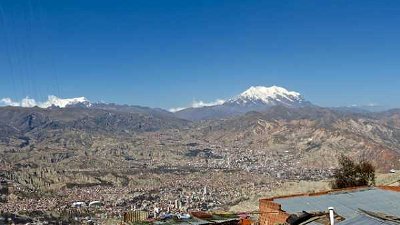
      La Paz. La Paz is the administrative capital. It is 12,000 feet about sea level which makes it the highest capital city in the world. La Paz has a population of around one million people. The constitutional capital is Sucre.

    Originally silver was important in Bolivia. What metal later became more important?9 for 10 - Bolivia

      tin. Bolivia was one of the world's leading producer of tin. However, the market for tin declined in the 1980s, and it is no longer so important in Bolivia's economy.

    Anconcagua is the highest mountain in the Cordillera Real mountain area near Lake Titicaca. What is the second highest in this area?9 for 10 - Bolivia

      Illampu. Illampu is 20,867 feet high, slightly less than Ancohuma's 21,081 feet. Aconcagua is in Argentina and is South America's highest mountain at 22,834 feet. The highest mountain in Bolivia is Sajama, 21,391ft.

    Bolivia is a landlocked country. What country lies to the northwest of Bolivia?9 for 10 - Bolivia

      Peru. Brazil lies to the north and east, Paraguay and Argentina to the south, and Chile to the southwest. At one time Bolivia extended to the Pacific, but after the War of the Pacific in the late 19th century, Chile seized the Bolivian province of Atacama.

    Bolivia has three official languages. Spanish and Quechuan are two of them. What is the third?9 for 10 - Bolivia

      Aymaran. Aymaran is the language of the people who inhabited the area before the Spanish came.

    What Bolivian city, situated in the Andes south of Paz near Lake Poopo, was founded by the Spanish because of the silver deposits found in the area? 9 for 10 - Bolivia

      Oruro. Oruro lies at an altitude of 12,159 feet. It has a population of just under 200,000.

    La Paz is actually co-capital of Bolivia. La Paz has the legislative and executive branch of the Government. What city is the other capital of Bolivia, housing the judicial branch of the Government?La Paz, Bolivia

      Sucre. Sucre was the country's first and only capital until 1898. In 1898, there was a power struggle between the Liberal and Conservative Parties. The Liberals overthrew the Conservatives. Their power base was with the Tin Miners around La Paz. Therefore, they reached a compromise to split the capital between the Liberal city of La Paz and the Conservative city of Sucre.

    In What year was the city of La Paz founded?La Paz, Bolivia

      1548. The city of La Paz was founded on October 20th, 1548 under the name of La Ciudad de Nuestra Seņora de La Paz. It was founded at the site of an old Aymaran village.

    In what suburb is the International airport located at?La Paz, Bolivia

      El Alto. The airport is called the "El Alto International Airport". El Alto is a suburb that is located high above the city of La Paz on the Altiplano. It is a spectacular view driving over the rim of the bowl and seeing La Paz spread out below El Alto.

    Merchandise sold here includes herbs, amulets, and goat fetuses used in Aymara traditions. What is the name of the market that sells these items?La Paz, Bolivia

      Witches Market. Also known in Spanish as the "Mercado de Brujas", the Witches Market sells all kinds of interesting amulets, potions, and spells. Goat fetuses are sold to bury in the foundations of new buildings. It is supposed to bring good luck.

    What are tourists supposed to chew to help fight off the effects of the high altitude?La Paz, Bolivia

      Coca leaves. Coca leaves are commonly chewed to help prevent the effects of altitude sickness. Coca leaves are the base for the drug cocaine, although it has very little of the drug in it. They are perfectly legal and available all over town. Coca-Cola buys over 150 tons of coca leaves every year to put in their popular soft drinks (Coca Cola in many parts of the world still has the coca leaves in their drink).

    What is the elevation of La Paz?La Paz, Bolivia

      11,942 ft. La Paz is the highest capital city in the world. It is so high that airplanes have to have special tires to land at the airport and FIFA (the governing body of world soccer) even banned the playing of international soccer games at La Paz for a time.

    In La Paz, you can take a unique tour of a prison. The tour is given by inmates of the prison. What is the name of the prison that you can tour?La Paz, Bolivia

      San Pedro. San Pedro is the largest prison in Bolivia. It virtually runs itself, as the inmates elect leaders. They have over 1,500 inmates and even a hotel within the prison so guests and relatives of inmates can stay while visiting.

    What is the name of the main, tree-lined street that runs through the center of downtown La Paz?La Paz, Bolivia

      Prado. This boulevard changes names several times as it runs throughout the city, but it is called "Paseo el Prado" in the "centro". The road also passes the area of town called "El Prado," which is the more affluent area of town.

    What is the name given to the music clubs/bars all over town that play traditional Bolivian folk music?La Paz, Bolivia

      Peņas. These bars/clubs/restaurants usually have live Andean folk music. They are open every night of the week and provide a great insight into the local culture in Bolivia.

    Bolivia has three main languages. Two are Aymara and Spanish. What is the other language?La Paz, Bolivia

      Quechua. Quechua is spoken throughout the central Andes region of South America. Aymara is also spoken in the Andes region by the Aymara people. Of the two languages, Quechua is more widely spoken. Bolivia has a large percentage of people who do not speak Spanish, speaking one of the other two languages.

  • All content is (C)opyright 1995-2006 FunTrivia.com. Content may NOT be copied, reprinted, or distributed without our written consent. Feel free to link to any page you wish.

  • While we try to keep trivia as accurate as possible through a regular volunteer editing process, FunTrivia cannot guarantee the validity of the information found here. FunTrivia offers no professional advice, and you take all responsibility for your use of anything contained herein.
  • Feel free to send a note to a particular item's author for further details or source information; most of our authors love to hear feedback about their work.
  • See our conditions of use for details.