|
|
|
Structure
Interesting Questions, Facts and Information
- There are a total of 50 general entries. We are selecting 30 for display.
Special Topics
|
Interesting Questions, Facts, and Information
Chile
Chile has many natural resources, among them a lots of rivers, which one is the most mighty of them? | All About Chile
|
Baker. The Baker River originates in the Bertrand lake, the waters are colorful, blue varying to green in the east casued by the effect of the affluents. The Baker river is most important in Chile and represents a great hydroelectric potential. The Baker River is located in the commune of Chile Chico 272 kms from Coyhaique.
Texas. The two flags are white, blue, and red and have a white star.
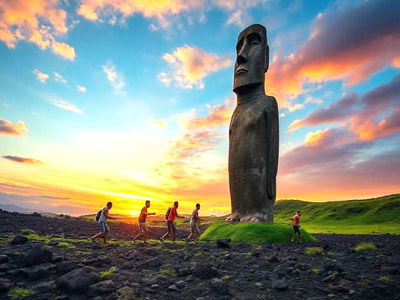
Easter Island. Easter Island was a Dutch colony. The government of Chile bought the island and from that moment it has been part of the Chilean sovereignty.
15. In 2008 the country is divided administratively in 15 regions, each one with its capital, and divided as well in provinces
On which tectonic plate does the northern portion of Chile lie? | All About Chile
|
Nazca plate. The Nazca Plate houses the northern part of Chile while the southern portion resides on the South American plate. The Nazca Plate continues to sneak under the neighbouring South American Plate causing geographic instability.
Santiago. The official name is Santiago de Nueva Extremadura. Santiago was founded by Pedro de Valdivia, a Spanish conqueror. Santiago has a population of over five million people, a sizeable portion of Chile's seventeen million total population.
South America. Chile is on the Pacific coast, and stretches from Peru to the southern tip of the continent.
Atacama. The Atacama desert lies between the coastal mountains and the Andes. This extremely arid region is known for its mineral deposits, especially sodium nitrate used for fertilizers.
Which native mammal of Chile is the llama supposedly descended from? | 9 for 10 - Chile
|
Guanaco. Llamas were domesticated around 4000 BC. The guanaco is smaller than the llama and is an endangered species.
What is the last name of the author who wrote "The House of the Spirits"? | 9 for 10 - Chile
|
Allende. Isabel Allende is a world renowned novelist. As well as "The House of the Spirits" she has written "Of Love and Shadows" and 'Eva Luna". Her uncle Salvador Allende Gossens was president of Chile from 1970 to 1973.
The southernmost tip of South America lies in Chile. What is its name? | 9 for 10 - Chile
|
Cape Horn. The first European to sail round Cape Horn was a Dutchman. He named it after his home town of Hoorn. Storms, currents and icebergs make this a very dangerous area for sailors.
In 1879 Chile went to war with two of its neighbours. The cause of the war was the ownership of areas where an important mineral was found. What is this mineral? | 9 for 10 - Chile
|
nitrate . Bolivia and Peru fought for the control of the Atacama province, a region that was rich in nitrates. In 1884 Bolivia ceded this province to Chile.
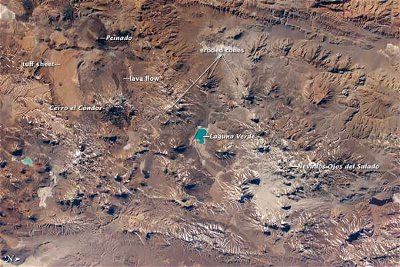
Ojos del Salado. Ojos del Salado is on the Chile Argentina border. It rises to a height of 22,572 feet and is the second highest peak in the Andes.
Tortolas and Tupungato are also on the Chile Argentina border. Ostenso is in Antarctica.
Of what metal was Chile the world's leading producer at the beginning of the 21st century? | 9 for 10 - Chile
|
copper. The mining of copper, iron and nitrates have always been important in Chile's economy.
Argentina. Chile's length, 2,650 miles, is about ten times its average width! Most of this eastern border is with Argentina.
On my way back to Santiago I stop at La Serena to chill. Founded in 1544 it's Chile's second oldest city. Situated only a couple of kilometers from the coast it is tied to the city of Coquimbo, connected/separated by 5km (3 mi) of beach where every summer vacation (February) hordes of Chileans, Argentines and Brazilians crowd the hotels which are empty the rest of the year. Doing some sightseeing in both cities I notice the differences in the twin cities: La Serena is an administrative center with Universities, Coquimbo is a harbor and industrial town. The twins are very different except for one feature which all Chilean cities seem to share. Which one? | Touring the North of Chile
|
A Central Square: the Plaza de Armas. Few cities have a statue of Simon Bolivar, many have an avenue where one can promenade, most have some kind of local market, but all, I repeat: ALL Chilean settlements, from village to metropolis have a central square and they are ALL called Plaza de Armas (I must be wrong on this but I have found NOT ONE village without a Plaza de Armas. If you find one please tell me!). For some reason the first necessity for city founders is a place where the soldiers can march. The square is then surrounded by a church, then the residence of the King's representative (governors palace etc), then a courthouse, then supplemented by the city hall, homes of dignitaries etc. There are lots of flags all over the country and on the Plaza de Armas there is often some kind of statue or monument celebrating the country and its heroes, but rarely of Bolivar, who liberated the north of the continent and never made it to Chile. Bolivars counterpart in the south is the Argentine San Martin, but the real Chilean hero is Bernardo O' Higgins; General Carreras is also a favourite and statues of these two locals pop up everywhere.
Many Cities have an avenue but only in Santiago is it called the Alameda. It is actually the old Spanish name but everybody still uses it; I can't blame them since the official name is "Avenida de Libertador General Bernardo O' Higgins". Many Cities also have a Mercado, but only in La Serena it is called "La Recova". It's a bit of a cross between a medieval Arab 'souk' and a modern American mall.
I'm flying home now, I hope you join me next year when I visit the south of Chile.
It's almost time to return to the south and I pass by Calama again. Close by is a small town with the name Chuquicamata (sometimes Chiquicamata). It is famous for being the world's largest open-pit mine. What is being mined here? | Touring the North of Chile
|
Copper. Copper for years has been the backbone of Chilean exports. In 1975 it still was responsible for more than 50% of exports. The economy has modernized and diversified considerably (wood products, wine, fruit) but copper is still the very important. Chilean mountain ranges are full of it; even in the desert copper minerals color the landscape a nice shade of green (I think the mineral is called Malachite). There is almost no iron to be found in Chile and though I'm not an earth science expert I guess it's quite ridiculous to mine natural gas from an open pit. I am not too sure about how to mine Nitrates but historically it has been very important. The area what is now El Norte Grande, being a desert, was economically totally uninteresting for the bordering countries Peru, Bolivia and Chile. This changed almost overnight when Nitrates became an important strategic resource and huge amounts of it were found in the Atacama desert. To make a complicated story short: in 1879 a war broke out between the three countries, Chile won, secured the area for itself (thus cutting Bolivia off from the sea) and Chile prospered for decades from the revenues.
Tectonics 101: Our home planet (aka earth) is made of huge slabs, continent size. When they hit each other head on one slab goes up making the highest mountains, one slab goes down forming a deep sea trench and all kind of mayhem happens: earthquakes, tsunamis and volcanic eruptions scourge the country. I have been talking about volcanoes and mountains already and though i didn't mention them until now, earthquakes are a daily nuisance to Chileans. Measuring 9.5 on the Richter scale, the strongest earthquake of the 20th century occurred in southern Chile in late May 1960, killing about 5,000. In the case of Chile the slab going up is South America, the slab going down is called the Nazca plate. The resulting mountains are the Andes, but what is the trench called? | Touring the North of Chile
|
Atacama Trench. Yes, after a desert, a salt lake and a region there is also a trench called Atacama. Another name for it is the very descriptive but even less imaginative name Peru-Chile Trench. Sigh* I love geography but sometimes I wish geographers would spend some time being creative. Actually I quite like the sound of Nazca Trench. Not only is Nazca a plate, but also an oceanic ridge. More importantly, the name comes from a place in the Peruvian desert where one Erich von Däniken would have us believe aliens have landed. Thats what I call imaginative. Humboldt was an 18th century German explorer who gave his name to the cold current flowing north along the coast. The deepest point is called Richards Deep and with -8065 m (-26460 ft) it is even lower than the mountains are high... amazing! www.nationmaster.com/encyclopedia/Atacama-Trench
The area around San Pedro is full of natural beauty but the most impressive site (personal opinion), Tatio, is a two hours drive over dirt roads away. For what is Tatio famous? | Touring the North of Chile
|
Geysers. There is actually a volcano called Tatio, but the name Tatio is synonymous with geysers (there are about 50,000 hits on "Tatio" but try to find one without the word "geyser" !). Huge Sand Dunes (sand boarding!) and Salt Caves are some of the attractions near San Pedro. Tatio is one of the few geyser fields in the world. There are only four: the most famous of course is Yellowstone, the others are on Kamchatka peninsula (Russia), New Zealand's North Island (some count the Iceland geysers as a fifth, the definition of a geyser field is more personal than scientific; whether its four or five, they are very very rare). Special about Tatio is that all geysers are concentrated in a very small area: only about 3x3 km (2x2 mi). The real stunner however is that the geysers are on a plateau at 4300 m (14000 ft)! The air is so thin just walking around will make you lose your breath and visitors should bring oxygen masks, just in case. For a nice list of geysers see www.johnstonsarchive.net/geysers/geyserct.html
At last I reach the tourism capital of northern Chile: San Pedro de Atacama. I am surprised by the smallness of it and reminds me of the Mexican towns in western movies, only the tumbleweed is missing. The village lies on the edge of Chiles largest 'salar'(= salt lake). What is its name? | Touring the North of Chile
|
Salar de Atacama. It is roughly 3000 km2 (1000 mi2) in size at an altitude of 2500 m (8000 ft). Salar de Uyuni is much larger and more spectacular but is in Bolivia. The same goes for Salinas Grandes except that it is in Argentina. The Salar Grande is another Chilean salt lake further north and is actually quite small and insignificant so don't be surprised if your can't find it on any map.
In Calama I miss the last bus to my destination San Pedro, so I am stranded. Calama is the only sizable settlement on Chile's longest river. What is it called? | Touring the North of Chile
|
Loa. The Loa river is Chile's longest with an official length of 443.85 km (275.85 mi). This is quite a feat considering that Chile is no wider than 430 km (265 mi) anywhere. It only manages to do so because it describes a big "U". The Baker river is in the far south and is the largest river with a flow 870 m3/sec compared to Loa's measly four. The Bio-Bio in central Chile is, by Chilean standards, also large and is a popular rafting destination. The Elqui river valley near La Serena is famous for production of Pisco, the national brandy (excellent stuff). Check www.dga.cl for more info on Chile's waters.
The trip to the North is about 24 hours and I take the night bus to Antofagasta. North of Copiapo the desert begins in earnest and its dull, dull, dull. So when in the middle of nowhere I suddenly see this man made structure I think I am looking at a mirage. What am I seeing? | Touring the North of Chile
|
A Giant Sculpted Hand. In 1992 a local artist had this bizarre idea of sculpting a 15 m (50 ft) hand in the desert about 50 km (30 mi) south of Antofagasta and calling it "El Mano del Desierto". The other options are equally bizarre things to find in the middle of a desert (which tells you something about my feelings towards Las Vegas).
Finally we turn to the North. Chileans are very practical when talking about Chile north of Santiago; they simply call it 'El Norte'. The northern part is called 'El Norte Grande'. What is the southern part called? | Touring the North of Chile
|
'El Norte Chico'. 'Chico' means 'small', 'pequeño' means 'little', 'proximo' means 'near' and 'sur' means 'south'. So they just call it 'The Big North' and 'The Small North'. 'The Big North' consists of the two regions of Tarapaca and Antofagasta, 'The Small North' consists of the regions of Atacama and Coquimbo. Most of this area is desert or semi-desert with little agriculture but lots of minerals.
First travelling west I want to visit the historically most important port of Chile: Valparaiso. Directly adjacent to this city is another, actually larger city. What is this city's name? | Touring the North of Chile
|
Viña del Mar. According to the 1992 census and most estimations afterwards Viña del Mar is slightly larger than Valparaiso, both standing at about 300,000. Concepcion is a city about 500 km (300 mi)south and is also about the same size. Puente Alto is a Santiago suburb and grew explosively in the 90s and with about 400,000 is now actually Chile's second largest city. San Antonio is a harbor city about 50 km (30 mi) south of Valparaiso. When Valparaiso's harbor couldn't expand any further it took over a lot of the commerce. I realize that these populations are time sensitive but I also believe that Viña and Valpo (as the locals will call them) will still be neighbours in 50 years time.
As most visitors do, I land at Santiago's Airport after a grueling 20 hour flight. Santiago is the heart and soul of the country. It's by far the biggest city and, being founded in 1541, also the oldest. It was founded at...? | Touring the North of Chile
|
The foot of a small hill. Pedro de Valdivia founded 'Santiago de nueva extremadura' at the foot of 'Cerro Santa Lucia'. For some reason the locals totally neglected this hill for about 350 years until it was decided it should be a park. From the top there is a nice view over the city, smog allowing. Santiago does have a river: the Mapocho, but its the only one. I have found no springs, hot or cold, near Santiago and although Inca influence probably reached this far south, the same goes for Inca roads.
Arturo Benitez International Airport. It used to be called Pudahuell International Airport.
La Chascona. A very interesting house. Neruda used to fill his house with sea rocks, maps, and any other thing he collected. If you ever come to Santiago you have to see it.
A statue of La Virgen Inmaculada Concepcion. It has 56 ft tall, and it was made in France
In which commune of Santiago would you be if you were in front of Los Dos Caracoles? | Santiago de Chile
|
Providencia. Los Dos Caracoles is a mall that has the shape of two snails.
Mapocho. It crosses the city from the north-east to the south-west, and it is very contaminated.
A big earthquake. We haven't had an earthquake since then. Which is pretty odd, because we usually have big earthquake every seven years.
|