|
|
|
Structure
Interesting Questions, Facts and Information
- There are a total of 20 general entries.
|
Interesting Questions, Facts, and Information
Puerto Rico
f. There are several, including Caribbean National Forest (El Yunque), Cloud Forest, and Pinones Forest.
Bayamon. San Juan is the largest with a population of about 437,000; Bayamon is second with about 220,000; Ponce is third with about 187,000; and Carolina is fourth with about 177,000.
8. The senatorial districts include Aguadilla, Mayaguez, Arecibo, Ponce, Bayamon, San Jaun, Guayama, and Humacao. There are 40 legislative districts.
Cerro Punta. Cerro Punta is 4,389 feet and lies in the Cordillera Central range.
t. The national anthem is "La Borinquena", meaning "Island of Borinquen". It was written by Manuel Fernandez Juncoz and Felix Astol y Artes.
t. This tree frog, called the coqui, is found almost nowhere else in the world. It grows no more than 1.5 inches high and has nearly transparent skin that allows it to blend in with its background.
Silk-cotton tree. The silk-cotton tree is also known as the ceiba or kapok. It has bell-shaped flowers, and the lightweight fiber from its fruits is used as stuffing in pillows and furniture.
Puerto Rican hibiscus. Also called "flor de maga", it is a large, showy flower that thrives in Puerto Rico's warm climate. It has five petals and several pistils.
Stripe-headed tanager. Also called "reinita mora", it is a tropical bird that feeds of fruit. A flock will eat all the fruit off one tree and then move on to the next.
t. It means "John is his name", referring to St. John the Baptist.
La Borinquena. "La Borinquena" was composed by Manuel Fernandez Juncos in 1903. Its tune has changed over time, and in 2003 it became more march-like.
El Yunque. El Yunque in a mountainous rain forest. It has clouds covering its peak. You can hear the sounds of coqui (frogs) and parrots in the rain forest.
Which indigenous tribe did the Spaniards find in Puerto Rico? | Puerto Rico
|
Tainos. The Tainos originally thought the Spaniards were gods. They were enslaved by the Spanish in the early 16th century.
Atlantic Ocean. On the north side, Puerto Rico is surrounded by the Atlantic Ocean, and to south it is surrounded by the Caribbean Sea. The beaches in the north attract many surfers, as the southern beaches have fewer big waves.
During the early 1900s, Puerto Rico was one of the major producers of which crop? | Puerto Rico
|
sugar. Before the 1960s, sugar plantations were found all around the island. Sugar plantations were a great source of employment during the first half of the 20th century.
The Greater Antilles. Puerto Rico is the smallest island in the Greater Antilles. The other islands that complete the Greater Antilles are: Cuba, Jamaica, and Hispaniola. Puerto Rico is the farthest east island.
What name was given to the capital city by the Spanish? | Puerto Rico
|
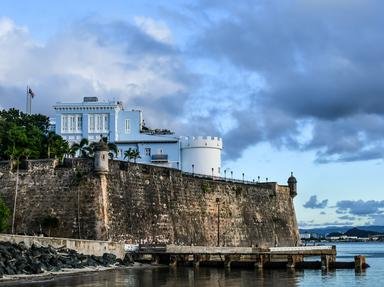
Puerto Rico. San Juan was the name of the island and Puerto Rico was the name of the capital, but later they were switched. It was named for Saint John the Baptist. San Juan was a valuable port, and forts surrounded the city.
In what year was Puerto Rico discovered by Europeans? | Puerto Rico
|
1493. Christopher Columbus landed in Puerto Rico on November 19,1493. He still didn't know he had arrived at a new continent (he thought he was in the East).
|