26. Who was chosen to command the Carthaginian army in the campaign?
From Quiz The Third Punic War
Answer:
Hasdrubal
Few Carthaginians are named in history, and those who are tend to have similar names, so this Hasdrubal should not be confused with any of the Hasdrubals who served in either of the other Punic wars (Hasdrubal Barca, Hasdrubal Gisco, Hasrdubal the Bald, Hasdrubal the Handsome, and Hasdrubal the Fat). All that is known of his life is that he had commanded the Carthaginian army defeated by the Numidians and had a wife and two sons. The fact that he was able to assume command of the defences of the city after his earlier defeat suggests that he may have held great political power at Carthage, had previous millitary experience, or both.
The Roman invasion was initially commanded by Manius Manilius. However, by the time that the city fell Scipio Amelianus had taken over. This is because Roman generals were normally also holders of a political office, and so were elected annually.
This process of replacing generals every year caused an inherent weakness in Roman warfare, every consul wanted to finish the war he was involved in before he was replaced. Consuls sometimes made rash and costly decisions to try to enhance their own reputation and political careers. It also prevented Roman commanders from gaining the kind of skill and experience that their professional Carthaginian opponents often had. However the strength of the Roman army at NCO level and its effective organisation counter acted this to a great degree.
Hannibal Barca was the great Carthaginian commander in the second Punic War, Scipio Africanus (adoptive grandfather of Scipio Amelianus) was the only Roman general to defeat him in a pitched battle. Hanno the Navigator was a great explorer who is believed to have sailed down the west African coastline founding Carthaginian colonies as he went. He is believed to have been the first man from outside sub Saharan Africa to see a gorrilla. Hanno the Great was a Carthaginian politician and general and main domestic opponent of Hannibal's father, Hamilcar Barca. We do not know how he earned his title.
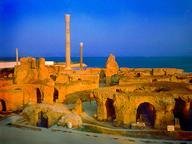
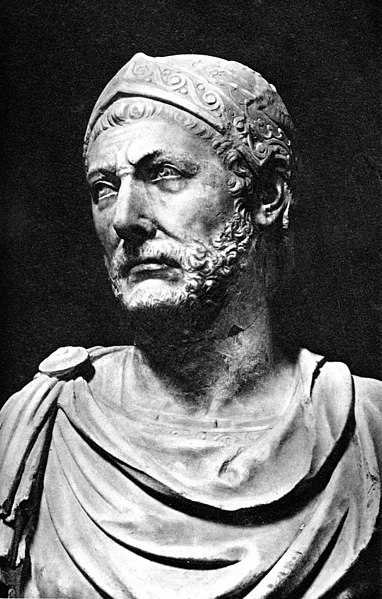 Much has been written about Hannibal's campaigns against the Romans during the Punic Wars, but this quiz will focus on his early life. What made this ancient Carthaginian the man he was, one who was so vehemently against Roman rule in his homeland?



 Quick Question
 Top 20% Rated Quiz,
 =
added recently,
=
added recently,  = Editor's Pick
 = Gold Member