6. Thimbles have a wide variety of uses, but in the simplest, original form what are thimbles used for?
From Quiz Thimbles: Not as Simple as they Seem
Answer:
To assist with sewing
Thimbles are, in the simplest form, used for helping with sewing. They are worn (usually) on the middle finger to help push needles. Thimbles also offer protection to the finger from a miss aimed needle. They come in a variety of shapes and sizes and from plain to extremely decorated. Early thimbles were made from wood, bone, leather, ivory, tin, bronze, brass, silver, gold and iron. Until the invention of thimble molds early thimbles were crafted by hand, making each one an original. John Lofting introduced the commercial production of brass thimbles in Britain in 1693. The earliest known thimble was found at Pompeii and is of Roman origin, it was a bronze thimble, and has been dated from the first century. The word origin for thimbles is in Old English thymel which means thumbstall, in Germany the word thimble means fingerhut literally meaning finger hat.
Thimbles or some form of a thimble can be found throughout history and in every society. The game Monopoly has a token that is a thimble. During the Second World War, thimbles were collected and melted down, they went towards creating hospital equipment.
Stephen Cruise, in 1997, on the corner of Richard Street and Spadina Avenue in Toronto, Ontario, created a nine foot tall thimble and buttons statue. He called this statue the "Uniform Measure/Stack" which consisted of eight buttons and a bronze thimble sitting on top. This area of Toronto had previously been the center of the garment factories. To see a picture of the statue or to read more please see http://spacing.ca/wire/2006/12/11/thimble-art-starts-to-measure-up/.
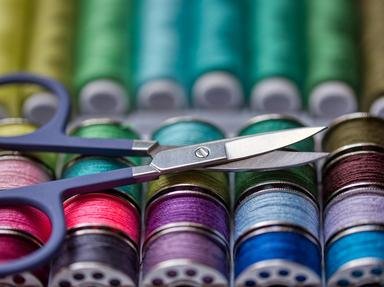

 Sewing is basically the craft of fastening or attaching objects using stitches made with a sewing needle and thread. This quiz investigates some of these, and related textile arts.
 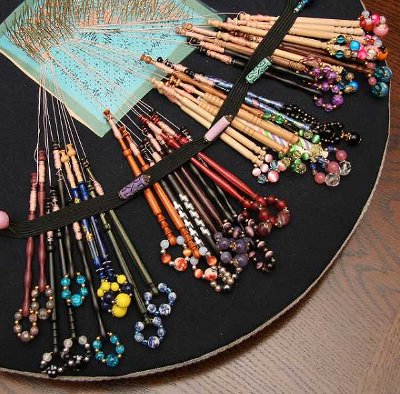 Come into my haberdashery store to find out more about these fascinating sewing and needlework essentials, old and new.
 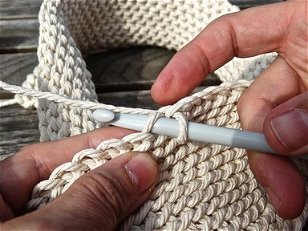 If I'm not playing or authoring on Fun Trivia these days, there is a good chance that I am crocheting. Contrary to popular belief, the craft isn't just for little old ladies anymore. Let's see what you know about the art of crochet.
 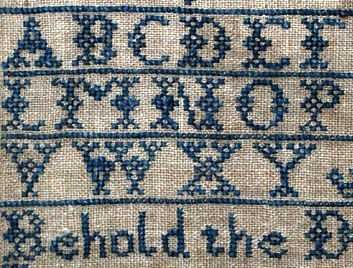 Needles and all kinds of thread and yarn have been used for centuries for making various types of cloth. You have seen this type of hand work all your life, but how much do you know about it?
  Quick Question
 = Top 5% Rated Quiz,
 Top 10% Rated Quiz,
 Top 20% Rated Quiz,
 A Well Rated Quiz
 =
added recently,
=
added recently,  = Editor's Pick
 = FunTrivia Editor
  = Gold Member
