|
|
|
Structure
Interesting Questions, Facts and Information
- There are a total of 75 general entries. We are selecting 30 for display.
|
Interesting Questions, Facts, and Information
Northanger Abbey
What does Catherine think Henry's father has done with his wife? | Northanger Abbey
|
Murdered her. The poor, fanciful creature!
Beechen Cliff. With a lovely view of the town
Because it is not a gothic as she would have hoped.
The Allens. Mrs Allen who has 'very little aquaintance in Bath'
What Castle is Catherine tempted to visit before she remembers that the outing will clash with a walking engagement she made with Miss Tilney? | Northanger Abbey
|
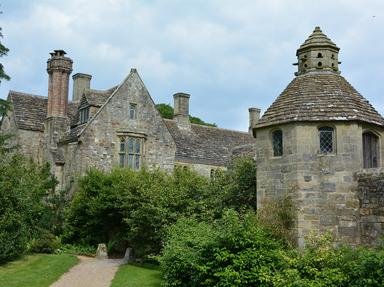
Blaize. It still exists as a perfect example of mock - gothic arcitecture
Frederick. He is an Army Captain
The Mysteries of Udolopho. Another of her novels 'The Romance of the Forest' is read by Harriet Smith in Emma.
Ann Radcliffe. Her favourite novel is 'The Mysteries of Udolpho'
How many years apart in age were Henry Tilney and Catherine at the end of the novel? | Northanger Abbey
|
8 . "To begin perfect happiness at the respective ages of twenty-six and eighteen, is to do pretty well . . ."
I hope you've enjoyed my quiz on Northanger Abbey! I'm sorry I didn't concentrate on the general themes more, but there are other quizzes doing that.
What was the date on James' letter telling Catherine that he had broken his engagement with Isabella? | Northanger Abbey
|
there wasn't one. Isabella's letter was dated "Bath, April", but James' letter had no date.
How many pounds did John Thorpe tell General Tilney that Catherine would have, upon first meeting him? | Northanger Abbey
|
Ten or fifteen thousand. " . . . and the ten or fifteen thousand pounds which her father could give her, would be a pretty addition to Mr. Allen's estate."
What time was it when Henry Tilney discovered Catherine "exploring" his mother's room? | Northanger Abbey
|
quarter past four. "It's only a quarter past four, (shewing his watch) and you are not now in Bath. No theatre, no rooms to prepare for. Half an hour at Northanger must be enough."
In which act of the play did Catherine spot Henry Tilney, after she missed her engagement with Miss Tilney and him to walk in the country? | Northanger Abbey
|
5th . "On the beginning of the fifth, however, the sudden view of Mr. Henry Tilney and his father, joining a party in the opposite box, recalled her to anxiety and distress. The stage could no longer excite genuine merriment--no longer keep her whole attention. Every other look upon an average was directed towards the opposite box; and, for the space of two entire scenes, did she thus watch Henry Tilney, without being once able to catch his eye."
Whose skeleton did Catherine feel must be behind the dreadful black veil in "The Mysteries of Udolpho"? | Northanger Abbey
|
Laurentina's. "The Mysteries of Udolpho" was written by Ann Radcliffe.
Eleanor Tilney often trusts Henry Tilney in the choice of muslin for a gown. Indeed, he payed (how many?) shillings a yard for the one he bought for her "the other day" which was "pronounced to be a prodigious bargain by every lady who saw it". And of course, is was a "true Indian muslin". How many shillings did he pay per yard? | Northanger Abbey
|
five . "Mrs Allen was quite struck by his genius".
According to Henry Tilney, "the usual style of letter-writing among women" is what? | Northanger Abbey
|
"faultless, except in three particulars.". "As far as I have had opportunity of judging, it appears to me that the usual style of letter-writing among women is faultless, except in three particulars."
"And what are they?"
"A general deficiency of subject, a total inattention to stops, and a very frequent ignorance of grammar."
From whom did Catherine learn that "Many a flower is born to blush unseen/And waste its fragrance on the desert air"? | Northanger Abbey
|
Gray. "But from fifteen to seventeen she was in training for a heroine; she read all such works as heroines must read to supply their memories with those quotations which are so serviceable and so soothing in the vicissitudes of their eventful lives".
*The filter automatically omits the word in the original quote.
Henry Tilney. After a life-time (or so it seems) for the reader, Henry eventually admits an attachment to Catherine and confesses his wishes to make her his wife; near the end of the novel.
Catherine and Henry. Catherine refused John; Isabella was led on by Captain Tilney (who never intended to marry her); thus losing her fiancé James.
He paid attentions to an engaged woman. Captain Tilney paid increasing attentions to Isabella Thorpe whilst she was engaged to James Morland. Undeniably, we are led to believe that Isabella returned these sentiments; thus putting an end to hers and James' engagement. This accomplished; Captain Tilney quitted Bath and left Isabella.
He found out she was not as wealthy as he had previously thought. John Thorpe having rather profound affections for Catherine spoke with the General at the theatre, and believing he would marry her; emphasised her wealth ten-fold. Hence the General, led by monetary-based intentions, aimed to have the 'wealthy' Catherine marry his son Henry.
No-one, she comes alone. Catherine is rejected from the Tilney household with not even a servant to accompany her part of the way home; due to the General discovering her lack of wealth after conversing with the persuasive John Thorpe.
Her father. Catherine's father suprisingly is not mentioned much in the novel; she dislikes the General due to his acquittal of her due to her small wealth; and dislikes Mr Thorpe's superior air and contradictory speech. Captain Tilney was the cause of a marriage not taking place between Isabella and Catherine's brother James.
The Thorpes. Catherine has acquaintances with The Thorpes, but did not actually dwell with them. She was at home at the beginning and end of the novel, resided with The Tilneys at both Bath and Northanger, and, of course, rested with The Allens for the majority of her stay at Bath.
|