
|
|
|
Structure
Interesting Questions, Facts and Information
- There are a total of 40 general entries. We are selecting 30 for display.
Special Topics
|
Interesting Questions, Facts, and Information
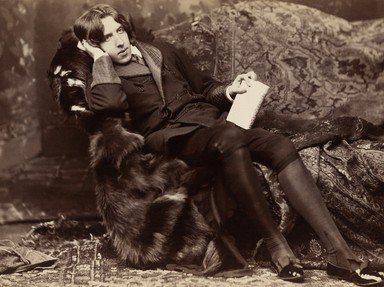
Wilde, Oscar
Jack Worthing. Jack created Ernest Worthing as his imaginary brother, and, in London, he claimed to be Ernest Worthing. When Algernon found out about Jack's double-life, he decided to use the name Ernest Worthing in order to meet Cecily. When Jack discovers who he really is, his aunt tell him that he was named after his father, Ernest John Moncrieff.
If Lady Bracknell will consent to let Jack and Gwendolen marry. He said he would not object if he were allowed to marry Gwendolen. Unfortunately, Lady Bracknell stated that Cecily and Algernon could just wait until Cecily came of age.
35. A little overprotective, don't you think?
He says there were no cucumbers in the market. Of course, we all know that Algernon had actually eaten them all, but it is a good servant who does not implicate his boss.
in a handbag at Victoria station. The Brighton Line, to be exact.
Thomas Cardew. Miss Prism is the one who actually lost Jack to begin with.
Algernon Moncrieff. Imagine the surprise of discovering you didn't need to create an imaginary brother when you had a real brother nearby the whole time?
They thought they were engaged to the same person. Both of them thought they were engaged to Ernest Worthing, yet neither of them were.
Hertfordshire. Woolton, Hertfordshire to be exact.
Algernon's imaginary friend. Bunbury, as an ailing invalid, was a terrific excuse for Algernon to get out of engagements he would rather avoid.
from the rings. This has to be the best closing paragraph ever written! "When they entered they found hanging on the wall a splendid portrait of their master as they had last seen him in all the wonder of his exquisite youth and beauty. Lying on the floor was a dead man in evening dress with a knife in his heart. He was withered, wrinkled and loathsome of visage. It was not till they had examined the rings that they recognised who it was."
"We must treat the trivial things in life seriously and the serious things with sincere and studied triviality". I don't actually know where this is from, but it's one of my favourite Wildeans ever!
Prince Charming. She calls him her Prince Charming; all very sweet, but it's hearing the name that leads her brother to Dorian later on.
poisons herself. Henry tells Dorian that she swallowed prussic acid or white lead. The strangling with hair is from Robert Browning's "Porphyria's Lover".
1891. "Lady Windemere's Fan" was published in 1892; "A Woman of No Importance" was published in 1893; and I just picked 1888 for Jack the Ripper's sake!
Lord Windermere. The others all admired it but Lord Windermere gave it to her.
Salome. It happened in 1892 because of the biblical content. The threat remained empty though.
The Importance of Being Earnest. In those days this honour was seldom awarded, but Wilde received it.
brother. The prisoner is Dmitri, Vera's brother.
His aunt Cecily. Cecily is in fact Jack's ward, but he tries to convince Algy she is his aunt so as to avoid telling him the truth about his double life.
lifelong romance. Wilde had a few of this kind of character in his plays, thought to be a reflection of himself - a sort of pompous, self-sufficient sort of chap. In the stage prompts Goring is described as "the first well dressed philosopher."
The garden, which is heaven. The Giant is finally content, after seeing the child. He lets go of his soul and the love for the child ultimately makes him good at heart. The child takes the giant to his garden, paradise, and it is a sign of the Giant's death.
The Giant sees the little boy again after many years. He becomes angry for a reason which is also a sign that tells us that the little boy is actually God. What is this reason/sign? | 'The Selfish Giant' - Oscar Wilde
|
Prints of nails on His palms and feet.. This is a strong symbol of Christianity. The nail marks on the palms are symbols that the little boy is actually God, or essentially Christ.
Years go on, and the Giant grows old and weak. He then uses a very beautiful metaphor (comparison without 'as' and 'like'). What does he compare the children to?
| 'The Selfish Giant' - Oscar Wilde
|
The flowers.. As the Giant reaches an elderly age, he grows wiser in nature. He loves the children a lot, and he discovers that watching the children at play gives him more pleasure than the other beauties of the Garden.
The little boy he'd helped did not visit him.. The Giant enjoyed watching the little children play and sometimes even joined them in their games. But he sorely missed the little boy whom he had helped climb the tree, because he had been the one to kiss him. Years passed, but there was no sign of the boy.
The little boy couldn't climb up the tree to spread happiness.. Once the crisp air of the season of spring had returned, the Giant noticed that winter still remained in one corner. There was a little boy there, who was too tiny to climb the tree there and shoo away winter. The Giant lost his selfishness and helped the boy up.
The children sneak back, so there is joy again.. Seeing the Giant's selfishness, spring refuses to visit his garden as there is no joy and happiness in it; hence, winter takes refuge there. But soon, the children sneak in, through a hole in the wall constructed by the Giant around his castle. Once the glee and the joyous air returns, so does spring.
A linnet. The Giant is full of sorrow when he looks out of his window to see only snow. Then one morning, he hears a linnet singing, and it strikes him with such pleasure, that it takes him a while to realize that spring has finally arrived at his doorstep.
While the town was visited by spring and summer, the castle continued to experience winter. Who were the four (personified) visitors to give trouble to the Giant during the season? | 'The Selfish Giant' - Oscar Wilde
|
Snow, frost, north-wind, hail.. This is another beautiful part of Wilde's novels. He gives life to all of his non-living characters.
The Cornish Ogre.. The Giant returns from his stay at his friend's place, the Cornish Ogre, and is horrified to see the children playing in his delicate garden. He chases them away and puts up a sign that says 'TRESPASSERS WILL BE PROSECUTED'.
The Giant. To imaginative people, reading the garden's description can give them sweet dreams forever. The grass is green and glistening. There are a dozen peach trees, which break into pretty blossoms in spring. The children used to play in the garden after coming back from school.
|