|
Structure
Interesting Questions, Facts and Information
- There are a total of 40 general entries. We are selecting 30 for display.
Special Topics
|
Interesting Questions, Facts, and Information
House of Stuart
High Steward. Easy when you think about it. The family, of Norman origin, was originally known as FitzAlan but in time took on the name to match their title. The title has been passed down to the heir to the British throne along with other titles the Stewarts accumulated over the years: Duke of Rothesay, Earl of Carrick, Lord of the Isles and Baron Renfrew.
Who was the husband of Marjorie Bruce, daughter of King Robert I, and the father of the first Stewart King, Robert II? | The Royal House of Stewart
|
Sir Walter Stewart. Walter was the son of James Stewart, Baron Renfrew and High Steward who had supported William Wallace and was an ally of Robert the Bruce against his rivals, the Comyn family. Walter was a staunch supporter of Robert the Bruce in his struggles against the English and proved to be one of his most able captains, taking part in the famous Battle of Bannockburn. Walter married Marjorie, then Bruce's only child, after her return from captivity in England. The couple had one child, named in honour of his maternal grandfather. Marjorie, however, died in childbirth.
John, Earl of Carrick. John was Robert's eldest son by his first wife. John was lame, following a kick from a horse and had no real desire to be king. He took the name Robert III (r.1390-1406) when he ascended the throne but left the rule of the kingdom to his brother Robert. There was some dubiety over the legality of Robert II's first marriage and therefore the legitimacy of his children by that marriage. This would cause problems for Robert II's grandson, James I, in years to come.
of starvation. David was ambitious and after a power struggle with his uncle had been given control of the government by his father. The Earl of Fife (now also Duke of Albany) was not to be defeated so easily and had David imprisoned in a dungeon where he died, it is believed of starvation, in 1402. His death left his younger brother, James, as heir to the throne.
England. In 1406 Robert III sent James, his only surviving son, to France to keep him out of the clutches of his uncle, the Duke of Albany. However, the ship was intercepted by English pirates and Prince James put in the custody of Henry IV of England. Robert III died shortly after hearing the news and Albany became Regent for his nephew, making little effort to arrange the new king's return from England. James would not return to Scotland until 1424.
Who was the lady-in-waiting to Queen Joan who suffered a broken arm trying to save James I from assassins? | The Royal House of Stewart
|
Katherine Douglas. In 1437 a plot had been hatched to kill James and place his surviving uncle, Walter, Earl of Atholl, on the throne. The assassins had removed the bar from the door of the Queen's room where the she and her ladies were entertaining the King. The assassins were heard approaching and in order to buy the King time to escape Katherine put her arm through the staples of the door. In breaking down the door the assasins broke Katherine's arm, earning her the nickname, Kate Bar-Lass. Her efforts were in vain though, James was discovered hiding in a drain and stabbed to death. The Earl of Atholl did not succeed, however, but was instead crowned with a red-hot iron crown. James I's only surviving son, the six-year old James, succeeded as James II.
Mary of Gueldres. Mary of Gueldres was a noblewoman from the Low Countries, a relation of the powerful Duke of Burgundy. She was the mother of James III (r.1460-1488) and acted as his Regent for a period. Joan Beaufort was James I's queen and the mother of James II (r.1437-1460); Margaret Tudor was the daughter of Henry VII of England and the wife of James IV (r.1488-1513), she was the mother of James V (r.1513-1542); Mary of Guise was the second wife of James V and the mother of Mary I (Mary, Queen of Scots (r.1542-1567)). Like Mary of Gueldres, all three women served as Regents for their children at various times.
James III. James married Princess Margaret, daughter of Christian I of Denmark in 1469. The Orkney and Shetland Islands which were then in the possession of the Danish crown were given as collateral for Margaret's dowry. The dowry was never paid by the hard-up Christian and so the islands passed permanently to Scotland.
Sauchieburn. James III was an unpopular king and there were many attempts to overthrow him in favour of his brother or his son. The King's army was defeated at Sauchieburn in 1488 after one such attempt and he fled, injured. A man claiming to be a priest offered to help the king but stabbed him to death instead. James IV was killed at the Battle of Flodden and James V died shortly after the Battle of Solway Moss.
James IV. Appointing close family members to high positions in the Church was relatively common at the time as a way of gaining income and gaining a powerful ally. James V appointed a number of his illegitmate sons to lucrative church posts. James IV's younger brother, James (presumably their father was keen to ensure that a James followed him on the throne by giving his two eldest sons the same name) was Archbishop of St Andrews, the highest position within the Scottish Church. The position was later given to James IV's illegitimate son, the 17 year old Alexander Stewart. Alexander died with his father at the disastrous Battle of Flodden in 1513.
Francis I. James had gone to France to find a bride but was not impressed with the choices offered to him. Instead he fell in love with Princess Madeleine, a younger daughter of King Francis I. Unfortunately, she died shortly after arriving in Scotland in 1537. James then married Mary of Guise who bore him three children: James, Arthur and Mary. Only Mary survived childhood and succeeded her father as Queen in 1542 at only 8 days old.
Mary, Queen of Scots left Scotland for France in 1548 and was later married to the Dauphin. She became Queen of France when her husband became Francis II. After Francis's death she returned to Scotland. What year was this? | The Royal House of Stewart
|
1561. Mary was 6 when she left Scotland and 19 when she returned, more French than Scottish. She was also Catholic in a newly-Protestant country. Her personal reign would last only 6 years before she was overthrown.
John Knox . Knox was a fierce Presbyterian who despised Mary's Catholicism and the fact that she was a female ruler. They had a number of fiery clashes.
After her forced abdication Mary I escaped from her prison and attempted to regain her throne. At which battle in 1568 were her forces defeated? | The Royal House of Stewart
|
Langside. The Battle of Carberry Hill took place prior to Mary's abdication and did not involve much fighting. After her forces were defeated at Langside Mary fled to England where she was imprisoned and ultimately executed by her second cousin, Queen Elizabeth of England. The site of the battle has given its name to an area of the city of Glasgow: Battlefield.
Earl of Moray. All four earls served as Regent during James's minority, including his paternal grandfather, Matthew Stuart, the Earl of Lennox. However, only James, Earl of Moray was illegitimate. He was the son of James V and therefore was the half-uncle of James VI. He served as Regent from James VI's accession in 1567 until his own assasination in 1570.
Charles I. Charles's arrogance, insistence on the Divine Right of Kings and his mishandling of the English Parliament led to the Civil War. He was captured by the Scots and handed over to the English Parliamentarians. To the horror of the Scots, Charles was put on trial and executed in 1649. His son was invited to Scotland and crowned as King of Scots at Scone in 1651 but forced to flee to Europe. He returned and was crowned as King of England in 1660.
Anne. Anne (r.1702-1714) was the daughter of James VII of Scotland and II of England (r.1685-1688), the sister of Mary II (r.1688-1694) and the sister-in-law of William II of Scotland and III of England (r.1688-1702). It was during Anne's reign that England and Scotland were united as Great Britain. All Anne's children predeceased her and so when she died in 1714 the throne passed to Georg, Elector of Hanover, a Protestant descendant of Elizabeth Stuart, daughter of James VI & I, over Anne's Catholic half-brother, James Francis Stuart.
When the House of Stuart came to the throne who was the head of the family? | House of Stuart
|
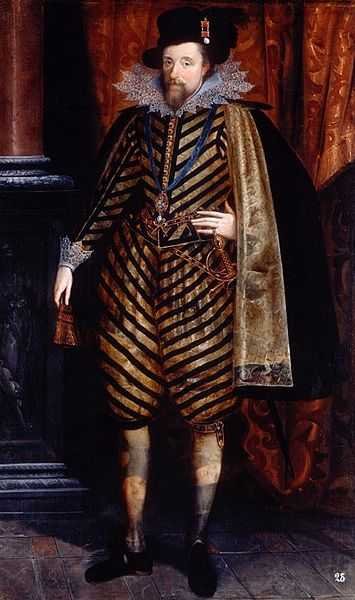
James I. James I came to the English throne upon the death of the last Tudor Monarch Queen Elizabeth I. He reigned in Scotland as James VI, hence he is sometimes known as "James VI and I".
Charles II. Charles II had 14 acknowledged illegitimate children. James II had only six illegitimate children. Anne and William III had NO illegitimate children.
Who at her coronation had 16 children, all of whom had died at birth or in infancy? | House of Stuart
|
Anne. None of these children lived long. Mary of Modena had 11 children by James II of whom only two survived into adulthood. Victoria had nine children with Prince Albert.
What is the name of the revolution that brought the end of of James II's reign? | House of Stuart
|
Glorious Revolution. Parliament and assorted grandees, fearing a Catholic on the throne, asked William of Orange (Mary II's husband) and Mary II to accept the throne. It was called "Glorious" due to the fact that there no bloodshed in England.
Anne. Anne Hyde was the daughter of Sir Edward Hyde, trusted advisor to Kings Charles I and II.
None. Despite being married, Charles and Catherine of Braganza never had children.
Duke of Monmouth. Monmouth (Charles II's illegitmate son) having caused a rebellion in south-west England, was executed. The Duke of Grafton was the illegitimate son by Lady Castlemaine. St. Albans was the illegitimate son by Nell Gwynn. Anne of Denmark was his (Monmouth's) paternal great-grandmother.
May 21, 1661. When Catherine arrived, she hardly spoke English and her hair extended so far out from the sides of her head that Charles was heard to say, "My God they brought me a bat to marry."
None. Neither of them even had any illegitimate children.
Grandson. William III was Charles I's grandson via his daughter Mary.
Sir Walter Raleigh. Having done some offense in the reign of James I, Sir Walter Raleigh was executed. The other gentlemen had died during Elizabeth's reign.
Anne. Charles I was too busy with appearances and the coming rebellion to worry about horse races. But his granddaughter Queen Anne indulged herself.
1701. The Act established Anne's heir (heiress) was the Electress Sophia of Hanover. Sophia was the granddaughter of James I and was a Protestant which made her a prime candidate. The act also more generally established the principle of the 'Protestant succession' in England.
Oliver Cromwell. Oliver Cromwell was King in all but name and upon his death the protectorate went to his son Richard who held it till the restoration.
|