|
Structure
Interesting Questions, Facts and Information
- There are a total of 90 general entries. We are selecting 30 for display.
Special Topics
|
Interesting Questions, Facts, and Information
Evolution
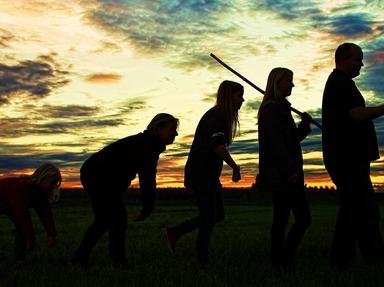
Living things are related to each other through common ancestry from earlier forms that were different from them. In order to understand the arguments over evolution, we must first understand what it is! It is a theory that encompasses all living things, not just humans.
A popular argument by creationists is that evolution could never have occurred because it is so unlikely. As one example, they have stated,' There are n! (n-factorial: n x n-1 x n-2 x...x 1) ways of an enzyme or DNA strand of n parts forming prebiotically. Since the smallest proteins have at least 100 amino acids, the chance of forming a particular enzyme prebiotically is at most 1divided by 100!, which is small enough to be disregarded.' What is wrong with this argument? | Evolution and the Creationists
|
Complex molecules don't form by chance alone. While this argument correctly demonstrates that no given protein could have come into existence all at once by pure chance, such a demonstration is irrelevant to current origin-of-life research. As Iris Fry points out, 'origin-of-life theories rely on various organizing principles, including selection mechanisms and catalysis, that are supposed to have limited and constrained the wide scope of possible prebiotic possibilities, thus constructing the scaffolding out of which the living arch eventually emerged'
Our ancestors looked bigger when they were frightened if their hair stood up. To get an example of this physiological phenomenon, one need look no further than the family cat when it's scared by a dog, puffing up and hissing. This 'piloerection' is nearly universal among mammals- chimpanzees do it too. However, in modern-day short-haired humans, the gesture has lost its original significance. If it is not an evolved response, why should we have it at all?
Our ancestors were warmer when they fluffed up their hair. Again, this is easily observable in modern-day birds and mammals. Also, again, it's easily explainable by evolution, but not by creation. As one scientist put it, 'Goosebumps were obviously 'created' to erect and 'fluff up' the hair or fur on a hairy or furry mammal ancestor, thereby improving its insulation value against the cold. Since most of us nowadays have so little body hair as to render it useless for insulation purposes, goosebumps are another vestigial reaction whose tool (fur) is no longer with us.'
They are examples of inferior design. One would expect that if humans were created by a perfect creator , in his image, as the pinnacle of his creation, that they would be examples of perfection in design. Alas, it isn't so. We, along with all other living things, have plenty of 'jury-rigged' and non-optimal designs that do the job, but lack elegance. Our aching backs and varicose veins are legacies of our four-footed ancestors. Humans are relatively recent bipeds, and our structure is still very much like that of a four-legged animal. We lack the necessary musculature to strengthen our backs, and our veins are not well-designed for the pressures that an upright stance puts on them. Female pelvises are not optimally designed for the passage of large-headed infants, as the human species has only recently undergone a tremendous spurt in brain growth.
Supposedly, all animals were originally designed as herbivores, so why were the carnivore modifications (like fangs and claws) created in the original animals?. In the supposed idyll of Eden, all animals were herbivores, implying that all were created as herbivores and were to remain so. Then, of course, Adam messed things up. But, if all the original animals were herbivores, why would they need fangs, claws, poison, webs? And why would herbivores need great speed, chemical defenses, quills or bad tastes?
Five digits per limb- either complete or vestigial. Yes, that includes whales that have five digits per flipper, bats that have five digits per wing, horses and antelopes that have vestigial remains of five digits, etc. Five digits isn't the most effective design for many of these creatures- so why should all show the remnants that are easily explained by theorizing that they all descended from a five-toed ancestor? The answer is not "Give birth to live young" because the monotreme mammals, the platypus and echidna, lay eggs.
As embryos, all mammals start out phenotypically female. Only later in development, after the nipples have formed, does a hormonal surge form male sexual structures. This would be an odd thing for a perfect creator to explain, as male nipples are not only useless, they can be dangerous (males can get breast cancer!)
Creationists claim that fossils are the remains of the living organisms that perished in Noah's Flood. The Karoo Formation in Africa contains the remains of over 800 billion vertebrate animals. If this were a true representation of how many vertebrates were killed in the flood, how many vertebrate animals would each acre of land on Earth have held at the time of the flood? | Evolution and the Creationists
|
2100. Obviously, this would be a very crowded Earth!
Alabama. Similar laws have been thrown out in all other states that had them.
What is the main argument given by scientists for why creationism should not be given 'equal time' in our science classes? | Evolution and the Creationists
|
Science is not a democratic process. We should decide which scientific theory is superior and should be used in education by its power to explain successfully, not on how popular it is. Creationism is not a science, it is a religious belief system. As such, it may have its place in a humanities class, alongside other religious belief systems, but not in a science class.
A fossil intermediate between two other fossils. Transitional fossils show the pathway of evolution from one type of animal to another. For example, Archaeopteryx was a fossil that showed characteristics of both its reptilian forebears and its avian descendants.
They show the intermediate steps in the evolution of a species. Transitional fossils document the evolution of species. For example, most people are familiar with the evolution of horses from small, multi-toed animals to large, hoofed animals. The many species in between Eohippus (now known as Hyracotherium,) the dawn horse, and Equus, the horse of today, are transitional fossils.
Creationists often criticize transitional fossils by stating that there is no proof that a given fossil is the ancestor of a given species. What is one thing that is wrong with such criticisms? | Evidence for Evolution- Transitional Fossils
|
Evolution is rarely a straight-line process; it's a bush rather than an arrow. For example, the horse family tree has many branches (see http://www.talkorigins.org/faqs/horses/horse_evol.html for a great discussion of this.) Therefore, some of the branches were indeed not direct ancestors of the modern horse. But all of the branches were part of the same family tree, and a path (including all of the transitional fossils) can be traced from the "root" of the tree to the horse of today.
One of the most exciting developments in evolutionary biology was the discoveries of Pakicetus and Ambulocetus. These fossils were clearly transitional forms in the evolution of what group of mammals? | Evidence for Evolution- Transitional Fossils
|
Whales. Pakicetus ("whale from Pakistan") was discovered in 1979. Ambulocetus ("walking whale") was discovered in 1995.
Pakicetids did not look like whales at all. They had four legs, a long tail and snout, and were about the size of a large dog. What they had in common with the whales of today was the structure of the inner ear, which was adapted for hearing underwater. The whales are the only mammals that have developed this specialization. Their descendants, the ambulocetids, had more adaptations to aquatic life and resembled a mammalian crocodile. They retained the special inner ear.
As whales continued to evolve, subsequent species became more and more perfectly adapted to aquatic life.
Creationists try to dispute the very clearly documented evolution of horses, which includes a superb series of transitional fossils, by using several arguments. Which is NOT an argument that they use? | Evidence for Evolution- Transitional Fossils
|
The shape of the eye orbit in modern horses is unique and not found in any of the animals said to be ancestral to the horse. Hyracotherium was not a hyrax (a member of an Old World family of small mammals resembling rodents, but probably related to the elephants); no modern paleontologist has even suggested that it is. Its skull, including the tooth formula (one of the most important ways of determining what family a mammal is in) is completely different from a hyrax.
The idea that fossils of Hyracotherium and later horses are found together in the strata appears to be a misreading of a book published in the 1930's, according to an extensive investigation by paleontologist Kathleen Hunt. Even if it were to occur, it is not impossible to have occurred naturally. Remember, as we've stated before, evolution is a bush, not an arrow. It's entirely possible for one branch of the bush to split off and diversify, while the root of the branch still survives.
Even modern horses have varying numbers of pairs of ribs; Arabian horses, for example, usually have one less pair than most other horse breeds.
Even a small amount of research into truly scientific sources will discredit the creationist claims, yet the same claims are made over and over (usually copied word for word from each other!) When evaluating such claims, always look for evidence- what papers or books do they cite to back their claim? Are they creationist sources or true scientific journals?
Fossil-bearing strata were often destroyed in volcanic eruptions. What is amazing is that we have found so *many* clear and beautiful examples of transitional fossils, not so few!
Fossilization is a rare process that requires exact conditions to occur. Let's discuss animal fossilization as an example. In order to fossilize, the animal must die in an area where it will be quickly buried in large amounts of mud. Note how rarely that must happen! It must also not be eaten before the mud covers it. Then, the mud must be subjected to just the right amount of pressure to become sedimentary rock.
Many animals do not fossilize well. Only hard structures, like bones, can fossilize, thus a jellyfish fossil, for example, would not be easy to find.
The vast majority of the world has not been explored for fossil-bearing strata. Most major fossil discoveries of today are made during massive excavations, such as road-building.
That legs evolved in fish long before amphibians emerged on land. The limbs of amphibians first evolved in fish that crawled along the sea floor.
The first fish on the path to amphibians, the paleoniscoids, resembled today's coelacanth, with thick fins and lungs.
The next fish, Osteolepis, had leg-like, bendable fins, and an amphibian-like skull.
The next step, the rhipidistian lobe-finned fish, had fins that resembled legs, with joints, and an even more amphibian-like skull.
The next fish, the panderichthyids , looked very amphibian-like, with legs with feet and a straight tail.
Next we have fish such as Ichthyostega, , which most people would think to be amphibians. They had legs, feet, tails and skulls that were very amphibian-like.
The next group, the labyrinthodonts, are recognized as the first amphibians. But they still had vestiges of their fish ancestry, such as some gill-like structures and a skull hinge that was found in fish. Some even had internal gills. Their feet were build like modified fish flippers with the rays serving as toes- some early amphibians had seven or eight toes per foot!
Transition from the three-chambered reptilian heart to the four-chambered mammalian heart. Hearts do not fossilize well, thus we don't have a fossil record of this transition.
Reptiles have teeth that look the same, have no roots, and regrow continuously, while mammals have the familiar canines, incisors and molars, rooted teeth, and usually 2 sets of teeth in a lifetime. Transitional fossils document the evolution of all of these characteristics. For a detailed explanation, see http://www.talkorigins.org/faqs/faq-transitional/part1b.html
"Imperfect design" is a concept that makes sense from an evolutionary perspective, but not a creationist one. Many living things have parts that seem to be suboptimal or jury-rigged, because they have evolved these parts from the "toolbox" that they had. Perhaps the most famous example of imperfect design is the giant panda's thumb. Why is it used as an example? | Evidence for Evolution- Unintelligent Design
|
It isn't a thumb at all, it's a modified wrist bone. A giant panda appears to have six digits on its front paws- the normal five claws of a carnivore plus a thumb. The thumb is, in reality, a modified sesamoid bone from the wrist.
The vegetarian giant panda evolved from carnivores, and carnivores don't need thumbs. Bamboo-stripping pandas do.
It takes a much more circuitous path than is necessary. In mammals, the recurrent laryngeal nerve runs from the vagus nerve, down the neck, into the chest, under the aorta, around a ligament in the lung, then back up to the larynx in the throat. This is clearly an inefficient design, especially in a mammal like a giraffe!
In a fish, the path of the recurrent laryngeal nerve is a straight line. As mammals evolved, the positions of the various organs changed (such as the heart moving down into the chest,) but the path of the nerve did not, and thus assumed the tortuous route that it now has.
In Arizona, there live some strange little whiptail lizards that are one of the few parthenogenic reptiles- the females can lay fertile eggs all by themselves, without males. What odd quirk, explainable through evolution, do these lizards have? | Evidence for Evolution- Unintelligent Design
|
The female lizards are much more fertile if they are courted by another female. The ancestral species of the parthenogenic whiptails is still around. In this ancestral species, the males court the females, as in most other lizard species. This courting causes the female to release hormones that boost her fertility.
Even though several species of whiptail no longer require males to lay eggs, they still require the same courtship ritual to stimulate hormone production. So the parthenogenic whiptails pair up, and one female will first assume the part of the male, then they switch roles.
Genes are wonderful things. However, much of our genome is composed of "junk DNA," and things that just don't work. One gene that doesn't work in humans is the LGGLO gene. It should produce an enzyme that allows the body to synthesize Vitamin C, necessary for our survival- but it doesn't work. How is this evidence for evolution? | Evidence for Evolution- Unintelligent Design
|
The gene also doesn't work in monkeys and apes- and it's broken in the same way in them. In most other mammals, the LGGLO gene is vital, because their diets are low in Vitamin C.
The LGGLO gene in all primates- including humans- is nonfunctional. Primates can survive with a non-functional LGGLO gene, because their diets are rich in fruits and other Vitamin C-rich foods. What is even more interesting is that the gene in every primate is rendered useless in exactly the same way- a single sequence of three amino acids is omitted.
The only explanation for this that makes sense is that the original DNA error occurred in an animal ancestral to the primates. In most animals, this error would have been fatal, but in this fruit-eating creature, the error was non-lethal, and passed on to its offspring- the ancestors of all of today's primates.
Guinea pigs also have a broken LGGLO gene- but it's broken in a completely different way.
Grow teeth. The researchers injected cells from mice into the chicken embryos. The mouse cells could not "tell" the embryo how to produce teeth, but they could "translate" any available instructions to grow teeth. The embryos grew teeth, which indicated that the genetic instructions for tooth formation were still present in the chicken embryo.
This makes sense if birds evolved from reptilian ancestors that had teeth. Indeed, the teeth formed in succeeding experiments were undifferentiated, conical teeth like those of reptiles.
Humans have quite a few instances of suboptimal design and evolutionary quirks. Like most animals, we have vestigial structures- things that evolved for a specific purpose at one point in our evolution, but are no longer useful for that purpose. What troublesome human organ is properly regarded as vestigial? | Evidence for Evolution- Unintelligent Design
|
Appendix. The often-infected appendix is a vestigial remnant of part of the cecum, a section of intestine at the junction of the small and large intestine that, in many other animals, serves as a pouch to enhance digestion of fibrous plant material. Humans have lost the capacity to digest such material, and thus this section of the digestive system has atrophied. Interestingly enough, the great apes all have the same intestinal configuration, and can also get appendicitis, just like humans!
Creationists will claim that the appendix is not vestigial because it may serve some function in the immune system (it should be noted that this has not been proven through research.) This is not an argument against evolution, as vestigial organs can serve some function- they just are no longer necessary for their original function. There is no question that the cecum is present, large, and active in many herbivorous mammals. There is equally no question (even the creationists admit this) that it is atrophied in both man and the great apes, and no longer serves its cellulose-digesting function.
For some great illustrations and discussion, see http://www.talkorigins.org/faqs/vestiges/appendix.html
From "Creation Tips" (http://www.users.bigpond.com/rdoolan/evoluwrong.html):
"The theory of evolution teaches that simple life-forms evolved into more complex life-forms, such as fish, amphibians, reptiles, birds, and mammals. There is no natural law known that could allow this to happen. The best that evolutionists can come up with to try to explain how this might have happened is to propose that it happened by mutations and natural selection.
But mutations overwhelmingly destroy genetic information and produce creatures more handicapped than the parents...And natural selection simply weeds out unfit creatures."
What is the biggest problem with these statements?
| Evidence for Evolution- Refuting Arguments
|
The explanation of mutation and natural selection is wrong. Mutations are usually neutral or beneficial in some circumstances (see Q. 9 for further discussion.)
Natural selection does not just "weed out unfit creatures." It's rather the opposite- those creatures most superbly adapted to their environment thrive and produce more offspring, and thus contribute more genes to the population.
From "Creation Tips" (http://www.users.bigpond.com/rdoolan/pests.html)
"Some plant and animal pests, and some bacteria, survive chemicals and antibiotics that are used to kill them. Isn't this evolution on a tiny time-scale?
No, because the only pests that survive are the ones that are already resistant to the chemicals. They don't evolve resistance, because they already have it. They then breed offspring with the same genetic resistance until the only ones living are those that have resistance."
What is the biggest problem with this statement?
| Evidence for Evolution- Refuting Arguments
|
What is explained *is* evolution. We are all a collection of genes. Genes are the instructions for making our bodies grow and work. Evolution acts upon genes. Evolution can be viewed as change in genetic frequency over time. If the genome of the insects changes over time, so that the genes for pesticide resistance become more common, evolution *has* occurred. This is natural selection in action.
From "Creation Tips":(http://www.users.bigpond.com/rdoolan/panda.html)
"The raccoon-like red panda... has razor-sharp claws and a vicious bite that it rarely attacks with; and it has supposedly evolved a small “sixth finger” or “pseudo-thumb” on its front paws from the wristbone. But the panda's thumb is not evidence for evolution. It gives absolutely no evidence that pandas have evolved from non-pandas... And although some pandas will eat meat, they prefer bamboo, fruit and plants. Yet we find there is no evidence their ancestors were anything but vegetarian pandas. In fact, zoologists still can't agree after more than a century on what pandas could have evolved from."
What is the biggest problem with this statement?
| Evidence for Evolution- Refuting Arguments
|
All of these (We know quite a bit about panda evolution, The sharp claws were evolved for climbing, not attacking, The teeth of red pandas are more easily explainable by evolution than by creation). In reality, the red panda is a beautiful example of evolution.
The panda started out as a carnivore, and all of its features are evolved from the available carnivore body plan. Its claws are sharp and partially retractable, like those of many other arboreal carnivores, so that it can climb well. Its teeth are those of a carnivore, but its molars have become more flattened and its incisors longer, to adapt it to its primarily vegetarian diet. One would think that if the panda were "created" a vegetarian, it would have teeth like a squirrel or other arboreal plant-eater, not teeth that are quite obviously those of a carnivore!
In reality, we know quite a bit about the evolution of pandas. The first proto-panda, Ailuaractos lufengensis, appeared about 8 million years ago. It had teeth that were very similar to today's arctoids (bears and raccoons,) and was about the size of a fox. Its descendant, Ailuropoda microta, found about 3 million years ago, had teeth that were intermediate between today's arctoids and the modern panda. About 1 million years ago, several species of animals similar to today's pandas appeared.
From "Creation Tips" (http://www.users.bigpond.com/rdoolan/birds.html):
"For a flying bird to have evolved from a non-flying reptile, as the evolution theory proposes, almost every structure in the non-flying animal would need to change. There is no living or fossil evidence for this, and much against it."
What is the biggest problem with this statement?
| Evidence for Evolution- Refuting Arguments
|
We actually have quite a bit of fossil evidence on how birds evolved from reptiles. Today's birds still show sign of their reptilian ancestry. Feathers, for example, are just modified scales- both are composed of keratin, and many birds today have scaly feet. Some birds, like penguins, even show intergradations between scales and feathers- the very edge of a penguin's wing is scaly, and between the scales and feathers are zones of featherlike scales- or scale-like feathers!
The early theropod dinosaurs like Coelophysis were the most likely ancestors of birds. They had feet like a bird's, with three toes in back and one behind, ran on their hind legs, and had hollow bones.
Later theropod dinosaurs like Oviraptor and Deinonychus, evolved breastbones similar to those in modern birds. Lisboasaurus, another theropod dinosaur, added teeth that were similar to those found in the first animals recognized as birds.
Archaeopteryx was the first fossil recognized as a bird. While it had feathers, it also had teeth and scales.
This was followed by even more fossils with predominantly more birdlike characteristics and fewer reptilian ones.
From "Creation Tips" (http://www.users.bigpond.com/rdoolan/CrabMystery.html):
"One of the most intriguing facts about crustaceans, as far as creation scientists are concerned...is that evolutionists have no idea how crustaceans could have evolved."
Is it true that evolutionists have no idea how crustaceans could have evolved? | Evidence for Evolution- Refuting Arguments
|
No. Crustaceans are arthropods, the most successful phylum of animals on the planet, that also includes everything from spiders to insects to pillbugs.
Arthropods are presumed to have the annelid worms (like earthworms) as their ancestors. Annelid worms, like insects, are segmented, and some marine annelid worms have leglike structures on their segments.
The first arthropods were worm-shaped, but had better developed legs than the annelids. Later arthropods added a harder exoskeleton. The arthropod ancestors diversified into many forms, including the crustaceans, which remained primarily aquatic.
Many scientists today are researching crustacean and other arthropod DNA to determine the relationships in this huge group of animals.
From "Scientific Evidence for Creation" (http://www.bible.ca/tracks/textbook-fraud-dawn-horse-eohippus.htm):
"We charge any school textbook with fraud and gross misrepresentation...If they fail to mention the fact that the extinct Hyracotherium (Eohippus) was almost identical in body design, feet, toes and size, to the modern living Hyrax, except for the skull and tail."
What is the biggest problem with this statement? | Evidence for Evolution- Refuting Arguments
|
The skull is by far the most important part to look at when determining if animals are related.. The claim that Hyracotherium=hyrax is rampant in creationist literature. It's also wrong.
When scientists try to determine how animals are related, the skull is absolutely the most important evidence that they examine. The most important part of the skull is the teeth. Teeth tell us many things about an animal- what it ate, for example. Animals that are closely related will have the same "tooth formula"- number of teeth in each side of the jaw, upper and lower, listed in order of incisors, canines, molars and premolars.
The tooth formula for Hyracotherium is:
3 . 1 . 4 . 3
3 . 1 . 4 . 3
The tooth formula for a hyrax is:
1 . 0 . 4 . 3
2 . 0 . 4 . 3
Not similar at all. Without similarity in the teeth, it is certain that Hyracotherium is not a hyrax.
|