
|
Structure
Interesting Questions, Facts and Information
- There are a total of 40 general entries. We are selecting 30 for display.
Special Topics
|
Interesting Questions, Facts, and Information
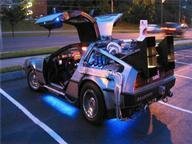
DeLorean
The Gold DeLorean cars were a promotional campaign for a popular credit card company. What company sponsored the Gold DeLoreans? | Gold DeLoreans
|
American Express. American Express sponsored the Gold DeLorean promotional campaign for its "Goldcard" holders. The Gold DeLoreans were featured in the American Express Christmas catalogue in December, 1979.
24-Karat Gold Plating. The gold on the Gold DeLoreans is actually 24-Karat Gold that has been electroplated onto the stainless steel panels, which came standard with the DeLorean cars. The cars are so detailed that the gold plating was not only featured on the stainless steel panels, but was extended to the rims and tailpipes of the cars.
How many cars were intended to be made for the Gold DeLorean promotional campaign? | Gold DeLoreans
|
100. DeLorean Motor Company made a deal with American Express to produce 100 gold-plated cars to be sold in the catalogue.
How many Gold DeLoreans were actually produced out of the original number? | Gold DeLoreans
|
2. Out of the original 100 gold cars commissioned by American Express, only two were actually made by DeLorean Motor Company.
1981. The year model for the Gold DeLoreans was 1981, and the cars came off the assembly line in late 1981. DeLorean Motor Company produced car models 1981-1983 before it went under in late 1982. DeLorean never made 1980 models, the earliest was 1981.
$85,000. One of these Gold DeLoreans cost (US) $85,000! This was a stark contrast to the Gold DeLorean's less-costly stainless steel counterpart, which cost (US) $25,000. In order to buy the gold car from American Express, there was a required (US) $10,000 deposit.
$1,000 a month. In addition to paying the 85,000 dollars for the car, one could expect their car insurance payments on the Gold DeLorean to be $1,000 a month. Repair costs on the Gold DeLoreans were also rediculous; a door ding could cost as much as (US) $24,000 to repair!
4. In addition to the original two Gold DeLoreans made by the DeLorean Motor Company in 1981, two more Gold DeLoreans were assembled in the United States using spare parts from the first two Gold DeLoreans, which brings the grand total to four Gold DeLoreans. However, the original two Gold DeLoreans are considered to be superior to the others that were assembled from the spare parts.
What were the colors of the interiors on the ORIGINAL Gold DeLoreans? | Gold DeLoreans
|
Saddle-brown & Black. The two original Gold DeLoreans that were produced had saddle-brown and black leather interiors. Black and Gray leather were standard on all DeLoreans, and saddle-brown would have been also listed as a standard interior color on later production models, had DeLorean Motor Company not gone out of business. So the 1979 prototype of the DeLorean and one of the original 1981 Gold DeLoreans are the only cars that have saddle-brown interiors.
Texas and Nevada. The two original Gold DeLoreans currently reside in Texas and Nevada. VIN 4301, the black interior Gold DeLorean sits in a display case in a bank in Snyder, Texas. The owner of this Gold DeLorean bought the gold car in 1981 for (US) $85,000 and is selling it for (US) $175,000. VIN 4300, the saddle-brown interior Gold DeLorean is on display at the National Automobile Museum as part of the Harrah Collection in Reno, Nevada. I have even had the pleasure of seeing this rare beauty in person on several occasions.
1981-1983. There were three years of production for the DeLorean DMC-12 car, which were 1981-1983. The DeLorean Motor Company originally scheduled production of the DMC-12 to begin around 1979, but delays put off assembly of the cars until 1981. The company went bankrupt in 1982, so 1983 was the last year of production for the DMC-12.
Northern Ireland. After scouting such locations as Texas and Puerto Rico; Dunmurry, Northern Ireland was chosen as the location of production for the DeLorean DMC-12. One of the reasons for the choosing of this particular site was to stimulate the dwindling economy by creating jobs. In a little over two years, DeLorean Motor Company built a state-of-the-art factory in an old peat bog in Dunmurry and began production on its cars. Although production was based in Ireland, the DMC-12 was primarily intended to be sold in the United States.
The initials "DMC" appear on the radiator grill of the DMC-12 cars, what does "DMC" stand for? | The DeLorean DMC-12
|
DeLorean Motor Company. John Z. DeLorean, the father of the DMC-12, was born in the motor capital of the world, Detroit, Michigan. He worked for nearly 20 years as a successful engineer for Chevrolet, Pontiac (DeLorean designed their GTO), and General Motors. As he envisioned building a sleek new sports car, DeLorean left his position as vice-president of General Motors in 1973. After gathering up $175 million in funds, he formed the DeLorean Motor Company in 1974.
Giugiaro. Italian car designer, Giugiaro designed the stainless steel outer shell of the DeLorean DMC-12. The type used was Grade-304 brushed stainless steel, which had a life-expectancy of 25 years. Although smudges and fingerprints were hard to get off, and waterspotting occurred after washing, DeLorean boasted that stainless steel had one advantage: "Got a scratch? Buff it out!"
One of the early wooden models of the DeLorean DMC-12 bore the initials "DSV" on the radiator grill instead of "DMC". What did DSV stand for? | The DeLorean DMC-12
|
DeLorean Safety Vehicle. The original concept for the DeLorean DMC-12 was a sleek sports car that was stylish, yet equipped with state-of-the-art safety features. And so, the DMC-12 was originally to be called the DeLorean Safety Vehicle. However, when the prototype was introduced in 1979, the name "DeLorean Safety Vehicle" was scrapped and the car was renamed the DeLorean DMC-12, with the initials "DMC" appearing on the radiator grill.
Cost of the car. The name DMC-12 was chosen for the car to reflect its inital projected cost. The "12" represents (US) $12,000; which is what the DMC-12 was originally priced to cost so it would contend directly with the Chevrolet Corvette, which at the time cost (US) $12,000. However, due to the inflation of the British pound, the actual sale price of the DMC-12 was increased to (US) $25,000.
Earlier models of the DMC-12 were slightly different than the later models. What was one of the differences between the earlier and later models? | The DeLorean DMC-12
|
Design of the hood. Although the "speeds" of the transmission and location of the battery (behind the passenger seat) remained constant on all production years of the DeLorean DMC-12, the hood design varied greatly, among other things. The early 1981 production models had a gas flap built into the front hood directly over the fuel access in the trunk, so the car could be refueled without opening the hood. But this was discontinued due to the fact that the hood with the gas flap sometimes cracked during casting, which was becoming costly. All 1981 production models also had indentations in the hood which ran parallel to the length of the car, but 1982 and 1983 models had smooth hoods. Other differences included location of the antenna, different audio systems, location of the interior clock, and the lettering "DeLorean" on the hood (which appeared mostly in the 1983 models).
5. The DeLorean came in a 5-speed manual transmission and a 3-speed automatic transmission. The price for the DMC-12 with manual transmission was (US) $25,000 while the DMC-12 with automatic transmission cost (US) $25,650.
Saddle-Brown. Black and gray leather interiors were standard on the DeLorean DMC-12. Although certain special DeLoreans, such as the prototype and one of the Gold DeLoreans had saddle-brown interior, it was not included in regular production of the cars. If the DeLorean Motor Company had continued production after 1983, saddle-brown would have been included as a standard interior for its cars.
The location of the antenna on early production models of the DMC-12 was different than in later production models. TO WHICH part of the car was the antenna relocated? | The DeLorean DMC-12
|
The rear driver side. In earlier models of the DeLorean DMC-12, the antenna electronically retracted into the body of the vehicle and it was located on the passenger side of the front hood. However, there were many complaints that this location was an eyesore, and in later models the antenna was moved to the rear driver side.
Seats. Although the DeLorean came with many power features, the seats had to be manually-adjusted. The DeLorean DMC-12 seated two people, and the 1979 prototype had seats that were flush with the rear of the car. However, the production models had a small area in the rear behind the seats that could be covered by an optional cargo net.
What other types of vehicles did DeLorean plan to make before it went out of business? | The DeLorean DMC-12
|
Busses and snowplows. DeLorean Motor Company, in addition to producing the DMC-12, also planned to produce the DMC-80 and the DMC-3700. The DMC-80 was a bus that was made for public transportation, but was never implemented. Like the DMC-12, the DMC-80 was intended to be ahead of its time. The DMC-3700 was a snowplow, also known as a snowcat; another project that was never put into production.
8,000 - 9,000. Over 6,000 cars came off the assembly line at the DeLorean Motor Company factory in 1981, and nearly 2,000 each year in 1982 and 1983. Sales were strong for the 1981 models, but sales dwindled in early 1982 and cars were stockpiled until DeLorean Motor Company went out of business later that year.
When was the first prototype of the De Lorean DMC-12 completed? | Delorean DMC-12
|
1976. It was created by William T. Collins, the former chief engineer at Pontiac.
12 months or 12,000 miles. The cars also came with an available, 5 year, 5,000 mile service contract.
How many speeds did the De Lorean's automatic transmission have? | Delorean DMC-12
|
3. The manual transmission came with 5 gears.
Dunmurry, Northern Ireland. Although Detroit is where most American cars are built, the Delorean was built a couple miles out of Belfast in a neighborhood named Dunmurry.
170 hp. John Delorean originally wanted the car to have 200 horsepower but eventually settled for 170.
How much horsepower did the De Loreans sold in the U.S. have? | Delorean DMC-12
|
130. This version had less horsepower because to be sold in the U.S., the car needed to have parts like catalytic converters to reduce emissions. This drastically dropped the horsepower.
DMC Houston announced that they will be restarting production on what day? | Delorean DMC-12
|
July 30, 2007. This will be a very limited production, only about 20 a year. Each car's base price is roughly $53,000.
All of these (Volvo, Renault, Peugeot). The engine is a V-6 PRV (Peugeot-Renault-Volvo) with a top speed closer to 140 mph rather than the 85 mph that the speedometer read. How ever, now you can buy a 140 mph speedometer at any of the dealerships or on the DMC website.
|