|
Structure
Interesting Questions, Facts and Information
- There are a total of 35 general entries. We are selecting 30 for display.
Special Topics
|
Interesting Questions, Facts, and Information
Historical Geography
In which new country could you visit the Adriatic beach resorts of Fiesa, Koper, and Piran? | New Country Quiz
|
Slovenia. These are all popular tourist destinations.
Armenia. It's only 11,506 square miles. Its capital and largest city is Yerevan.
What is the major religion of Myanmar, the country formerly known as Burma? | New Country Quiz
|
Buddhism. This southeast Asian country started calling itself Myanmar in 1989. Because the name change was made by the military regime that occupies the country, not all countries, including the US, recognize the new name.
Zaire. This central African republic was established in 1997. Its capital and largest city is Kinshasa.
The archipelago country of Vanuatu was formed in 1980. Where is this country located? | New Country Quiz
|
South Pacific. This country consists of 83 islands between New Caledonia and Fiji in the South Pacific. In 1980 it declared itself independent from the New Hebrides. Its capital, Port Vila, is located on the island of Efate.
Once called Byzantium, this city went by another well-known name before becoming what it is today. What is the present name of the city? | Historical Geography
|
Istanbul. Known as Constantinople by Westerners until 1930, Istanbul was also known as Byzantium in ancient times.
A line from the They Might Be Giants song "Istanbul (not Constantinople)" taught me that this city was once called New Amsterdam. What city am I referring to? | Historical Geography
|
New York. Officially termed the City of New York, it is more commonly referred to as New York City and more affectionately called "The Big Apple".
I first learned about Saigon in the Paul Hardcastle song - 19. "In World War II the average age of the combat soldier was 26... In Vietnam he was 19". What is Saigon called today?
Saigon | Historical Geography
|
Ho Chi Minh City. After surrendering in 1975, the Vietnamese city of Saigon was renamed, honouring the late North Vietnamese president.
Famed for clothing made from the ultra-soft hair of goats' bellies, the Anatolian city of Angora is now known by what name? | Historical Geography
|
Ankara. The home of angora goats, this is Turkey's capital city.
Sri Lanka. Ceylon became a republic in 1972 and underwent a name change to Sri Lanka, which means "splendid thing".
Toronto. In 1834, York changed its name back to Toronto, a Native Indian word for "place of meeting". Today, regions of the city pay homage to the former name which include East York and North York.
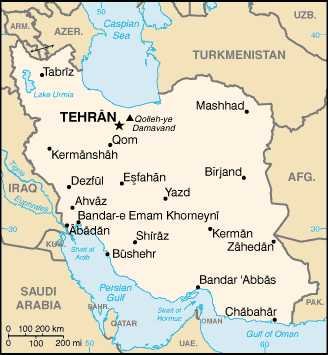
Many references in ancient history point to the Kingdom of Persia. What is the current name of this country? | Historical Geography
|
Iran. The story of Aladdin is set in Persia
This Scandinavian capital city changed its name to Christiania and then back to its original name of...what? Which city am I looking for? | Historical Geography
|
Oslo. Founded in 1048, the city of Oslo was destroyed by fire in 1624. It was rebuilt under the guidance of King Christian IV of Norway and as such, named Christiania (later Kristiania). In 1924, the city was restored to its original name of Oslo.
The name Danzig is no longer used for this European city. What is Danzig now called? | Historical Geography
|
Gdansk. Meaning disambiguation, Gdansk was Poland's largest city until 1770. The name Danzig was applied by the Germans until WWII.
The city of Reval in the north of Europe now goes by a new name. What is this city called today? | Historical Geography
|
Tallinn. Tallinn has seen many attacks and pillages over the centuries, particularly in medieval times where it was discovered to be rich in salt. The Old Town survived the huge bombings of WWII and was added to the UNESCO World Cultural Heritage list in 1997.
This Caribbean island was first discovered by Christopher Columbus on his fourth and final voyage in 1502. The French colonized the island in 1632, but the British took interest in the territory several times. Both the Treaties of Amiens and the Vienna Treaty ceded the territory back to France from England on two different occasions. Which island's territorial struggle did I just briefly describe? | A Territorial Quiz
|
Martinique. It was also on the island of Martinique that the famous eruption of Mt. Pelee occurred on May 8, 1902. The eruption killed 30,000 people and destroyed the capital of the island, St. Pierre. After the eruption, Fort-de-France became the capital; it still is today.
This British territory was combined with St. Kitts and Nevis in the early 19th century. The inhabitants of this island were very upset and tried to separate many times. Finally, in 1971, when the British military intervened in a revolt, the island was allowed separation from St. Kitts and Nevis. Which territory am I speaking of? | A Territorial Quiz
|
Anguilla. St. Kitts and Nevis achieved independence from Britain in 1983, but Anguilla still remains under British control today.
France gave up its claims in Canada for official possession of this territory with the Treaty of Paris of 1763. The territory was taken over by the British during the chaos of the French Revolution. Under the command of Victor Hughes, however, the French recovered the island. What is the name of this territory, which Columbus named after a Spanish monastery? | A Territorial Quiz
|
Guadeloupe. The full original name of the territory was Santa Maria de Guadalupe de Estremudura, as named by Columbus on his second voyage. Interestingly enough, the Swedish took control of this territory for a year, but it was returned under the Treaty of Paris of 1814.
This island group was originally colonized by Denmark in 1648. However, the British annexed some of the islands in 1672. The other islands were bought by the United States during World War I. Can you name this island group? | A Territorial Quiz
|
Virgin Islands . The United States bought the islands for $25 million, worried that the Germans might use the islands as a submarine base if Denmark were to fall to Germany in Europe. The islands remain split into the US Virgin Islands and the British Virgin Islands today.
We've spent enough time in the Caribbean. Why don't we sail to the Pacific for a while?
The islands of Wallis and Futuna requested a territorial status in 1842. Their call was answered, and the islands were annexed and placed under the dominion of New Caledonia. Which country took the islands of Wallis and Futuna under its wing? | A Territorial Quiz
|
France. In 1959, the islands voted to become an official territory of France and thereby separated from New Caledonia.
There are three main islands of the territory: Wallis, Futuna, and Alofi. There are about 20 other small islets. Only Wallis and Futuna are populated. It is said that cannibals from Futuna raided and ate all the inhabitants of Alofi. Hmm...it makes me hungry!
New Zealand took control of this island in 1901. It is noted for being one of the world's largest coral islands and has large limestone cliffs on its coasts. Can you name this plateau island? | A Territorial Quiz
|
Niue. New Zealand granted Niue self-government in 1974.
While the island usually has fair weather, it was ravaged by Cyclone Heta in January 2004, damaging structures across the entire island and killing two people.
This "festive" territory in the Indian Ocean, whose capital is plainly The Settlement, was occupied by Japan during World War II. The island was reclaimed by Australia in 1957. What is it? | A Territorial Quiz
|
Christmas Island. The island is mainly noted for its unique fauna and flora. Though the island is only 135 square kilometers in area, about 65% of the island is protected in a National Park.
The Indian Ocean Christmas Island, an Australian territory, should not be confused with the Pacific Kiritimati (formerly Christmas Island), which is part of the Republic of Kiribati. (Got that?)
This famous territory of the United States served as an important turning point of the Pacific Theatre in World War II. It is aptly named for its location between Hawaii and Japan. Can you name it? | A Territorial Quiz
|
Midway . United States codebreakers uncoded some of the Japanese code and figured that the Japanese were soon to attack Midway Island. In order to be sure, Midway sent out a decoy message saying that drinking water was low on the island due to a broken water plant. The Japanese intercepted the message and Midway's name, coded "AF" appeared again in the Japanese translation. Thus, the United States knew the Japanese military's plan and was prepared for the attack on Midway. In the resulting battle, the Japanese navy was badly beaten and lost four aircraft carriers.
This territory was discovered in 1774 by Captain James Cook. He named his find after the Scottish highlands. France settled the islands in 1853 and used the territory as a penal colony until 1904. Starting in 1985, some inhabitants have pushed for an independent state named "Kanaky." Can you name this territory? | A Territorial Quiz
|
New Caledonia. The group that pushes for independence calls itself the "Front de Libération Nationale Kanak Socialiste," or FLINKS. These conflicts led to increased autonomy granted in 1988 and 1998 with the Matignon and Noumea accords, respectively.
Now let's just cruise around the world for the last part of the quiz!
We first arrive in the Atlantic. Which territory, whose name means "Sheep Islands," lies in the North Sea and was claimed by Denmark in 1948?
| A Territorial Quiz
|
Faroe. The Faroe islands, whose capital is Torshavn, lies halfway between Iceland and Norway in the southern Norwegian Sea. The inhabitants of the islands currently look for independence from their Danish owners.
Which British Overseas territory includes such dependencies as Ascension Island and Tristan da Cunha? It is located in the South Atlantic Ocean halfway between Brazil and the continent of Africa. | A Territorial Quiz
|
St. Helena. St. Helena is most remembered for being the island of Napoleon's second banishment and his deathbed. Some think he died peacefully, but others believe that he was murdered by arsenic poisoning.
This territory was discovered by either the Russians or the Vikings in the 12th century. It was used as a base for whaling in the 17th and 18th centuries. Today, this territory boasts the northernmost inhabited point in the world. What is the territory? | A Territorial Quiz
|
Svalbard. Svalbard, which literally means "cold edge," includes only four permanent settlements. These are Barentsburg, Sveagruva, Ny Alesund, and Longyearbyen, the capital. Ny Alesund, at 79 degrees North latitude, is considered to be the world's northernmost settlement. It is home to only about 35 persons.
This territory, a volcanic island located in the Indian Ocean, was claimed by France in 1642 and was given status as an overseas department in 1946. Can you name this island territory, whose capital is Saint-Denis? | A Territorial Quiz
|
Reunion. The island of Reunion is home to Piton de la Fournaise, a shield volcano that rises to a height of 8565 feet. This volcano is very active, last erupting in August of 2004. The highest point on the island is another volcano, Piton des Neiges, which rises to a height of 10,069 feet. This volcano, however, appears to be extinct.
This group of islands lies off the African coast and is a dependency of Spain. It contains the third largest volcano on Earth, Mt. Teide; it is also the highest mountain in Spain. What is the collective name for these islands? | A Territorial Quiz
|
Canary Islands. The Canary Islands were the setting for the infamous 1977 Tenerife aviation disaster, in which 583 people died when landing KLM Flight 4805 hit the taxiing Pam Am Flight 1736. This was the worst aviation disaster until the September 11 attack on the World Trade Center in New York City.
The Canary Islands are also a place of particular interest for geologists. Some predict that if the volcano on the island of La Palma were to erupt, a chunk of the island the size of the Isle of Man in the British Isles would plunge into the ocean, creating a massive tidal wave that would ravage the Caribbean and the East Coast of the United States. Yikes!
Thanks for taking my quiz. I hope you enjoyed it. :)
|