Register New Player - Log In
Welcome to our world of fun trivia quizzes and quiz games:     New Player quiz register Play Now! trivia game
Fun Trivia : European Overseas Empires Encyclopedia FunTrivia

Structure

fun facts,factoids,info

Interesting Questions, Facts and Information

  • There are a total of 10 general entries.

Special Topics

Interesting Questions, Facts, and Information

    European Overseas Empires

    During the year 1598, the Iberian Union, which includes modern-day Spain and Portugal, controlled which East Indies dominion?European Colonial Empires (1560-1835)

      The Philippines. In 1598, the Spanish controlled the 7,000 islands in the Philippines, whose regional capital was Manila, which was settled in 1574.

    Which European nation dominated North America at the close of 1763?European Colonial Empires (1560-1835)

      Britain. When the Seven Years' War ended, France was forced to cede Canada to Great Britain, making it the largest North American colonial power.

    Which European nation dominated the Americas in 1700?European Colonial Empires (1560-1835)

      Spain. The Spanish possessions in the Americas extended from Chile to the Black Hills.

    How many continents in all did the Ottoman Empire span in 1700?European Colonial Empires (1560-1835)

      3. The Ottoman Empire spanned the continents of Africa, Europe, and Asia in 1700. At the outbreak of the Great War, however, the Ottomans only held a sliver of land in Europe, no land in Africa, and only chunks of land in the Middle East that centered around the regions of Anatolia and Mesopotamia. Today, all that remains under the banner of Turkey is Anatolia and a small part of Europe.

    In the 1750's the Seven Years' War eprupted around the world, in Europe, India, Africa, and America. What French colony, that included the settlement of St. Louis, did the British gain control of?European Colonial Empires (1560-1835)

      Senegal. Senegal was returned to France after the Napoleonic Wars ended in 1815.

    The first permanent European settlement in North America was founded in 1565 by Spain. What was its name?European Colonial Empires (1560-1835)

      St. Augustine. Today St. Augustine is known as the "Ancient City". It is located in north east Florida.

    In 1835 the Indian region of Pondicherry was under control of which European nation?European Colonial Empires (1560-1835)

      France. Although in 1835 the Indian subcontinent was dominated by the British Empire, the French controlled a small portion of east Carnatica called Pondicherry, which was formerly governed by the Maratha Confederacy. Some small portions of India were under Portuguese rule.

    In 1835 the region of Alaska in North America was under control of which European nation?European Colonial Empires (1560-1835)

      Russia. Over the years, Alaska was claimed by Spain, France, Britain, and the United States, but in 1835, the Russian Empire was the governor of the region.

    In 1700 the island of Ceylon, whose regional capital was Trincomalee, was under colonial control of what European nation?European Colonial Empires (1560-1835)

      The Netherlands. Ceylon is now known as Sri Lanka; its capital is Sri Jayawardenapura Kotte - often shortened to Kotte.

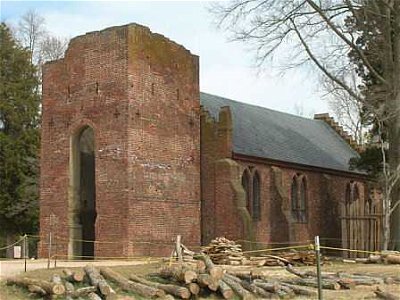
    In 1607 the first permanent British settlement was founded in the New World. It bears the name of the ruling King of England at the time. What was its name?European Colonial Empires (1560-1835)

      Jamestown. The ruling British monarch at the time was James I, after which the settlement was named. Roanoke was actually the first British settlement in America; however, it was abandoned by the Crown after the settlers there vanished, most likely from a Native American raid.

  • All content is (C)opyright 1995-2006 FunTrivia.com. Content may NOT be copied, reprinted, or distributed without our written consent. Feel free to link to any page you wish.

  • While we try to keep trivia as accurate as possible through a regular volunteer editing process, FunTrivia cannot guarantee the validity of the information found here. FunTrivia offers no professional advice, and you take all responsibility for your use of anything contained herein.
  • Feel free to send a note to a particular item's author for further details or source information; most of our authors love to hear feedback about their work.
  • See our conditions of use for details.