|
|
|
Structure
Interesting Questions, Facts and Information
- There are a total of 60 general entries. We are selecting 30 for display.
Special Topics
|
Interesting Questions, Facts, and Information
Animals in Idiom
A bug in a rug. You can feel as sick as a dog, be as gentle as a lamb and things you pick up can be as slippery as an eel , but what could be snugger than a bug in a rug?
A peacock. Owls are too wise for vanity. Parrots and buffaloes may be proud creatures too, but neither is so proud as the peacock when it spreads its tail.
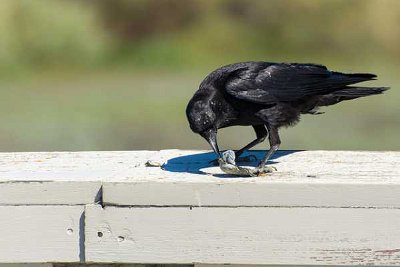
A churchmouse. Just imagine the life of a tiny little mouse in an empty, damp, cold church. Brrr. A sparrow may be a democrat among birds, but it's far too busy to think of poverty at all. Wrens are small-size birds , but they behave as if they were royalty. Crows are so ugly that they always lose in popularity polls, but they are good enough thieves not to have to be beggars.
A goose. Never saw a gaggle of giggling geese though.
As an ox. Oxen are also supposed to be dumb. Strangely enough for a nation of horselovers, in the English language horses are, in the first place, called hungry. Other languages consider horses to be strong in the first place.
As a fox. Cats are cunning too but they are sly enough not to demonstrate it too openly. What else can an eel be but wet and slippery ... and very fast. Hares ... well they are good runners but slow starters, if we can believe the Fable.
As a bear. Especially bears with sore heads can be VERY cross. Well better don't show a red rag to a bull and remember once bitten always angry is the elephant's motto. Porcupines... well it's not easy to have any dealings with them. Their quills always prick and hurt, whether they are sore or not.
To what animal does the English language compare those who swallow their food like true gluttons, fast and without good manners? | Idioms Referring To Animals
|
wolf. You can ape somebody. Ferret out some mystery. Outfox somebody who is less clever than you. But what gluttons do when they hurriedly gulp down their food, is sometimes called : to wolf it down.
the pigeons. In Flemish: 'to tie the cat on the bacon'. Or 'to put the cat near the jug of milk'.
In much political controversy we tend to divide politicians in hardliners and softies. What is the name we give to the softies? | Idioms Referring To Animals
|
doves. Wets is not an animal name. It's the name given in Mrs Thatcher's days to those Conservatives who were - for her taste - too much like softies.
lion. In Aesop's days there were not too many elephants around yet.
What type of cat played an important role in those times when corporal punishment was still a main ingredient of a good education? | Idioms Referring To Animals
|
cat o' nine tails. The cat o' nine tails was used for judicial floggings rather than in schools. A Siamese cat is a short-haired cat with pale fur, darker ears, tail and feet, and blue eyes. Stray cats are probably not ideal educators. And the Cheshire cat ... well you can read about her in 'Alice in Wonderland'
bull's. The old killing instinct is probably the real driving force behind a number of 'sports'.
crow's. The little lines around the corners of a person's face, radiating out from near the eyes.
cat. 'Catnap'! The hedgehog's 'wintersleep' is not exactly a short sleep. In Dutch the guineapig (marmot) is reputed to sleep like a top, but the English language seems to be unaware of the phenomenon. The dormouse (cp. French dormir= to sleep) is commonly thought to be a 'longsleeper'. A perpetually 'dormant' animal.
What animal's ears does a book get when as a result of a lot of use it has the pages turned down at the corners? | Idioms Referring To Animals
|
dog's ears. Elephants' ears are certainly very sizeable. In Dutch the 'dogsears' become 'donkey's ears'. If you ask me, a bit too pointed for a description of what happens to corners of pages.
dog. 'A dog's life'. Being dressed up like 'a dog's dinner' is not too nice either. Neither is 'a dog's breakfast'.
mutton. All these English "food terms" have their origins in Norman-French. Mouton,boeuf,porc,veau. They are the sort of meat you get from: sheep, cows, pigs or calves.
It was the poor Anglo-Saxon peasant who had to kill his "animals" to get the meat on to the tables of his masters the "Anglo-French" conquerors.
an illusory finding. In the phrasing of the "Shorter Oxford's Dictionary" a 'mare's nest' is a (wonderful) discovery which proves or will prove to be illusory. The phrase can also be used in the meaning of : "an unfounded suspîcion".
your goose. There is nothing wrong with cooking beef, fish or quail, - as long as you don't "boil" them as some cooks might say. Whether Dan Quayle cooked his goose is an altogether different pair of shoes.
donkey-work. A dog's life would be a "life of constant harassment or drudgery".
A parrot might be a person who mindlessly and mechanically repeats the words or actions of another. Parrot's work is in some languages the sort of studywork that does not involve much reasoning. Just memory work.
As a cat is a very skilful animal, a cat's job might be the sort of job a cat-burglar carries out: entering a house from the roof or from an upper floor.
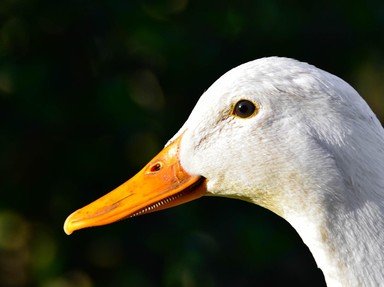
a duck. Originally it was "a duck's egg" , which is 0 or nought.
a dog in the manger. "The Dog in the Manger" is a well-known story attributed to Aesop. See Wikipedia.
When you grin fixedly and broadly, you grin like a Cheshire cat.
Cheshire cheese is a crumbly cheese of a type originally made in Cheshire.
No links with "cheese-smile", "cheese" being the word you have to notionally pronounce so that your lips adopt the position of a smile.
a cat-and-dog life. Cats and dogs are reputed not to get on well, though there seem to be exceptions. A cock-and-bull story is an incredible tale.
like a bull in a china shop. Chinashops play a role in other idioms too. Dutch has a proverb: "Caution
is the mother of the chinashop".
like a bear with a sore head. Why bears are particularly susceptible to "headaches" is not very clear
and in some languages it is "toothache" that causes the bad temper. E.g. in Dutch : to laugh like a peasant with a sore tooth. Means: to have to laugh at one's own expense.
Shutting the stable door after the horse has bolted. Pumping up your security after a major theft would seem to be a bit like shutting the stable door after the horse has bolted! (with thanks for all definitions to the Cambridge International Dictionary of Idioms!)
Looking a gift horse in the mouth. If someone tells you not to look a gift horse in the mouth, they mean that whatever chance you've been given or whatever you've been offered may not necessarily be the answer to your prayers but it would be a darn sight better than nothing!
Eat a horse. If you've eaten nothing all day - you could probably eat a horse, and in some countries they actually do still eat horses!
Leading a horse to water. If you made travel arrangements, bought tickets and even took someone to the airport, but they just wouldn't get on the plane would be leading a horse to water, and furthermore, not being able to make them drink!
Eat like a horse. Eating like a horse means you always eat a lot of food - "She eats like a horse, so I don't know how she manages to stay so thin!" If you are very hungry, you might say, "I could eat a horse!" -- but not that you are eating one.
|