Quizzes at Fun Trivia Fun Trivia | quizzes Quizzes | games Games | community People | services Services | help Help | me Me
New Player - Log In
Currently 8639 players online.   Trivia games, quizzes, and contests - FREE !     Get Started! quiz register
Fun Trivia: G : Gold Rush

Special Sub-Topic: California Gold Rush


The California gold rush began when the first traces of gold were discovered on the American River near Coloma on January 24, 1848. Who found those first gold flakes?

    James Marshall. James Marshall, whose discovery began the gold rush, never made the fortune he expected. John Sutter owned Sutter's Mill, where the first gold was found. John Marhall was a Supreme Court Justice. Joe Montana took gold out of California by throwing a football.

As prospectors rushed in, they established camps around their claims. Which one was not a gold mining camp in the Mother Lode?
    Virginia City. Virginia City, Nevada, was the center of silver mining in the Comstock Lode.

Gold was mined in many ways. Which of the following tools was NOT used in the gold mining process?
    Plaice. Plaice is a fish. Placer mining involved washing, dredging or other hydraulic methods that used tools such as pans, sluice boxes and rockers.

In the most productive year, 1852, the amount of gold brought out of the Mother Lode amounted to more than $81 million. Then yields dropped fairly regularly, as gold became more and more difficult to mine. By 1874, the gold rush was over. What was the most significant reason for its end?
    Silver was found not far away in Nevada. By 1874, it was becoming difficult and expensive to take any more gold from the Mother Lode. With the discovery of silver in Nevada's nearby Comstock Lode, miners moved on.

Bandits preyed on gold miners from the very beginning. Legend has it that one of the most famous held up 28 stagecoaches with an unloaded gun and always said "Please" when taking people's belongings. Who was this famous bandit?
    Black Bart. Charles Bolton, a.k.a. Black Bart, was a self-styled highwayman and poet who wasn't captured until 1883. Juaquin Murietta has sometimes been romanticized as the Robin Hood bandit of the period.

Several famous authors visited the gold rush country and wrote about it. This author of "The Outcasts of Poker Flat" has been described as too much of a dandy for the gold fields, with a fondness for canes and patent leather shoes. He described the mining camps as "ugly, unwashed, vulgar and lawless."
    Bret Harte. Bret Harte was the dandy who found the mining camps so distasteful. He also wrote "The Luck of Roaring Camp" and other stories of the gold rush. Mark Twain, less of a dandy in those early days, wrote "The Celebrated Jumping Frog of Calaveras County." Bat Masterson was a bit later. He ended his days as a sports writer in New York City. Jack London wrote of the Klondike gold rush.

A miner who had just struck it rich, walked into a restaurant and ordered the most expensive meal the cook could make. He was served an omelette of eggs, bacon and oysters, all ingredients hard to get in the gold rush country. The dish came to be known as Hangtown Fry. Which town was called Hangtown?
    Placerville. In the early days of the gold rush, robberies and murders plagued the mining towns. After one such crime, a citizens' jury took justice into their own hands and hanged the three accused from a white oak tree. The name Hangtown was quickly attached to the town now called Placerville.

Men with money to spend wanted to be entertained. Some of the best known entertainers from the United States and Europe traveled to California. Some say one mining town was named for a singer called the "Swedish Nightingale." What was her name?
    Jenny Lind. There is some doubt if the town of Jenny Lind was really named for Swedish singer. She toured the U.S. in 1850-1852 but never got to the gold country. Lola Montez was a Spanish dancer of the time. Carlotta Crabtree was a popular actress who left a huge fortune when she died. Part of her money financed Carlotta's Fountain, which still stands in San Francisco. Mae West was an early star of Hollywood movies.

The father of this early twentieth-century tycoon used money from the Sheep Ranch Gold Mine near Murphy's to set his son up in business.
    William Randolph Hearst. George Hearst owned a couple of small newspapers. His son William Randolph took over the San Francisco Examiner and developed what has been called the most powerful newspaper chain ever in the United States.

Unfortunately, the mining camps of the Mother Lode all became ghost towns. Nothing is now left from the Gold Rush Days.
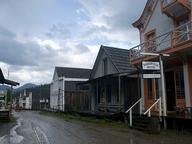
    f. There are many places you and your family can immerse yourself in Gold Rush History: Columbia State Historic Park, north of Sonora, and Marshall Gold Discovery State Historic Park in Coloma, to name a couple.


Did you find these entries particularly interesting, or do you have comments / corrections to make? Let the author know!

  • Send the author a thank you or compliment
  • Submit a correction