FREE! Click here to
Join FunTrivia. Thousands of games, quizzes, and lots more!

Mixed Animal Trivia Questions and Answers
Fun Facts & Interesting Information
Fun Trivia Question Usage
You are welcome to use the questions in this section for non-commerical purposes: quizzing friends/coworkers, classrooms, newsletters, trivia nights, events, etc. Questions may
not be used for websites or in apps, and may not be resold. You use the questions at your own risk, and FunTrivia is not responsible for errors, etc in the content.
Please
link to or
credit FunTrivia textually (http://www.funtrivia.com) if you use any of these questions. Thanks!
Visit our
Trivia Question Store to buy question packs for commercial or for-profit ventures.
1. Labradors are one of the most common pets. What type of a dog is a labrador?
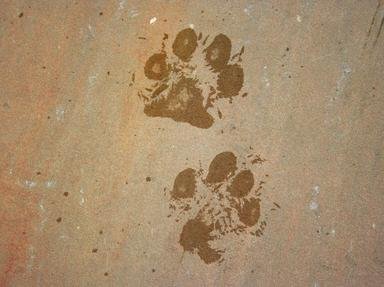
Answer: Retriever
Interesting Information:Labradors are classified under retrievers. Other retrievers are the golden retrievers, Newfoundland, poodle, etc. Retrievers, alongside setters, pointers and waterdogs, come under the gun dog group of dogs. They were bred to assist hunting dogs in retrieving game.
Question by player Saleo
Difficulty: Very Easy.
From Quiz: FunTrivia Animals Mix: Vol 14
Some incorrect choices:
Spaniel, Hound, Terrier
2. Can you identify the whale from the list?
Answer: Beluga
Interesting Information:Whales are cetaceans, a group which also includes dolphins and porpoises. They include the world's largest marine mammals. Whales breathe through a blowhole, although baleen whales have two blowholes.
Question by player suomy
Difficulty: Very Easy.
From Quiz: FunTrivia Animals Mix: Vol 14
Some incorrect choices:
Dugong, Manatee, Walrus
3. The bite of which type of parasite can cause what is known as Lyme disease?
Answer: A tick
Interesting Information:Lyme Disease is caused by a bacteria and transferred to humans by being bitten by infected ticks. A tick is a parasite of the arachnid family that lives on the blood of animals. Symptoms of Lyme disease include a rash, headaches and fatigue. It causes inflammation of major organs like the brain, heart, eyes, liver, lungs etc. It can be cured if treated early on but there are often complications if that is not the case.
Question by player Spontini
Difficulty: Very Easy.
From Quiz: FunTrivia Animals Mix: Vol 13
Some incorrect choices:
A tock, A beetle, A fly
4. Why would I wet a piece of white paper and place it under my pet while rubbing his fur?
Answer: To check for fleas
Interesting Information:When fleas bite our pets they leave small drops of blood behind. When you rub your pets fur the small dried drops will fall on the white paper and show up as dark specks on the wet paper.
Question by player Zepper
Difficulty: Very Easy.
From Quiz: FunTrivia Animals Mix: Vol 12
Some incorrect choices:
To irritate him, To test for worms, To cool his feet
5. What creature causes the most human deaths worldwide yearly?
Answer: Mosquito
Interesting Information:The mosquito transmits malaria carrying parasites with its bite that kills hundreds of thousands of people yearly worldwide. This number is greater than the mortality rate inflicted by the three other possible answers combined.
Question by player Toneman52
Difficulty: Very Easy.
From Quiz: FunTrivia Animals Mix: Vol 10
Some incorrect choices:
Killer bees, Poisonous snakes, Sharks
6. How do the small treefrogs in the rainforest ascend trees?
Answer: Sticky toes help them climb.
Interesting Information:Small treefrogs live in the rainforest and have sticky toes that help them climb. Those sticky toe pads are self-cleaning too; the pads have hexagonal patterns so some parts of the pads make contact with the tree surface and create friction, while the slots spread the mucus (the sticky stuff) throughout the pad.
Question by player Billkozy
Difficulty: Very Easy.
From Quiz: FunTrivia Animals Mix: Vol 8
Some incorrect choices:
Limbs with skin-flaps that act as wings., Tongues that latch onto branches., Riding on the backs of birds.
7. The Parawakan chicken strain is found in which Asian country?
Answer: Philippines
Interesting Information:The Parawakan can be found in the island of Palawan. It is considered as the largest native chicken strain in the Philippines with weight averaging 5 kilos. In the Philippines, Parawakan cocks are used in "Tampur", a lengthy type of cockfighting.
Question by player pomophagist44
Difficulty: Very Easy.
From Quiz: FunTrivia Animals Mix: Vol 5
Some incorrect choices:
Argentina, Senegal, Italy
8. What bird is NOT mostly red in color?
Answer: Mourning Dove
Interesting Information:Most doves are white but the mourning dove is a light grey and brown coloring. The birds are usually about twelve inches long and weigh a slight four to six ounces. The males do have a slight light pink coloring, but not red.
Question by player linkan
Difficulty: Very Easy.
From Quiz: FunTrivia Animals Mix: Vol 4
Some incorrect choices:
Northern Cardinal, Scarlet Tanager, Vermilion Flycatcher
9. Resembling a little puffball, the pomapoo is a hybrid dog breed created by crossing the poodle with which other breed?
Answer: Pomeranian
Interesting Information:Take the first three letters each from "Pomeranian" and "poodle", and place an "a" in-between, and you get "pomapoo". Bear in mind that these mixes (like Labradoodle, cockapoo, etc.), as lovable as they are, are not actually breeds. Nor are they really hybrids because they are all of the same species. They are pedigreed but mixed-breed dogs; they are just like the doggie you found at the shelter except for the detailed family history and the expense.
Question by player gracious1
Difficulty: Very Easy.
From Quiz: FunTrivia Animals Mix: Vol 2
Some incorrect choices:
Brussels griffon, Dalmatian, Basset hound
10. The Science Daily online magazine announced in March 2018, that Austrian scientists have found a way to make paper from which large animal's dung?
Answer: Elephant
Interesting Information:Alexander Bismarck, Ph.D., from the University of Vienna in Austria, along with three students, decided to carry out experiments on making paper from animal dung because of the excellent source of cellulose this end product contains. Initially their experiments were on goat manure before moving on to try that produced from other animals such as cows and horses - and elephants. It was concluded that "less energy and fewer chemicals" were needed to convert this readily available cellulose source into paper than that from harvested wood. In countries with few trees, this would be particularly economical.
The manure is initially treated with sodium hydroxide to remove organic polymers in the tissues of the grass and other crops consumed by the animals. This in turn is re-used as fuel or fertiliser. The remaining purified cellulose is then ground down to make the minute fibres needed to create paper, a much easier process than grinding wood. This paper can also be used to clean wastewater before it is recycled back into use. Biogas can be produced from the manure as well. Gas from gas, you could say.
Difficulty: Very Easy.
From Quiz: Interesting Animal Facts
Some incorrect choices:
Cat, Dog, Gorilla
11. There are loads of birds in the finch family, but which one these is fictitious?
Answer: Sooty finch
Interesting Information:The goldfinch, hawfinch and citril finch are all common in Europe, but there isn't a sooty finch. There are, however, a few species of birds with the sooty moniker, such as a tern, a shearwater and an albatross.
Difficulty: Hard.
From Quiz: Which One Doesn't Exist?
Some incorrect choices:
Citril finch, Goldfinch, Hawfinch
12. All six subspecies of this striped cat are considered endangered. What is this animal that has been responsible for more human deaths by direct attack than any other wild mammal?
Answer: Tiger
Interesting Information:Tigers have killed, and usually dined on, an estimated 373,000 humans between 1800 and 2009. The deadliest single tiger is known as "The Champawat Tigress". After being shot and wounded, she was unable to hunt her usual prey and began hunting humans. She killed 436 Nepalese people from about 1890 until 1911, when she was shot and killed.
Difficulty: Easy.
From Quiz: Animals That Eat Humans
Some incorrect choices:
Lion, Leopard, Cheetah
13. What critter might you see washing its "hands" in a stream? You may recognize it more easily by the bandit mask on its face.
Answer: Raccoon
Interesting Information:The raccoon is a medium sized mammal of North America, but isn't necessarily nocturnal. They do prefer to move about more in the cover of darkness, but can and have been seen out and about during the day. They are easily recognizable by the black facial fur that creates a bandit-like mask around their eyes. Coons also have agile front paws, "hands", which they make great use of. This is uncommon in the animal world but not exclusive to the raccoon. These critters are highly intelligent and quite skilled at problem solving, especially when it comes to getting at food sources.
Difficulty: Very Easy.
From Quiz: Creepy Creatures Lurking in the Dark of Night
Some incorrect choices:
Skunk, Rat, Beaver
14. Aardvarks are often confused with anteaters, but the two animals are not the same, although both eat insects. Which set of qualities belongs to the aardvark?
Answer: Nocturnal, native to Africa, lives in underground burrows
Interesting Information:Aardvarks are found on the African continent, and although there is some evidence in recent years that their numbers are decreasing, are not on the endangered species list. The name comes from a Dutch/Afrikaans word meaning "earth pig". Their diet consists primarily of ants and termites although, interestingly, they have a symbiotic relationship with a type of cucumber, called, reasonably enough, the aardvark cucumber. They ingest the fruit; the fertility of the seed is enhanced during its time in the aardvark's intestine, and the animal helps to spread the fruit by defecating seeds in various places. These then take root and form new plants.
Difficulty: Hard.
From Quiz: A is for Animal
Some incorrect choices:
Lives exclusively on ants, lays eggs, hairless, Lives above ground, eats ant eggs but not ants, found only in Asia, Diurnal, short ears, critically endangered
15. Name the subfamily that includes the milk snake.
Answer: Colubrinae
Interesting Information:Some other members of this subfamily are the eastern indigo snake and Japanese vine snakes (common also in China, India, Sri Lanka and other parts of Southeast Asia). Milk snakes are divided into 24 subspecies and represent no danger for human beings.
Difficulty: Hard.
From Quiz: Animals - Now and Then
Some incorrect choices:
Erycinae, Causinae, Azemiopinae
16. In the 2014 Top Ten heaviest land mammals, the gorilla is No. 10, the moose is No. 6 and the African elephant is the heaviest. Which land mammal, which spends a lot of time in the water, is at No.2?
Answer: Hippopotamus
Interesting Information:The African elephant is the longest quadruped as well as the heaviest land mammal. The gorilla (at No. 10) is about 1/30th the weight of the elephant.
Difficulty: Very Easy.
From Quiz: Top Ten Top Tens
Some incorrect choices:
Giraffe, Indian Rhinoceros, American buffalo
17. Olympias, the mother of Alexander the Great, is said to have had what creature as a companion in her bed? (Hint: it belonged to the Order Squamata).
Answer: Snake
Interesting Information:Plutarch in his "Life of Alexander" relates that Olympias had been initiated into the rites of Dionysos and Orpheus, which involved snake-handling, and that Philip, her husband, once saw her in bed with a large serpent. This snake was later identified as the god Zeus Ammon in serpent form, who was considered to be the "real" father of Alexander. Unlike Appalachian snake-handling which uses venomous snakes, these creatures were tame and non-venomous.
Difficulty: Hard.
From Quiz: Animals in the Ancient World
Some incorrect choices:
Pet dog, Golden eagle, Lion cub
18. An inhabitant of coniferous woodland, this small European mammal has a dark brown coat with a cream patch of fur at the throat.
Answer: pine marten
Interesting Information:In the United Kingdom, the pine marten is credited with keeping the population of invasive grey squirrels in check, whilst the native red squirrel population appears to have been unaffected. This is thought to be because the grey squirrel spends more time on the forest floor where the sprightly martens like to hunt.
Difficulty: Average.
From Quiz: Wild Animals of the World
Some incorrect choices:
sea otter, common genet, eastern quoll
19. Quadruped - according to Rudyard Kipling it looks like a cross between a hedgehog and a tortoise - lives in the Americas - some can curl up in defence. Which animal am I describing?
Answer: armadillo
Interesting Information:While species of the "little armoured one" (English translation of the Spanish name, armadillo) can be found all over South and Central America, they have been found as far north as Nebraska and Indiana in the United States.
The armadillo is a mammal whose species range in size from about 15cm long (the pink fairy armadillo) to 150cm long (the giant armadillo). The back, head, tail, and upper parts of the short limbs are covered with flexible overlapping scales to offer some protection from predators, but there is only one species (the South American three-banded armadillo) that relies on curling up into a ball for protection - most other armadillos either dig to escape, or else hide in thorny vegetation.
"The Beginning of the Armadillos" is one of Rudyard Kipling's "Just So Stories" which gives a humorous explanation of how armadillos came into existence.
The aardwolf is a member of the hyena family and is found in Southern and Eastern Africa; the Arctic skua is a bird found in the Northern Hemisphere; the aye-aye is a species of lemur found in Madagascar.
Difficulty: Very Easy.
From Quiz: Armadillo Outta Here!
Some incorrect choices:
arctic skua, aye-aye, aardwolf
20. Camels belong to the genus "Camelus" of the family "Camelidae" and the order of "Artiodactyla". What is the common name for an artiodactyl?
Answer: Even-toed ungulate
Interesting Information:Being an even-toed ungulate, camels have two toes on each foot. The feet have adapted to life in sandy deserts by having a broad, flat underside.
Difficulty: Hard.
From Quiz: Things that go Hump in the Desert
Some incorrect choices:
Odd-toed ungulate, Horses, Cattle
21. In the wake of the December 26, 2004, Indian Ocean tsunami a baby hippopotamus was left orphaned but, at a wildlife park, adopted a surprising animal as his mother. What kind of animal was it?
Answer: Tortoise
Interesting Information:The young hippo, named Owen, was put in an enclosure with various animals including a 130 year old male tortoise, Mzee. Conservationists think that Owen was attracted by Mzee's grey rounded shape which reminded him of his mother. Mzee had never shown any desire to be social with other animals and at first rejected the baby's efforts to befriend him but Owen persisted. In the next year they bonded closely and became inseparable. They wallowed in the mud together, slept side by side and the little hippo even chose to eat the same food as Mzee, rather than the traditional hippo diet. Tortoises are not noted as social animals, but this one nudged Owen to go for walks, initiated play in the water, and even stretched his neck out so his little friend could give him a lick. They even devised a form of communication using sounds different from their normal vocalisations.
Difficulty: Hard.
From Quiz: Fascinating Animal Behaviour
Some incorrect choices:
Gorilla, Zebra, Lion
22. What kind of animal is a terrapin?
Answer: turtle
Interesting Information:A terrapin is a small turtle native to the southern and eastern areas of North America. Their numbers have decreased over the last 200 years because they are considered a delicacy. Strangely, Prohibition in the early part of the 20th century may have been their saving grace, in that alcohol was considered vital to a good turtle stew. Most terrapins are found today in the mangrove swamps of Florida where they are a protected species. Other than man, the animal that causes the most threat to terrapins is the raccoon who will scavenge terrapin nests and will also spend the long time required to kill an adult terrapin.
Difficulty: Hard.
From Quiz: Just Another Critter Quiz
Some incorrect choices:
bird, antelope, spider
23. Taking measurements from observing animals is central to studying their behavior. What is the name given to the time period between the stimulus and the first occurrence of a certain behavior?
Answer: Latency
Interesting Information:Latency is a measurement that can be used to determine the "readiness" of an animal to perform a particular type of behavior. An example would be determining hunger in a dog by measuring the latency between presenting the food and when the dog begins to eat.
Frequency is the measure of how many times a behavior is performed over a period of time - an example would be how many times a chick pecked per minute.
Duration is the measure of how long a certain behavior lasts, for example if a chimpanzee is grooming, this could vary from a quick brush at the arm to a prolonged cleaning of the fur over a few minutes.
Finally, intensity measures how vigorous or intense a behavior is. This is the most difficult to measure - for example, if a dog is displaying territorial defense, how do you measure the intensity? Normally, a small scale is used, such as 0-5. 0 means no reaction, 1 is mild, 5 is very aggressive.
Difficulty: Hard.
From Quiz: Animal Behavior
Some incorrect choices:
Frequency, Duration, Intensity
24. This mammal lives in the coastal forests of eastern Brazil, is an herbivore and spends most of its life hanging upside down in a tree. Which animal is this?
Answer: three-toed sloth
Interesting Information:Three-toed sloths only descend to the ground once or twice a week, usually to move to another tree, and their fur tends to be tinged green from the algae that grows in it. Because of their inactivity, three-toed sloths have an average body temperature of only 75 degrees Fahrenheit, although their temperature can vary depending on climate and activity level.
Difficulty: Hard.
From Quiz: I'm Feeling Slothful
Some incorrect choices:
white-eared opossum, northern tamandua, southern two-toed sloth
25. Modern zoo enclosures incorporate electric barriers to keep animals in their enclosures and to protect foliage, but some apes have discovered a way to circumvent these measures by doing what?
Answer: Creating insulation
Interesting Information:At the Woodland Park zoo the keepers placed electrified barriers around trees to protect them in the gorilla enclosure. However, a female gorilla, Jumoke, created insulation by gathering and placing tree logs and limbs on the hot wire to avoid being shocked while gaining access to the trees.
Also, Joseph, an orangutan, at the Kansas City Zoo created insulation by placing a rubber tire on an electric barrier, which then allowed him to escape by climbing out.
Difficulty: Hard.
From Quiz: Hairy Houdinis
Some incorrect choices:
Jumping over the electric barrier, Unplugging the electric cord, Building a pair of stilts
26. A millipede is more closely related to what animal?
Answer: Grasshopper
Interesting Information:Millipedes and grasshoppers are both arthropods, having hard exoskeletons and jointed appendages. Earthworms and leeches, both segmented worms, are classified in Phylum Annelida. Snakes, having backbones, are chordates, like us.
Difficulty: Hard.
From Quiz: Animal Relatives
Some incorrect choices:
Snake, Earthworm, Leech
27. What types of insects are named pipevine swallowtails, viceroys, juniper hairstreaks and monarchs?
Answer: Butterflies
Interesting Information:Butterflies are beautiful insects. There are thousands of butterfly species in the world. Pipevine swallowtails feed on the pipevine plants; viceroys feed on the willow plants; monarchs feed on the milkweed plants; and juniper hairstreaks feed on the Eastern Red cedar plants.
Question by player milliesmall
Difficulty: Very Easy.
From Quiz: FunTrivia Animals Mix: Vol 14
Some incorrect choices:
Bees, Beetles, Wasps
28. What highly intelligent cephalopod mollusk has a large head, several arms with suction cups, no skeleton and has been observed using tools for protection?
Answer: Octopus
Interesting Information:The octopus is a very intelligent mollusk, with three hearts and eight arms. Its ability to perform several tasks has been observed by scientists which includes opening up bottles and using empty clam shells as shields from predators. It can also squeeze itself in small spaces and swim very fast to avoid getting caught.
Question by player milliesmall
Difficulty: Very Easy.
From Quiz: FunTrivia Animals Mix: Vol 13
Some incorrect choices:
Shrimp, Clam, Starfish
29. When a rabbit is afraid or angry, what might it do?
Answer: Thump its feet
Interesting Information:Some rabbits turn everything over in its cage when throwing a tantrum, while others thump their feet. Some rabbits will do both.
Question by player pinkbunny98
Difficulty: Very Easy.
From Quiz: FunTrivia Animals Mix: Vol 12
Some incorrect choices:
Nothing, Yell, Talk
30. Which nocturnal mammal has over 900 different species?
Answer: Bats
Interesting Information:There are over 900 species of bats (some sources say that there are more than 1,100). This means that one out of every five mammalian species is a bat.
Question by player timence
Difficulty: Very Easy.
From Quiz: FunTrivia Animals Mix: Vol 10
Some incorrect choices:
Cats, Possums, Dingoes
31. The prairie wolf or the American jackal are alternate names for which animal of Central and North America, whose Latin name is Canis latrans?
Answer: Coyote
Interesting Information:Coyotes can be found as far south as Panama and as far north as Alaska. Their Latin name of Canis latrans literally means barking dog. Coyotes have become largely nocturnal animals, owing to their trepidation where humans are concerned. They tend to move around in small kindred packs but generally hunt in pairs. It is rare, though not unheard of, for a coyote to attack a human. They are, however, a major threat to livestock and domestic pets.
Question by player nickdrew55
Difficulty: Very Easy.
From Quiz: FunTrivia Animals Mix: Vol 8
Some incorrect choices:
Hyena, Dingo, Puma
32. What beautiful insect is known for its migration from Mexico to Canada during spring and summer and back to Mexico again in the autumn?
Answer: Monarch butterfly
Interesting Information:Unable to overwinter as larvae or pupae like other butterflies, the monarch is the only butterfly known to make a two-way seasonal migration in the same way birds do. There are two populations in North America, Eastern and Western. The monarch butterflies of the Eastern population (east of the Rocky Mountains, that is) spend the winter in Mexico, then migrate into Texas and the Southern Plains states. From there they advance toward the Great Lakes, and by early summer they reach Canada and northeastern United States. Beginning in September, the butterflies go back the way they came. Although you may find monarch butterflies in Hawaii, Puerto Rico, or even New Zealand, they probably arrived there blown by storms or transported by humans, and they are not part of this annual migration.
Question by player gracious1
Difficulty: Very Easy.
From Quiz: FunTrivia Animals Mix: Vol 7
Some incorrect choices:
Army ant, Bumblebee , Cockroach
33. This very large tortoise shares its name with the islands where it lives. What is its name?
Answer: Galapagos
Interesting Information:Spaniards discovered the Galapagos Islands in the 16th century. Galápago is the Spanish word for tortoise. The Galapagos tortoise can weigh more than 400 kg./880 lbs. and be more than 1.8 meters/5.9 feet long. All the other choices live in the ocean, so they are known as turtles - not tortoises.
Question by player ELJ1
Difficulty: Very Easy.
From Quiz: FunTrivia Animals Mix: Vol 5
Some incorrect choices:
leatherback, hawksbill, Kemp's ridley
34. The moniker "timber wolf" is a popular nickname. What is this wild canine's actual species name?
Answer: Gray wolf
Interesting Information:The gray wolf is the species most people commonly associate with wolf characteristics in general. These beautiful creatures actually come in many different colors, live mainly in North America, and usually mate for life. Majestic AND faithful!
Question by player bombshell11
Difficulty: Easy.
From Quiz: FunTrivia Animals Mix: Vol 4
Some incorrect choices:
Arctic wolf, Indian wolf, Red wolf
35. Rockhopper, emperor and king are all varieties of which flightless bird?
Answer: Penguin
Interesting Information:The emperor penguin is the largest species of penguin, with adults typically reaching 120 centimetres in height. The king penguin is the second largest species, at an average of 85 centimetres in height, whereas rockhoppers are much smaller, averaging 50 centimetres. Penguins are only native to the southern hemisphere.
Question by player TheLastEnemy
Difficulty: Very Easy.
From Quiz: FunTrivia Animals Mix: Vol 3
Some incorrect choices:
Emu, Ostrich, Kiwi
36. What is the frightening nickname of osedax, a deep-sea worm that lives on whale carcasses?
Answer: Zombie worm
Interesting Information:Discovered in 2002, 3000 meters deep off California on the decaying bone of a grey whale, osedax, which means "bone-eater" in Latin, is a small worm (2 to 7 cm). It digs through whale bones by secreting an acid from its skin that dissolves the bone so it can reach the lipids on which it feeds. Osedax lacks a mouth or stomach, so it digests the proteins and fats found within the bone with the help of bacteria.
Question by player chabenao1
Difficulty: Very Easy.
From Quiz: FunTrivia Animals Mix: Vol 2
Some incorrect choices:
Grey worm, Night worm, Naked worm
37. Just as you come out from the den of the tigons, you are able to see an animal Mark describes as the cross-breed of a polar bear and a grizzly bear. What name best describes the creature you have just seen?
Answer: Pizzly bear
Interesting Information:The existence of these creatures was confirmed in 2006 when the DNA of a strange looking bear was tested. It is also called the grolar bear, grizzlar bear or nanulak. Just like in the case of the tigon, these hybrids are mostly artificially cross-bred, although some naturally occur.
Difficulty: Easy.
From Quiz: The Quizzyland Crossbreed Reservation!
Some incorrect choices:
Wizzly bear, Tickly bear, Teddy bear
38. In 19th century Romania, the Ursari people trained brown bears to carry out which medical practice?
Answer: Treat bad backs
Interesting Information:The Ursari people from Romania are traditional nomads, often referred to as "bear handlers". They earn their living by delivering busking type performances in various places, using trained dancing brown bears, and sometimes trained monkeys as well. Once roaming widely throughout Romania, the Ursari tend to live in more permanent settlements in the 21st century, but their cultural beliefs and practices continue on in various parts of Romania.
Still practiced in the 21st century Romania even today, not only do the Ursari sell bear fat to cure rheumatism and arthritic disorders, and bear hair as good luck charms, they continue the practice of training their brown bears to walk up and down on the back of any customer with pain in that area of his or her body in a form of chiropractor treatment. An additional bonus to this treatment, so it is believed in the areas where the Ursari live, is that it will also chase evil spirits away and ensure fertility. It's quite possible, don't you think, that many a chap with a bad back, who saw a large hairy growly creature longing to step on his spine, found he was miraculously cured beforehand?
Difficulty: Easy.
From Quiz: Interesting Animal Facts
Some incorrect choices:
Perform brain surgery, Tonsillectomies, Psychological consultations
39. If a dog's eyes narrow, does it mean the same as when your cat's eyes slowly narrow?
Answer: No, the meanings are very different.
Interesting Information:When cats narrow their eyes they are telling you how contented they are and that they really like you.
Dogs on the other hand are expressing aggression or fear, negative emotions.
Difficulty: Hard.
From Quiz: Dog Talk vs. Cat Chatter
Some incorrect choices:
Yes, both animals are warning you away., No, neither animal means anything by such behavior. , Yes, both animals are communicating affection.
40. The gazelle is a type of antelope, and there are numerous species of this mammal. Which one of the four listed did I make up?
Answer: Nubian gazelle
Interesting Information:Thomson's and Mongalla gazelles can be found in Africa, whilst the mountain gazelle lives in the middle east. No Nubian gazelle, although there is a Nubian giraffe and Nubian goat.
Difficulty: Hard.
From Quiz: Which One Doesn't Exist?
Some incorrect choices:
Thomson's gazelle, Mongalla gazelle, Mountain gazelle
Please remember to credit FunTrivia.com, add links on your website or newsletters, or otherwise spread the word about our website. Thank you very much, and we hope these questions have been useful!
|