
|
Structure
Interesting Questions, Facts and Information
- There are a total of 50 general entries. We are selecting 30 for display.
Special Topics
|
Interesting Questions, Facts, and Information
Gems and Birthstones
Pearl. Pearls consist almost entirely of nacre, which is the substance forming the inner layers of the mollusk shells.
Narcissus. The genus is native to the warmer portions of the eastern hemisphere and is widely cultivated in gardens. Members of the genus have long, sometimes rushlike leaves growing upward from the bulbous root.
Diamond. The Diamond is the hardest substance known and is given a value of 10 in the Mohs hardness scale, devised by the German mineralogist Friedrich Mohs to indicate relative hardness of substances on a rating scale from 1 to 10.
Larkspur. Larkspurs belong to the family Ranunculaceae.
Amethyst. The finest specimens occur in India, Sri Lanka, and Brazil. Amethyst is common in Europe and in many parts of Scotland.
Gladiolus. Some 180 species exist, mostly native to southern Africa, but some are also found in the Mediterranean area. The poppy is also considered a birth flower for August.
Citrine. Topaz has a vitreous luster and may be colorless, yellow, green, blue, or red. Blue topaz is the birthstone for December. The more common birthstone for November is citrine.
Carnation. The Carnation family contains more than 2000 species placed in about 80 genera.
Opal. Opal has a hardness between 5.5 and 6.5 and a specific gravity of 1.9 to 2.3.
Jonquil. The jonquil has yellow flowers with short crowns. The daffodil is also considered a birth flower for March.
Sapphire. Sapphire is a precious gemstone that occurs as a transparent, blue variety of the mineral corundum.
Lily of the Valley. Because of their fragrance, the flowers are used in the manufacturing of perfume.
Rose. The Rose is the most popular and widely cultivated garden flower in the world.
Turquoise. The Aztec of Mexico commonly used turquoise for their fine mosaic art and introduced the stone to the surrounding areas, where it became known as chalchihuitl. Blue topaz can also be December's birthstone.
Aquamarine. The largest aquamarine crystal in the world, a perfectly transparent blue-green stone weighing about 243lbs, was found in 1910 in the Marambaia, Minas Gerais, Brazil.
Ruby. The Ruby's color varies in different specimens from rose red through so-called ruby red and carmine to a deep purplish red, called pigeon blood.
Violet. The violet family belongs to an order having 24 families and about 5000 species.
Peridot. Peridot symbolizes 'Married Happiness'.
Emerald. The emerald was known in ancient times, not only for its beauty but also for its alleged power of healing diseases of the eye.
Garnet. Large quantities of garnets are ground up and made into sandpaper.
Bloodstone. Bloodstone is also called 'heliotrope.'
Which stone is also known as 'Bishop's Stone' because Catholic bishops still wear rings set with this gem? | Gems: Myths and Legends
|
Amethyst. According to legend, amethyst has many healing properties.
Emerald . Emerald is supposedly the favorite stone of the Goddess Venus.
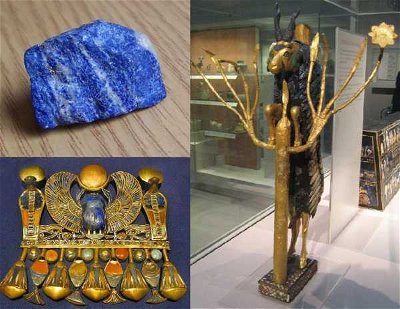
Lapis Lazuli. Lapis Lazuli is said to bestow the wearer with strength and self-assurance.
Onyx. Onyx was also reputed to drive away all undesirable thoughts and bad temper.
Opal. Opal is said to aid psychic vision.
Carbon. A diamond is formed by carbon crystallizing.
58. A single cut diamond usually has 18 facets.
|