FREE! Click here to
Join FunTrivia. Thousands of games, quizzes, and lots more!

MLB Ballparks Trivia Questions and Answers
Fun Facts & Interesting Information
Fun Trivia Question Usage
You are welcome to use the questions in this section for non-commerical purposes: quizzing friends/coworkers, classrooms, newsletters, trivia nights, events, etc. Questions may
not be used for websites or in apps, and may not be resold. You use the questions at your own risk, and FunTrivia is not responsible for errors, etc in the content.
Please
link to or
credit FunTrivia textually (http://www.funtrivia.com) if you use any of these questions. Thanks!
Visit our
Trivia Question Store to buy question packs for commercial or for-profit ventures.
1. Which team played at Crosley Field from 1912-1970?
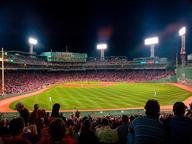
Answer: Cincinnati Reds
Interesting Information:The Reds played at the Palace of the Fans from 1902-1911. After their years at Crosley Field, the team moved to Riverfront Stadium (Cinergy Field) for the 1970-2002 seasons. In 2003, the Reds settled in at the Great American Ballpark.
Difficulty: Easy.
From Quiz: Major League Baseball Stadiums
Some incorrect choices:
Chicago Cubs, Cleveland Indians, Boston Red Sox
2. In April, 2000 the Detroit Tigers began the new millennium with a new ballpark. It replaced Tiger Stadium which had been built in 1912. What was the new Tiger Stadium called?
Answer: Comerica Park
Interesting Information:Before Tiger Stadium was built the ballpark was called Bennett Park, named for catcher Charlie Bennett who lost both his legs in a train accident. Today Comerica Park is much more than a baseball field. It houses a carousel with tigers instead of horses, a 50-foot Ferris Wheel with cars shaped like baseballs, and a huge waterfall display of fireworks for every home run scored. Comerica Park has wider seats than its predecessor, more restaurants, better clubhouse facilities and, along the left-center field wall, the names of former baseball greats like Ty Cobb and Willie Horton.
Difficulty: Easy.
From Quiz: Names of MLB Ballparks
Some incorrect choices:
Wrigley Field, Turner Field, Miller Park
3. Denizens from the first planet in our solar system choose to land in Mercury, Alabama in order get their baseball fix. Which MLB team's ballpark is the closest to reach from there?
Answer: Atlanta Braves
Interesting Information:A trip from Mercury, Alabama to the Atlanta Braves' ballpark is only about 165 miles (265 km), while driving to see the St. Louis Cardinals is more than twice that distance, and the Tampa Bay Rays (in St. Petersburg, Florida) and Houston Astros are further yet.
The Atlanta Braves have played in three primary ballparks in the first 60 years since moving to Atlanta in 1966. They began at Atlanta-Fulton County Stadium, where they played from 1966 to 1996; often nicknamed "The Launching Pad" for its high number of home runs, it was a multipurpose facility shared with the NFL's Falcons. In 1996, the stadium was converted into Centennial Olympic Stadium for the Summer Olympics, and after the Games it was rebuilt as Turner Field. Known as "The Ted," Turner Field served as the Braves' home from 1997 through 2016 and seated just over 50,000 fans after its baseball conversion. Following the 2016 season, the Braves moved to Truist Park (originally SunTrust Park), located in Cobb County just outside Atlanta. Opening in 2017, Truist Park is part of a modern mixed-use development called The Battery Atlanta.
Difficulty: Hard.
From Quiz: Baseball on Other Planets
Some incorrect choices:
St. Louis Cardinals, Houston Astros, Tampa Bay Rays
4. In the 12th inning of the 1970 All Star Game, Pete Rose bowled over Ray Fosse to score the winning run. The play has been part of baseball lore ever since. In what ballpark did this famous/infamous event take place?
Answer: Riverfront Stadium
Interesting Information:On the banks of the Ohio River, Cincinnati's Riverfront Stadium was brand new when The Queen City hosted the 1970 midsummer classic. The ferocity of the hit (and the fact that it took place during what many consider 'just' an exhibition game) contribute to Rose's 'Jekyll and Hyde' legacy. Re-named Cinergy Field in 1996, the stereotypical 'cookie-cutter' stadium was closed and demolished following the 2002 season.
Difficulty: Hard.
From Quiz: Baseball Parks. Where Did It happen?
Some incorrect choices:
Crosley Field, Three Rivers Stadium, Busch Stadium
5. Fenway Park in Boston has had a storied life. What is the origin of its name "Fenway"?
Answer: Named after a swamp
Interesting Information:The park was constructed in a swampy area known as 'The fens', which in 1910 was changed from a saltwater to a freshwater swamp by the construction of the Charles River Dam. There is a 'red seat' in right field indicating, supposedly, the longest home run of 502' ever hit by anyone. It was a Red Sox player by the name of Ted Williams. It is interesting to note that the opening of the park on April 20, 1912, was overshadowed by the sinking of the Titanic just six days earlier.
Difficulty: Hard.
From Quiz: MLB Ballparks
Some incorrect choices:
Named after George Fenway, Named after the Fenway Road, Named after the fenced way leading to the park
6. The Houston Colt .45s (later Astros) began their franchise endeavors in 1962 as an expansion team in the National League in 1962. Which stadium did they begin it all in for their home games?
Answer: Colt Stadium
Interesting Information:Colt Stadium was built for this new Major League team, and opened in time for the Colt .45s 1962 inaugural season. They played their last game there only two seasons later, and began the 1965 season in the world famous Houston Astrodome. Of the 10 National League teams in 1965, the Astros and Astrodome finished second in season attendance behind the Dodgers.
Difficulty: Hard.
From Quiz: Ballparks! The Place to Be
Some incorrect choices:
Houston Astrodome, Texas Field, Six Gun Field
7. The New York Mets played their home games at Shea Stadium from 1964 to 2008. In which New York City borough was Shea Stadium located?
Answer: Queens
Interesting Information:Shea Stadium was located in Flushing Meadows, Queens, about a 30-minute subway ride east of downtown Manhattan. This Queens ballpark was officially called William A. Shea Municipal Stadium. It was named after William Shea, an attorney who helped to bring National League baseball back to New York in 1962, five years after the Dodgers and Giants had moved from Gotham to the West Coast. In 2009, the Mets moved across the parking lot to a new stadium called Citi Field.
Difficulty: Easy.
From Quiz: Defunct Baseball Stadiums
Some incorrect choices:
Brooklyn, The Bronx, Manhattan
8. This AL team better known by their moniker (Mariners), played in this ballpark beginning on July 15, 1999, when they lost their first-ever game at which stadium 3-2 to the Padres?
Answer: Safeco Field
Interesting Information:Safeco Field finally broke ground on March 8, 1997. The Mariners won the AL Western Division in 1997, but lost to the Orioles in the ALDS.
Difficulty: Easy.
From Quiz: MLB Ballparks
Some incorrect choices:
Metrodome, Tropicana Field, Fenway Park
9. Which park is famous for its ivy-covered outfield walls?
Answer: Wrigley Field (Cubs)
Interesting Information:The ivy has been in Wrigley Field since 1937. The park however, was built in 1914, making it the second-oldest baseball stadium ever (behind Fenway Park).
Difficulty: Very Easy.
From Quiz: Interesting Ballparks
Some incorrect choices:
US. Cellular Field (White Sox), Busch Stadium (Cardinals), Camden Yards (Orioles)
10. The Oakland Athletics were the Kansas City Athletics, and before that, the Philadelphia Athletics that joined the new American League in 1901. Which ballpark did the franchise begin play in?
Answer: Columbia Park
Interesting Information:Connie Mack and the Athletics called Columbia Park their home from 1901-1908. They moved into the new Shibe Park in 1909, and played there until 1954 when the team moved to Kansas City. Shibe Park was renamed Connie Mack Stadium for the team's last two seasons in Philadelphia.
Difficulty: Hard.
From Quiz: Please Wipe Your Feet!
Some incorrect choices:
Patriots Stadium, Sportsman Field, Shibe Park
11. The Giants moved in 2000 from Candlestick Park to which ballpark?
Answer: Pacific Bell Park
Interesting Information:It was the first privately financed ballpark. It included a 9-foot statue of Willie Mays, a 80-foot Coke bottle, and a miniature ballpark.
Difficulty: Average.
From Quiz: Major League Baseball Stadiums
Some incorrect choices:
Chase Field, Petco Park, Busch Stadium
12. It was the first domed stadium, opened in 1965. It has hosted numerous sporting teams, major events, and concerts. Some of the biggest include "The Battle of the Sexes" in 1973, Selena's final concert in 1995, and Wrestlemania X7 in 2001.
Answer: Houston Astrodome
Interesting Information:The Astrodome has also hosted the 1971 Final Four as well as the MLBs Astros, NFLs Oilers, USFLs Gamblers, the Houston Bowl for two years, and was included in Houston's proposal for the 2012 Olympic Games to serve as the Olympic Stadium.
Difficulty: Very Easy.
From Quiz: Former Major League Ballparks
Some incorrect choices:
Reliant Arena, Rice Stadium, Metrodome
13. Where is Turner Field located?
Answer: Atlanta, GA
Interesting Information:Before the Braves had Turner Field, which opened in 1997, they played home games in the Atlanta-Fulton County Stadium.
Difficulty: Very Easy.
From Quiz: MLB Stadiums
Some incorrect choices:
Cleveland, OH, New York, NY, Philadelphia, PA
14. Fenway Park was built in 1912. Who was the first opponent the Boston Red Sox played there?
Answer: New York Highlanders
Interesting Information:This game took place on April 20, 1912. The Red Sox won 7-6. The Highlanders became the Yankees in 1913.
Difficulty: Hard.
From Quiz: MLB Stadium Firsts
Some incorrect choices:
Cincinnati Reds, St. Louis Browns, Chicago White Sox
15. This stadium hosted the first ever All-Star Game in 1933, the Negro League All-Star game from 1933-1950, and it was home to Disco Demolition Night in 1979.
Answer: Comiskey Park
Interesting Information:Comiskey Park was built in 1910 on Chicago's south side. It was home to the famed "exploding scoreboard".
Difficulty: Average.
From Quiz: Name That Park
Some incorrect choices:
Yankee Stadium, Fenway Park, Tiger Stadium
16. Which city was Ebbets Field field located in?
Answer: Brooklyn, NY
Interesting Information:Ebbets Field was home of the Brooklyn Dodgers from 1913-1957. Kids could watch the game through a gap under the metal gate in right-center field.
Difficulty: Very Easy.
From Quiz: Old Baseball Parks
Some incorrect choices:
Pittsburgh, PA, Yakima, WA, Cincinnati, OH
17. Which ballpark was opened in 1912 and had a slope leading up to the left field wall?
Answer: Fenway Park
Interesting Information:The oldest Major League park in 2004 and home to the Red Sox, had been the site of eight World Series, including the 2004, and three All-Star Games. Their first World Series was in 1912 and the Sox were champions. Also, in 1912, the Red Sox, Tris speaker was named the Amercan League MVP. The 'Green Monster' came later.
Difficulty: Hard.
From Quiz: Name This Ballpark
Some incorrect choices:
Comiskey Park, Ebbets Field, County Stadium
18. How many MLB baseball teams played in the Polo Grounds?
Answer: 3
Interesting Information:Three baseball teams played in the Polo Grounds: The New York Giants, New York Yankees, and the New York Mets.
Difficulty: Hard.
From Quiz: Polo Grounds
Some incorrect choices:
1, 2, 4
19. When did Forbes Field open?
Answer: 1909
Interesting Information:When Forbes Field first opened its doors in 1909, 30,000 fans rushed inside to watch the Pittsburgh Pirates play.
Difficulty: Hard.
From Quiz: Major & Minor League Ballparks
Some incorrect choices:
1872, 1888, 1925
20. What stadium is located at 755 Hank Aaron Drive SE?
Answer: Turner Field
Interesting Information:Turner Field was home to the Atlanta Braves from 1997 until 2016, when they moved to Sun Trust Park.
Difficulty: Very Easy.
From Quiz: NL Ballpark Addresses
Some incorrect choices:
Minute Maid Park, PacBell Park, Wrigley Field
21. What stadium is located at 1250 First Avenue South?
Answer: Safeco Field
Interesting Information:Safeco Field is home to the Seattle Mariners and has a capacity of around 47,772.
Difficulty: Hard.
From Quiz: A.L. Ballpark Addresses
Some incorrect choices:
U.S. Cellular Field, Skydome, Edison International Field
22. St. Louis Cardinals played where?
Answer: Busch
Interesting Information:Busch Stadium replaced Sportsman Park in 1966.
Difficulty: Very Easy.
From Quiz: MLB Stadiums
Some incorrect choices:
PNC, Minute Maid, Qualcom
23. What stadium had the world's largest TV, hotels overlooking the field, and Windows Restaurant, all beyond the centerfield fence, when it opened in 1989?
Answer: Skydome
Interesting Information:The Skydome opened in 1989 in Toronto, Canada. It was the first baseball stadium with a retractable roof.
Difficulty: Hard.
From Quiz: MLB Baseball Stadiums
Some incorrect choices:
Bank One Ballpark, PNC Park, Pacific Bell Park
24. The 2002 Tampa Bay Devil Rays played at what stadium?
Answer: Tropicana Field
Interesting Information:Named after Tropicana Orange Juice.
Difficulty: Easy.
From Quiz: MLB Stadiums [2]
Some incorrect choices:
Minute Maid Field, ----------, ----------
25. The Cubs began playing at ____________ in 1916.
Answer: Wrigley Field
Interesting Information:Wrigley makes gum.
Difficulty: Easy.
From Quiz: MLB Stadiums [1]
26. What ballpark did the Boston franchise play their home games before they moved into Fenway Park?
Answer: Huntington Avenue Grounds
Interesting Information:This ballpark featured a 635 ft deep centerfield but only a 280 ft deep right field. It was open from 1901-1911. The first World Series game was played here October 1, 1903.
Difficulty: Hard.
From Quiz: Ballparks of the Major Leagues
Some incorrect choices:
Bennett Park, Hilltop Park, Shibe Park
27. When a member of the home team that plays here hits a homerun, a train travels along the outfield wall. This ballpark is ______ ?
Answer: Minute Maid Park
Interesting Information:Homeof the Houston Astros (formerly Enron Field and Astros Stadium), it opened in 2000. It has a 242-foot high retractable roof. The Astros lost 1-4 in their first regular season game here to Philadelphia on April 7th, 2000. Minute Maid Park features a closed-captioning board for the hearing impaired.
Difficulty: Hard.
From Quiz: MLB Ballparks
Some incorrect choices:
The Astrodome, The Ballpark in Arlington, Busch Stadium
28. This team lost the World Series to the Yankees in 1998. Name that ballpark!
Answer: Qualcomm Stadium
Interesting Information:The San Diego Padres played at Qualcomm Staduim in San Diego, California.
Difficulty: Hard.
From Quiz: Name That Ballpark
29. At what field did the Boston Braves play most of their home games from 1922 to 1939?
Answer: Braves Field
Interesting Information:The Braves played their home games at Braves Field in Boston from 1915 to 1952. On some occasions they played at Fenway Park.
Difficulty: Hard.
From Quiz: History of MLB Stadiums
Some incorrect choices:
Boston Field, Fenway Park, South End Grounds
30. Qualcomm Park at Jack Murphy Stadium (San Diego Padres): Grass or Turf?
Answer: Grass
Interesting Information:Qualcomm Park at Jack Murphy Stadium opened its doors in 1967.
Difficulty: Very Easy.
From Quiz: Western Stadiums
31. Three Rivers Stadium (Pittsburgh Pirates): Grass or Turf?
Answer: Turf
Interesting Information:Three Rivers Stadium opened its doors in 1970.
Difficulty: Average.
From Quiz: Eastern Stadiums
32. On October 2, 1916 the home town Phillies beat the visiting Boston Braves 2-0, giving Grover Cleveland Alexander a record 17 shutouts in a season. In what stadium was this achieved?
Answer: Baker Bowl
Interesting Information:The Baker Bowl was the home stadium for the Philadelphia Phillies from April 30, 1887, to June 30, 1938.
Difficulty: Hard.
From Quiz: Lost Ballparks
33. At what major league stadium will you see a replica steam engine train travel along a track from one side of the stadium to the other each time the home team hits a homerun?
Answer: Minute Maid Park
Interesting Information:Fans can't ride inside of the train at Minute Maid Park in Houston, but they can still cheer for the Astros.
Difficulty: Average.
From Quiz: Stadium Landmarks
Some incorrect choices:
Miller Park, Safeco Field, PNC Park
34. This team was the first to draw one million fans for a season at home.
Answer: 1920 Yankees
Interesting Information:Not many teams drew a million until the boom after WWII.
Difficulty: Hard.
From Quiz: Baseball Attendances
Some incorrect choices:
1931 Athletics, 1946 Red Sox, 1930 Cubs
35. What stadium was located at the corner of Chicago and 5th St. in 1995?
Answer: Metrodome
Interesting Information:It is located in Minneapolis and it opened in 1982.
Difficulty: Hard.
From Quiz: Baseball Stadiums
Some incorrect choices:
Jacobs Field, Comiskey Park, Wrigley Field
36. Forbes Field was home to the ____________ ?
Answer: Pittsburgh Pirates
Interesting Information:The correct answer is the Pittsburgh Pirates, who called Forbes Field their home from 1909 to 1970. Interestingly, Forbes Field was the first ballpark to have a wall in the outfield painted in black, which became a trend in baseball stadiums across the country. The ballpark also hosted several historic moments, including Babe Ruth's last three home runs and Bill Mazeroski's walk-off home run in Game 7 of the 1960 World Series. Today, the site of Forbes Field is home to the University of Pittsburgh's Posvar Hall.
Difficulty: Easy.
From Quiz: The Old Ballparks
Some incorrect choices:
Detroit Tigers, Cleveland Indians, St. Louis Browns
37. Which ballpark is the oldest stadium, which was still in use in the late 1990s?
Answer: Fenway Park
Interesting Information:These are the three oldest stadiums in the majors. Fenway (1912), Wrigley (1914), and Yankee (1923).
Difficulty: Hard.
From Quiz: MLB Stadiums
Some incorrect choices:
Wrigley Field, Yankee Stadium, Shea Stadium
38. What was the first domed stadium in Major League Baseball?
Answer: Astrodome
Interesting Information:Not only was the Houston Astrodome the first domed stadium in MLB, but it was the first to use artificial turf. Hence the name 'Astroturf'. The original grass field could not withstand the indoor conditions.
Difficulty: Easy.
From Quiz: MLB Domed Stadiums
Some incorrect choices:
Kingdome, Metrodome, SkyDome
39. Who began playing at Wrigley Field in 1916?
Answer: Chicago Cubs
From Quiz: Classic Ballparks: Who Played?
Some incorrect choices:
Chicago White Sox, Milwaukee Indians, Seattle Mariners
40. At what stadium can you see a large Citgo sign over the left field wall?
Answer: Fenway Park
Interesting Information:The left field wall is better known as The Green Monster. You can see the sign over the famous Green Monster.
Difficulty: Hard.
From Quiz: Ballparks Through The Years
Some incorrect choices:
Wrigley Field, The Ballpark in Arlington, Ebbets Field
Please remember to credit FunTrivia.com, add links on your website or newsletters, or otherwise spread the word about our website. Thank you very much, and we hope these questions have been useful!
|