|
Structure
Interesting Questions, Facts and Information
- There are a total of 90 general entries. We are selecting 30 for display.
Special Topics
|
Interesting Questions, Facts, and Information
Aircraft
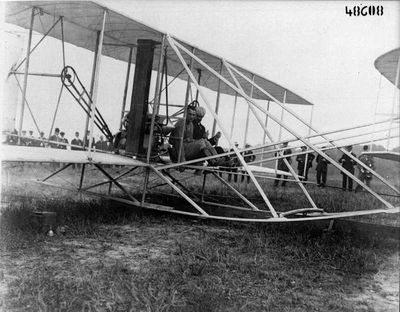
Wright Flyer. During the Wrights' design and construction of their experimental aircraft they also pioneered many of the basic tenets and techniques of modern aeronautical engineering, such as the use of a wind tunnel and flight testing as design tools. Their seminal accomplishment encompassed not only the breakthrough first flight of an airplane, but also the equally important achievement of establishing the foundation of aeronautical engineering.
Compressor, Combustion, Turbine, Exhaust. There is one more basic section called the Accessory Section.
fuel control. The fuel control finely meters fuel to be burned. The average cost is {$60,000.}
distribute fuel to the nozzles. A manifold is a high tech term for a gas line. Numerous manifolds carry fuel to the combustion section.
A large fan mounted to the front of the engine. This is the engine of choice for most commercial airliners. The large front-mounted fan aids in cooling the engine.
Exhaust nozzles. The exhaust nozzles located on the rear of the engine close the exhaust opening smaller therefore making more thrust. However, the pilot has to keep a watch on the temperature gauge because it will get hot!
An oil tank located on the outside of the engine. There are two types of oil tanks. The wet sump (like your car) stores oil internally.
Reduction gearbox. The gearbox changes the rpm ratio from the engine for the propeller.
Exhaust gas temperature. A gauge that if not watched could melt the tail section off the engine.
A filtered breathing system. Molecular Sieve Oxygen Generation System filters excess nitrogen from outside air for the pilots to breathe.
What component on an aircraft keeps the wheels from locking up upon landings? | Aircraft Systems I
|
Skid detectors. The skid detectors are sensors that sense when the wheel is not turning, therefore eases up on the hydraulic pressure going to that particular brake assembly. It happens very rapidly, applying pressure, relieving it, applying pressure, relieving it, etc.
What type of flight control system uses linear actuators to move the actual flight controls by hydraulic pressure? | Aircraft Systems I
|
Fully powered. The fully powered system uses linear actuators to move the primary flight controls. Most of these systems use tandem actuators which have two seperate hydraulic systems flowing through them. In the event of a hydraulic system failure, the second side of the actuator still is being powered by the remaining hydraulic system.
In a helicopter, what component makes the aircraft induce roll movements? | Aircraft Systems I
|
Cyclic stick. The cyclic stick usually located between the pilot's legs is moved left and right to make the aircraft 'roll' to the left or right.
What hydraulic system component seperates the normal hydraulic system from the emergency system by routing all pressures and fluids to the flight control system in the event of an emergency? | Aircraft Systems I
|
Shuttle valve. The shuttle valve is an automatically controlled valve that shuts off the flow of hydraulic fluid to non-essential items to allow control of the flight controls for whatever time the fluid and pressure lasts.
Stabilator. An aircraft that does not have an elevator which is a small area that hinges upward and downward on the tail of the aircraft and provides climbing and descending capabilities has an stabilator instead. A stabilator provides much more surface for the air to grab to make the aircraft pitch up or down. Very few aircraft have an elevator and a stabilator together.
Wet sump / Dry sump. Even with automobiles and race cars there are two types of oil tanks. The wet sump tank means that the oil is being stored inside the engine as most commercial autos have with the oil pan, while the dry sump tank indicates that the oil is being stored outside the engine in a seperate tank.
In a jet turbine engine, how many rotors and/or stators make up one stage of compression in an axial flow compressor section? | Aircraft Systems I
|
One rotor / One stator. One rotor in addition to one stator make up one stage of compression. The large high bypass turbofan jet engines can have 20 sets of rotors and stators which create a tremendous amount of low pressure high volume compressed air.
Negative pressure relief valve. The negative pressure relief valve is a valve that senses when there is negative pressure in a fuel tank which if not corrected, the tank will collapse. When this occurs, it automatically vacuums air in from the outside air to create a positive pressure within the fuel tank to keep from imploding. Implosion effects are created by the rapid change to cold temperatures.
Molded pieces to enhance aerodynamics. Fairing are molded pieces of numerous composites such as rubber, plastic, fiberglass, metal, or whatever that creates a smooth surface for components that stick out in the airways that create drag on an aircraft. Fairing allows the air to move over the item smoothly cutting down on the drag effect.
a small component to prevent cable chafing. A fairlead, which is usually made of phenolic, is placed on an aircraft anywhere that a cable may rub against something which would wear the cable out. Great lengths of cables are used for flight control systems and to actuate the engine throttles.
Turbine section. The turbine section which has rotating fans in it, turn due to the hot gases that pass through it. In turn, the fan which is connected by a shaft to the compressor section, keeps the compressor turning drawing in new air to the engine, which starts the entire process over again.
covers the engine. A nacelle is the entire engine covering and houses the engine. Nacelles are only on engines that need a complete cover unlike some engines that are built into the fuselage of an aircraft.
What component is added to weak areas of a wing to help re-enforce that area? | Aircraft Systems II
|
stiffners. After an aircraft has been put into production and wing cracks have been discovered, the wing is modified with a stiffner to add strength to that area of the wing. It is a small brace anywhere from 3" to much larger that helps take the stress in that area.
directional turning from the tail section. Yaw movement is provided by the rudder on the tail section of the aircraft. It allows the tail to directionally push the aircraft to the left or right. The rudder is used with other flight controls to complete a turn of the aircraft.
-300f degrees. Lox as it is commonly referred to is in the neighborhood of -297f degrees. It is an expensive process to convert gaseous oxygen to liquid but the benefits far exceed the cost. An equal sized container of liquid oxygen compared to gaseous oxygen will last 4-5 times longer. In liquid form it is considered super-concentrated. The lox is warmed thus changing it to a gas before the pilots and passengers breathe it.
A flight control component. A control tab is built on primary flight controls, i.e. the ailerons, rudder, and elevators. They move in the opposite direction of the actual surface to offset the wind speed and pressures of the air traveling over and under the flight control. It is used to help the pilot move the controls easier.
Identifies friend or foe. The IFF required by the FAA on most aircraft is an electronic component that identifies friendly aircraft in the area who should be there. It also identifies aircraft from enemy nations.
Quadrant. A quadrant is a device that changes linear control rod motion into cable motion to save weight on the aircraft in the flight control system. Their are numerous quadrants in this system to do just that. It also does the opposite, as it will change cable motion back to control rod motion.
What component on a helicopter allows the rotor blades to change pitch angles? | Aircraft Systems II
|
swashplate. The swashplate is located just under the rotor head. It rotates with the rotor head and forces the pitch control rods to change the angles of the blades which create more lift or lessen it so they aircraft may descend. It will also make the helicopter move from side to side.
B-52. The symbol of U.S. military strategic power, the B-52 bomber was first delivered in production in 1954. Originally designed with a fighter-style cockpit, it was redesigned to have the pilot and co-pilot sit side-by-side. The aircraft flew with many upgrades and modifications for over 50 years.
The B-17 was one of the most successful bombers during the WWII era. With different series of the B-17 manufactured, how many B-17G aircraft were made? | U.S. Aircraft History
|
8680. The Seattle plant for Boeing manufactured 4035 of the B-17G. Douglas Aircraft Co. made 2395, while Vega manufactured 2250. The aircraft was named, 'The Flying Fortress'.
|