29. What was the name of the too-far-ahead-of-its-time car that Preston Tucker tried to bring to market?
From Quiz Car Flake II
Answer:
Torpedo
The Tucker Torpedo was an odd bird in the post-war world of the late 1940s. It looked like a cyclopean Oldsmobile of that vintage, but had a flat, rear-mounted six cylinder engine, all around independent suspension and a headlight that followed the same arc as the steering wheels.
Not exactly cyclopean, but the Torpedo had three, (count 'em) three headlights, and the center one was the one that followed the wheel arc. The Torpedo was also a safety conscious marque that had one of the first passenger roll cages and had safety belts as an option before anybody. Fifty one were built, and amazingly enough, after more than 50 years, 47 still survive! The "big three" tried and succeeded in suppressing production of this car, as most of Preston Tucker's supplies were cut off and bad publicity was routinely circulated about him and his car.
Originally sold for less than $3000.00, the value of the remaining models varies between $250,000 to $500,000 today! In 1988, Francis Ford Coppola directed Jeff Bridges in a George Lucas production of "Tucker: A Man and His Dream", about the creator of this visionary, but weird-looking, automobile.
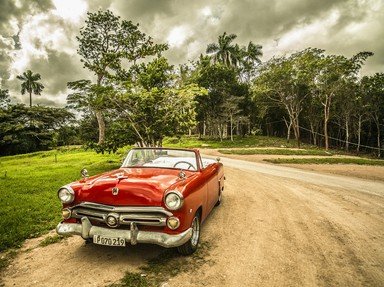



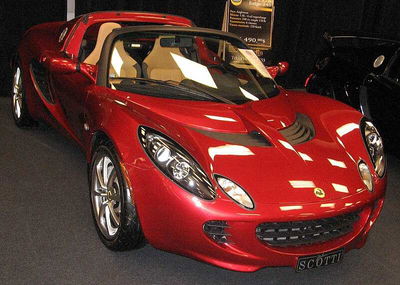 All you have to do is match the image with the make and model. Enjoy, and have fun.
Digby
All you have to do is match the image with the make and model. Enjoy, and have fun.
Digby 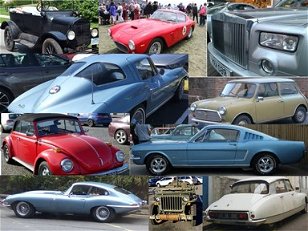 Classic cars are those that catch the eye with exquisite styling or those that are full of engineering ingenuity. This quiz lists ten such classic cars, all instantly recognisable. However what if you only see part of the car? Sneaky but solvable.
 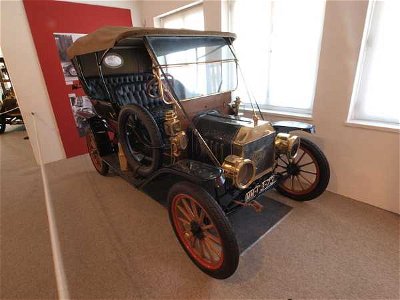 Late on a Saturday night, I was on my way to the ER after a household mishap, and what did I see? A "Smoker Show" right there on the parking lot! My injury is not that severe; I can make a quick detour! The cars, however, may need more help than I do!
 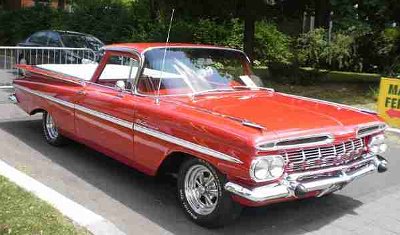 Identify these vehicles that no longer come off the assembly line!
  I've tried to draw some car brand badges. What do you know about these makes of car? The drawings are a bit shaky, but it has been over forty years since I took a pencil in my hand!
  Quick Question
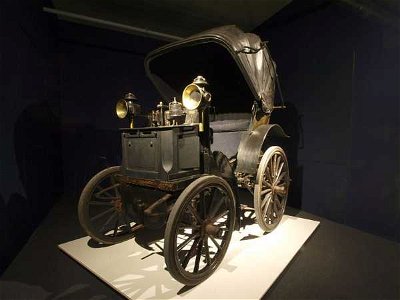 Automobile manufacturing has been successful for some companies, while others have fallen by the wayside. Do you know all of these?
 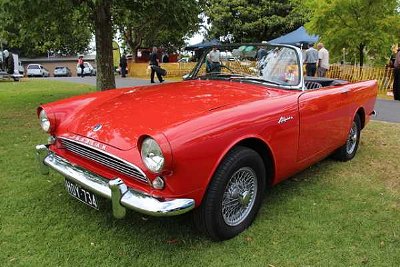 Most of the first automobiles had removable cloth tops, or no tops at all. Sure, roadsters and convertibles are somewhat impractical, but they sure are fun! This quiz looks at some fine examples of the coachmaker's art over the last 100 years.
  = Top 5% Rated Quiz,
 Top 10% Rated Quiz,
 Top 20% Rated Quiz,
 A Well Rated Quiz
 =
added recently,
=
added recently,  = Editor's Pick
 = FunTrivia Editor
  = Gold Member
