|
Structure
Interesting Questions, Facts and Information
- There are a total of 110 general entries. We are selecting 30 for display.
Special Topics
|
Interesting Questions, Facts, and Information
Mixed Human Body Trivia
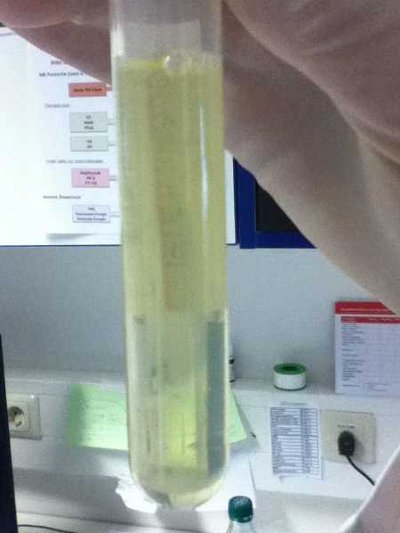
Roughly what per cent of whole blood comprises the blood cells (reds, whites, and platelets)? The rest of the blood is plasma. | Human Body Basics Part I
|
42%. One determines this by spinning blood in a test tube to determine the hematocrit, which is what the percent represents. Since cells are heavier than the liquid, they spin to the bottom. By far, most of the cells are red, and the contribution of the other cell types is negligible.
From the temple side to the nose side. The lacrimal ducts are located near the outer side of the eyes and tears flow towards the middle, where they drain into the sinuses.
1 in one thousand. Almost all people born with only one kidney lead comletely normal lives. Some don't find out until they try to donate one!
thymus gland. The thymus involutes by age 15. The thyroid and parathyroids are secretory glands and the thalamus is part of the brain. If you've ever eaten sweetbreads, they are thymus glands.
4. The heart has four chambers. Two valves are between the upper and lower chambers on each side of the heart and two valves are in the blood outflow tracts of the lower pumping chambers. No valves exist in the inflow tracts to the upper chambers. They fill passively as blood returns to the heart.
the back of the brain. The posterior portions of the occipital lobes in the back of the brain house the visual cortex. Damage to that part of the brain can lead to total blindness, even if there is nothing wrong with the eyes.
in the marrow of flat bones (skull, hips, ribs, and sternum). As we age, blood cell production in the marrow becomes centralized, and away from the arm and leg bones, whose marrow cavities fill up with fat.
What is the normal lifespan of red blood cells, the predominant white blood cells, and platelets, in that order? | Human Body Basics Part III
|
120 days, 24 hours, and 10 days. The white cell called the neutrophil lives in the bloodstream only 24 hours, and red cells, which, once mature, are nothing more than thin walled sacs containing hemoglobin, are functional for a full 120 days before breaking up in the spleen and bloodstream and being "recycled" with the iron returned to the bone marrow and other components incorporated into bile in the liver. Platelets prevent bleeding by forming a platelet plug like the "finger in the dike".
it equalizes pressure between the pharynx and middle ear. The eardrum is pushed or pulled due to differences in pressure between the middle and outer ear canal. Equalizing the pressure reduces discomfort and promotes hearing.
The ability to sense position and location. When visual clues and touch are diminished we rely more on proprioceptors in muscle, connective tissue and other sites to tell us our position. It's something we take for granted unless one has a disease state in which you lose it.
Where is there no actual sphincter muscle (an annular muscle which intermittently prevents access across it)? | Human Body Basics Part III
|
between small intestine and large intestine. The boundary between the small and large intestines is the ileocecal valve, which is not a sphincter muscle.
touch. Well, I enjoyed it, and I hope you got them all right. If not, then you've learned something.
Every second. This only sounds amazing until you realize how many cells there are in your body. Every square inch of skin alone, for example, contains over 9 million cells. Altogether the average human body consists of 75 trillion cells, give or take a few.
100,000 times. This adds up to about 2.5 billion beats in your lifetime if you live to around 80 years of age.
Brad Byers, the "Human Toolbox" holds the world record for sword swallowing (among other strange world records). How many 70cm long swords can he swallow at one time? | Featuring the Amazing Human Body
|
10. Not only does he swallow the swords, but he also twists them. Another one of his amazing feats is to lie on a bed of nails with 18 people sitting on him.
180 litres. Each kidney has about 1 million nephrons: balls of blood vessels, each surrounded by a capsule. Fluids and dissolved substances get filtered through the capsule by blood pressure; blood cells and larger molecules can't pass through and remain in the blood stream.
30-50%. Amazing, isn't it? The average weight of bacteria in your gut is 1 kg. That's why nurses get so insistent about your bowels moving even after you've had surgery and nothing to eat or drink for three days...
Hands. Each hand has 27 bones. Two hands therefore have 54 bones; the entire human body has 206 (in the adult). The feet closely rival the hands with 26 bones each.
130m/sec. Lightning moves at about 150,000km/sec. Think about that next time you read about somebody moving at "lightning speed".
In the male testes, there are cells that are nicknamed, “nurse cells.” What are these cells really called? | Human Body Terminology
|
Sertoli cells. Sertoli cells are named nurse cells since they protect the sperm and help them mature.
gyri. Gyri help minimize the total surface area of the brain. If it weren’t for the gyri, then our brains would be huge.
Haversian canals. Haversian canals extend lengthwise through the bone and contain the blood vessels, lymphatic vessels, and nerves necessary for the bone.
lower esophageal sphincter. The cardiac sphincter or the lower esophageal sphincter regulates the passage of food from the esophagus to the stomach.
If your friend is suffering from the varicella zoster virus, what is he or she possibly suffering from? | Human Body Terminology
|
chickenpox. Varicella zoster is the fancy name for chickenpox. The disease can be prevented with the varicella vaccine. Sometimes, for those who have had actual chickenpox, a condition named shingles might appear several years after the chickenpox infection.
Sometimes doctors need to perform a test called a barium enema. What is another name for this test? | Human Body Terminology
|
lower gastrointestinal (GI) series. Barium enemas involve the infusion of barium sulfate, a radiopaque substance, into rectum in order to view the lower GI tract on a x-ray.
cortisol. Cortisol is a hormone that affects the metabolism of carbohydrates. It also helps increases the amount of glucose available to the body during the flight of fight response.
ceruminous gland. The ceruminous glands secrete a substance called cerumen that is more commonly known as ear wax.
hysterosalpingography. A hysterosalpingograpy is used to detect any abnormalities within the uterus and the Fallopian tubes.
umbilicus. The umbilicus is where the umbilical cord was once connected while you were still developing.
Excess tissue fluid. If there is damage to lymph capillaries, there is often swelling in certain body parts due to the accumulation of excess tissue fluid.
Urea. Amino acids are firstly oxidised into ammonia, which then enters the "Ornithine Cycle" where it is rapidly converted into urea.
|