|
Structure
Interesting Questions, Facts and Information
- There are a total of 55 general entries. We are selecting 30 for display.
|
Interesting Questions, Facts, and Information
Kenya
Swahili and English. Both Kiswahili and English are used on a daily basis and Kikuyu and Luo are widely understood. Kikamba is another indigenous language.
a minibus. This is the preferred mode of transport as they are quicker than buses and cheaper than taxis. They are also very dangerous with a high accident rate.
What is the name of the full length white robe that some men still wear in Kenya? | Kenya Kulture
|
khanzu. A bui bui is the long black wraparound for women that hugs the body, falls short of the ankles and doesn't have the veil covering the face. A kikoi is a large colorful cloth that has a traditional Swahili proverb. Women usually wear a kanga over their other clothing to keep it clean, to carry their children or other things. A kikoi is a type of sarong worn by men.
a wind instrument. It is a wind instrument ornately carved and made of ivory and often used as a fanfare at weddings.
One of the staple foods of Kenya is ugali na sukuma wiki. What is it? | Kenya Kulture
|
Maize meal (porridge) with vegetables. Chapati na sukuma wiki is a flat bread with green vegetables. These two meals, do not require any silverware. You simply use the ugali or chapati to pick up the sukuma wiki and then you put it in your mouth to eat it. It is considered rude if you do not wash your hands prior to the start of the meal.
What is the most popular religion practised in Kenya? | Kenya Kulture
|
Christianity. Approximately 70 percent of Kenyans are {Christians;} about 25 percent are adherents of indigenous {religions;} 6 percent are Muslims. Among the Asian community there are Hindus, Sikhs, Parsees, and Bahai's. Although traditional beliefs and practices vary among Kenya's ethnic groups, almost all involve belief in an eternal, omnipotent creator envisaged as remote from men. The Kikuyu's god is named 'Murungu' or (more frequently) 'Ngai', a loan-word from Masai. Ngai cannot be seen, but is manifested in the sun, moon, thunder and lighting, stars, rain, the rainbow and in the great fig trees that serve as places of worship and sacrifice.
Which Kenyan tribe is famous for dancing on stilts performed by men wearing long black coats and white masks? | Kenya Kulture
|
Embu. The Embu are well known for their honey also.
Both sexes of the Maasai Mara tribe wear earrings. True or False? | Kenya Kulture
|
True. The Maasai are one of the best known perhaps because of their tall elegant muscular features or their fierce, brave, stubborn and arrogant {reputation;} or maybe because of their simple yet distinctive appearance with ochre-covered warriors proudly holding their spear and wearing their bright blood-red shoulder cloak (shuka) and the women wearing bangles and beads around their neck (both sexes wear earrings, taking pride in stretching large holes in their ear lobes). The men sometimes cover their braided hair with a fatty ochre paste and may wear an elaborate head-dress, perhaps of a lion mane or eagle or ostrich feathers during some {ceremonies;} the women generally have shaved heads.
When is the best time of year to visit the Masai Mara National Reserve? | Kenya Kulture
|
July and August. Kenya's most spectacular annual event is organised by an unlikely group - wildebeests. Literally millions of these ungainly antelopes move en masse in July and August from the Serengeti in search of lush grass.
True. Along with tea, coffee, horticultural products, petroleum products and fish.
Eastern Africa. Kenya is a republic in Eastern Africa.
1963. Kenya won independence in 1963 and has been a republic since 1964.
five. It is bordered on the north by Sudan and Ethiopia, on the east by Somalia, on the south by Tanzania, and on the west by Uganda.
Yes. Yes, it does run through the centre of Kenya. Kenya's coastal area is a hot and humid tropical region.
No. Many people think it is in Kenya because it's situated on the Kenyan countryside. Africa's tallest mountain is in Tanzania, across the border.
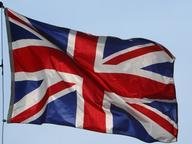
British. During this period, the British greatly influenced both the economic and cultural life of Kenya.
Nairobi. Nairobi is the capital and largest city of Kenya. Its city centre has many modern buildings.
shilling. One shilling = 100 cents.
Indian. Kenya is bounded on the east by the Indian Ocean.
Mount Kenya is Kenya's highest mountain. Is it a dormant, extinct or active volcano? | Know More About Kenya
|
extinct. It is 5,199 metres above sea level (17,057 feet).
English and Swahili. Numerous indigenous languages are also spoken widely. Swahili is also called 'Kiswahili'.
rural. About three-quarters of Kenya's people live in rural areas. About 99% of Kenya's population is made up of black Africans.
the use of weapons. The best-known of the Kenyan nomads are the Masai (or Maasai). The Masai people are tall and slender and are popular for their skill in the use of weapons and their strongly independent ways.
Maize. Kenyans often grind maize into porridge and eat it with a stew made from vegetables, fish or meat. Beer is a popular drink in Kenya.
Protestant. Protestant 45%, Roman Catholic 33%, Muslim 10%, indigenous beliefs 10%, other 2%
Yes. Most of the people enjoy both dancing and watching dance performances.
Harambee. That's the word on the coat of arms!
rivers. Both of the rivers flow from southwestern Kenya to the Indian Ocean.
About 2000 B.C.. Scientists have found the earliest-known remains of human beings in Kenya. Little is known about these people. These people are the ancestors of today's Kenyans. They included farmers, herders and hunters. Cushitic-speaking people from northern Africa moved into the area that is now Kenya c.2000 B.C.
Jomo Kenyatta. The first President of the Republic of Kenya was Mzee Jomo Kenyatta otherwise referred to as the founding father. Mwalimu Julius Nyerere was the first president of Tanzania.
Place of cool waters. Nairobi is Masai meaning 'place of cool waters'. It was initially used as grazing land by the Maasai since the water there rarely dried up. The British identified it as a potential trading area/town centre as there was plenty of water and it was more centrally located as compared to the initial town, now called Machakos about 70 km south of Nairobi. For along time Nairobi was referred to as "the green city in the sun".
|