Sep 10 2026
:
rustic_les: 12/12
Aug 31 2026
:
JetsunmaP: 12/12
Aug 31 2026
:
JanIQ: 10/12
Aug 25 2026
:
sadwings: 10/12
Aug 23 2026
:
sabbaticalfire: 12/12
Aug 23 2026
:
FREEDOM49: 12/12
Aug 22 2026
:
andymuenz: 8/12
Aug 22 2026
:
wellenbrecher: 12/12
Aug 17 2026
:
mickeyp: 8/12
Quiz Answer Key and Fun Facts
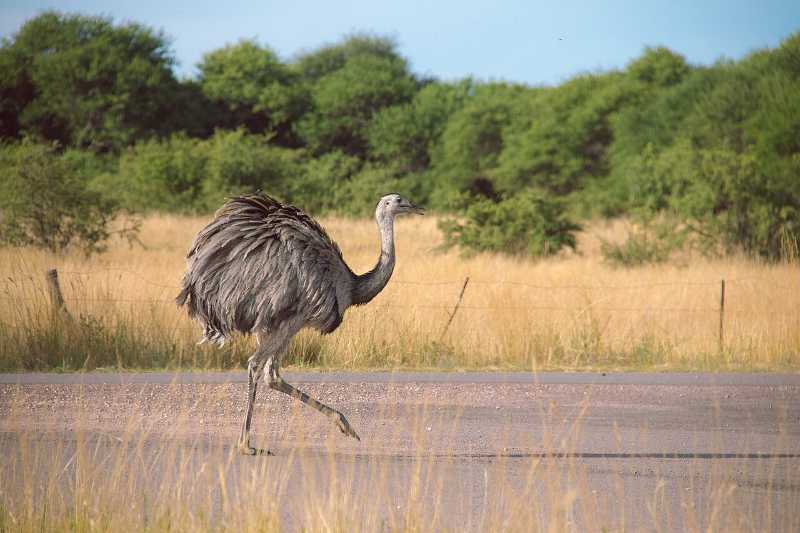
1. Rhea
If you thought it looked a bit like an ostrich or an emu, you would be on the money - these are the largest ratites (flightless birds). Africa's ostriches are the largest, followed by Australia's emus, and South America's rheas in third place. In 1752 Paul Möhring proposed their English name, in reference to the Greek Titan Rhea, whose name means ground - a reference to them being flightless - and this was adopted as the genus name in 1760.
In other languages, they have names which refer to other characteristics. The local Guarani people call them nandu guazu, meaning big spider. This may describe their appearance when running and flapping their wings. A number of European languages call them nandu, but the Portuguese prefer ema, possibly in comparison to the emu.
Taxonomists currently consider that there are two species of rhea, the greater and the lesser (can you guess which one is usually larger?), each with multiple subspecies - the exact number of which is subject to debate, as is so common among taxonomists.
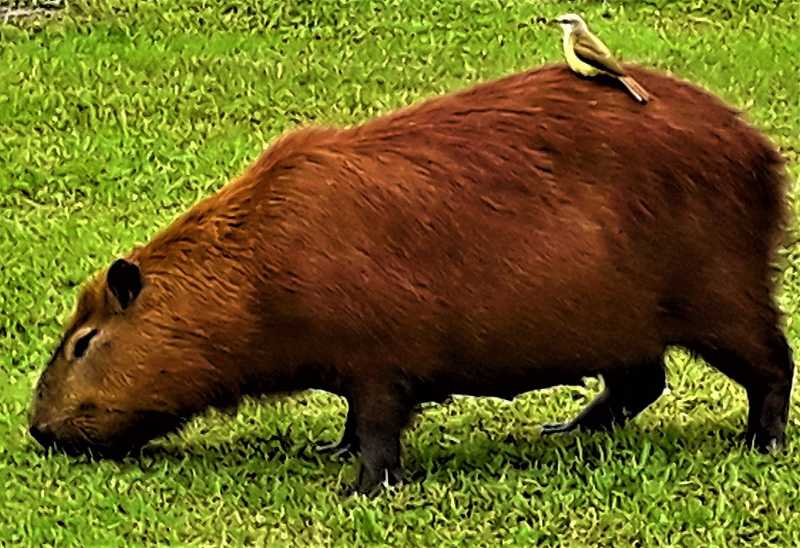
2. Capybara
You already knew that the greater capybara (Hydrochoerus hydrochaeris) is the largest rodent, but did you know what it looks like? It resembles a magnified version of its relative, the guinea pig. The bird perched on its back gives you some idea of its size, up to 130cm (over 4 feet) in length and 60 cm (24 inches) tall at the withers - the spot at the top of their shoulders which is also used to measure the height of a horse. The weight of an adult is typically 35-65 kg (77-145 pounds), with females usually larger than males.
Capybaras are semiaquatic mammals, meaning they flourish in forested areas near bodies of water. As well as being excellent swimmers, they are gregarious animals who like to live in communities, and graze on the local foliage. They tend to develop a preference for one type of plant, and eat it exclusively during the seasons when it is available, only spreading out to other plants during winter or dry times. Different communities, in different ecosystems, have different preferred plants.
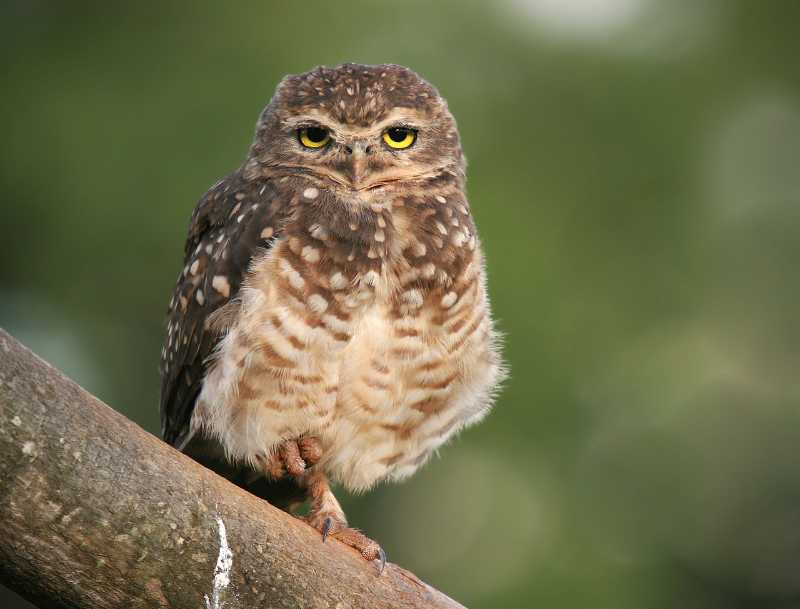
3. Burrowing owl
Burrowing owls (Athene cunicularia) get their name from their preferred nesting location, burrows - although they do not construct their own burrows, but take over sites which have been abandoned by other species. They are found in grasslands and deserts all over North and South America.
Unlike most owls, the burrowing owl is active during the day, although most of its hunting is done at dawn and dusk. It has relatively long legs, as it prefers to chase its prey along the ground, rather than pouncing from the air - although it can fly for short distances when it chooses to. Their diet includes insects and small vertebrates, such as mice and lizards.
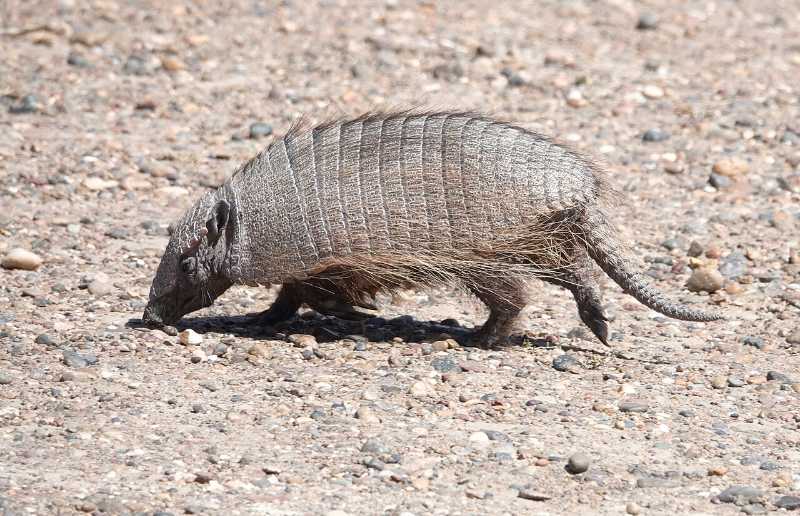
4. Large hairy armadillo
The common name for Chaetophractus villosus is pretty obvious: it is an armadillo, as can be seen from its body shape and bony armor; it is larger than most armadillos, and along the bottom of the sides of the bony plates that cover its back you can see a fringe of the hairs that cover its underside hanging down.
The plated carapace that provides the armadillo with a defense against many predators is one of the things that makes it vulnerable to humans - who not only eat their flesh, but also use their shells for vessels. Or turn them into charangos, a musical instrument in the lute family that uses an armadillo shell (faced with wood ) to form the resonant body of the instrument.
5. White-faced ibis
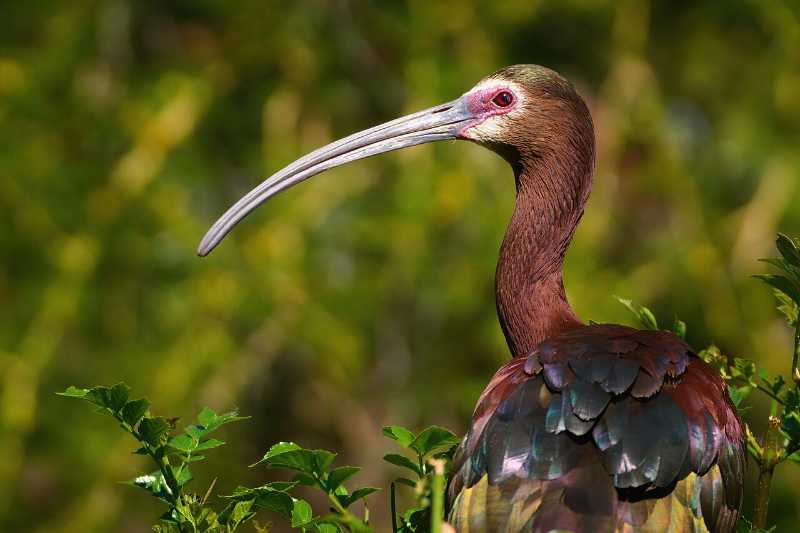
The subspecies of Plegadis chihi found in southern South America east of the Andes does not interact with those inhabiting North America, which actually seem to be more closely related to the glossy ibis. So taxonomic reclassification is definitely on the cards, but for now the South American white-faced ibis is classed in the same species as its northern cousin.
Ibises are wading birds (I chose an image to show the white face, so the long legs aren't obvious) who feed on organisms they can locate in the water which they probe with their long beaks. These include both vertebrates (fish, frogs) and invertebrates (insects, snails, small crayfish). They build nests of reeds, hidden in areas of their marshy territory which have more dense bushes to provide cover.
6. Maned wolf
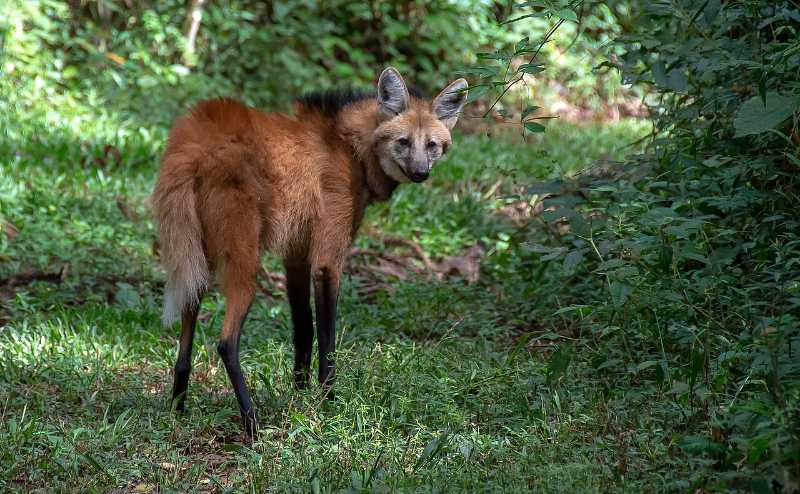
Chrysocyon brachyur is the largest canine of South America, with coloration that resembles a red fox (not even a close relative), a resemblance that is the basis for its Guarani name, 'guará guazú', which means large fox. The English name focuses on the black mane that features on the nape of its neck.
The maned wolf (which isn't a wolf, either) is a solitary crepuscular omnivore. In other words, it does not live in a pack like many canids, it prefers to do its hunting in the twilight hours, and it eats not only meat, but also a variety of vegetable matter. In fact, fruits and vegetables form more of its diet than meat, and it plays an important ecological role in the distribution of seeds via its faeces. Its favorite fruit, comprising around half its diet, is the wolf apple (Solanum lycocarpum), which resembles a tomato, as its genus name suggests.
7. Pampas meadowlark
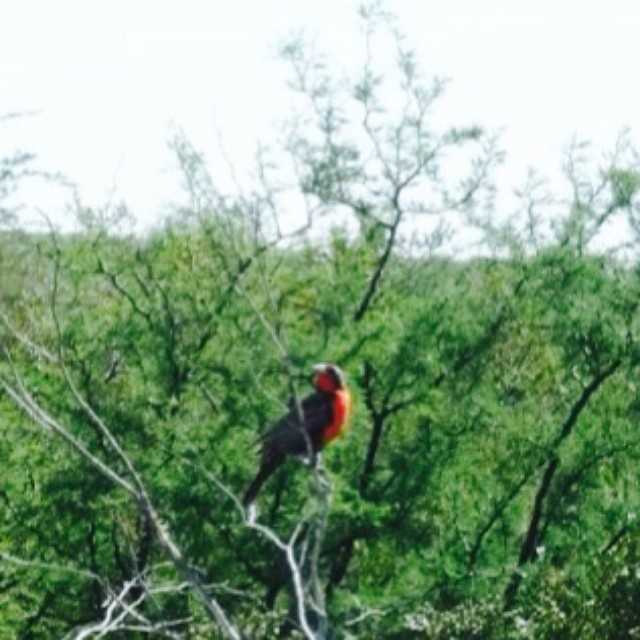
The Pampas meadowlark is a passerine (perching bird) related to the New World orioles and New World blackbirds. Taxonomists have had difficulty deciding exactly how it fits into their scheme. It was originally classified as Trupialis militaris in 1850, later being identified as Sturnella militaris and Sturnella defilippii before becoming known as Leistes defilippii.
As the name suggests, the birds are found only in Argentina and Uruguay, where they prefer open grasslands such as those to be found in the Pampas. The two groups, which are well separated, do not cross into each other's territories. While they display some differences in appearance and behavior, they are still (as of 2026, these things change!) considered to form a monotypic species rather than one with two subspecies.
8. Hog-nosed skunk
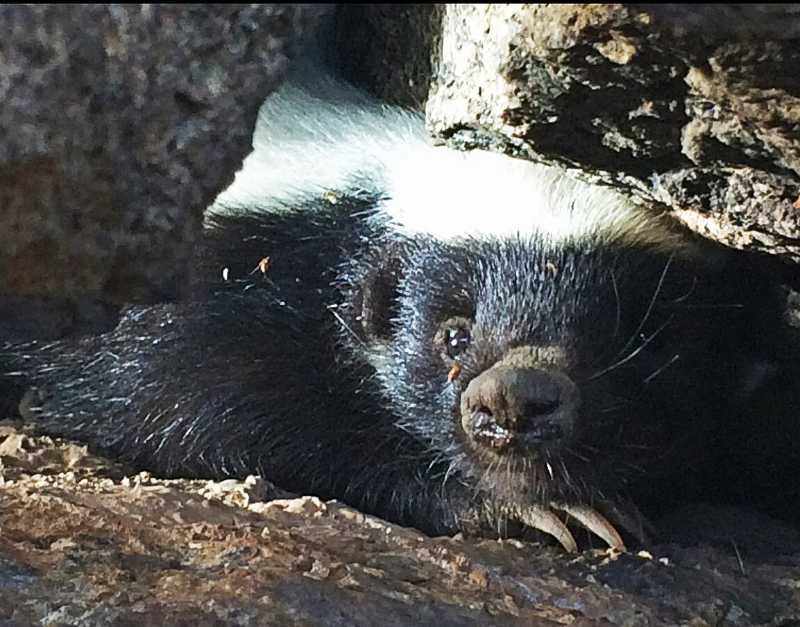
In order to capture the distinctive nose that is behind this skunk's common name, the distinctive white stripe down the back, contrasting with the black fur of the rest of its body, had to be left mostly to the imagination. There are four species in the genus Conepatus, which includes the American hog-nosed skunk found in southwestern parts of the USA and Mexico, the striped hog-nosed skunk that ranges from southern Mexico to Peru, Molina's hog-nosed skunk found in the northern parts of South America, and the Patagonian hog-nosed skunk (you can guess where they live for yourself), whose range includes the Pampas on its northern end.
All hog-nosed skunks have a naked snout, which they use to forage in the ground for the insects and larvae that form the majority of their diet. Their strong claws also assist in this, and their shoulders are well-developed, providing strength for digging - both in search of food and to dig out a burrow for themselves, where they spend the daylight hours, emerging to feed at night.
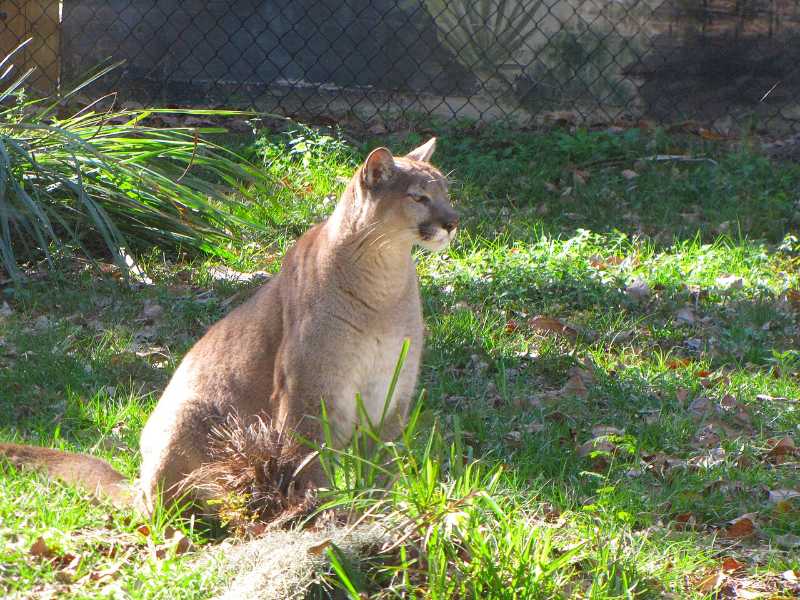
9. Puma
There are lots of names used for members of the species Puma concolor, including cougar, puma, mountain lion, catamount, and panther. They are found all over the Americas, making them one of the most widely distributed felines in the world. However, their presence in the Pampas is severely reduced - they are considered endangered in that area, despite their success in more inaccessible regions.
While North American cougars tend to focus on ungulates such as deer for their primary prey, South American cougars usually seek smaller prey, with the capybara one of their largest targets. Near the coast, they are known to hunt Magellanic penguins, along with other birds and small reptiles.
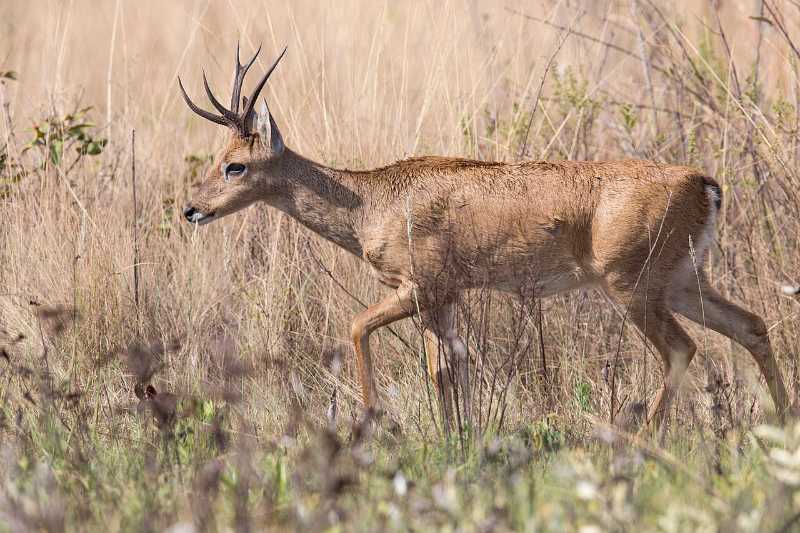
10. Pampas deer
There is only one species of Ozotoceros bezoarticus, a deer that lives in low-elevation grasslands and wetlands, but there are a number of subspecies. All appear to have evolved to inhabit open areas, rather than forested ones, due to the absence of pack-hunting predators. When threatened, it is likely to be by an individual; since the decline in numbers of cougars, jaguars and ocelots in the region, they have become less likely to flee immediately. Rather, they stamp their feet and face their foe before deciding whether or not the threat means they need to run for it.
The deer population has been in decline ever since the arrival of European settlers, and the introduction of sheep and cattle. The deer are happy to include a variety of non-grass items in their diet, including soft-stemmed plants and the shoots and leaves of shrubs as well as grass, so do not suffer directly from food competition, but they do get infected with disease, as well as being hunted by farmers who consider them a threat to their livestock's feeding.
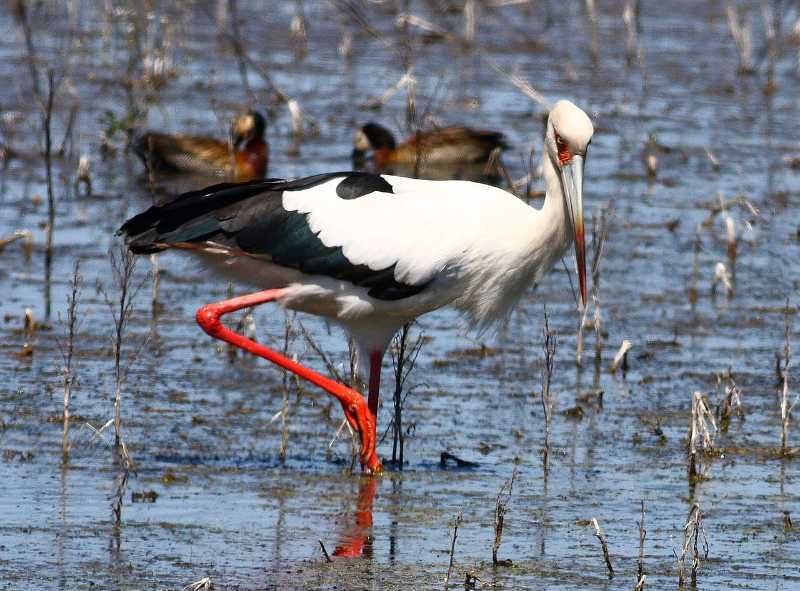
11. Maguari stork
If you didn't know that storks are wading birds with long legs and beaks they use to forage in the water for their food, you might have guessed it from the photo. Ciconia maguari gained their specific name from Tupi word meaning heavy bill - you can see its size in the image. The first description of them, in 1648, identified them as Maguari Brasiliensibus, using the local name for the genus, and the species name from the fact that they were spotted in Brazil. This is the only member of the Ciconia genus to be found in the New World, with the others found in various parts of Europe, Africa and Asia. This geographical disparity is why they were once considered to belong to a genus of their own.
Maguari storks are found in two distinct regions of South America - a northern population in the Venezuela region, and a southern one that is found from mid-Brazil south to the middle of Argentina. Despite the separation, they are considered to be in a monotypic species.
Flocks of maguari storks often feed together, especially during the dry season. They prefer to feed in wetlands, where small fish, frogs, insect larvae, etc. abound, and are also known to include small mammals (mice and rats) and bird eggs in their diet. Sometimes, however, they can be found hunting in grasslands, if there is a temporary abundance of mice or toads, or if ploughing has loosened the soil to reveal easy-to-spot grubs. They hunt by sight, waiting to spot their prey before grabbing it.
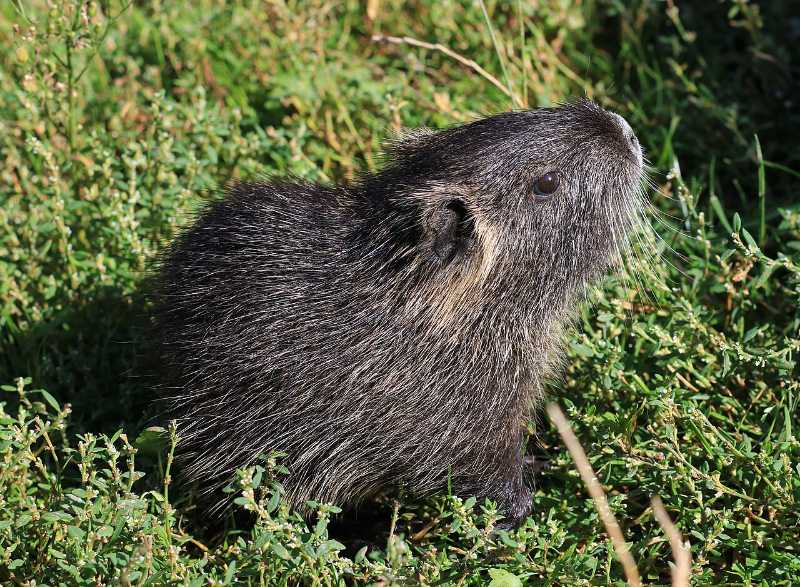
12. Coypu
We have already looked at one semiaquatic mammal, the capybara, and we finish with another, the nutria or coypu (Myocastor coypus). Their generic name comes from Greek words meaning rat or mouse and beaver. The reason for the existence of two common names is that the word nutria is used to refer to otters, so that name, which is used in North America, would be confusing. Other languages have a range of names, often translations of the genus. While the coypu originated in South America, it has been introduced into multiple parts of North America and Europe, where it has established itself in marshes and wetlands.
The coypu looks like a large rat, or a beaver with a skinny tail. Its large incisors, which become bright orange, emphasise its similarity to the beaver. Coypu were once hunted (nearly to extinction) then farmed for their fur. Since this demand has been reduced, they have become increasingly seen as a pest. They are known for their ability to devastate the local foliage - they do not only eat the visible part of their chosen plant, they also eat roots and tubers, and can clear large areas, upsetting the ecological balance for the other residents. In many places, they are now considered an invasive species.
This quiz was reviewed by FunTrivia editor rossian before going online.
Any errors found in FunTrivia content are routinely corrected through our feedback system.