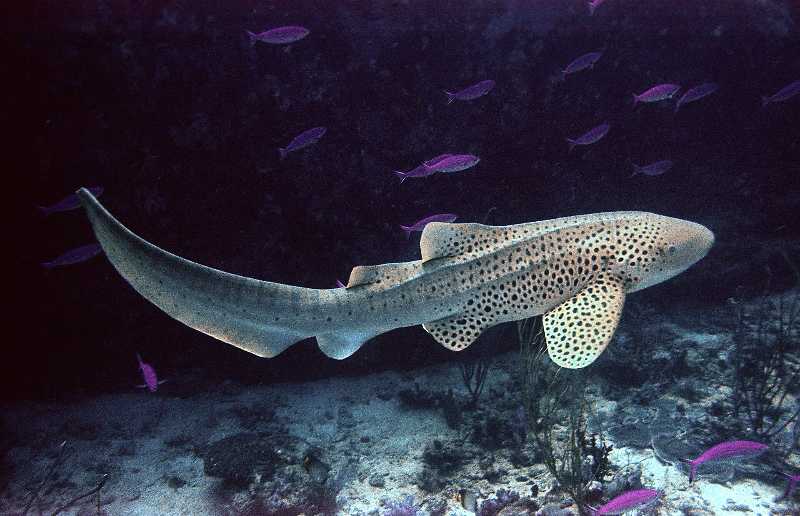
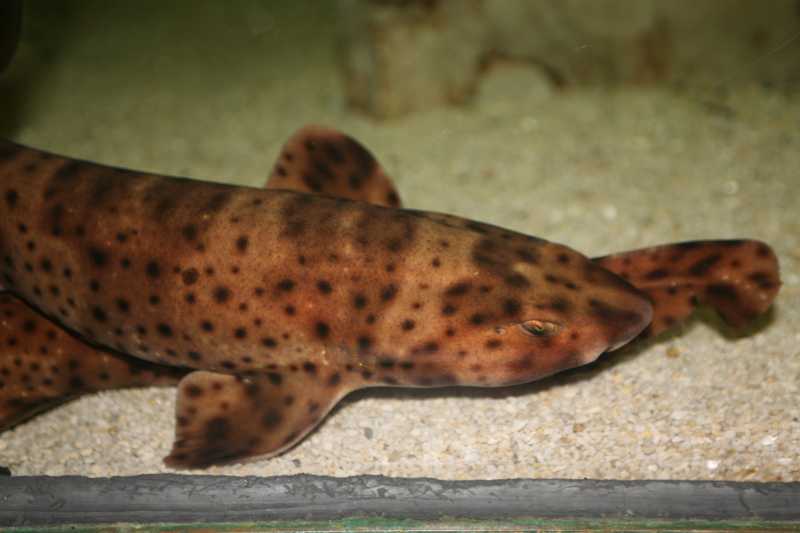
This shark may look more like a leopard and, in fact, another name for them is the leopard shark (though this can be confusing, as there are other sharks called this). However, they get the name zebra shark from their babies, which have vastly different colouring of black with white stripes.
These sharks grow up to 2.5 m (8.2 feet) and are nocturnal. They feed on molluscs, crustaceans, small bony fishes and possibly sea snakes.
2. Whale shark
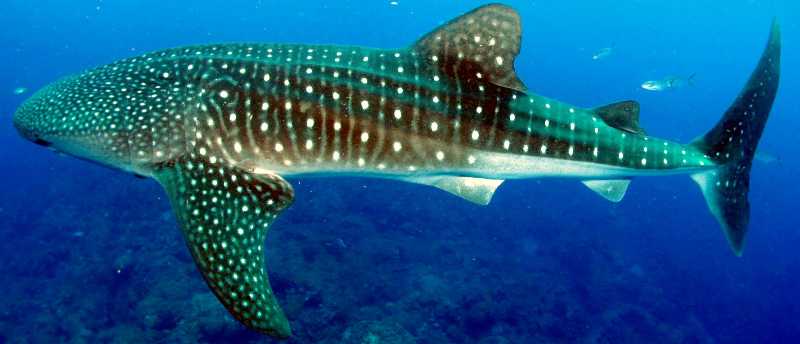
This wonderfully patterned shark is very popular for tourists to swim with. They are the largest living fish species, reaching lengths of up to 18.8 m (61.7 feet). Females give birth to up to 300 live young 40-60 cm (16-24 inches) long. They have very small teeth and pose no danger to humans.
Their modified gill rakers allow them to filter feed, and feed on a range of things, such as plankton, krill, fish eggs, copepods, jellyfish, sargassum seaweed (making them omnivorous), arrow worms, crab larvae, small squid and fish and, during coral spawning, will feed on coral eggs.
3. Tiger shark
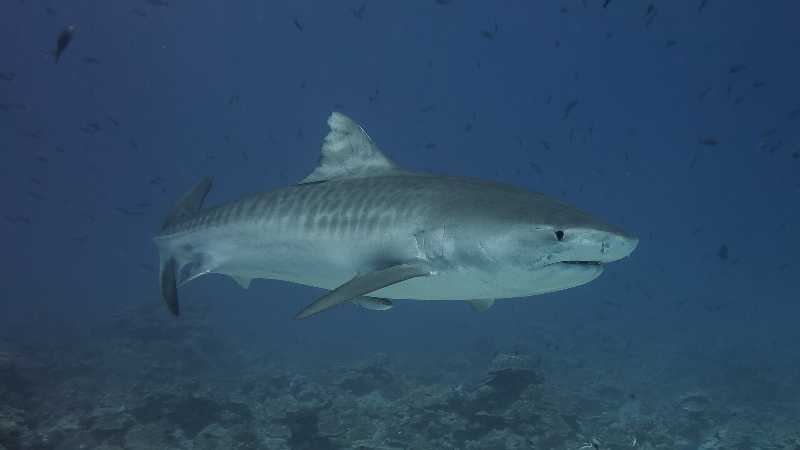
The distinctive stripes of this shark earned it its name. These sharks are large, with females reaching over 5 m (16.4 feet). These sharks are considered dangerous, as they can be aggressive. They are also dangerous because they are not picky eaters. They are sometimes known as the "garbage cans of the sea", because they will eat rubbish. Tyres, license plates, oil cans, baseballs, and even pieces of a 13th century suit of armor have been found in the stomachs of these animals.
They will also prey on terrestrial animals that enter their habitat, such as flying foxes, horses, dogs, cats, sheep, goats, rats and even an echidna (found in a shark off the coast of Queensland).
4. Great white shark
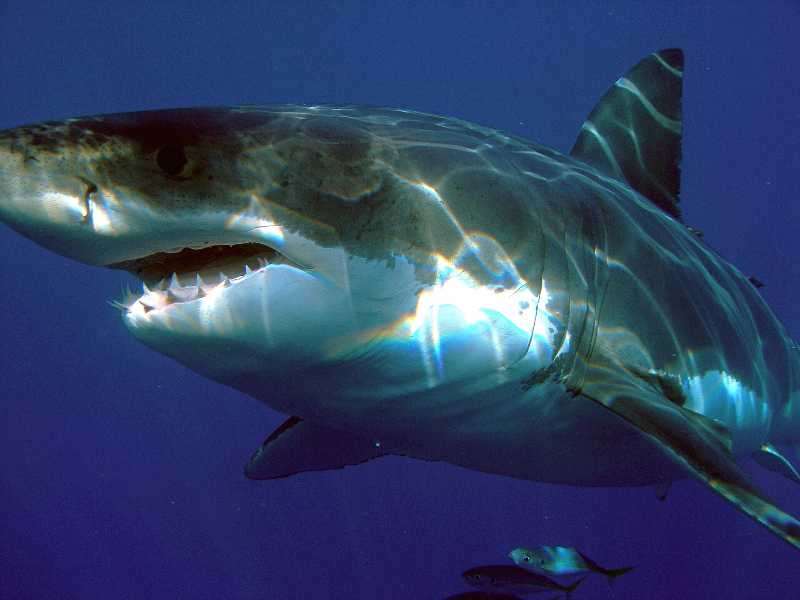
What would a shark quiz be without a great white? This iconic animal features prominently in pop culture, though this tends to present a misleading idea of their danger and aggression. Deep Blue, one of the largest great whites, is 6.1 m (20 feet) long.
Its 300 serrated teeth are continually replaced throughout its life. Great whites have large livers that can be up to a quarter of its body weight, used for energy storage and buoyancy control.
5. Basking shark
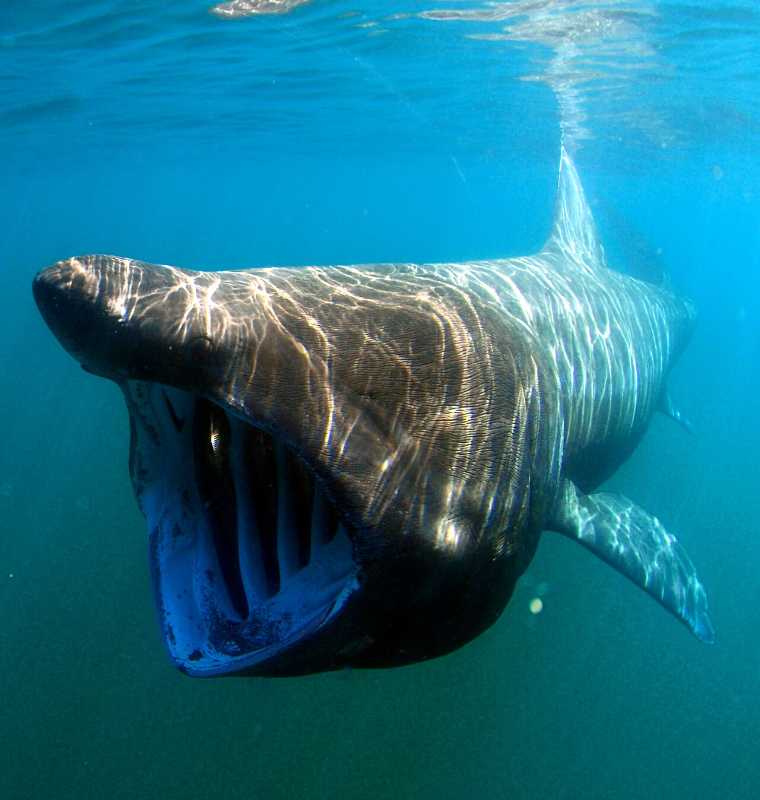
This shark's mottled brown colour, bulbous nose and large white mouth clearly label it as a basking shark. It is the second largest shark behind the whale shark, reaching lengths of up to 12 m (39.4 feet). Like the other largest sharks, they are filter feeders, feeding on zooplankton, and small fish and invertebrates.
They pose no danger to humans and often approach divers, making them a staple for tourism. They are a cosmopolitan species, meaning they are found in all oceans, and they are also highly migratory.
6. Cookiecutter shark
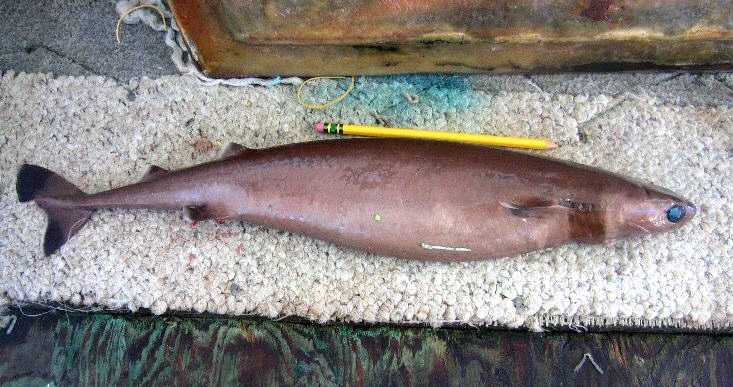
This small shark, also known as the cigar shark for its tube-shaped body, has a distinctive colour and dark band around its neck. They are found in warmer waters, particularly around islands, and up to 3.7 km (2.3 miles). They may also migrate vertically as much as 3 km (1.9 miles) daily, approaching the surface at dusk and diving back down with the dawn. Their lower surface is covered with light-emitting photophores used for camouflage.
This shark gets its name from the way it feeds. It uses its sharp teeth to gouge round plugs out of other animals, such as marine mammals, fishes and, occasionally, human divers. They have also been known to take bites out of submarines and underwater cables.
7. Greenland shark
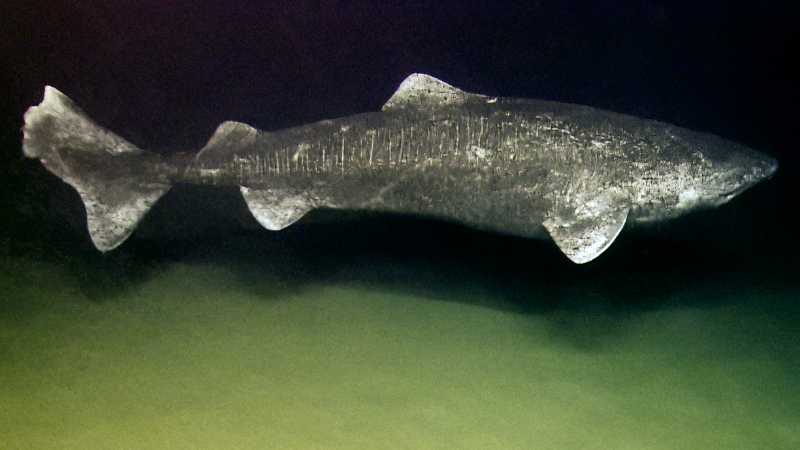
This shark's mottled grey and white colouring and rounded fins are distinctive. The Greenland shark lives in deep, cold water (100-1200 m or 328.1-3937 feet). These sharks have the longest lifespan of any vertebrate, living up to 510 years. Since these sharks live in the dark, their eyesight is poor, and made worse by the fact that they often have parasitic copepods burrowed in their eyes.
Because their lifespan is so long, they only reach sexual maturity at 150 years, and their pregnancy can be up to 18 years, so they are slow to bounce back from population loss. These sharks are very large, reaching up to 6.4 m (21 feet).
8. Wobbegong shark
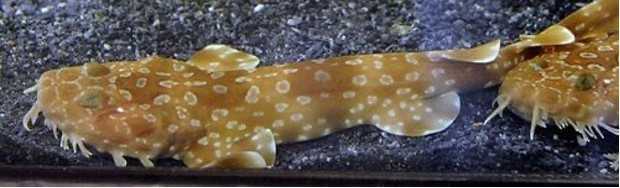
The flat body, "tassels" on the face and attractive pattern of this shark are characteristic of the wobbegong family of sharks. Each species has slightly different sizes and patterns. which help them to blend in to the ocean floor, as they are ambush predators.
The shark in this image is very small as it is a young shark. Wobbegongs aren't considered dangerous, but they have attacked swimmers, divers and snorkellers who inadvertently come too close. Once they bite, they are very difficult to remove and often hang on to the person.
9. Thresher shark
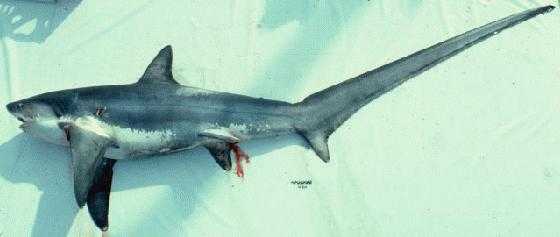
This shark's distinctive long caudal (tail) fin clearly distinguishes it as one of three thresher shark species. The three species are the common, pelagic, and bigeye thresher. These sharks use their long fin as a whip to stun fish. This tail can be as long as the rest of their body.
The largest of the three species by far is the common thresher, which reaches up to 6.1 m (20 feet) in length and can weigh over 500 kg (1,100 lbs). These sharks are highly vulnerable to overfishing.
10. Megamouth shark
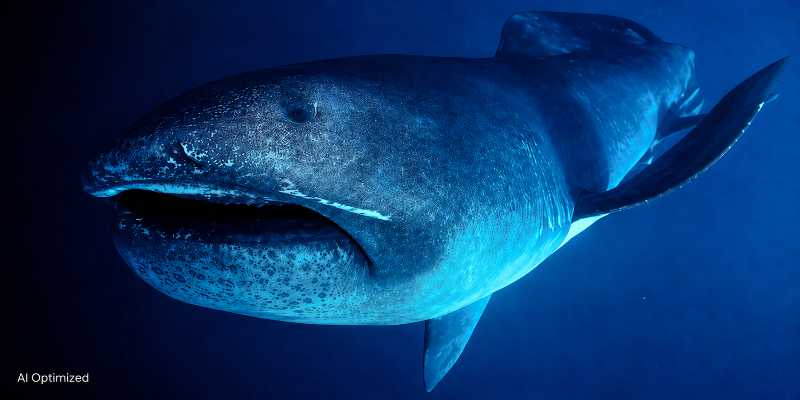
This shark's wide mouth and mottled grey colour are unique. It is the smallest of the filter feeding sharks, reaching up to 5.5 m (18 feet). They are very rare and live in the deep ocean. It was only discovered in 1976, after a specimen was found tangled in the anchor of a US Navy research boat in Hawaii. Since their discovery, only 296 specimens have been seen or caught. Females are larger than males on average.
11. Port Jackson shark
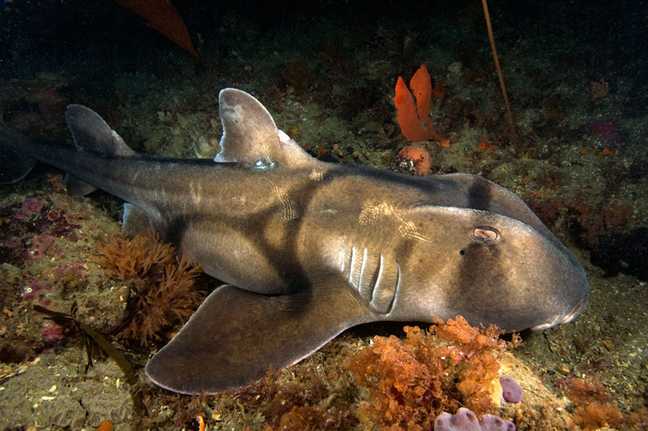
The ridges on this shark's eyes, as well as its chain like pattern and wide fins are unusual, though still seen commonly throughout the bullhead shark family. These sharks are unique in that their front and back teeth are different; the front teeth are small and sharp, while the back teeth are more blunt for crushing purposes, as this shark needs to crush the shells of the molluscs and echinoderms (starfish, urchins and sea cucumbers).
12. Epaulette shark
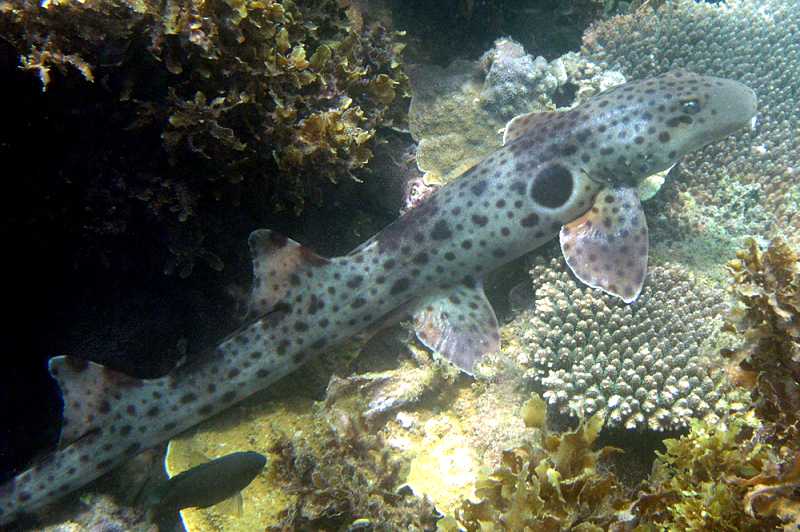
These sharks are so named for the large dark spot above their pectoral fins, reminiscent of the shoulder ornaments sometimes worn as part of military uniform. These sharks are able to survive the nightly hypoxia (oxygen depletion) that occurs in the shallow reefs they live in.
They can even survive in water with no oxygen at all for up to two hours with no ill effects, and can tolerate a large temperature range. They can also "walk" short distances across land.
13. Swell shark
This shark's pattern and colouring are used for camouflage in its rocky home. The name comes from its unusual defence mechanism. When threatened, they will swallow water, expanding up to twice their usual size and bite their tail to keep the water in.
This makes them much harder to bite and swallow, and their larger size makes them appear more threatening to potential predators. They reach maximum lengths of 1.1 m (3.6 feet).
14. Goblin shark
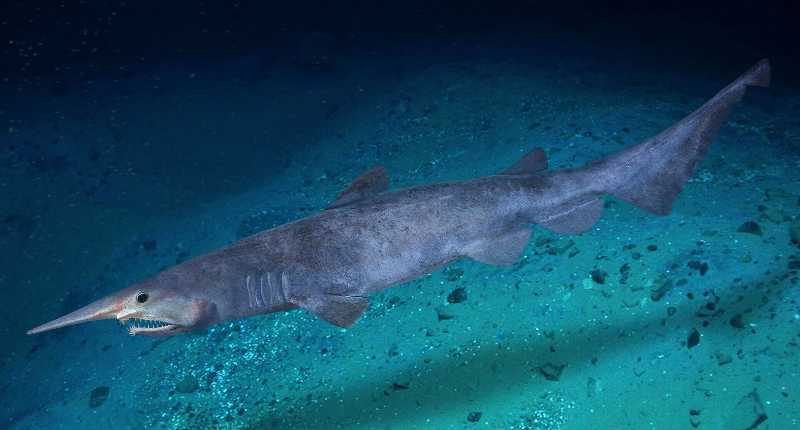
This deep-sea shark species has an instantly recognisable long nose and flat shape. Their unusual-looking jaws are protrusible, meaning they can be pushed out of its head further to grab fish. This shark can attain lengths of as much as 6 m (19.7 feet) in the case of one specimen found in 2000, though more commonly grow to 3-4 m (9.8-13.1 feet).
They usually occur at depths greater than 100 m (328.1 feet), but their have been confirmed recordings of them down to 2,000 m (6,561.7 feet).
15. Hammerhead shark
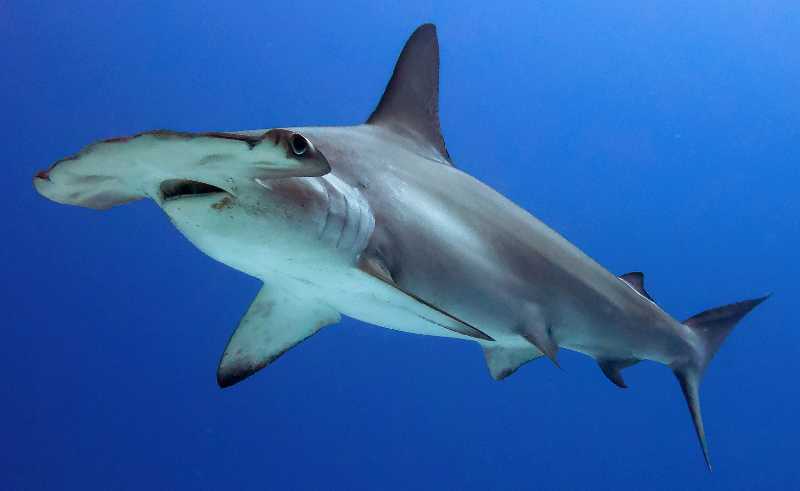
These distinctive sharks (of which there are ten species) are recognisable to even the most amateur shark fans. The shape of their head gives them increased binocular vision, better depth perception and a larger area for electroreceptors. Almost all of the hammerhead shark species are critically endangered. They are been known to have caused any human fatalities.
The largest species is the great hammerhead with an average length and weight of 4 m (13.1 feet) and 230 kg (507 lbs), while the smallest, the bonnet head, which has a relatively small head, averages only 1.5 m (5 feet) and 10.8 kg (24 lbs). Another species, the winghead, has a very wide head, and is placed in a separate genus from all other hammerhead species.
This quiz was reviewed by FunTrivia editor rossian before going online.
Any errors found in FunTrivia content are routinely corrected through our feedback system.