Last 3 plays: bernie73 (10/10), Reamar42 (10/10), DeepHistory (10/10).
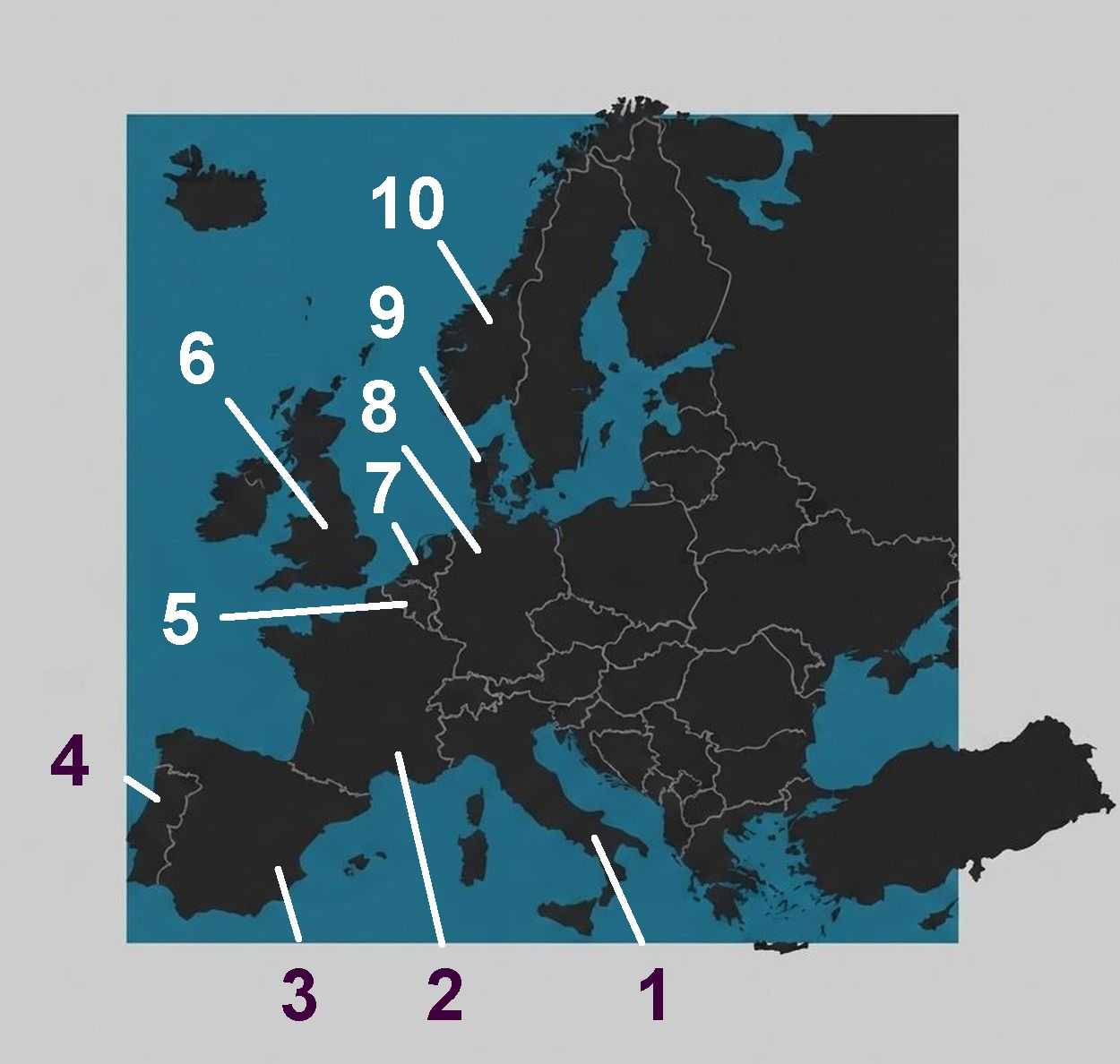
Link these explorers with their birth countries. Be aware that some were working for other countries when exploring.
Click on image to zoom
Alexander von HumboldtFrancisco PizarroJames CookAmerigo VespucciRoald AmundsenVasco da GamaVitus BeringAdrien de GerlacheSamuel de ChamplainAbel Tasman* Drag / drop or click on the choices above to move them to the answer list. View Image Attributions for This Quiz
Amerigo Vespucci was born in what is now Florence, Italy, in 1454. It was a city-state at the time. He had two older brothers, but did not follow them to university, instead he received his education from an uncle who was a celebrated humanist scholar. He was given an introduction to geography and astronomy, which proved important later in his career.
Vespucci was living in Seville by 1492 and was involved in supplying some Christopher Columbus voyages. It is unclear how many voyages Vespucci took part in, possibly as many as four. There is sufficient evidence to support at least one for the Spanish crown and another for the Portuguese crown. Claims of others helped reinforce his exploration credentials. The Spanish made him a citizen of Castile and León. In 1508 he became chief pilot for the Casa de Contratación, the crown agency for the Spanish Empire, and he remained in Spanish crown service until his death in 1512.
2. Samuel de Champlain
It is not clear when Samuel de Champlain was born or where in France the event took place. It was once claimed that the date and location depended on the religious leaning of the scholar concerned. The date of birth normally lies between 1567 and 1580 and the place is thought to have been in the French province of Aunis. It is unclear what he looked like either. The Champlain portrait by Théophile Hamel (1870) is actually based on the portrait a contemporary advisor to Cardinal Richelieu.
Born into a family of mariners, he received a maritime education as well as a military one. He also received combat experience in the late 1590s in Henry IV's army, which was to serve him well in New France. Before that, his first overseas travel was as part of a Spanish fleet to the West Indies at the request of his uncle-in-law. After a stint as geographer to King Henry IV, he then turned his attention and energies to North America where he founded Quebec.
3. Francisco Pizarro
Best known for his expeditions which resulted in the conquest of the Inca Empire, Spanish conquistador Francisco Pizarro was born in Trujillo, Spain, possibly in the late 1470s. He was assassinated in Lima, Peru, in 1541 as a result of power struggles between Spanish conquistadors.
The illegitimate son of an infantry colonel, Pizarro grew up illiterate and remained so for life. His mother later married and produced another son, Francisco Martín de Alcantara, who accompanied Pizarro during his Peruvian conquest, and died defending Pizarro during the assassination. Pizarro first sailed to the New World in 1509 and became established in Panama as mayor of the relatively-new Panama City. It was tales of gold that encouraged him to mount his South American expeditions, starting in 1524. The Inca Empire conquest was completed during the period 1532-1572. Pizarro was also second cousin once removed to the conquistador Hernán Cortés, who conquered the Aztec Empire.
4. Vasco da Gama
The Portuguese explorer Vasco da Gama gained his fame from opening the maritime trade route between Europe and India around Africa's Cape of Good Hope. This broke the Muslim dominance of the overland route. It also helped Portugal to establish a colonial empire along the Indian Ocean trade route and gave Portugal a prominence in the spice trade. His ruthlessness was evident in his massacre of over 400 pilgrims in the 1502 Pilgrim Ship incident.
Vasco da Gama was born in the seaport of Sines in southwest Portugal during the 1460s. His father was civil governor of Sines during his childhood. Little is known about his early years, however, he undoubtedly learned maritime and military skills. He joined his father in the Order of Santiago, a Christian military-religious order of knights. When the head of the order later became King John II of Portugal, he tasked da Gama with seizing some French ships in 1492. His successor King Manuel I chose the by-now-experienced da Gama to lead the first India voyage (1497-1499). After a spell of disfavour, a new king (John III) appointed da Gama as Viceroy of Portuguese India in 1524 but de Gama died from malaria in India later that year.
5. Adrien de Gerlache
The Belgian explorer Baron Adrien Victor Joseph de Gerlache de Gomery (1866-1934), or Adrien de Gerlache, was best known for leading the Belgian Antarctic Expedition of 1897-1899. It was the first expedition to overwinter in the Antarctic region after his ship became ice-bound, possibly deliberately. Among his crew members were Frederick Cook (an American explorer who claimed to reach the North Pole in 1908) and Roald Amundsen (a Norwegian explorer who was later first to reach the South Pole).
De Gerlache was born in Hasselt, Belgium, in 1866. He was interested in the sea from an early age, starting off as a cabin boy in 1883, and gaining his captain's ticket by 1894. By now also a Belgian Navy lieutenant but bored of working on Ostend-Dover ferries, he tried but failed to get on two expeditions before deciding to mount his own expedition. In 1957-1958, his son Gaston led the second Belgian expedition to Antarctica.
6. James Cook
Known for leading three exploratory voyages in the Pacific and Southern Oceans during the 18th century, Captain James Cook was a British Royal Navy officer and conducted his voyages at the behest of the Royal Navy. He was to die in 1779 on Hawai'i Island as a result of a cutter (small boat) being stolen, which he had attempted to retrieve by kidnapping the local king with a view to ransoming him in exchange.
Cook was born in the village of Marton in the north of Yorkshire in 1728, the second of eight children. His father, also named James, was a Scottish farm labourer while his mother Grace Pace was from a local town. Cook's education was paid for by his father's employer and he was a farm worker and grocer boy before rising through the ranks of the merchant navy. Declining the offer of captaining the collier "Friendship", he joined the Royal Navy in 1755. Starting at the bottom again, he rose through the ranks and served during the Seven Years' War (1756-1763).
After the conflict, he was tasked with charting the coast of Newfoundland. It was this hydrographic work and his astronomical observations of an eclipse during this period which attracted the attention of the Admiralty and set him up for his subsequent voyages.
7. Abel Tasman
Abel Janszoon Tasman (1603-1659) was best known for the two voyages he conducted on behalf of the Dutch East India Company (VOC). He was the first European to discover New Zealand, or Staten Landt, as he called it. He also was the first European to find what he named Antony van Diemen's Land after his sponsor, now named Tasmania after him.
Tasman was probably born in 1602 or 1603. His home village was Lutjegast in the province of Groningen, Netherlands. Uneducated, he was described as a widower and seaman when he married for the second time in Amsterdam. He was then employed by the VOC in 1632 and soon sailed to Batavia (Jakarta). On returning to the Netherlands, he signed up for another 10 years and brought his wife Jannetje with him on the six-month voyage back to Batavia. His famous voyages took place in 1642 and 1644. He retired to Batavia and died aged 58, leaving his estate split between his second wife and daughter from his first marriage.
8. Alexander von Humboldt
Alexander von Humboldt (1769-1859) was a German polymath, geographer, naturalist, and explorer. He was seen by members of the natural science disciplines as the father of ecology and of environmentalism. His lengthy explorations in the Spanish Americas contributed to his five-volume treatise "Cosmos", which provided a strong impetus for scientific exploration during the 19th century.
Von Humboldt was born in Berlin in 1769 to a prominent German noble family, one of four siblings. His two sisters died young and, after his father's death in 1779, his mother organised the education of the brothers through tutors, including botanist Carl Ludwig Willdenow. Inherited money was instrumental in funding von Humboldt's explorations. He developed many scientific connections such as with Joseph Banks, president of the Royal Society and the botanist who accompanied Captain James Cook on his first great voyage. Von Humboldt's Spanish American expedition took place between 1799 and 1804. He was accompanied by French explorer and botanist Aimé Bonpland, having obtained the consent of the Spanish crown.
9. Vitus Bering
The Danish-born Vitus Bering, also known as Ivan Ivanovich Bering, was probably best known as the cartographer who led two Russian naval scientific expeditions in the first half of the 18th century to the Kamchatka region to explore the Asian Pacific coast.
Vitus Jonassen Bering (1681-1741) was born in the port town of Horsens in Denmark. He signed on as a ship's boy at the age of 15, reaching as far as India and the Dutch East Indies. In 1704 he signed up with the expanding Russian Navy and rapidly gained promotion, becoming second captain by 1720. At the end of the Great Northern War (1700-1721) in which he had served in a non-combat role, he resigned in 1724 due to being passed over for promotion. After being jobless for five months, he re-enlisted at his departing rank. He was asked later the same year to lead the First Kamchatka Expedition (1725-1731). He died during the second expedition in 1741, probably as a result of scurvy.
10. Roald Amundsen
The Norwegian polar explorer Roald Amundsen (1872-1928) was a key figure in the period sometimes referred to as the Heroic Age of Antarctic Exploration. He was first to reach the South Pole, beating the British explorer Robert F. Scott to the post by about a month.
Born in Borge into a family of Norwegian shipowners and captains, he was the fourth son. His mother was keen for him to avoid a maritime career, pushing him to become a doctor instead. When his mother died, he gave up medical studies for a life at sea. He was aged 21 at the time. He signed up as first mate for the Belgian Antarctic Expedition led by Adrien de Gerlache. This was his first taste of the Antarctica. The first expedition he led was to traverse the Northwest Passage which he did during the period 1903-1906, becoming the first to do so by ship alone. This is where he learned Arctic survival skills which stood him in good stead for the South Pole expedition (1911-1912). He disappeared along with five others in a flying boat during an Arctic rescue mission in 1928.
This quiz was reviewed by FunTrivia editor ponycargirl before going online.
Any errors found in FunTrivia content are routinely corrected through our feedback system.