FREE! Click here to Join FunTrivia. Thousands of games, quizzes, and lots more!
Quiz about NeoPaganism  Occultism

Neo-Paganism & Occultism Trivia Quiz


Another interesting, adopted quiz in my FunTrivia journey, this one takes a look at witchcraft, modern occultism, spiritualist philosophies, important figures, and other aspects of neo-paganism. Have fun!
This is a renovated/adopted version of an old quiz by author katethepagan

A multiple-choice quiz by NeuralSpicy. Estimated time: 3 mins.
  1. Home
  2. »
  3. Quizzes
  4. »
  5. Religion Trivia
  6. »
  7. Paganism

Author
NeuralSpicy
Time
3 mins
Type
Multiple Choice
Quiz #
239,106
Updated
Nov 01 26
# Qns
10
Difficulty
New Game
Avg Score
9 / 10
Plays
13
Last 3 plays: Guest 69 (3/10), Guest 99 (9/10), kingmama (7/10).
- -
Question 1 of 10
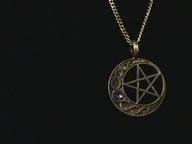
1. What is the name of the pagan symbol of a five-pointed star enclosed within a circle? Hint


Question 2 of 10
2. The practitioners of this pagan religion, made popular in the mid-20th century, often honor a Goddess and a God and observe seasonal festivals called sabbats. What is it called? Hint


Question 3 of 10
3. What famous occultist, mountaineer, poet, and prolific author wrote "The Book of the Law", which introduced the religion called Thelema? Hint


Question 4 of 10
4. In the Tarot, which of the following does the Six of Coins NOT represent? Hint


Question 5 of 10
5. Helena Blavatsky founded which spiritual movement that sought to explore universal wisdom, reincarnation, and religious synthesis? Hint


Question 6 of 10
6. According to the Wiccan Rede, which wood from the Sambucus tree should never be burned, as traditional lore states it is "the Lady's tree"? Hint


Question 7 of 10
7. Which contemporary movement is especially known to honor the ancient religions of Scandinavia, including veneration of figures like Odin, Thor, and Freyja? Hint


Question 8 of 10
8. Which Wiccan sabbat, coinciding with Halloween, marks the transition between the light and the dark halves of the calendar? Hint


Question 9 of 10
9. Gazing into a crystal ball, mirror, or other reflective surface in an attempt to see visions or hidden information is called what? Hint


Question 10 of 10
10. Dion Fortune, born Violet Mary Firth, was an important British occultist, author, and a major figure in modern Western esotericism. Her family motto spoke of God being above fate. What was it? Hint


(Optional) Create a Free FunTrivia ID to save the points you are about to earn:

arrow Select a User ID:
arrow Choose a Password:
arrow Your Email:


Most Recent Scores
Today : Guest 69: 3/10
Today : Guest 99: 9/10
Today : kingmama: 7/10
Today : elvislennon: 8/10
Today : DizWiz: 10/10
Today : Guest 104: 3/10
Today : marianjoy: 10/10
Today : bernie73: 5/10
Today : Steelflower75: 9/10

Quiz Answer Key and Fun Facts
1. What is the name of the pagan symbol of a five-pointed star enclosed within a circle?

Answer: Pentacle

Without a circle, you have yourself a pentagram. Enclose it in a circle, and it's usually called a pentacle, especially in modern Paganism. Regardless, the symbolism of the five points is often the same, although the circle can add another layer of meaning.

They represent the five elements of earth, air, fire, water, and spirit. In a typical upright pentacle, there is one point facing upwards, and that is the one symbolizing spirit. It's all about balance and protection. They can also represent the wounds of Christ, the human senses, or whatever your particular tradition says they represent. Symbols shift their meanings depending on who's using them. Regardless of your interpretation, the five-pointed star has a history dating back to ancient Mesopotamia over 5,000 years ago.
2. The practitioners of this pagan religion, made popular in the mid-20th century, often honor a Goddess and a God and observe seasonal festivals called sabbats. What is it called?

Answer: Wicca

Wicca is a nature-based Pagan religion that had its roots in England and was later made popular in the 1950s by Gerald Gardner. Typically, there's a balance between a masculine figure (a horned God) and a feminine figure, the Goddess or sometimes the Triple Goddess. The Triple Goddess is a kind of trinity made up of the Maiden, the Mother, and the Crone, representing different stages of a woman's life. The Wiccan Rede, an ethical guideline of the religion, is summed up neatly with the phrase, "An it harm none, do what ye will".

The Wheel of the Year follows the changing seasons and is traditionally divided into light and dark halves. It celebrates eight holidays or festivals known as Sabbats. These include the solstices and equinoxes, along with four festivals that fall between them. One of the most important is Samhain, which many Wiccans consider their New Year.
3. What famous occultist, mountaineer, poet, and prolific author wrote "The Book of the Law", which introduced the religion called Thelema?

Answer: Aleister Crowley

Edward Alexander Crowley was born in 1875 in England. He lived a full life by any standards, with his résumé including such items as ceremonial magician, poet, occultist, novelist, mountaineer, and founder of the Thelema religious philosophy.

He was raised in a strict fundamentalist household, and when he rebelled against Christianity, he rebelled hard, sometimes going by the name "The Beast" and getting into all sorts of trouble. 1904's "The Book of the Law" was Crowley transcribing the words of a channeled entity named Aiwass. The big idea behind the idea of Thelema lacked the mitigating clause found in Wiccan paganism. It was simply "Do what thou wilt shall be the whole of the Law." It wasn't about selfish desires, though. It was about looking deep within to find your "True Will", your deeper purpose, and acting on it. So it's more about discovering your true purpose and following it than simply doing whatever feels good.
4. In the Tarot, which of the following does the Six of Coins NOT represent?

Answer: Love

In the mysterious world of Tarot, the Six of Coins (or Six of Pentacles) represents the balance of giving and receiving, with a focus on material or financial exchanges. Love is the odd one out here. There are a number of cards for that, most notably the Lovers. There are certainly others.

Upright, it's about giving or receiving help. Reversed, it can refer to selfishness or receiving help you need with strings attached. That's simplified, but you get the basic idea.
5. Helena Blavatsky founded which spiritual movement that sought to explore universal wisdom, reincarnation, and religious synthesis?

Answer: Theosophy

If you like the esoteric, Theosophy is for you. Madame Blavatsky, a 19th-century Russian occultist, co-founded the movement with Henry Steel Olcott and William Quan Judge. She claimed that her knowledge was given her by a secret spiritual brotherhood living in Tibet. Her books, including "Isis Unveiled", formed the foundational documents of Theosophy.

The word "Theosophy" is Greek for "Wisdom of the Gods", so she certainly wasn't being coy. The philosophy attempted to mesh various beliefs from the Eastern and Western world together. It was single-handedly responsible for shining a light in the West on concepts like karma and reincarnation.
6. According to the Wiccan Rede, which wood from the Sambucus tree should never be burned, as traditional lore states it is "the Lady's tree"?

Answer: Elder

"Nine woods in the Cauldron go
Burn them quick an' burn them slow.
Elder be ye Lady's tree
Burn it not or cursed ye'll be."

- The Wiccan Rede

This law has its roots in ancient European folklore. In Wicca, the "Lady" refers to the Triple Goddess. It is her sacred manifestation on Earth, and as such, she would prefer not to be set on fire. This no-no goes back a long time when Celtic folklore claimed it was protected by the "Elder Mother". She was a spirit who would punish anybody who came along and burned her wood without permission.

It's also practical advice. Elder wood contains poisons that are released when burned. Inhaling the toxic smoke can cause wicked problems for your lungs and even get you sick.
7. Which contemporary movement is especially known to honor the ancient religions of Scandinavia, including veneration of figures like Odin, Thor, and Freyja?

Answer: Heathenry

Heathenry is also known by names such as Ásatrú and Forn Siđr ('The Old Way'). Heathen religious organizations have received official recognition in several Scandinavian countries, including Iceland, Norway, Denmark, and Sweden. It's a revival of pre-Christian Germanic and Scandinavian religions. Practitioners are generally polytheistic, worshipping the old Norse gods, while some also embrace animistic beliefs involving nature spirits and the veneration of ancestors.

Blót rituals are the big deal in heathenry. Historically, these involved the ritual sacrifice of animals. Today's practitioners usually prefer a less messy alternative: sacrificing food, mead, or ale. However, there are groups and individuals who have revived the older practice.
8. Which Wiccan sabbat, coinciding with Halloween, marks the transition between the light and the dark halves of the calendar?

Answer: Samhain

Samhain marks the end of the light half of the calendar and the beginning of the dark half.
It's considered by many to be the Pagan New Year, when the veil between the worlds of the living and dead is at its thinnest. Many Wiccans and Druids celebrate it as one of the most sacred of the eight Sabbats of the Wheel of the Year. It can involve creating an altar dedicated to lost relatives, friends, and pets. There's often a silent meal held in total darkness or candlelight. Also, because of that thinning of the veil between worlds, it's considered a powerful night for reading tarot, scrying, and casting runes. It's a time to reflect on personal grief and bad habits, and consider emotional baggage that needs to be tossed aside in the coming year.

The fact that Samhain coincides with Halloween is no coincidence. A lot of modern traditions originate with the old Celtic festival. People even wore masks and disguises, possibly to confuse or ward off evil spirits by making themselves look like supernatural creatures. I suppose the idea was that a monster would leave other monsters alone. They also went from door to door reciting special verses in exchange for food.
9. Gazing into a crystal ball, mirror, or other reflective surface in an attempt to see visions or hidden information is called what?

Answer: Scrying

If you're staring into a smooth, reflective surface to see spiritual visions, you are scrying, my friend. The word originated from the Middle English word "descry", meaning "to discover". Practitioners have their own favorite surfaces to stare into. If you're picturing a crystal ball, that certainly qualifies, as does mirror scrying and water scrying.

Other practitioners get creative with fire scrying, which involves staring deeply into a flame, be it a candle or a bonfire.
10. Dion Fortune, born Violet Mary Firth, was an important British occultist, author, and a major figure in modern Western esotericism. Her family motto spoke of God being above fate. What was it?

Answer: Deo non fortuna

Dion Fortune's family motto was "Deo non fortuna", meaning "By God, not luck". It was originally adopted by her paternal grandfather, John Firth. When Violet Firth entered the world of the occult, she adopted the magical name "Deo Non Fortuna", based on the old family motto. She later shortened it to Dion Fortune and used this name for her writings about magic, mysticism, and psychology.

By whichever name you call her, she founded what became the Society of the Inner Light, a group that blended esoteric Christianity, Arthurian legend, and the Qabalah. It still operates today.
Source: Author NeuralSpicy

This quiz was reviewed by FunTrivia editor looney_tunes before going online.
Any errors found in FunTrivia content are routinely corrected through our feedback system.
11/1/2026, Copyright 2026 FunTrivia, Inc. - Report an Error / Contact Us