FREE! Click here to Join FunTrivia. Thousands of games, quizzes, and lots more!
Quiz about Label It Inside a Eukaryotic Cell

Label It! Inside a Eukaryotic Cell Quiz

Animal Edition

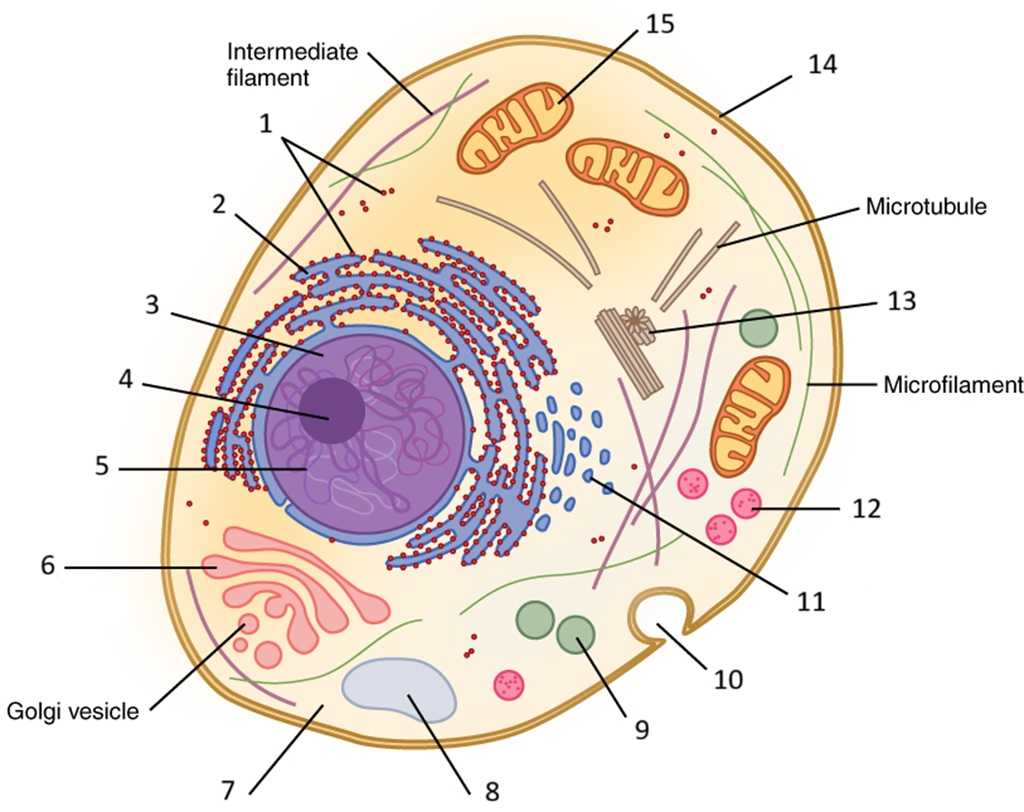
Think you know your cell biology? Whether you're a high school or college student preparing for an exam, this quiz makes a great study guide! Label 15 structures of an animal cell using the clues provided to help you along the way.

A label quiz by nnamarie. Estimated time: 3 mins.
  1. Home
  2. »
  3. Quizzes
  4. »
  5. Science Trivia
  6. »
  7. Biology
  8. »
  9. Cell and Molecular Biology

Author
nnamarie
Time
3 mins
Type
Label Quiz
Quiz #
421,540
Updated
Nov 26 26
# Qns
15
Difficulty
Average
Avg Score
11 / 15
Plays
18
Last 3 plays: elgecko44 (10/15), calmdecember (15/15), PhNurse (13/15).
Click on image to zoom
Smooth Endoplasmic Reticulum (SER) Lysosome Nucleolus Rough Endoplasmic Reticulum (RER) Chromatin Centrosome Mitochondria Cell Membrane Nucleus Peroxisome Ribosomes Cytoplasm Secretory Vesicle Golgi Apparatus Vacuole
* Drag / drop or click on the choices above to move them to the answer list.
View Image Attributions for This Quiz
1. Small structures in the cytoplasm and RER where proteins are synthesized  
2. Covered in ribosomes; helps process and transport proteins  
3. Cell's control center; stores DNA instructions  
4. Located inside the nucleus, it produces ribosomal RNA (rRNA) and assembles ribosome subunits   
5. Holds DNA, the instructions for life, in the nucleus  
6. Cell's post office: sorts & packages proteins into Golgi vesicles for delivery   
7. Jelly-like material that surrounds the organelles  
8. Small storage sac that holds water, nutrients, or waste   
9. Breaks down fatty acids and harmful substances like hydrogen PEROXide  
10. Packages and releases materials outside the cell; exocytosis  
11. Lacks ribosomes, makes lipids, stores calcium, and helps detoxify chemicals  
12. Breaks down and recycles cellular waste   
13. Organizes microtubules during cell division  
14. Selectively permeable barrier that controls what enters and exits the cell  
15. Powerhouse of the cell; produces ATP via cellular respiration  

Most Recent Scores
Today : elgecko44: 10/15
Nov 26 2026 : calmdecember: 15/15
Nov 26 2026 : PhNurse: 13/15
Nov 26 2026 : WandMaster8: 15/15
Nov 26 2026 : lethisen250582: 15/15
Nov 26 2026 : Guest 108: 15/15
Nov 26 2026 : pennie1478: 3/15
Nov 26 2026 : xchasbox: 1/15
Nov 26 2026 : Alcoholic63: 3/15

Quiz Answer Key and Fun Facts
1. Ribosomes

Ribosomes are responsible for translation, the process of reading messenger RNA (mRNA) to assemble amino acids into proteins. Free ribosomes in the cytoplasm generally produce proteins that function within the cell, while ribosomes attached to the rough endoplasmic reticulum synthesize proteins destined for secretion, insertion into cell membranes, or use in certain organelles. Ribosomes are composed of ribosomal RNA (rRNA) and proteins, and their subunits are assembled in the nucleolus.
2. Rough Endoplasmic Reticulum (RER)

The rough endoplasmic reticulum (RER) gets its name from the ribosomes attached to its surface, giving it a rough appearance under a microscope. These ribosomes synthesize proteins that enter the RER, where they begin folding into their correct three-dimensional shapes and may undergo initial modifications. Transport vesicles then carry many of these proteins to the Golgi apparatus for further processing, sorting, and distribution.

The RER is also physically connected to the outer membrane of the nuclear envelope.
3. Nucleus

The nucleus contains most of the cell's DNA and regulates cellular activities through gene expression. It is the primary site of transcription, where genetic instructions in DNA are copied into RNA by enzymes called RNA polymerases. Messenger RNA (mRNA) then travels through nuclear pores into the cytoplasm, where ribosomes translate its genetic instructions into proteins.

The nuclear envelope separates the genetic material from the cytoplasm.
4. Nucleolus

The nucleolus is a dense region inside the nucleus responsible for producing ribosomal RNA (rRNA) and assembling ribosomal subunits. Ribosomal proteins produced in the cytoplasm enter the nucleus and combine with rRNA in the nucleolus. The completed subunits are exported through nuclear pores and later join together during protein synthesis.

A single nucleus can contain multiple nucleoli, particularly in cells that produce large amounts of protein.
5. Chromatin

Chromatin consists of DNA wrapped around proteins called histones, which help organize and package genetic material inside the nucleus. The arrangement of chromatin influences gene expression because tightly packed DNA is generally less accessible to the transcription machinery. During cell division, chromatin condenses into recognizable chromosomes, allowing genetic material to be accurately distributed between daughter cells. Nearly every cell in the body contains essentially the same DNA, but different patterns of gene expression enable cells to perform specialized functions.
6. Golgi Apparatus

The Golgi apparatus receives proteins and lipids from the endoplasmic reticulum and modifies, sorts, and packages them for delivery. It consists of flattened membrane sacs called cisternae that process materials as they move through the organelle. The Golgi packages cargo into vesicles, including secretory vesicles that transport materials to the cell membrane for release outside the cell.

It also helps direct digestive enzymes to lysosomes, linking the cell's shipping and recycling systems.
7. Cytoplasm

The cytoplasm includes the cytosol, a water-based fluid, and the organelles located outside the nucleus. It contains dissolved ions, nutrients, and enzymes needed for numerous chemical reactions. Glycolysis, the first stage of glucose breakdown, occurs in the cytosol and produces a small amount of ATP.

The cytoplasm also provides the environment in which free ribosomes synthesize proteins and materials move between organelles.
8. Vacuole

Vacuoles are membrane-bound compartments that store substances such as water, nutrients, and cellular waste. Animal cells generally contain several smaller vacuoles rather than one large central vacuole. Their membranes help separate stored substances from the surrounding cytoplasm, helping maintain the cell's internal conditions. Vacuoles and other membrane-bound compartments contribute to the storage, transport, and processing of materials within cells.
9. Peroxisome

Peroxisomes contain enzymes that break down certain fatty acids and carry out reactions involving potentially harmful chemicals. Some of these reactions produce hydrogen peroxide (H₂O₂), which can damage cellular components if allowed to accumulate. An enzyme called catalase converts hydrogen peroxide into water and oxygen, protecting the cell. Peroxisomes also work alongside mitochondria and the endoplasmic reticulum in lipid metabolism and other metabolic processes.
10. Secretory Vesicle

Secretory vesicles are small membrane-bound sacs that transport materials, such as proteins and hormones, from the Golgi apparatus to the cell membrane. When a vesicle fuses with the plasma membrane, its contents are released outside the cell through exocytosis.

This process allows specialized cells to secrete important substances, including insulin from pancreatic beta cells and digestive enzymes from glandular cells. Vesicle fusion also adds membrane lipids and proteins to the plasma membrane.
11. Smooth Endoplasmic Reticulum (SER)

Unlike the rough endoplasmic reticulum (RER), the smooth endoplasmic reticulum lacks attached ribosomes and specializes in lipid synthesis rather than protein synthesis. It produces phospholipids used in cellular membranes and helps synthesize steroid hormones in certain cells. Enzymes in the smooth ER also help detoxify drugs and other chemicals, particularly in liver cells.

In muscle cells, a specialized form called the sarcoplasmic reticulum stores and releases calcium ions needed for muscle contraction.
12. Lysosome

Lysosomes contain digestive enzymes that break down damaged organelles, large molecules, and unwanted cellular materials. Their interiors are acidic, providing the conditions needed for these enzymes to function effectively. Through a recycling process called autophagy, lysosomes help recover useful components from worn-out cellular structures.

Many lysosomal digestive enzymes are synthesized in the rough endoplasmic reticulum and processed through the Golgi apparatus before reaching lysosomes.
13. Centrosome

The centrosome is the primary microtubule-organizing center in most animal cells and typically contains a pair of centrioles. Before cell division, the centrosome duplicates, helping establish the two poles of the mitotic spindle. Spindle microtubules help separate chromosomes so that each daughter cell receives the correct genetic information. Microtubules organized by the centrosomes also contribute to cell shape, intracellular transport, and the organization of cellular structures.
14. Cell Membrane

The cell membrane is composed primarily of a phospholipid bilayer with embedded proteins that regulate transport and communication. Its selective permeability allows certain molecules to cross while restricting others, helping maintain homeostasis. Membrane proteins function as channels, transporters, and receptors that detect chemical signals from other cells.

The membrane also participates in endocytosis and exocytosis, allowing materials to enter or leave the cell through membrane-bound vesicles.
15. Mitochondria

Mitochondria are commonly called the cell's powerhouses because they produce much of the ATP needed for cellular activities. During cellular respiration, the citric acid cycle and electron transport chain help extract energy from nutrients, with most ATP being produced through oxidative phosphorylation.

The electron transport chain is located in the inner mitochondrial membrane, where a proton gradient drives ATP synthesis. ATP then powers essential cellular processes, including active transport, protein synthesis, and cell division.
Source: Author nnamarie

This quiz was reviewed by FunTrivia editor rossian before going online.
Any errors found in FunTrivia content are routinely corrected through our feedback system.
11/27/2026, Copyright 2026 FunTrivia, Inc. - Report an Error / Contact Us