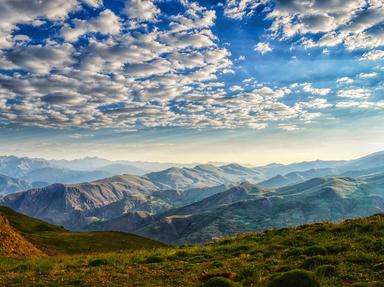
There would be many factors that go into determining this. Though two mountain ranges may appear continuous, they are often geologically distinct, perhaps in their origin, or in the composition and thus shape of the mountains. They may be separated by other significant geographic features like rivers. There may be historical or cultural reasons to refer them as different ranges even without a geological reason. Ultimately, it's not a clean-cut decision, but rather a general consensus.
I'll look at one good example, though I'm sure there are many more interesting ones out there (Himalayas, Karakoram and Hindu Kush for example). Each one will have its own unique distinctions.
The Great Dividing Range of Australia, which extends for over 3,500km (2,175 miles) along the east coast of the continent, is often considered to be a single mountain range or chain, but to geographers and geologists it is more of a collection of mountain ranges, plateuas and hills. It was formed together 300 million years ago from a collision between Australia, South America and New Zealand. In that sense it is one range. However, the underlying rocks and geology across its length vary quite significantly. With the continent being the oldest landmass on Earth, with rocks that are billions of years old in many places, there has been plenty of time for different forces to shape the large stretch of land that was more recently pushed up into the Great Dividing Range. There are sections of volcanic rock and volcano remnants, escarpments, former sedimentary river basins. Climate varies widely from north to south, altering the vegetation, with everything from tropical rainforest to high altitude alpine vegetation.
So there is a lot of objective variation, but ultimately it's a subjective choice on where the lines are drawn. A good example of this is the Blue Mountains region west of Sydney. Its boundaries are not fixed but rather vague. Further up and down the Range, at least to the untrained eye, there are many sections with a very similar appearance and vegetation, yet they attract their own names. The proximity to a major city in Sydney gives the Blue Mountains their lustre, even when the geographic features are not so distinct from other areas.
Jul 03 2026, 5:26 PM