FREE! Click here to Join FunTrivia. Thousands of games, quizzes, and lots more!
Quiz about Dawlat alKuwayt

Dawlat al-Kuwayt Trivia Quiz

The State of Kuwait

The small Middle Eastern nation of Kuwait may be most familiar for its oil production, but there are many more interesting things to explore on a visit.

A photo quiz by looney_tunes. Estimated time: 2 mins.
  1. Home
  2. »
  3. Quizzes
  4. »
  5. General Knowledge Trivia
  6. »
  7. Mixed Nations
  8. »
  9. Mixed Middle East

Author
looney_tunes
Time
2 mins
Type
Photo Quiz
Quiz #
425,436
Updated
Sep 30 26
# Qns
10
Difficulty
New Game
Avg Score
8 / 10
Plays
12
Last 3 plays: wjames (8/10), rossian (10/10), gme24 (8/10).
-
Question 1 of 10
1. What language is the most widely spoken in Kuwait? Hint


Question 2 of 10
2. Which of these natural events is a frequent problem for Kuwaitis? Hint


Question 3 of 10
3. Which of its neighbours invaded Kuwait in 1990?


Question 4 of 10
4. What kind of boat is Al-Hashemi-II, shown here? Hint


Question 5 of 10
5. This photo shows Souq al-Mubarakeya, located in Kuwait City. What is a souq?


Question 6 of 10
6. What is the name for the tower shown here, rising above the Imam Sadiq mosque? Hint


Question 7 of 10
7. The Arabian red fox, found in Kuwait, is the smallest subspecies of the red fox.


Question 8 of 10
8. Which Kuwaiti island is a breeding ground for a number of birds, including the pictured white-cheeked tern? Hint


Question 9 of 10
9. As an Islamic city, Kuwait city has a number of mosques. Which of them is the largest? Hint


Question 10 of 10
10. What will you see in the Dar al Athar al Islamiyyah collection? Hint


(Optional) Create a Free FunTrivia ID to save the points you are about to earn:

arrow Select a User ID:
arrow Choose a Password:
arrow Your Email:


View Image Attributions for This Quiz

Most Recent Scores
Today : wjames: 8/10
Today : rossian: 10/10
Today : gme24: 8/10
Today : cj-08514: 7/10
Today : Guest 76: 7/10
Today : jasa9092: 10/10
Today : Reamar42: 8/10
Today : Guest 2: 9/10
Today : bernie73: 6/10

Quiz Answer Key and Fun Facts
1. What language is the most widely spoken in Kuwait?

Answer: Arabic

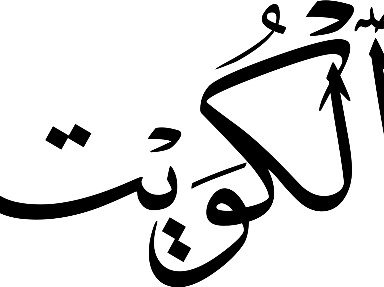
As you may guess from the writing in the image (and the title image for the quiz, which shows the country's name written in Arabic), the official language of Kuwait is Arabic - specifically, Modern Standard Arabic. However, that form of Arabic is mostly used in the press and in academic institutions - for everyday use, the variant called Kuwaiti Arabic is used. Kuwaiti Arabic is a dialect which has been influenced by the dialects of Iraq and Saudi Arabia, along with influence from the historical presence of English, Italian, Persian, Turkish, Hindi, Urdu and Swahili. Because Kuwaiti soap operas are widely disseminated through the Arabic-speaking world, Kuwaiti Arabic is familiar around the world.

Modern Standard Arabic is the language of instruction in Kuwaiti schools, but most student also study English and French - useful in the commercial world in which adult Kuwaitis find themselves.
2. Which of these natural events is a frequent problem for Kuwaitis?

Answer: dust storm

Kuwait has a hot, dry climate, as might be expected from its location, on the north of the Persian gulf, bordered by Saudi Arabia and Iraq. Annual rainfall averages between 75 and 150 mm, and summer temperatures usually have a daily maximum between 42 and 46 degrees Centigrade. The highest temperature (so far) recorded in Kuwait was 54 C at Mitribah, on 21 July 2016, currently the third highest temperature on record anywhere in the world.

During the spring and early summer, winds tend to be from the south, hot and dry. during June and July a northwesterly wind called the shamal brings frequent and dramatic dust storms, such as the one in the image. From late July until October, however, the prevailing wind changes to be from the southeast, carrying moisture from the Gulf. Because Kuwait is located on the north of the Persian Gulf, its winters are cooler than those of most other coastal states in the region.
3. Which of its neighbours invaded Kuwait in 1990?

Answer: Iraq

The 1980s saw a great deal of tension in the region over the control of oil reserves. Kuwait was an ally of Iraq during their war with Iran (1980-1988), but when they refused to forgive the massive debt that Iraq ran up during that time, the alliance turned into a rivalry. In July 1990 Iraq lodged an official complaint with OPEC (the Organisation of Petroleum Exporting Countries), contending that Kuwait was using slant drilling to steal oil from an Iraqi oil field near the border. In August, Iraq invaded and annexed Kuwait. The image for this question shows Iraqi tanks along the beach near Kuwait City.

In response to this invasion, a coalition of countries led by the United States engaged in a conflict that has become known as the Gulf War, and succeeded in driving out the Iraqi forces in February of 1991. On their way out, however, they set around 700 oil wells on fire, resulting in both the loss of oil that was burned and extensive contamination of the surrounding land. It has been estimated that about 40 million tons of sand and earth were contaminated, covering nearly 5% of Kuwait's land. Water supplies in the affected region were also impacted, leading to significant loss of vegetation and animal life, most of which has not yet been restored.
4. What kind of boat is Al-Hashemi-II, shown here?

Answer: dhow

Al-Hashemi-II is the largest dhow ever built, according to the 2002 Guinness Book of World Records. The manufacturer claims its dimensions as 83.75m long and 18.5m wide at its broadest; the Guinness people differ slightly, with a length of 80.4m and a width of 18.7m. Although the dhow is constructed to be watertight, it has never actually been floated, and is used as an event centre and maritime museum.

The dhow, a boat widely used in the Red Sea and Indian Oceans (including the Persian Gulf) for trade, is a sailing vessel whose origins are not documented. The term is actually from European observers, as the locals use separate terms for the various types of vessel covered by this umbrella term. These include 'baghlah' for the heaviest seagoing version and the slightly lighter 'boum', both of which are two-masted vessels with triangular sails that hang from a long yard mounted in a fore-aft orientation at an angle to the mast.

Both Al-Hashemi-II and Fateh Al-Khayr (the only surviving Kuwaiti-built ship from the pre-oil era, when the pearl industry was vital to the nation's economy) are examples of the boum which played a significant role in the development of the country through trade.
5. This photo shows Souq al-Mubarakeya, located in Kuwait City. What is a souq?

Answer: market

A souq (also spelled souk or suq) is a marketplace consisting of a series of stalls or shops. Also called bazaars (the Persian word), they are a common feature of cities in the Middle East and the northern parts of Africa. They are traditionally situated in streets that have been roofed over, and have an entrance gate at each end. As well as being used to describe a city's central shopping area, the word has come to be used figuratively, as in describing the stock market.

Souq Al-Mubarakiya has been established for over 200 years in the centre of Kuwait. As you can tell from the image, it is beautifully lit at night, which, along with the cooler temperatures, makes evening shopping ideal for tourists who want to see the traditional market in action. According to its website, you can find all sorts of goods: Persian carpets, perfumes, jewelry, traditional clothing, antiques, fresh foods, spices, and more. There are several restaurants where you can sample authentic traditional food, as well as a children's playground and shisha (hookah) smoking rooms.
6. What is the name for the tower shown here, rising above the Imam Sadiq mosque?

Answer: minaret

All four of these are features of a mosque. The qibla is the name for the wall that faces towards the Kaaba in Mecca, so allows Muslims to orient themselves properly for their prayers. The haram is the open room in which they gather for prayer services. The qubba is the dome, symbolising the dome of heaven, which often covers the prayer hall.

A minaret (called a manara in Arabic) is one of the most distinctive features of a mosque, appearing prominently in its exterior view. It is a tall, slender tower from which the mosque's muezzin issues the regular call to prayer (adhan). Minarets are usually constructed as part of the mosque, but may also be built as an independent building very close to the main building. As well as providing a platform from which the muezzin's call can reach a large number of the faithful, the minaret makes a constant statement about the presence of Islam, and the power (both religious and political) of those who built them.

The Imam Ja'far as-Sadiq Mosque, dedicated to a figure revered by Shia Muslims as the sixth Imam (infallible successor to Muhammad) is one of the oldest mosques in Kuwait. It came to international attention in 2015 when it was the site of a suicide bombing carried out by representatives of the Islamic State of Iraq and the Levant (ISIL) which killed 27 and injured 227.
7. The Arabian red fox, found in Kuwait, is the smallest subspecies of the red fox.

Answer: True

Despite its name, the subspecies Vulpes vulpes arabica is not only found on the Arabian Peninsula, but also in nearby Kuwait, Jordan and Syria. Its small size, short fur and large ears are all typical adaptations for a desert environment, but (like other red foxes) it is commonly found in urban areas, where it happily scavenges through food waste. When left to its own devices, it is an omnivore, eating just about anything: eggs, any meat it can catch (mostly rodents, due to size constraints) or find already killed and ready to eat, even fruits and vegetables.

In 2022 Kuwait hosted the Third Gulf Cooperation Council (GCC) Games, a sports festival that included 16 different sports in which nearly 2000 athletes competed. The mascot for the games was an Arabian red fox named Salmi, chosen to symbolise endurance and the ability to survive in a world where struggle is all around. This was the first edition of the games to include female athletes. It had originally been planned for 2020, but was postponed several times due to the COVID-19 pandemic.
8. Which Kuwaiti island is a breeding ground for a number of birds, including the pictured white-cheeked tern?

Answer: Kubbar Island

Kubbar Island is a sandy, shrub-covered island off the coast of the southern part of Kuwait. It is a small (under 30 acres) circular island surrounded by coral reefs, which make it a popular spot for scuba diving. That doesn't sound too impressive, but the island also is home to a breeding colony of white-cheeked terns (Sterna repressa), which has led to the island being designated an Important Bird Area by BirdLife International.

Bubiyan Island, located in the north, is Kuwait's largest island, the largest of eight islands near the mouth of the Shatt al-Arab, the river that forms the boundary between Iraq and Iran. Failaka Island is located off the coast near Kuwait City. Its strategic location had led to its being the longest continuously inhabited place in Kuwait until the Gulf War pretty much destroyed it. While most of the mines have been cleared, it is still occupied by the military; nevertheless, tourists from Kuwait City do visit for a day on the beach.

Shuwaikh Island is actually an island with an asterisk - still described as such, but actually no longer an island since a land bridge was constructed to connect Akkaz Island to the mainland industrial area of Shuwaikh. This was part of the larger Sheikh Jaber Al-Ahmad Al-Sabah Causeway project undertaken in 2018 to connect Kuwait City with other parts of the country directly across the bay, rather than having to travel around its edge.
9. As an Islamic city, Kuwait city has a number of mosques. Which of them is the largest?

Answer: Grand Mosque

Kuwait has approximately 2,000 mosques - hardly surprising in an Islamic country, where the faithful are expected to congregate for prayer several times a day. Approximately 70% of Kuwait's roughly 5 million citizens are Sunni Muslims, and 30% Shi'a Muslims (with the numbers adhering to other faiths numbering in the hundreds at most). Although Shi'ites are in the minority, that is the branch to which the current royal family adhere, and a number of the newest mosques are Shi'a mosques, including the three incorrect options used here. Of them, the Imam Hussein Mosque is the largest, and the Siddiqa Fatima Zahra Mosque possibly the most interesting architecturally, built to resemble the Taj Mahal with its four minarets.

The Grand Mosque is located in Kuwait City. The building covers 20,000 square metres of the 45,000 square metres that comprise the mosque's grounds. The main prayer hall is a square 72 metres on a side, which can accommodate about 10,000 worshippers. When the smaller halls and the outdoor courtyards and gardens are utilised (as happens, for example, during Ramadan), the mosque can cater for over 150,000 people at once.
10. What will you see in the Dar al Athar al Islamiyyah collection?

Answer: Islamic art

Dar al Athar al Islamiyyah is actually the name of an organisation which manages several cultural centres in which their massive collection of Islamic art is displayed. The collection, belonging to Sheikh Nasser Sabah Al-Ahmed Al-Sabah and his wife Sheikha Hussa Sabah Al-Salem Al-Sabah, has over 20,000 items, both Islamic and pre-Islamic. The latter are mostly displayed at the Amricani cultural centre; many items are in the Kuwait National Museum. According to that museum's website, the collection features "books, manuscripts, ceramics, glass, metal, precious stones and jewelled objects, architectural ornaments, textiles and carpets, coins and scientific instruments."

Another fine display of Islamic art can be found at the Tareq Rajab Museum and the nearby Tareq Rajab Museum of Islamic Calligraphy, both funded by the Rajab family. The items here include examples of art from around the Islamic world from pre-Islamic times through to the 21st century. It is known for its ceramics and jewelry, as well as for a comprehensive collection of Qurans dating from as early as the 7th century.
Source: Author looney_tunes

This quiz was reviewed by FunTrivia editor agony before going online.
Any errors found in FunTrivia content are routinely corrected through our feedback system.
9/30/2026, Copyright 2026 FunTrivia, Inc. - Report an Error / Contact Us