FREE! Click here to Join FunTrivia. Thousands of games, quizzes, and lots more!
Quiz about The Table of Nations

The Table of Nations Trivia Quiz


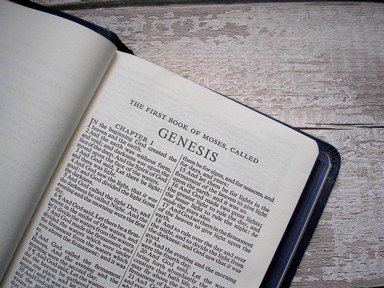
This quiz is based upon some information from Genesis 10, which has been dubbed by theologians as "the table of nations". No specific English translation is needed for the quiz.

A classification quiz by Ceduh. Estimated time: 3 mins.
  1. Home
  2. »
  3. Quizzes
  4. »
  5. Religion Trivia
  6. »
  7. Old Testament / Tanakh
  8. »
  9. Genesis

Author
Ceduh
Time
3 mins
Type
Classify Quiz
Quiz #
424,992
Updated
Aug 16 26
# Qns
10
Difficulty
New Game
Avg Score
8 / 10
Plays
11
Last 3 plays: Guest 72 (4/10), quizzer74 (8/10), Guest 209 (8/10).
Noah had three sons - Shem, Ham, and Japheth - and from these, all of the world's nations came to be. Match the ethnic groups to the sons of Noah that they came from according to Genesis. To make things more interesting, I included people who are believed to be modern descendants of the ancient people.
Shem
Ham
Japheth

Eberites or Hebrews (Jews) Arameans (Syrians) Havilites (Saudi Arabians) Canaanites (Lebanese and Palestinians) Javanites (Greeks) Asshurites (Assyrians) Askenazis (Germans and Jews in diaspora) Cushites (Ethiopians or Sudanese) Madaians (Persians/Iranians) Mizraites (Egyptians)

* Drag / drop or click on the choices above to move them to the correct categories.


Most Recent Scores
Today : Guest 72: 4/10
Today : quizzer74: 8/10
Today : Guest 209: 8/10
Today : lethisen250582: 10/10
Today : Steelflower75: 10/10
Today : miner8265: 3/10
Today : masfon: 10/10
Today : Kabdanis: 10/10
Today : ankitankurddit: 10/10

Quiz Answer Key and Fun Facts
1. Eberites or Hebrews (Jews)

Answer: Shem

Eber, a son of Shelah and grandson of Shem, was the ancestor of the Hebrews, and Abraham is considered to have been the first Hebrew. The word "Eber" or "Hebrew" means to "cross over", and it represents Abraham's journey from the Euphrates River to the land of Canaan, the Promised Land.

It is important to note that while all Jews are Hebrews, not all Hebrews are Jews. The Jews or Israelites are the descendants of Jacob, Abraham's grandson. So while Abraham, Isaac, and even Ishmael (Abraham's son through Hagar) and Esau (Jacob's brother) were Hebrews, they were NOT Israelites or Jews ("Jews" originally referred to inhabitants of the southern kingdom of Judah/Judea while "Israelites" were the inhabitants of the northern kingdom, but after the northern kingdom of Israel fell in 722 BC, all Israelites became known as Jews).

And then there's the word "Semitic", which is just the Greek form of the Hebrew "Shemitic", and it refers to several Middle Eastern groups; not just Jews. Some people suggest that "antisemitic" should be replaced with "anti-Jewish", because Jews aren't the only Semitic group out there. Arabs are Semitic but are often accused of antisemitism.

According to the Bible, God created the nation of Israel through the descendants of Jacob, who was a descendant of Abraham, Eber, Aram (through his mother's side), and Shem. God gave the land of Canaan to Jacob's descendants. However, because they were disobedient, God scattered them into all nations. This is the diaspora. However, God promised to one day bring them back to the land; never to be uprooted again. Many believe that the current state of Israel is the fulfillment of this promise, while others feel like Jews shouldn't be in the land of Israel until the Messiah comes.

DNA studies show that the major Jewish subgroups, Ashkenazi, Sephardic, and Mizrahi all have ancestry from the Middle East.

Jews are called God's chosen nation because it was through them that God chose to reveal Himself. The Jews wrote the Bible. They brought God's Law and morals into a world that was largely pagan and polytheistic, with human sacrifices, cannibalism, etc. Although God did promise Israel a kingdom, other nations can join if they accept the Messiah. It was always God's plan to use Israel to bring salvation to the Gentiles; never about racism or only caring about Israel.

I'm just saying "Messiah" because Jews and Christians disagree on who the Messiah is, but they agree on the concept, or at least Jews and Christian Zionists do.
2. Canaanites (Lebanese and Palestinians)

Answer: Ham

Ham was the father of Canaan, and Canaan was the grandfather of all of the various Canaanite subgroups.

Genesis 10:15-19, New American Standard Bible:
"Canaan became the father of Sidon, his firstborn, and Heth
and the Arvadite and the Zemarite and the Hamathite; and afterward the families of the Canaanite were spread abroad.
and the Jebusite and the Amorite and the Girgashite
The territory of the Canaanite extended from Sidon as you go toward Gerar, as far as Gaza; as you go toward Sodom and Gomorrah and Admah and Zeboiim, as far as Lasha."

DNA studies show that Lebanese people are the direct descendants of the ancient Canaanites, especially the Phoenicians. Other groups that have Canaanite ancestry (although not quite as much as the Lebanese) include the Palestinians and, ironically, even the Jewish people.

The land of Canaan, later called the land of Israel in the Bible, includes modern Lebanon, Israel, Palestine, and parts of Syria and Jordan (as of July 2026, today's Israelis live in only a tiny portion of the Biblical Promised Land). (Evidently, the Promised land, according to some sources, extends beyond Canaan and even includes parts of Saudi Arabia, Iraq, and elsewhere).

Some theologians believe that Palestinians are the descendants of Esau, Jacob's brother, who himself took wives from both the daughters of Canaan and from Ishmael, his Arabic uncle. This belief is based upon Genesis 25, when Rebekah asked God why the babies in her womb were fighting and God told her that she had two nations in her womb and they would always fight. That would make Palestinians half-Semitic and half-Hamitic.
3. Askenazis (Germans and Jews in diaspora)

Answer: Japheth

Ashkenaz was a son of Gomer and grandson of Japheth.

Genesis 10:2-3, New American Standard Bible:
"The sons of Japheth were Gomer and Magog and Madai and Javan and Tubal and Meshech and Tiras.
The sons of Gomer were Ashkenaz and Riphath and Togarmah."

While some ancient scholars and Rabbis considered Ashkenaz to be the ancestor of the Scythians and Cimmerians, by the middle ages, "Ashkenaz" became the Hebrew word for "German" or "Germany". As a result, diasporic Jews who lived in Germany became known as Ashkenazi Jews. Yiddish is, of course, Hebrew mixed with German. Eventually, "Ashkenazi" became the word for Jews who lived in other parts of Europe, such as Poland, Ukraine, and Russia. (Jews who lived in Spain and other areas were/are "Sephardic").

(The Germans are descendants of Japheth.)
4. Cushites (Ethiopians or Sudanese)

Answer: Ham

Since ancient times, scholars have considered Ham to be the ancestor of Africans and certain Asian groups. Cush was Ham's firstborn son. While it is believed today that the land of Cush is Sudan, originally, Cushites were identified as Ethiopians. In some English translations of the Bible, for example, "Cushite" is translated as "Ethiopian".

It is important to note that in the ancient world, however, "Ethiopian" was a blanket term for any African or black person. Cush had his own sons and his descendants are and have been considered to be what we call black people. Ham had another son, Put, who is identified with Libya.

While Moses' first wife Zipporah was a Midianite (Saudi Arabian), he later married a Cushite woman (unnamed), and his sister Mariam was struck with leprosy for apparently criticizing his interracial marriage.
5. Havilites (Saudi Arabians)

Answer: Shem

Before anybody sends me a correction notice, let me explain something. In the table of nations of Genesis 10, there are two men named Havilah; one as a son of Cush and grandson of Ham, and the other as a son of Joktan and great-grandson of Shem. This question is about the Semitic Havilites; not the Hamitic ones.

According to Genesis 25, the Ishmaelites lived in the land of Havilah and other areas, such as Shur. It is generally believed that the Ishmaelites and the Midianites, both Abraham's descendants but outside of the Jewish covenant, were the ancestors of the Arabs. Since the Havilites were descendants of Shem, they were related to Abraham, and so it seems that the Havilites "evolved" into the Arabic tribes of the Ishmaelites and the Midianites. Therefore some scholars view the land of Havilah as the same as the land of Midian, which is now called Saudi Arabia. The land of Midian was where Moses met his wife and also where he met God at the burning bush and even where he received the Law at Mt. Sinai.

Some scholars believe that the Hamitic Havilites became the Somalians.
6. Madaians (Persians/Iranians)

Answer: Japheth

Since ancient times, scholars have considered Japheth to be the ancestor of the Indo-Europeans.

Genesis 10:2, New American Standard Bible:
"The sons of Japheth were Gomer and Magog and Madai and Javan and Tubal and Meshech and Tiras".

One of these Indo groups are the Persians, which come from "Madai", which is the Hebrew word for the Medes.

Note: Some sources suggest a connection between Shem's son Elam and Persia or Iran. They even argue that Persians are a mix between Japhethic and Semitic ancestry. It is interesting to note that in the apocryphal Book of Jubilees, Madai married a daughter of Shem and even begged to live among the descendants of Shem instead of near the British Isles, which was his original inheritance.

In the New Testament, the Magi were Persian priests of Zoroastrianism, Persia's religion before Islam took over.
7. Javanites (Greeks)

Answer: Japheth

Javan was a son of Japheth. The Hebrew word for "Greece" is "Javan". In fact, in the Septuagint, which is the Greek translation of the Old Testament, "Javan" is translated as "Hellas", which is Greek for "Greece", LOL.

The sons of Javan were Elishah, Tarshish, Kittim, and Dodanim. The 9th century monk Nennius traced several European nations from Javan, including the Romans, the Britons, the Albans, the Saxons, the Bavarians, the Thuringians and the Lombards.

The Old Testament rarely mentions Greece, but when it does, it is listed among Israel's enemies. However, in the New Testament, Paul preached to the pagan Greeks and many of them converted to Christianity.
8. Mizraites (Egyptians)

Answer: Ham

Genesis 10:6, New American Standard Bible:
"The sons of Ham were Cush and Mizraim and Put and Canaan."

"Mizraim" is the Hebrew word for "Egypt". Egypt was, of course, where the Israelites were enslaved, according to the Bible. But Egypt will have its place in the Messianic kingdom, as a saved nation (see Isaiah 19).

Hagar, Sarah's maid who became the mother of Ishmael, was Egyptian.

Perhaps of all of the sons of Noah, the sons of Ham have had the most confusion surrounding them. For example, some people associate the ancient Philistines with the Canaanites, but according to Genesis 10, Mizraim, not Canaan, was the ancestor of the Philistines.

Then there's the curse of Canaan from Genesis 9. Although the Bible is clear that Noah cursed Canaan, racists in early American history used that verse to try and justify the enslavement of African-Americans, who were Cushites. Yet Noah never cursed Cush. If anything, that curse was fulfilled through God giving the land of Canaan to the Israelites, and has nothing to do with America or black or white people.
9. Asshurites (Assyrians)

Answer: Shem

Genesis 10:22, New American Standard Bible:
"The sons of Shem were Elam and Asshur and Arpachshad and Lud and Aram."

"Asshur" is the Hebrew word for "Assyria".

While the Assyrians invaded the northern kingdom of Israel around 722 BC, Isaiah 19 says that Assyria will be a saved nation in the future Messianic kingdom.

Ancient Assyria was an empire which was largely in what is now Iraq, but also in parts of Turkey, Syria, and Iran. Assyrian people still exist, and they live in Iraq (distinct from Iraqi Arabs) and in diaspora.
10. Arameans (Syrians)

Answer: Shem

When I was researching for this quiz, I realized something interesting. According to the Bible, the Jewish people grew out of the Aramean (Syrian) people.

Aram was a son of Shem. While Abraham was a descendant of Eber, he was born in Ur of the Chaldeans (believed to be modern Iraq). However, his family moved to the land of Aram, also called Haran. So he grew up in Aram. Interestingly, before Isaac was born, before even Ishmael was born, Abraham told God that his heir was Eliezer of Damascus (Genesis 15).

Rebekah, the wife of Isaac, is explicitly called an Aramean in Genesis 25. Jacob's wives, Leah and Rachel, were also Arameans because they were the daughters of Rebekah's brother, Laban. In Genesis 27, Isaac and Rebekah were upset that Esau married Canaanite women; they wanted him to marry Arameans because they were family. In Deuteronomy 26, God called Jacob a wandering Aramean. In other words, the only real difference between the original Hebrews and the Arameans is that the Hebrews believed in God and God made them into the nation of Israel with His Covenant. The Arameans outside of that Covenant were polytheists.

During the time of Jesus, the Jews spoke Aramaic, and the Old Testament was written in Hebrew with some parts written in Aramaic.

Outside of the family of Jacob, the Bible mentions the Arameans and Damascus frequently, with both positive and negative references. In the New Testament, "Aram" is called "Syria".
Source: Author Ceduh

This quiz was reviewed by FunTrivia editor looney_tunes before going online.
Any errors found in FunTrivia content are routinely corrected through our feedback system.
8/16/2026, Copyright 2026 FunTrivia, Inc. - Report an Error / Contact Us