FREE! Click here to Join FunTrivia. Thousands of games, quizzes, and lots more!
Magical Studies at Hogwarts Trivia Quiz
The 'Harry Potter' franchise has enchanted audiences - young and old - for decades. This quiz explores the Hogwarts curriculum by way of twelve magical pictures. Enjoy!
Please click on each image for additional detail, if required.
Drag-Drop or Click from Right
Options
TransfigurationHerbologyAstronomyMuggle StudiesFlyingCharmsAncient RunesDefence Against the Dark ArtsCare of Magical CreaturesHistory of MagicPotionsDivination
The mandatory subject of Astronomy was taught at Hogwarts to all students during their first five years at the establishment. Students had to make their way - at night - to the heights of the Astronomy Tower, ready to inspect stars, planets and constellations under the watchful eye of Professor Aurora Sinistra.
Despite Astronomy being a core subject at Hogwarts, author J.K. Rowling did not provide a great deal of detail as to what students were required to do; from what is outlined in the books, it takes a similar form to the Astronomy classes we take at our own schools, colleges and universities. In the 'Harry Potter' canon, Astrology belonged to the subjective field of Divination rather than the objective, scientifically-inclined subject of Astronomy.
2. Potions
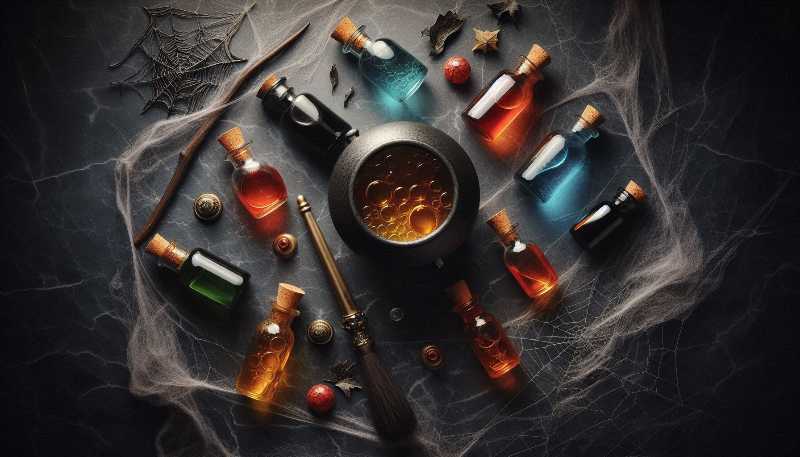
One of the core subjects studied at Hogwarts by Harry Potter and his friends was Potions, taught initially by Professor Severus Snape and then by Professor Horace Slughorn. The subject, akin to muggle Chemistry but with black cauldrons and magical ingredients, had a strong association with Slytherin throughout the books with both Snape and Slughorn also carrying out the role of Head of Slytherin at various times.
It didn't take long for Snape to assert his authority over Harry Potter. During Harry's first Potions class, Snape reminded the young wizard - rather unfairly and by way of interrogation - that "fame clearly isn't everything" (Chapter 8, 'Philosopher's Stone') and that being well known certainly wouldn't help in acquiring knowledge of where to find a bezoar (psst...you can find one in the stomach of a goat, Harry). Excelling in Potions was a prerequisite to achieving employment as an Auror, a magical enforcement job that interested our protagonist.
3. Muggle Studies
During the time that Harry Potter studied at Hogwarts, Muggle Studies was a subject taught to students from their third year onward by Professor Charity Burbage (until she met her horrifying end at the hands of Voldemort and was succeeded by Alecto Carrow). Under Professor Burbage the course was elective, reflecting the divide in knowledge between students who grew up in the non-magical world and those who spent their formative years in wizarding communities. Muggle Studies was made compulsory upon the takeover by Carrow.
Beyond the superficial study of objects such as toasters, radios and television sets, Muggle Studies had an ideological component. Charity Burbage's view was that Muggles were not inferior to magical folk whereas Alecto Carrow instructed the Voldemort perspective that Muggles are to be ruled over as they "are like animals" and that there is a "natural order" (Chapter 29, 'Deathly Hallows').
4. Transfiguration
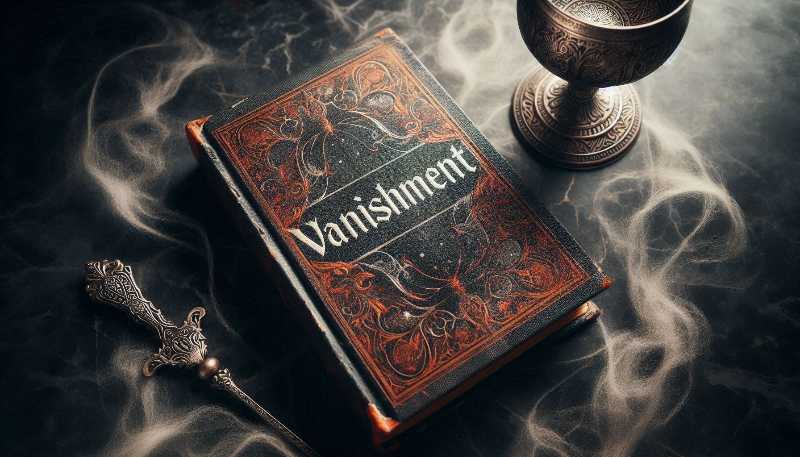
In the 'Harry Potter' books, students were introduced to Transfiguration in their first year. Attendance at Transfiguration classes was mandatory up until the fifth year and the subject focussed on magic related to the change of form, whether it be inanimate objects, animals or humans. Within the broad discipline of Transfiguration sits Vanishment which, as the name suggests, is all about making objects disappear. The related field of Conjuration deals with creating objects out of thin air or making items reappear.
Throughout the protagonist's time at Hogwarts, Transfiguration was taught by Head of Gryffindor and Deputy Headmistress of Hogwarts, Professor Minerva McGonagall. She later became Headmistress of the magical school upon the conclusion of the Second Wizarding War in which Voldemort is defeated.
5. Defence Against the Dark Arts
Defence Against the Dark Arts (DADA) was the forte of our protagonist, Mr Potter, and this is not at all surprising given his dark, turbulent entry into the world. The subject was the only one in which he obtained the highest grade of Outstanding (O) in his Ordinary Wizarding Levels (OWLs), a series of examinations taken at the end of his fifth year at Hogwarts.
The teaching of Defence Against the Dark Arts can best be described as shambolic with professors changing on an annual basis. Harry's long list of Defence Against the Dark Arts teachers is as follows: Quirinus Quirrell (outwardly timid person hiding a big secret under his turban), Gilderoy Lockhart (charming but hopeless wizard who unwittingly wipes his own memory), Remus Lupin (lycanthropy expert with the scars to show for it), Alastor "Mad-Eye" Moody (it was really Bartemius Crouch Jr sipping Polyjuice Potion), Dolores Umbridge (believed a theoretical understanding of the subject would be sufficient), Severus Snape (had wanted the job for a long time) and Amycus Carrow (though Harry was no longer in attendance by this point).
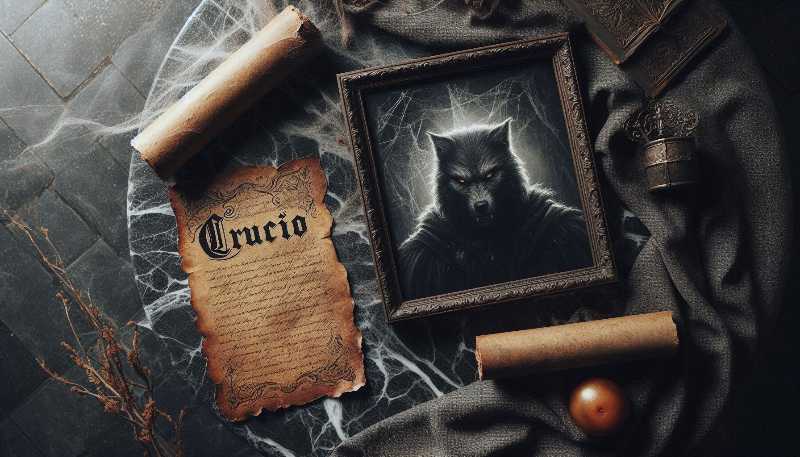
In the image there is a piece of parchment which features the word "Crucio"; this is the incantation for the Cruciatus Curse, one of three Unforgivable Curses. It is the method by which a (dark) witch or wizard can torture and inflict pain upon another; it was of course made use of by Voldemort along with the Imperius Curse ("Imperio"), which allows one to control the actions of another, and the Killing Curse ("Avada Kedavra").
6. Care of Magical Creatures
Harry Potter, Hermione Granger and Ron Weasley all studied Care of Magical Creatures in their third, fourth and fifth years at Hogwarts and took an Ordinary Wizarding Level (OWL) examination in the subject. Despite achieving the second best grade of Exceeds Expectations (only Outstanding is better), Harry - as well as Ron and Hermione for that matter - decided not to extend his formal studies in this field into his final two years at the school.
This predominantly practical subject teaches exactly what one would expect, how to care for magical creatures such as the unicorn (its blood is pure), phoenix (its tears can heal), thestral (visible to those who have witnessed death) and hippogriff (prideful creatures that must be approached in the right way). Harry, Ron and Hermione studied this course under the tutelage of Hogwarts Gamekeeper, Rubeus Hagrid, who was very experienced in the practical aspects of the discipline but was rather rusty on the formalities of teaching. At certain moments of unavailability, the wonderfully named Wilhelmina Grubbly-Plank stood in as substitute.
7. Flying
During Harry Potter's time at Hogwarts School of Witchcraft and Wizardry, Flying was taught by Madam Rolanda Hooch, who also officiated Quidditch matches at Hogwarts. This subject, held in the castle grounds, was practical in nature and taught broom skills to first-year students. Harry Potter was a natural in this class and put his skills to good use as a Seeker for the Gryffindor team in the magical ball-and-broom sport of Quidditch.
In terms of online discussions amongst fans, a few questions have been debated that relate to Madam Hooch and the teaching of the Flying course at the magical school. Is Flying only taught to first-year students? If so, what does Madam Hooch do with the rest of her time? Is she part time? These questions - and more - arise because J. K. Rowling didn't spend a great deal of time discussing Flying as a Hogwarts course, instead favouring Quidditch as a means of advancing the plot.
The assumption that Flying is only taught to students in their first year is predominantly underpinned firstly by the fact that the only explicit description of a Flying lesson was for a class of first-year Slytherin and Gryffindor students (Chapter 9, 'Philosopher's Stone'), secondly that there is no mention - even in timetables - of Flying for second-year students or older and, thirdly, that there is no OWL (Ordinary Wizarding Level) or NEWT (Nastily Exhausting Wizarding Test) in the subject. Whilst this is not conclusive - J. K. Rowling does not outwardly state that the course is only for Hogwarts freshers - the evidence strongly leans toward Flying being an introductory course only available to those in their first year.
8. Charms
Charms was taught to Harry Potter and his cohort by the short-statured, highly intellectual Head of Ravenclaw, Professor Filius Flitwick. Charms was mandatory for all students from year one through year five inclusive and covered content including proper enunciation for incantations (wouldn't want to make an error now would we Mr. Finnigan?), optimal wand movements and, of course, knowledge of the charms themselves.
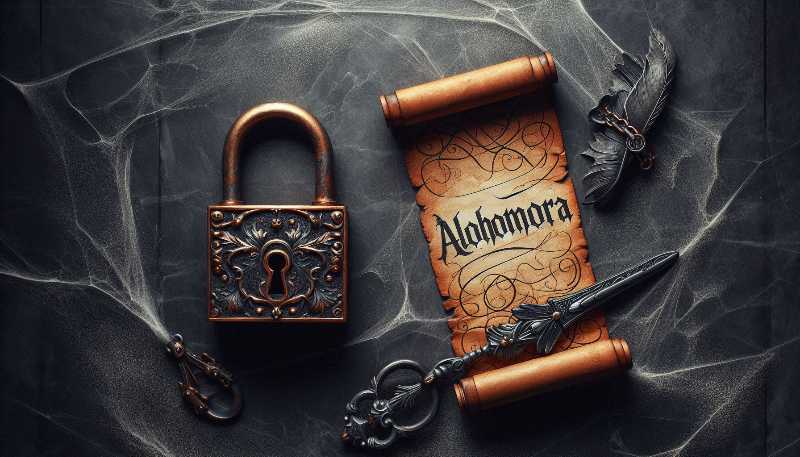
"Alohomora" is the incantation that underpins the Unlocking Charm which, if used successfully, will unlock a door, window or other locked object so long as there is no other magic adding extra layers of defence. The incantation associated with the Locking Charm - the counter to "Alohomora" - is "Colloportus".
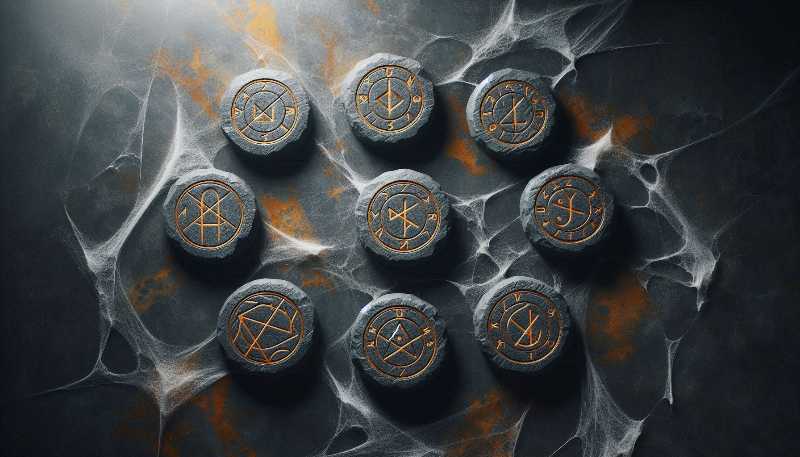
9. Ancient Runes
It is unsurprising that the exceptionally bright Hermione Granger was attracted to the study of Ancient Runes, as it is one of the more theoretical disciplines on offer to students at Hogwarts School of Witchcraft and Wizardry. J. K. Rowling has little to say about Ancient Runes, so little in fact that the name of the teacher is not even provided (non-canonical references have since been made by the author indicating that the subject lead is Professor Bathsheda Babbling).
From the few canonical references that exist, we know that Hermione studied the subject (Chapter 4, 'Prisoner of Azkaban') albeit with the help of a Time-Turner to deal with timetable clashes. We also know that the subject dealt with translations as Hermione rued an error in her Ancient Runes examination, "I mistranslated 'ehwaz'...it means 'partnership' not 'defence', I mixed it up with 'eihwaz'" (Chapter 31, 'Order of the Phoenix').
10. History of Magic
History of Magic was a subject taught at Hogwarts that was often derided for being dry; it was considered something of an endurance test by those who sat before the ghostly teacher, Professor Cuthbert Binns. It was not just the content that gave the subject a poor reputation but the way in which it was taught. As J. K. Rowling wrote, "Professor Binns opened his notes and began to read in a flat drone like an old vacuum cleaner until nearly everyone in the class was in a deep stupor" (Chapter 9, 'Chamber of Secrets').
Whilst students were drifting off during a lecture on the International Warlock Convention of 1289, Hermione - one of the few still awake - asks Professor Binns for information about the titular Chamber of Secrets. The 2002 film version of 'Chamber of Secrets' does not feature this material from the book and doesn't feature History of Magic classes at all.
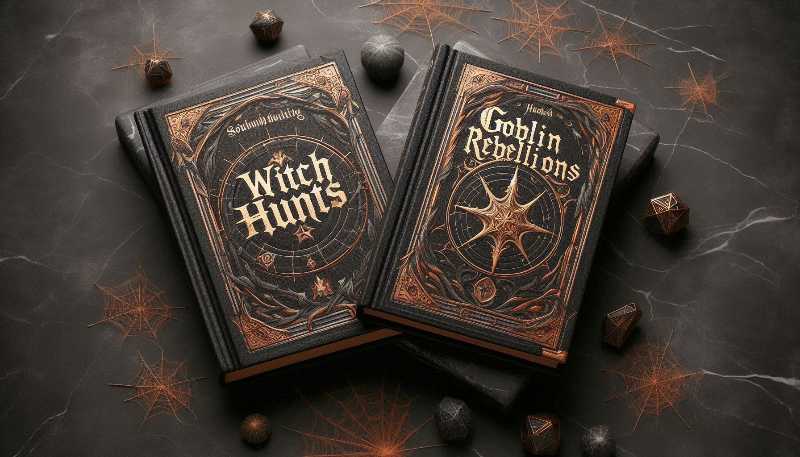
The image shows two books titled 'Witch Hunts' and 'Goblin Rebellions', topics taught to students struggling to stay awake in their History of Magic lessons.
11. Herbology
If Potions is akin to Chemistry and Care of Magical Creatures to Zoology, then Herbology is the magical version of what we would know to be Botany, the study of the plant kingdom. Growing and nurturing plants was particularly important for ensuring a steady supply of ingredients for use in making potions.
In the 'Harry Potter' books, Gryffindor student Neville Longbottom was particularly enthusiastic about this hands-on subject that was taught in the castle's greenhouses by Head of Hufflepuff, Professor Pomona Sprout. It is confirmed in the epilogue to 'Deathly Hallows' (some nineteen years after the Second Wizarding War) that Neville Longbottom had followed in Professor Sprout's footsteps and had become the Herbology teacher at Hogwarts.
J. K. Rowling tended towards capitalising nouns that have particular significance, including school subjects. In everyday English, nouns such as chemistry, zoology and botany wouldn't typically be capitalised in contexts such as the first sentence of this section but stylistically it makes sense in this case to take Rowling's lead.
12. Divination
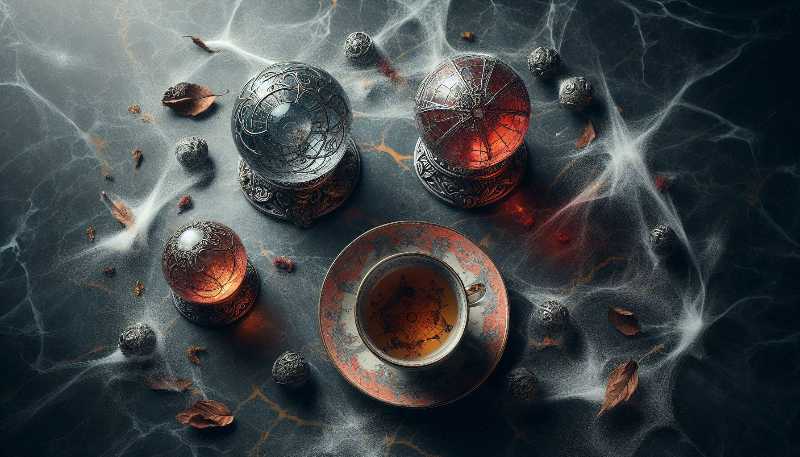
Harry Potter was taught Divination by the eccentric Professor Sybill Trelawney and, in later years, by the centaur Firenze (though, in divergence from the books, the films do not feature Firenze in a teaching role). In this elective subject, students were taught about methods that could be used to prognosticate or look into the future, whether it be through palm reading, crystal-gazing (hence the crystal balls in the picture) or using tea leaves in a cup.
Those that are gifted in this art are referred to as a Seer but the subject itself is viewed with suspicion by many including Transfiguration specialist, Professor Minerva McGonagall. It is worth noting that Professor McGonagall does not doubt the existence of Seers, rather her position is that true Seers are very rare and that by implication it is not really a subject that can be "taught".
Seers are often asked to prove their abilities but Professor Trelawney - in response to such a request from Professor Dolores Umbridge - made it clear that the "Inner Eye does not See upon command!" (Chapter 15, 'Order of the Phoenix').
This quiz was reviewed by FunTrivia editor MotherGoose before going online.
Any errors found in FunTrivia content are routinely corrected through our feedback system.