FREE! Click here to Join FunTrivia. Thousands of games, quizzes, and lots more!
Quiz about Artemis II Spaceflight

Artemis II Spaceflight Trivia Quiz

April 1 to 10, 2026

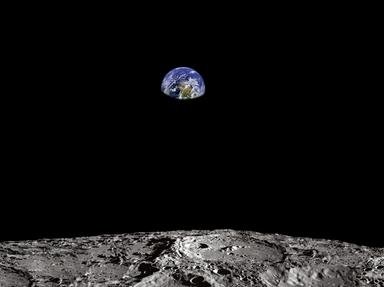
The first ten days of April 2026 saw a manned spaceflight visit the moon (as a flyby) for the first time in over 50 years. See if you can put the different phases of the Artemis II spaceflight in the correct order that they occurred.

An ordering quiz by reedy. Estimated time: 3 mins.
  1. Home
  2. »
  3. Quizzes
  4. »
  5. History Trivia
  6. »
  7. Specialized History
  8. »
  9. Man in Space

Author
reedy
Time
3 mins
Type
Order Quiz
Quiz #
423,844
Updated
Apr 18 26
# Qns
10
Difficulty
New Game
Avg Score
5 / 10
Plays
10
Last 3 plays: mulligas (7/10), Taltarzac (8/10), ceetee (8/10).
Mobile instructions: Press on an answer on the right. Then, press on the question it matches on the left.
(a) Drag-and-drop from the right to the left, or (b) click on a right side answer, and then click on its destination box to move it.
What's the Correct Order?Choices
1.   
(Mission Day 1)
Initial Earth orbit checkout
2.   
Launch from Earth
3.   
Free-return trajectory toward Earth
4.   
Outbound deep-space cruise
5.   
(Mission Day 2)
Ascent, stage separation, & Orion deployment
6.   
Earth re-entry & Pacific splashdown
7.   
Proximity operations & manual piloting demo
8.   
(Mission Day 6)
Trans-lunar injection burn
9.   
Entry into the Moon's sphere of influence
10.   
(Mission Day 10)
Lunar flyby & maximum distance record


Most Recent Scores
Apr 18 2026 : mulligas: 7/10
Apr 18 2026 : Taltarzac: 8/10
Apr 18 2026 : ceetee: 8/10
Apr 18 2026 : lethisen250582: 10/10
Apr 18 2026 : cowalsh: 10/10
Apr 18 2026 : mcdubb: 10/10
Apr 18 2026 : xchasbox: 8/10
Apr 18 2026 : Kabdanis: 7/10
Apr 18 2026 : Guest 77: 9/10

Quiz Answer Key and Fun Facts
1. Launch from Earth

Artemis II launched aboard the Space Launch System (SLS) from Kennedy Space Center on April 1, 2026, placing the Orion spacecraft and its four‑person crew into space and beginning the mission.

There were some challenges faced during this process, specifically pre‑launch system anomalies, including a faulty temperature sensor in the Launch Abort System and a brief Flight Termination System communications issue, but they were resolved before liftoff without scrubbing the launch.
2. Ascent, stage separation, & Orion deployment

Solid rocket boosters and the SLS core stage separated; Orion deployed its solar arrays and transitioned to spacecraft power.

The SLS rocket performed exceptionally, achieving target orbit accuracy greater than 99%, with clean stage separations and no crew‑related concerns during ascent.
3. Initial Earth orbit checkout

Orion remained in Earth orbit while the crew verified critical systems, including life support, propulsion, communications, and navigation.

During this phase, the crew encountered only non‑critical software problems, most notably a Microsoft Outlook failure on personal crew tablets, and Mission Control remotely resolved the email issue. A little more impactfully, Orion's toilet fan controller initially failed, preventing urine use for several hours. The crew, led by Christina Koch, successfully troubleshot and restored the toilet within about 6 hours.

All mission‑critical systems (guidance, life support, propulsion) operated nominally throughout this phase.
4. Proximity operations & manual piloting demo

The crew manually flew Orion during a proximity‑operations test, demonstrating human control of the spacecraft before leaving Earth orbit.
5. Trans-lunar injection burn

Orion's service‑module engine fired to push the spacecraft out of Earth orbit and onto a free‑return trajectory toward the Moon.

No anomalies were reported during the trans-lunar injection burn. Orion's service module engine executed the burn precisely, committing the spacecraft to a free‑return trajectory - a key pass/fail test of the mission.
6. Outbound deep-space cruise

The crew conducted long‑duration life‑support tests, radiation monitoring, navigation updates, exercise routines, and communications checks while traveling away from Earth. This occurred over three days (days 3 to 5 of the mission).

The challenges faced during this extended portion of the mission were minimal, pretty much limited to minor usability issues (Bluetooth pairing, software quirks). Physically, the crew operated in higher radiation and communication-delay environments than experienced in low‑Earth orbit. However, radiation levels remained within predicted models.

Life‑support, environmental control, and health‑monitoring systems worked as designed, and crew performance metrics (cognition, workload, fatigue) remained stable across the multiple days.
7. Entry into the Moon's sphere of influence

Orion entered the Moon's gravitational influence, with preparations for lunar flyby operations and anticipated communications blackout.
8. Lunar flyby & maximum distance record

Orion passed behind the Moon at about 6,500 km above the surface, briefly losing contact with Earth and reaching its maximum distance-farther than any humans had ever traveled.

A real challenge was faced as the crew passed behind the Moon, with the expected communications blackout. Navigation and propulsion accuracy had to be exact, with no margin for error.

Orion's closest approach to the Moon was about 6,500 km (4,040 mi) above the lunar surface. The communications blackout occurred exactly as predicted, and in the process, the spacecraft (and crew) set a new human‑distance (from Earth) record with no trajectory deviations, traveling over 406,771 km (252,756 mi) during their lunar flyby. They surpassed the previous record set by Apollo 13 in 1970, which was 400,171 km (248,655 mi).
9. Free-return trajectory toward Earth

Lunar gravity bent Orion's flight path back toward Earth; the crew conducted re‑entry preparations, system checks, and mission debriefs.

This was, perhaps, the most critical portion of the mission, needed to ensure the best chance for a safe return to Earth. Orion's trajectory had to be refined with multiple return‑correction burns, where even small errors could have led to an unsafe re‑entry angle days later. During parts of the return, communications delays exceeded half a second, requiring the crew to operate with greater autonomy than missions in low‑Earth orbit.

This phase was ultimately successful. The trajectory behaved exactly as designed, validating NASA's emergency-safe return concept for future lunar missions. Power, thermal control, propulsion, and navigation also remained nominal throughout the outbound-to-inbound transition, allowing for optimal conditions for re-entry and splashdown.
10. Earth re-entry & Pacific splashdown

On April 10, 2026, Orion re‑entered Earth's atmosphere at high speed, endured peak heating, deployed parachutes, and splashed down safely in the Pacific Ocean.

This was the most dangerous phase of the mission, lasting roughly 13 minutes. Orion separated from its European Service Module (ESM) and re‑entered Earth's atmosphere at Mach 32 (around 40,000 km/h (25,000 mph)), enduring temperatures approaching 2,760 degrees Celsius (5,000 degrees Fahrenheit) before splashing down off the coast of San Diego, California.

One key challenge that was faced by the crew was a known heat-shield risk, which had been encountered in the Artemis I unmanned mission. That mission revealed unexpected cracking and uneven ablation in Orion's Avcoat heat shield. Artemis II flew with the same heat‑shield design, increasing scrutiny and risk.

Another major challenge was that once atmospheric entry began, there was no backup system - success depended entirely on correct trajectory angle, shield performance, and guidance systems working perfectly. On top of that, a plasma sheath caused a total radio blackout for a portion of the re-entry, leaving mission controllers unable to intervene during peak heating.

Ultimately, it was a successful re-entry and splashdown. Based on observations from Artemis I, engineers had changed the re‑entry angle to distribute heat more evenly - avoiding the gas‑trapping issue seen on that mission. This mitigation proved effective. Despite public concern over a white patch seen on the heat shield post‑landing, NASA confirmed it was expected material behavior, not structural failure, and that no unexpected damage was observed.

Drogue and main parachutes deployed precisely on schedule, slowing Orion from hypersonic speed to about 27 km/h (17 mph) before splashdown. U.S. Navy teams recovered the capsule aboard USS John P. Murtha, and all four crew members exited under their own power and in good health.
Source: Author reedy

This quiz was reviewed by FunTrivia editor trident before going online.
Any errors found in FunTrivia content are routinely corrected through our feedback system.
4/19/2026, Copyright 2026 FunTrivia, Inc. - Report an Error / Contact Us