FREE! Click here to Join FunTrivia. Thousands of games, quizzes, and lots more!
Quiz about Homonyms are a Reel Waist of Thyme

Homonyms are a Reel Waist of Thyme Quiz


English is notorious for its homonyms. Homophones, like the ones in the title, are words that have the same pronunciation but whose spelling and meaning are different. Can you match each word definition with the photo suggesting its homophone?

by LadyNym. Estimated time: 3 mins.
  1. Home
  2. »
  3. Quizzes
  4. »
  5. Humanities Trivia
  6. »
  7. Language Use
  8. »
  9. Homonyms and Homophones

Author
LadyNym
Time
3 mins
Type
Quiz #
424,558
Updated
Jun 18 26
# Qns
12
Difficulty
Easy
Avg Score
10 / 12
Plays
54
Last 3 plays: Guest 2 (10/12), Alison4 (12/12), reedy (12/12).
Match each definition with the visual representation of its homophone.
Drag-Drop or Click from Right
Options
Modify without changing completely Coniferous tree often seen at Christmastime The time between sunset and sunrise Complain in a high-pitched tone Appearing or occurring in succession Officially prohibited or excluded The period of a monarch's rule Beloved or expensive Grain ground to a fine powder Receive compensation in return for work done Give up something in exchange for money Bull, ram or rooster


 View Image Attributions for This Quiz

Most Recent Scores
Today : Guest 2: 10/12
Today : Alison4: 12/12
Today : reedy: 12/12
Today : Guest 97: 5/12
Today : CardoQ: 10/12
Today : Guest 78: 8/12
Today : Yowser: 7/12
Today : Lenny15: 8/12
Today : Kwizzard: 12/12

Quiz Answer Key and Fun Facts
1. Grain ground to a fine powder

Flour/flower

Unlike most homophones, these two words are not only identical in sound and very similar in spelling but also very closely related. Flour comes from Anglo-French "flur de farine" (flower of flour), referring to the best part of ground wheat - the one free of bran. Both flour and flower have their roots in the Latin word "flos, floris", which also denotes the best part of something (as in the phrase "the flower of one's youth").

Until the late 18th century, there was no distinction in spelling between these two words: in Samuel Johnson's English dictionary both the word for finely milled grain and the one for a plant's blossom are recorded as "flower". The word flourish, on the other hand, preserves the original French spelling.
2. The period of a monarch's rule

Reign/rain

Reign comes from the Latin word "regnum", in turn derived from "rex, regis" (king). In one of the English language's many phonetic quirks, the letter G is silent, while it is sounded in the related adjective regnal. Rain, on the other hand, comes from Proto-Germanic "*regna-", which is also the source of German "regen" and Swedish "regn".

While rain and reign are hardly ever confused because of the very distinctive areas of knowledge to which they belong, reign is often confused with rein - another homophone that, however, comes from Latin "retinere" and is thus etymologically related to retain. In fact, the common phrases "rein in" and "free rein" are frequently misspelled as "reign in" and "free reign" - as pointed out by two dedicated articles on the Merriam-Webster website.
3. Complain in a high-pitched tone

Whine/wine

Though very similar in spelling as well as identical in pronunciation, these two words are very unlikely to be confused unless it is to produce a pun such as "would you like some cheese with your whine?". Whine is an onomatopoeic word of Germanic origin, derived from Old English "hwinan", which usually referred to the whizzing or whistling noise made by arrows speeding through the air. It is probably related to whinny, describing a low, soft neigh.

Wine comes from the Latin "vinum", which is derived from Greek "oinos". These words are believed by some scholars to have their origin in a non-Indo-European language, possibly from the Caucasus region.
4. Bull, ram or rooster

Male/mail

Bulls, rams and roosters are examples of male animals, possessing the capacity to beget offspring by fertilizing a female. In fact, the English noun/adjective male comes from the Latin "masculus", from which masculine is derived, along with the Spanish word "macho" - also used in English with a somewhat derogatory connotation.

The photo depicts an old-fashioned mailbox. The word mail for letters and other correspondence has an interesting origin, as it comes from Proto-Germanic "*malho-" (bag or sack) through Old French "male" (wallet, bag or bundle). In the Middle Ages, mail referred to a small traveling bag (like the modern French word "malle"). Then, around the mid-17th century, the word came to denote a bag full of letters, and finally the letters themselves.
5. Officially prohibited or excluded

Banned/band

Commonly used as an adjective (as in "banned books"), banned is the past participle of the verb to ban. This verb comes from Proto-Germanic "*bannan", meaning to speak in public, which in Old English took on the meaning of summon or call to arms, and eventually came to denote the act of cursing or outlawing. The Germanic root was also borrowed by Latin as "bannire", to which the words bandit, banish and contraband are related.

In the meaning of musical ensemble hinted at by the photo, band comes from Late Latin "banda", the plural form of "bandum", a word of Gothic origin meaning flag or standard - probably referring to a rallying point used by a group of soldiers. Interestingly, as recorded in the Merriam-Webster dictionary, some scholars have suggested that ban and band may be etymologically related.
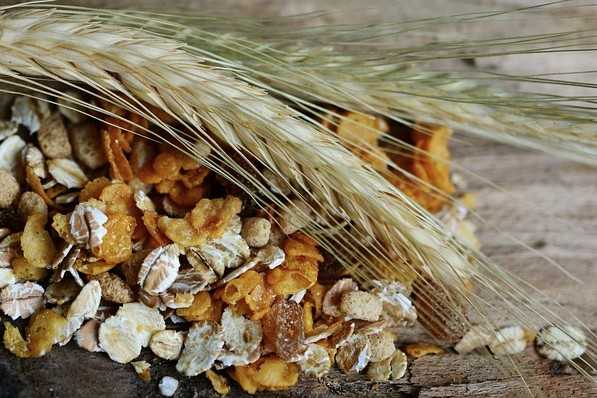
6. Appearing or occurring in succession

Serial/cereal

An adjective derived from series, serial is also used as a noun to denote a publication or TV show that appears periodically in parts. In fact, it became common in English in the mid-19th century in reference to Charles Dickens' novels, which were originally published in periodicals. Series comes from the Latin verb "serere" (to join together).

Cereal also has Latin origins, though vastly different ones. It comes from the adjective "Cerealis", which meant pertaining to Ceres, the goddess of agriculture and Roman counterpart of Demeter. She was especially associated with food-giving plants, so her name became synonymous with grains, some of the most important staple crops for humankind.
7. Give up something in exchange for money

Sell/cell

The verb to sell comes from Proto-Germanic "*saljanan-", meaning to deliver or hand over. While Old English "sellan" simply meant to give, towards the end of the period the current meaning of give up something for money began to emerge.

The original meaning of cell - from which its modern uses in the fields of science or technology are derived - is a small room usually occupied by a single person in a convent or a prison (like the one in the photo). The word comes from Latin "cella" (small room) and is related to the verb "celare" (to hide), the origin of the English word conceal.
8. Coniferous tree often seen at Christmastime

Fir/fur

Firs are large, evergreen conifers in the genus Abies of the pine family. Some species are very popular choices for Christmas trees. The word fir comes from Old Norse "fyri", which is in turn derived from a Proto-Indo-European (PIE) root originally meaning oak: in fact, odd as it may sound, the Latin word "quercus" (oak) is etymologically related to fir because of both trees' connection to mountainous regions.

Fur has a rather interesting history, as it was originally used as a verb that meant to line a garment with the soft hair of an animal. This verb - "furren" in Middle English - came directly from Anglo-French "furrer", a word of Germanic origin that meant to stuff, fill or line. The modern French word for fur is "fourrure", and "fourrer" means to fill or stuff.
9. Receive compensation in return for work done

Earn/urn

Generally used in reference to the financial compensation received for one's work, earn comes from Proto-Germanic *aznon-, which meant to reap or serve. This root developed into Old English "earnian", the direct ancestor of the modern English word.

Though often associated with funeral rites, urns can also be decorative - like the one in the photo, or the "Grecian urn" in John Keats' famous ode. The word comes from Latin "urna", which had the same meaning and might have been derived from the verb "urere" (to burn) - a possible reference to the firing of the clay used to make these vessels.
10. The time between sunset and sunrise

Night/knight

The identical pronunciation of these two very different words stems from one of the peculiarities of the English language - the silent K in the consonant group "kn", which was voiced in Old and Middle English, as it still is in other Germanic languages. Night comes from the Indo-European root "*nekwt-", the source of Greek "nyx", Latin "nox" and other such words used in Indo-European languages for the time between dusk and dawn.

Knight is a word of Germanic origin, closely related to German "Knecht". Its original meaning was boy or servant, then it came to denote a mounted man-at-arms at the service of a monarch or feudal lord. The word for the code followed by knights, known as chivalry, is instead derived from French "cheval" (horse); the chess piece known as knight usually has the shape of a horse.
11. Beloved or expensive

Dear/deer

Dear comes from Proto-Germanic "*deurja-"through Old English "deore". Related words in other Germanic languages - such as German "teuer" and Dutch "duur" - retain the original meaning of highly priced or expensive, while English has also added the less materialistic meaning of beloved.

Deer is also of Germanic origin, coming from Old English "deor" - which, however, referred to any wild animal rather than the specific mammal family (Cervidae) that it designates in modern English. In fact, other modern Germanic languages (English and Scots excepted) have kept the original meaning - like German "Tier" and Swedish "djur". The Old English word for deer was "heorot", which appears in the epic poem "Beowulf" as the name of King Hrothgar's hall and is preserved in modern English as hart.
12. Modify without changing completely

Alter/altar

This is another pair of frequently confused words. The verb to alter comes from Late Latin "alterare", a verbal derivative of the adjective "alter", meaning other or second. The well-known phrase "alter ego" can be literally translated as "another self". Thus, altering implies making something different without transforming it into something else entirely.

Frequently confused with alter, altar comes from Late Latin "altare", generally used in the plural form "altaria" to refer to a table used for religious rites, particularly the offering of sacrifice to the gods. Because of its association, some scholars have suggested a derivation from the Latin verb "alere" (to feed).
Source: Author LadyNym

This quiz was reviewed by FunTrivia editor looney_tunes before going online.
Any errors found in FunTrivia content are routinely corrected through our feedback system.
Related Quizzes
1. Sorting Homophones Easier
2. Common Words Very Easy
3. Oh! Very Easy
4. Same Word; Two Meanings Very Easy
5. Sound Alikes Easier
6. H is for Homophone Easier
7. Three Words in One Very Easy
8. Nursery Rhyme Heteronyms Average
9. Identical but Not Alike 3 Very Easy
10. Which Witch? Very Easy
11. Double Meanings: Heteronymic Headlines Average
12. Maid of the Missed Very Easy

6/18/2026, Copyright 2026 FunTrivia, Inc. - Report an Error / Contact Us