FREE! Click here to Join FunTrivia. Thousands of games, quizzes, and lots more!
Scenes from British Literature Quiz
Images of Literary Scenes
Click each scene from these classic British novels and stories to get a closer look at the clues. Then match each scene with its corresponding work. It's a literary extravaganza!
Last 3 plays: Guest 62 (10/12), LNelson521 (12/12), herma1504 (6/12).
Drag-Drop or Click from Right
Options
The Hound of the BaskervillesThe Wind in the WillowsGulliver's TravelsFrankensteinA Christmas CarolRobinson CrusoePride and PrejudiceTreasure IslandBlack BeautyThe Invisible ManThrough the Looking GlassTo the Lighthouse
May 15 2026
:
Guest 62: 10/12
May 08 2026
:
LNelson521: 12/12
May 08 2026
:
herma1504: 6/12
May 08 2026
:
Guest 2: 12/12
May 08 2026
:
Guest 77: 12/12
May 07 2026
:
Guest 69: 12/12
May 07 2026
:
Guest 86: 12/12
May 06 2026
:
lunamoth54: 12/12
May 06 2026
:
Guest 176: 10/12
Quiz Answer Key and Fun Facts
1. Black Beauty
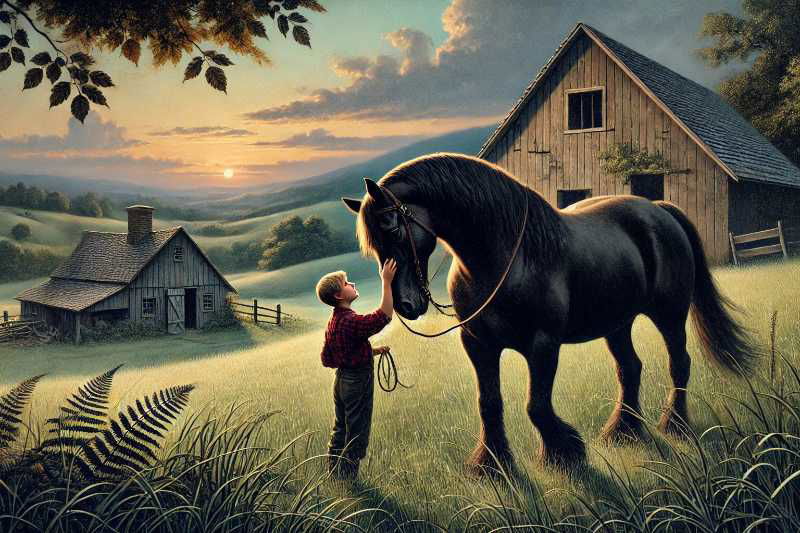
Published in 1877, Anna Sewell's "Black Beauty" tells its story through the voice of a horse, tracing his life across a series of owners. That unique perspective keeps the attention on how horses are treated, rather than on human concerns alone.
In this scene, a young stable hand named Joe Green takes care of Black Beauty, brushing him, feeding him properly, and speaking to him in a calm, reassuring way. Years later, Joe, now grown, recognizes the horse again and reacts with clear excitement at the reunion.
2. Gulliver's Travels
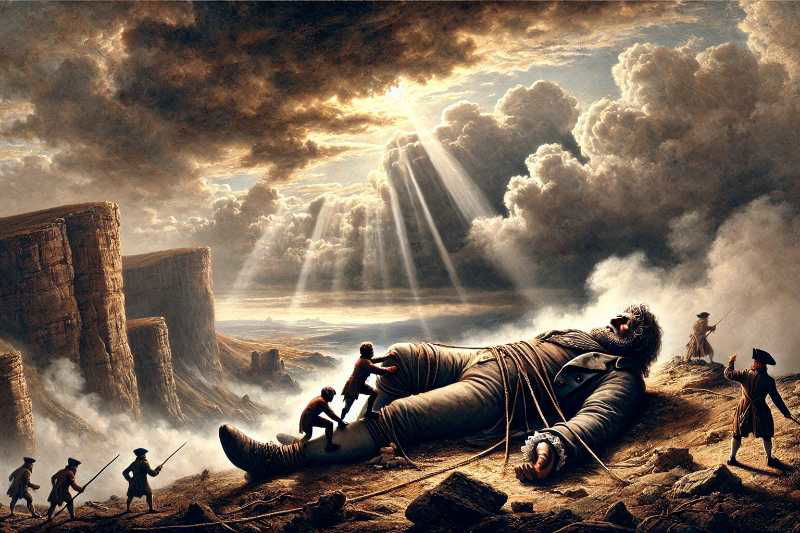
Jonathan Swift's "Gulliver's Travels," published in 1726, follows Lemuel Gulliver as he moves through a series of unusual lands. The tone moves between travel narrative and pointed satire, with Swift using Gulliver's encounters to mock the political disputes and scientific pretensions of his time.
This image takes place after a shipwreck, where Gulliver washes ashore and falls asleep. When he wakes, he finds himself pinned to the ground, tied down by dozens of thin ropes. The Lilliputians, small in size but highly organized, approach him carefully and begin to examine him up close.
3. The Hound of the Baskervilles
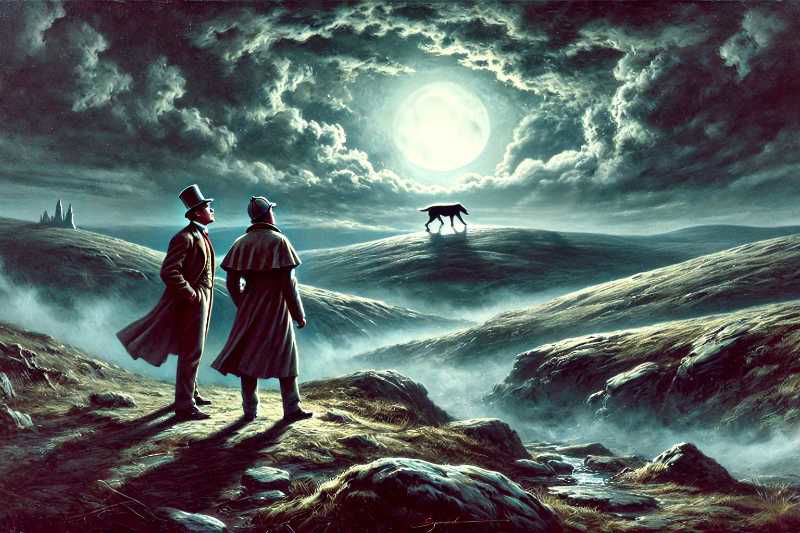
"The Hound of the Baskervilles," published in 1902 by Arthur Conan Doyle, brings Sherlock Holmes and Dr. Watson into a case shaped by rumor and fear. The setting, the moors of Devonshire, shapes the case through its thick fog and uneven ground, which limit visibility and make movement uncertain.
The scene here is during a night search, when Sir Henry Baskerville and Watson encounter the supposed hound. The animal appears with glowing features and an aggressive stance. Holmes, who has been concealed nearby, steps in at that moment, and he and Watson fire at the creature. The investigation soon reveals that the dog is real but has been coated with phosphorus to create the illusion of something supernatural.
4. Frankenstein
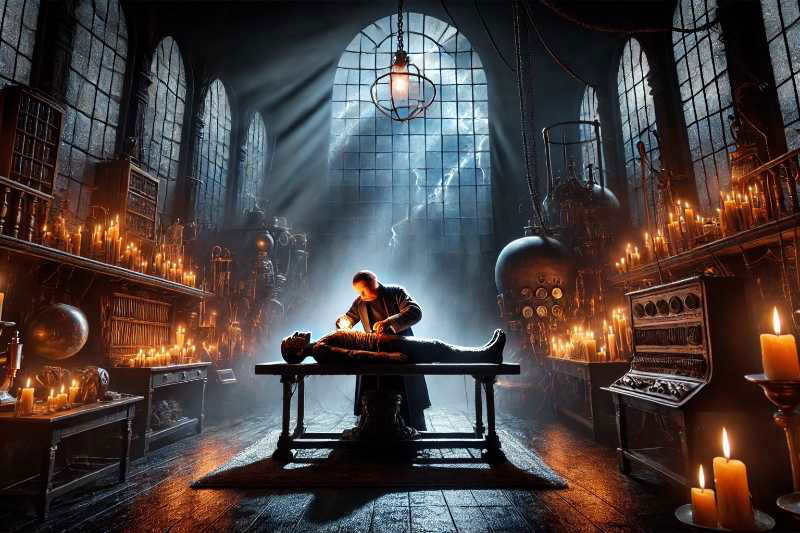
Mary Shelley's "Frankenstein," first published in 1818, centers on Victor Frankenstein, a scientist who assembles and animates a living being. The experiment takes place in a laboratory filled with equipment and anatomical materials.
When this scene takes place late at night, the creature starts showing signs of life. Its eyes open, and it begins to move and breathe. Victor reacts immediately with horror and leaves the room, unable to face what he has created.
5. The Wind in the Willows
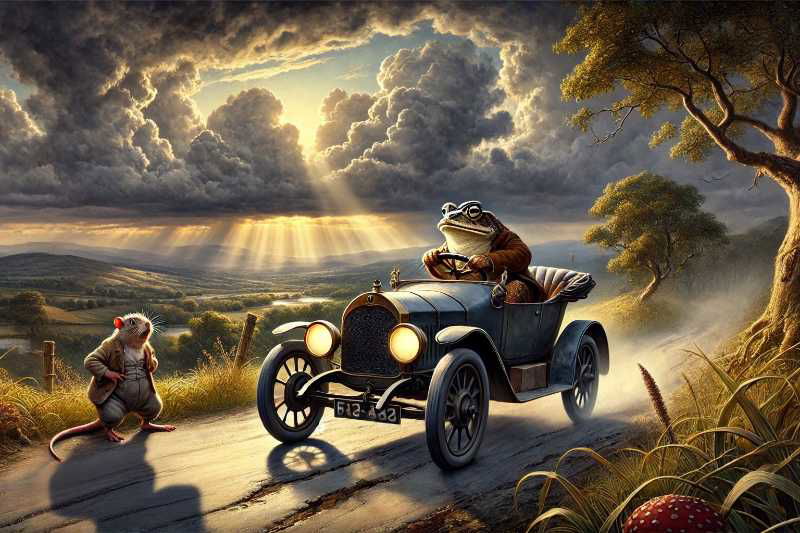
In Kenneth Grahame's "The Wind in the Willows," published in 1908, animal characters live in a rural setting that closely reflects everyday English life, complete with roads, homes, and social routines. Toad, one of the central figures, is known for his sudden obsessions, especially his fascination with motorcars, which he pursues without much regard for risk or consequence.
Here we see such an episode. Toad drives his motorcar at high speed, ignoring warnings and basic caution. His reckless driving leads to a crash, after which he is arrested, put on trial, and sentenced to prison.
6. Treasure Island
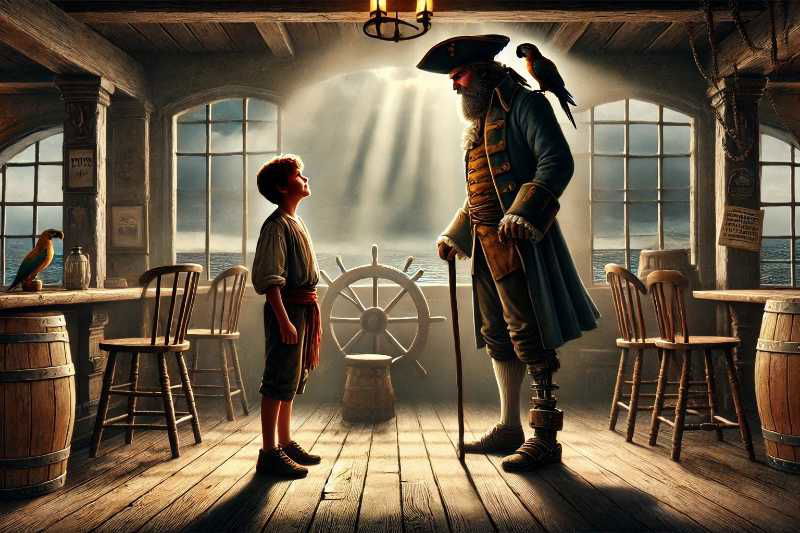
First published in 1883, Robert Louis Stevenson's "Treasure Island" follows Jim Hawkins as he becomes entangled in a voyage to recover buried pirate treasure. Early in the narrative, Jim visits the Spyglass Inn, a busy tavern connected to the expedition.
This scene is where he meets Long John Silver, a tall, one-legged man who manages the place while moving skillfully with a crutch. Silver speaks confidently and treats Jim with familiarity, giving the impression that he can be trusted while hiding his involvement in piracy.
7. Pride and Prejudice
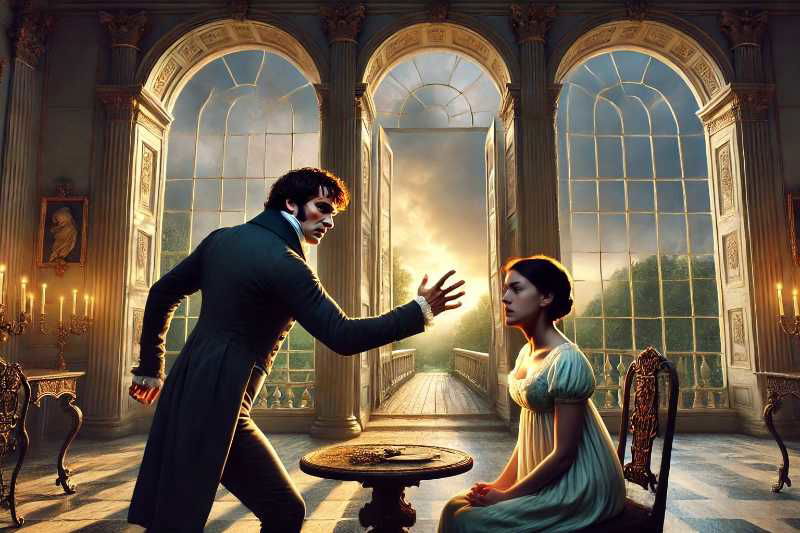
"Pride and Prejudice," published in 1813 by Jane Austen, centers on Elizabeth Bennet and her interactions with Mr. Darcy within a rigid social hierarchy.
Darcy's initial proposal takes place in private and comes without warning. He expresses his feelings but also points out the disadvantages of her family's lower status. Elizabeth rejects him and criticizes both his manner and his earlier actions toward her sister's relationship, which she sees as interference.
8. The Invisible Man
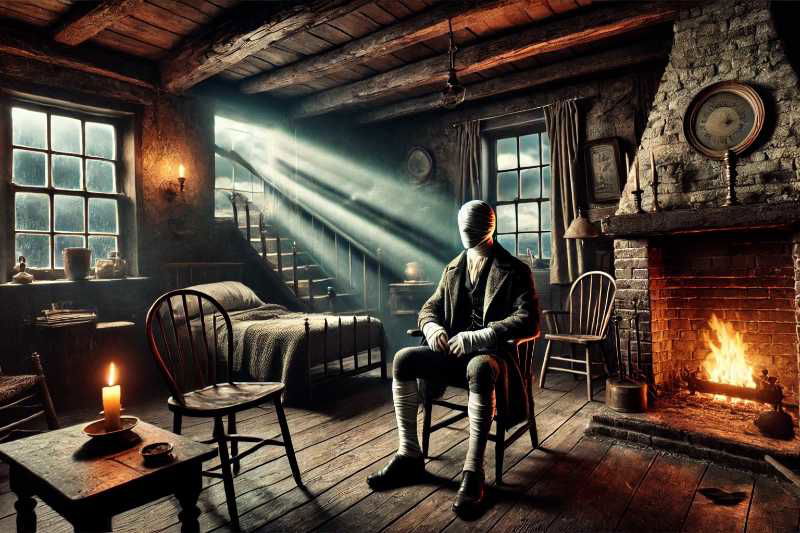
In 1897, H.G. Wells introduced "The Invisible Man," a novel focused on Jack Griffin, a scientist who has made himself invisible. The condition forces him to cover himself with bandages, clothing, and dark glasses in order to function in public.
Here, Griffin takes shelter at a small inn during a snowstorm, his face hidden under bandages and dark glasses. The inn's residents notice his refusal to remove them, along with his abrupt, secretive manner. As he reacts impatiently to questions and keeps to himself, suspicion grows among the guests about his identity and motives.
9. To the Lighthouse
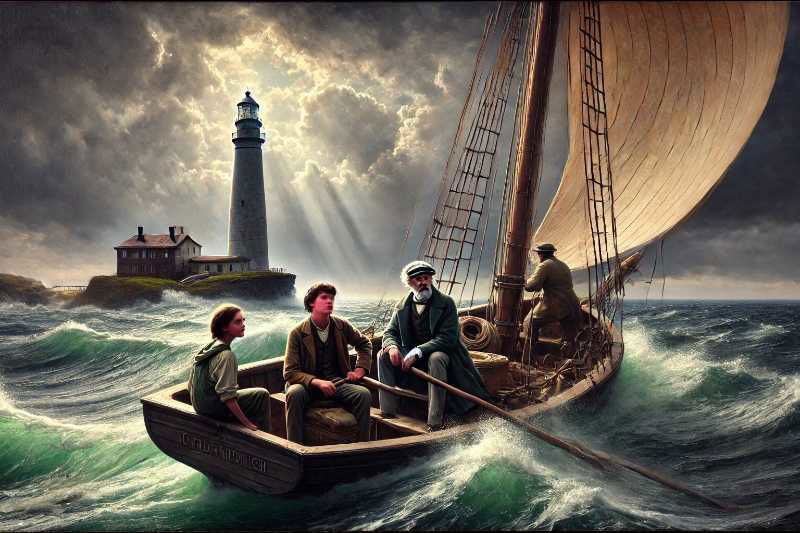
"To the Lighthouse," written by Virginia Woolf and published in 1927, follows members of the Ramsay family at their summer home in the Hebrides, a house overlooking the sea with a clear view of the distant lighthouse.
This scene takes place near the end of the book, a long-delayed trip to the lighthouse with James and Cam traveling by boat with their father. As the boat moves across open water toward the lighthouse, James, seated opposite his father, notices his father's quiet focus on navigation and begins to reconsider the harsh judgments he formed about him as a child.
10. Through the Looking Glass
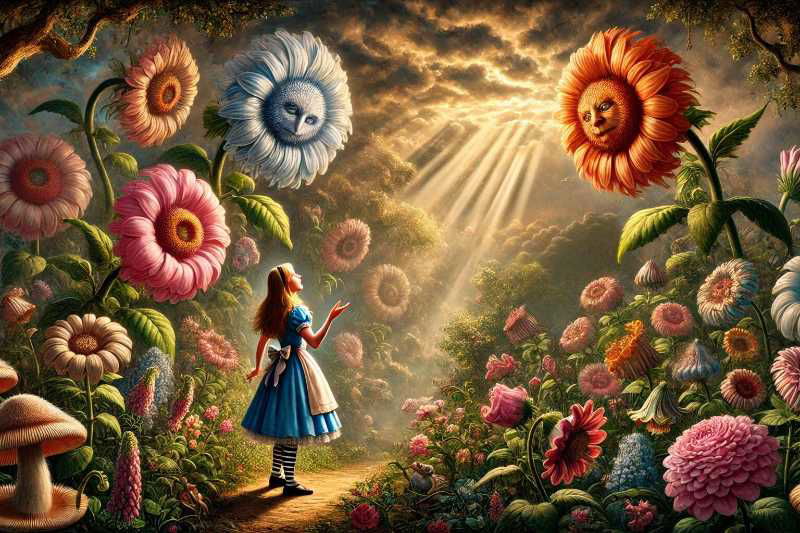
Lewis Carroll's "Through the Looking-Glass, and What Alice Found There" appeared in 1871 as a continuation of Alice's earlier adventures. This involves her falling into a dreamlike world where she encounters talking animals and characters like the Mad Hatter and the Queen of Hearts.
As can be seen here, after Alice passes through a mirror, she enters a garden where the flowers speak to her. Roses, daisies, and tiger lilies respond to her questions, with the roses speaking sharply and correcting her, the daisies chiming in more casually, and the tiger lily taking a more authoritative, almost scolding tone.
11. Robinson Crusoe
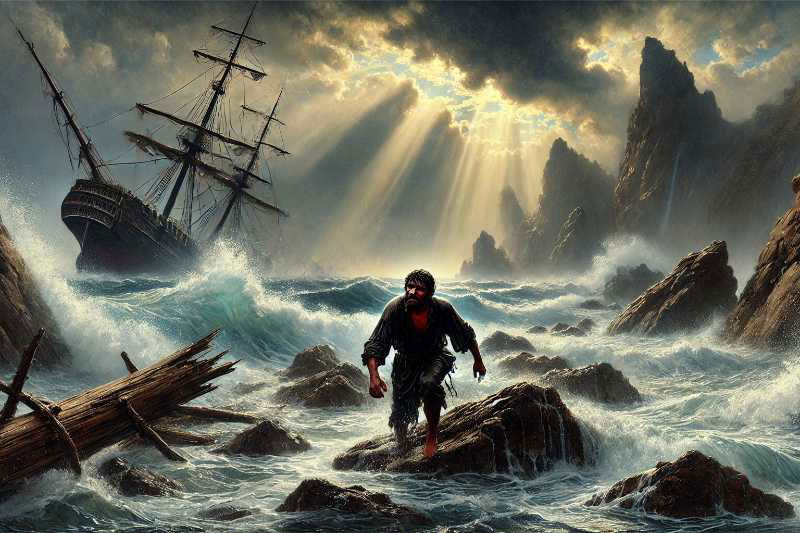
Published in 1719, Daniel Defoe's "Robinson Crusoe" begins with a violent storm that destroys Crusoe's ship. He struggles through strong waves and eventually reaches the shore, exhausted and soaked.
Once he has recovered enough to look around, he realizes he is the only survivor. That realization forces him to begin organizing his surroundings and making repeated trips back to the wreck to recover supplies. He then starts building a shelter, securing fresh water, and finding ways to hunt or gather food so he can survive on the island long term.
12. A Christmas Carol
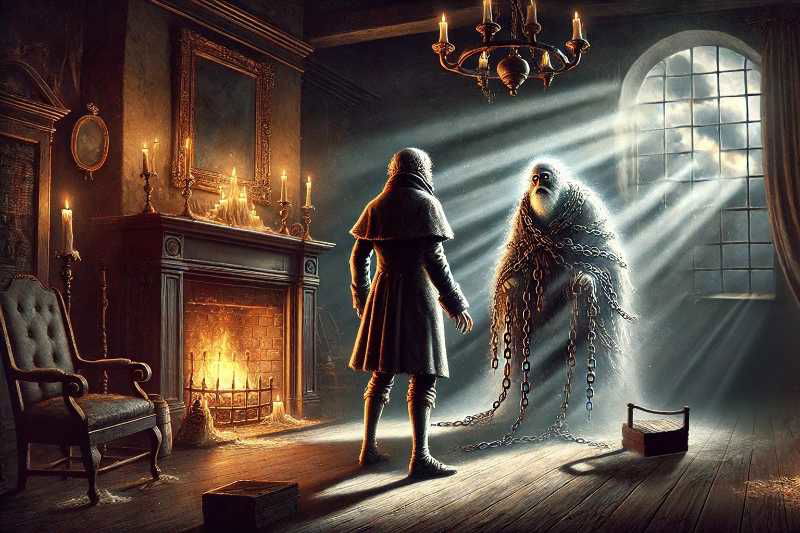
Charles Dickens's "A Christmas Carol," published in 1843, introduces Ebenezer Scrooge as a businessman known for his strict focus on money and lack of generosity.
One evening, he encounters the ghost of Jacob Marley, his former partner. Marley appears weighed down by chains made from cash boxes and locks, each representing his past actions. He warns Scrooge that a similar fate awaits him if he does not change, and he prepares him for the visits of the spirits who will follow.
This quiz was reviewed by FunTrivia editor looney_tunes before going online.
Any errors found in FunTrivia content are routinely corrected through our feedback system.