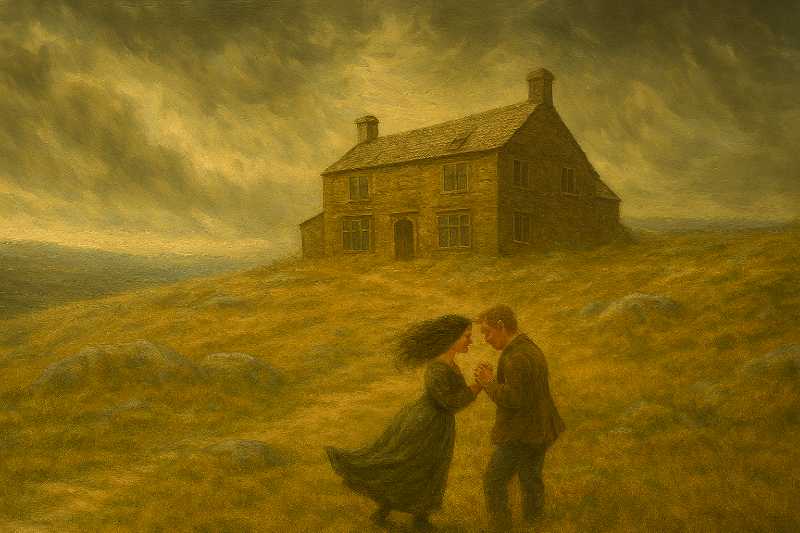
Written by Emily Bronte, 'Wuthering Heights' is set in Yorkshire's wild moors. It is a tale of love and of jealousy, unfolding as the narrator (Mr. Lockwood, newly arrived in the district) learns more about the tangled history of his neighbour Heathcliff's family. Lockwood has a disturbing confrontation with the ghost of Catherine Earnshaw, Heathcliff's long-dead love who had married his rival and died in childbirth.
The story is revealed through conversations with Nelly, formerly a servant at Heathcliff's home, and continues with news about Catherine's daughter, Cathy, who is drawn into marriage with Linton, Heathcliff's son. The tragic story is appealing for its well-drawn characters and the depictions of the wild moorland setting.
2. L M Montgomery
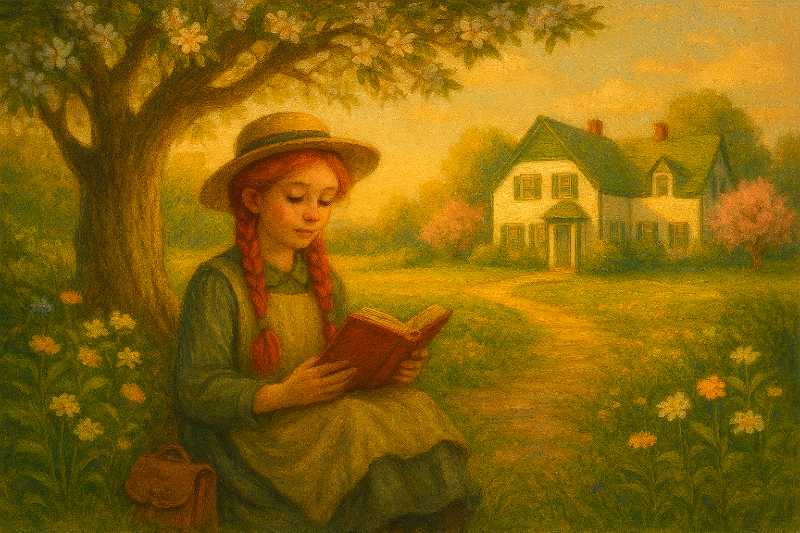
Anne of Green Gables starts as a case of mistaken identity, as siblings Matthew and Marilla Cuthbert send for an orphan boy to help with work on their farm, Green Gables on Prince Edward Island. Marilla is shocked when 11-year-old redheaded Anne arrives, although Matthew is immediately won over by her bubbly nature and curiosity. Eventually Anne wins Marilla over, and she is adopted by the siblings.
This is the first of the series about Anne, her family, and the fictional town of Avonlea. The books draw heavily on Lucy Maud Montgomery's memories of her own childhood on Prince Edward Island. Princess Kate of England asked to visit P.E.I. when she and Prince William toured Canada in 2011, as 'Anne of Green Gables' was her favourite childhood book.
3. Charles Dickens
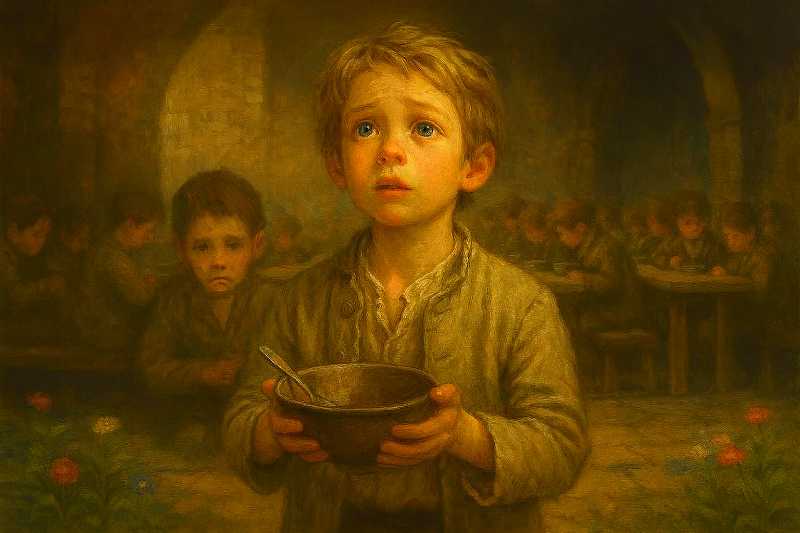
The picture is of the orphaned Oliver Twist asking for more gruel in the workhouse. The story follows Oliver as he escapes to London from his abusive employer, an undertaker, and is taken into a den of thieves and pickpockets ruled by the villainous Fagin.
After many perilous exploits due to his enforced life beyond the law, Oliver is adopted by the kind and generous Mr. Brownlow. The book is a scathing commentary on the Poor Laws and the intolerable conditions suffered by the poor in Victorian London, but also draws wonderful portraits of its characters, including the vicious Bill Sykes, and the kind prostitute Nancy, who meets a cruel end.
4. Victor Hugo
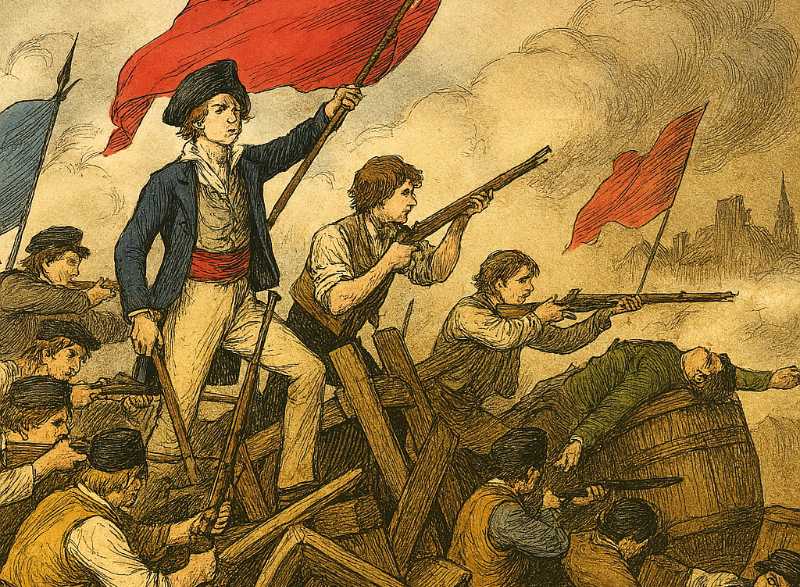
'Les Miserables' is possibly one of the best novels of the 19th Century, set in post-revolution France at a chaotic time in France's history, before a new, more just system was established.
It follows the life of a former convict, Jan Valjean, and his attempts to live a normal life while being pursued by Javert, an obsessive police inspector. Valjean's interactions with Fantine, a woman forced into prostitution, lead him to rescue her little daughter, Cosette, from virtual slavery by the innkeepers 'caring' for her. Cosette grows up to fall in love with a university student, Marius, who is involved in manning the barricades during one of the uprisings.
It is a brilliant novel that offers so much more than the excellent stage show and movie.
5. Jane Austen
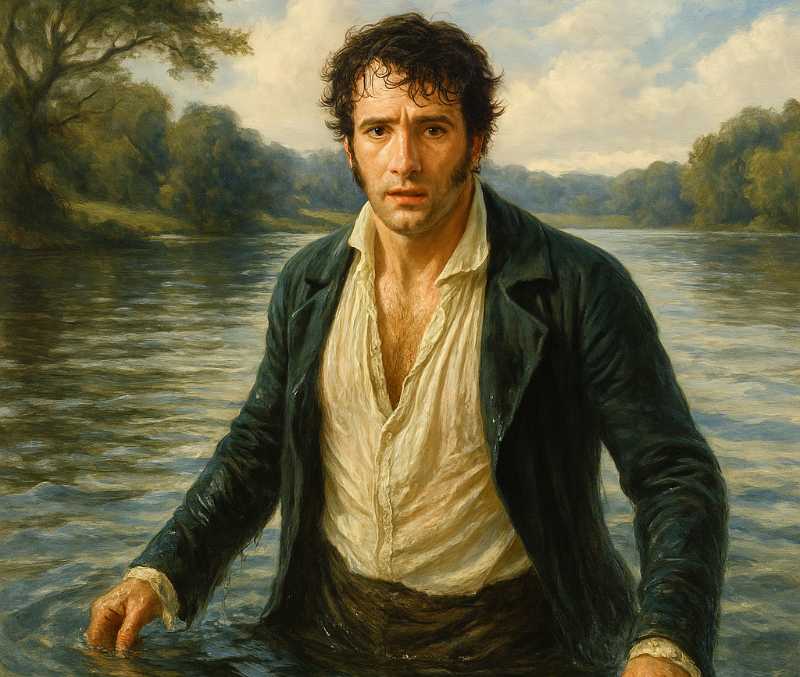
Ah, the luscious Mr Darcy, who is introduced to us as an insufferable prig, but gradually morphs into a flesh and blood hero as Jane Austen reveals more about him in her classic "Pride and Prejudice". (Although he appears unexpectedly in the novel, discomforting our heroine, the 'wet shirt scene' originated with Colin Firth's BBC portrayal of Darcy.)
This is only the 3rd book (2nd published) by Austen, written when she was 20-21 years old, and is the best-loved of her many excellent works. It follows the Bennet family as Mrs Bennet attempts to marry off her five daughters, preferably to wealthy men in order to keep the rest of the family afloat. The second daughter, Elizabeth, is the main female protagonist, witty, feisty but charming, constrained by the manners of the day, but refusing to accept anything less than marriage for love.
6. Suzanne Collins
A later addition to my bookshelves, "The Hunger Games" trilogy by Collins was recommended to me by a granddaughter.
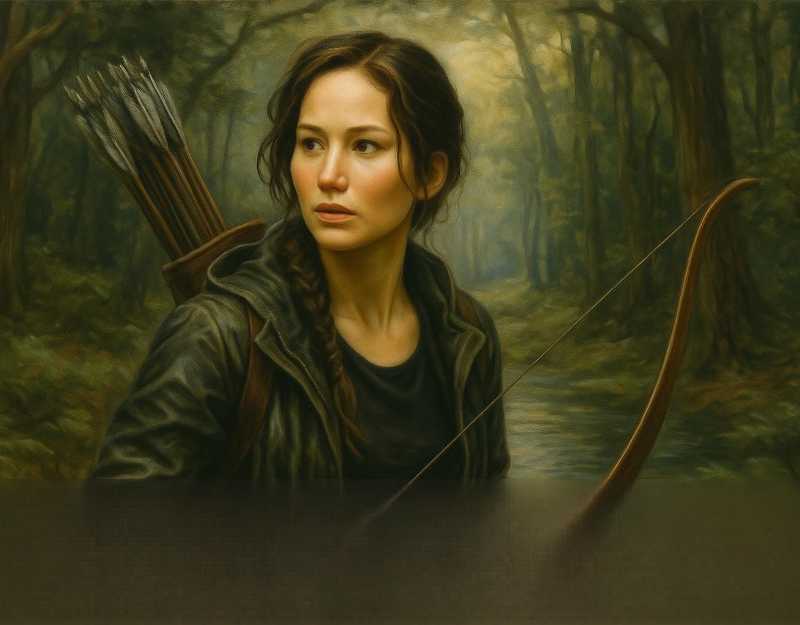
The setting is a dystopian view of the nation of Panem in what was North America after a devastating war, with annual lotteries held in each district to select two 'tributes', a boy and a girl, to represent their district at 'games' held at the capital. These 24 will be contestants in a fight to the death, till only one winner remains alive. The winner's district will benefit by extra rations and concessions for the next year. The central character is Katniss Everdeen, who takes her younger sister's place after she drew the 'winning' glass ball.
The trilogy is convincingly written, with believable characters, some of whom we come to care about, and plot lines that keep the readers on the edge of their seats.
7. Margaret Mitchell
First published in 1936, Margaret Mitchell's huge novel, 'Gone With the Wind', was an instant success, made in 1939 into one of the greatest movies in history, starring Clark Gable and Vivien Leigh.
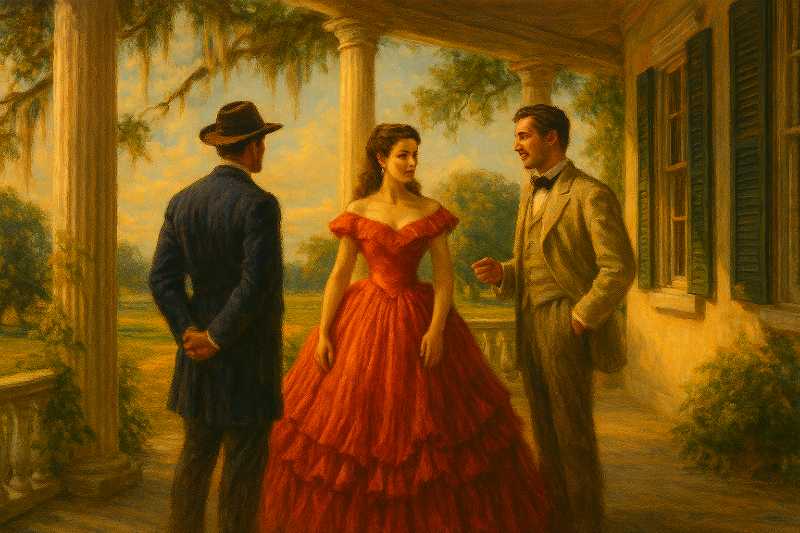
It begins with the determined, manipulative and unsuccessful efforts of Scarlett O'Hara to marry Ashley, her cousin's fiance, and follows her fortunes through various marriages and affairs, with the Civil War playing a huge role in the plot. Rhett Butler, a dashing, worldly-wise entrepreneur, and Ashley figure large in the story.
Despite its complicated plot, it is a very well-constructed story, and Scarlett's selfish character commands respect for her tenacity and ingenuity as a survivor. Well worth the read, but only if you are willing to commit a large slice of your time.
8. Herman Melville
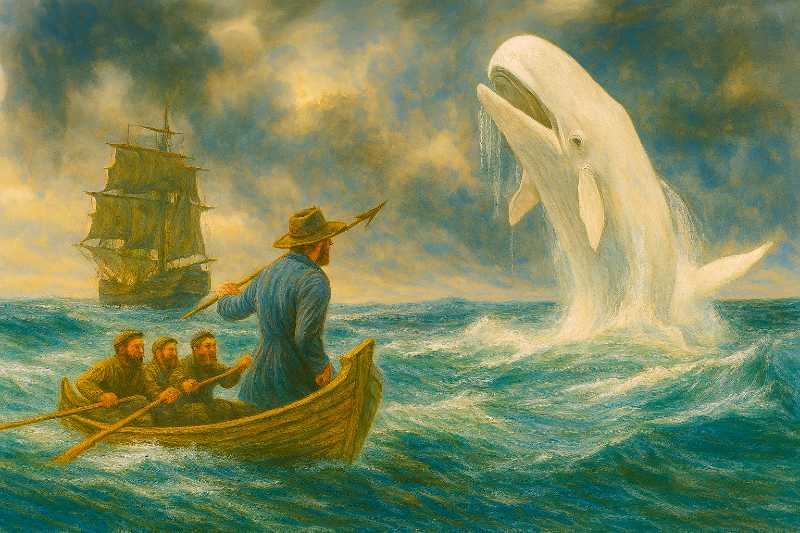
'Moby Dick; or, the Whale' is a classic adventure tale of a whaling captain's search for vengeance against the white whale which caused the loss of his leg.
Narrated by a crewman, "Call me Ishmael", it follows Captain Ahab's ship, the Pequod, as the crew search the high seas for the whale. On the way they encounter and slaughter other whales, and Ishmael describes the hunts, kills, and the various methods of extracting and storing oil and spermaceti, the valuable commodities from whales.
The final days of the voyage are filled with high drama as the epic struggle between whale and men reaches its climax. Regardless of the moral issues raised by whaling, there is no doubt that this book provides a valuable insight into a largely forgotten part of history.
9. Anna Sewell
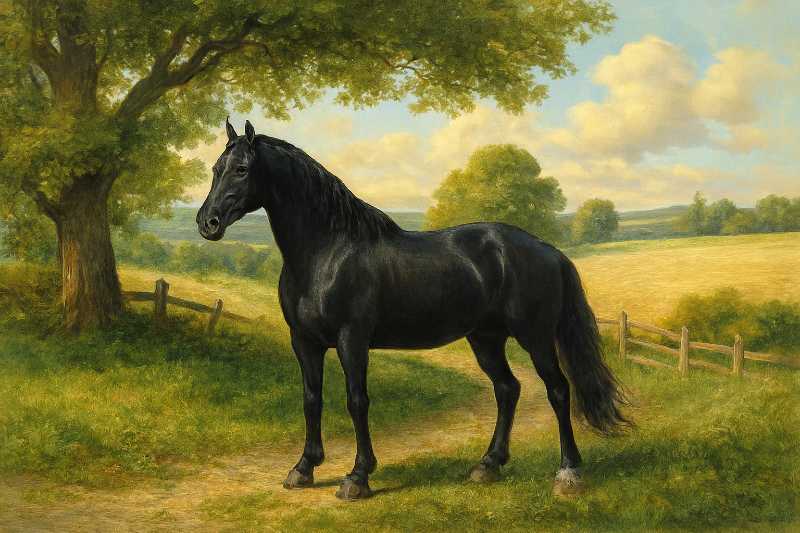
At the age of 14, Anna Sewell injured both ankles, rendering her almost unable to walk for the rest of her life. She learned much about horses by taking on the task of driving her father to and from the railway station each day.
'Black Beauty' was written for adults to draw attention to cruel treatment of animals in Victorian England, and also to the difficult conditions of London cab drivers. Soon after the book was published, reforms to the cab trade were enacted. The book has since become a children's classic. The book has no precedent, being written as an autobiography narrated by the horse. It tells of his life from his first happy memories as a foal, his harsh life pulling London cabs, and other adventures and misadventures leading to his comfortable retirement in the country.
A lovely book, told by someone who understood horses and their needs.
10. Leo Tolstoy
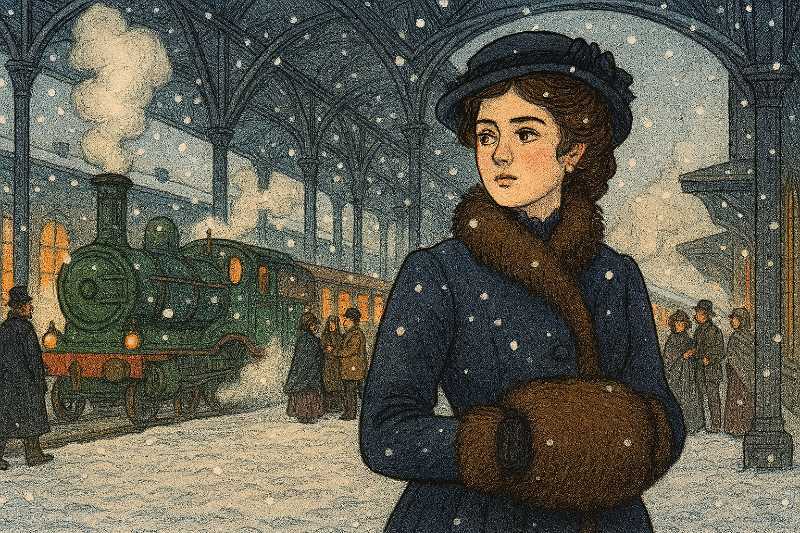
Anna Karenina was first released in serial form in a Russian newspaper, a practice common world-wide in the 19th Century. Tolstoy later described it as his first real novel.
The main character, Anna, is married to a much older, domineering man, Alexei Karenin. While trying to help her womanising brother sort out his marital mess, she meets the dashing and wealthy Count Vronsky, and embarks on a passionate affair. Other stories unfold - that of Kitty and Levin, and the stark contrasts between the wealthy few, the middle and the peasant classes of feudal Russia. It also highlights the limited options available to women at the time.
Tolstoy writes vividly of country life and of Russian high society in the cities, and his characters inhabit those spaces authentically. A brilliant, entertaining, sometimes tragic tale, but ultimately with a hopeful and uplifting ending.
This quiz was reviewed by FunTrivia editor MotherGoose before going online.
Any errors found in FunTrivia content are routinely corrected through our feedback system.