FREE! Click here to Join FunTrivia. Thousands of games, quizzes, and lots more!
Quiz about Endless Summer Nights

Endless Summer Nights Trivia Quiz

The Creole Sound of the Vieux Carré

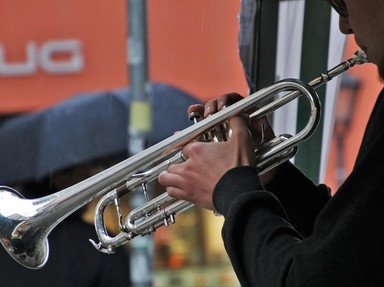
Beneath the endless summer nights of the Vieux Carré, musicians from different traditions forged a new sound. From these sixteen jazz pioneers, select the ten who came from New Orleans' Creole musical world.

A collection quiz by reedy. Estimated time: 3 mins.
  1. Home
  2. »
  3. Quizzes
  4. »
  5. Music Trivia
  6. »
  7. Other Music
  8. »
  9. Jazz

Author
reedy
Time
3 mins
Type
Quiz #
426,552
Updated
Nov 16 26
# Qns
10
Difficulty
New Game
Avg Score
8 / 10
Plays
10
Last 3 plays: Guest 99 (2/10), bernie73 (7/10), PurpleComet (7/10).
Choose only the ten Creole musicians, and ignore those that came from outside New Orleans' French Quarter.
There are 10 correct entries. Get 3 incorrect and the game ends.
Achille Baquet Paul Barbarin Barney Bigard Louis Armstrong Joe "King" Oliver Jimmie Noone Louis Barbarin Sidney Bechet George Baquet Zutty Singleton Manuel Perez Jelly Roll Morton Edward "Kid" Ory Buddy Bolden Lorenzo Tio Jr Johnny Dodds

Left click to select the correct answers.
Right click if using a keyboard to cross out things you know are incorrect to help you narrow things down.

Most Recent Scores
Today : Guest 99: 2/10
Today : bernie73: 7/10
Today : PurpleComet: 7/10
Today : Steelflower75: 9/10
Today : Pearlmina: 9/10
Today : Rizeeve: 10/10
Today : Guest 34: 2/10
Today : xchasbox: 9/10
Today : wwe84: 3/10

Quiz Answer Key and Fun Facts
Answer:

In early New Orleans, the line between Creole and non-Creole musicians was drawn less by race than by culture, language, and geography, with Canal Street serving as the rough dividing line.

Downtown Creoles of color, concentrated around the French Quarter, Tremé, Faubourg Marigny, and the Seventh Ward, often came from French- and Spanish-speaking Catholic families and received formal European musical training. Uptown Black musicians, along with many Sicilian immigrants, were more likely to learn by ear and draw upon blues-inflected styles rooted in improvisation. When Jim Crow laws erased the Creoles' separate legal status in the 1890s, musicians from both traditions increasingly shared bandstands, and the fusion of Downtown technique with Uptown creativity helped give birth to jazz.

Several important musicians emerged from this Creole musical world. Cornetist Manuel Perez set the standard for disciplined brass playing through his leadership of the Onward Brass Band, while clarinetist George Baquet became one of the defining voices of the Creole reed tradition before helping spread New Orleans music beyond Louisiana through national tours. His younger brother Achille Baquet occupied a unique position in early jazz, performing with both Black and white bands and carrying Creole clarinet techniques into the wider American music scene.

The French Quarter and neighboring Faubourg Marigny shaped Jelly Roll Morton, whose experiences in Storyville transformed a classically trained Creole pianist into one of jazz's first major composers and arrangers. Across town, Kid Ory arrived from rural Louisiana and quickly became a central figure in Quarter dance halls, pioneering the influential "tailgate" trombone style and mentoring many of the city's future stars. Clarinetist and teacher Lorenzo Tio Jr., meanwhile, became the great transmitter of Creole technique, training generations of players from his New Orleans home.

Among Tio's most celebrated students was Sidney Bechet, the Seventh Ward prodigy who honed his skills in French Quarter dance halls and Storyville before becoming one of jazz's first internationally acclaimed soloists. His powerful clarinet and soprano saxophone playing made him one of the most influential jazz soloists of the twentieth century.

The French Quarter's parade and brass-band traditions also produced drummers Paul Barbarin and Louis Barbarin, brothers who grew up immersed in New Orleans street music. Paul achieved national prominence with leading jazz bands before returning home to lead revival-era ensembles and compose standards such as Bourbon Street Parade. Louis remained more closely tied to New Orleans itself, performing in local dance halls, on riverboats, and later at Preservation Hall, where he helped preserve traditional jazz for new audiences.

The final member of this French Quarter musical lineage was clarinetist Barney Bigard. Raised in a Creole family near the Quarter and trained by Lorenzo Tio Jr., Bigard carried the city's distinctive clarinet style to a global audience through Duke Ellington's orchestra and later Louis Armstrong's All-Stars. Collectively, these musicians illustrate the extraordinary contribution of the French Quarter and surrounding neighborhoods to the development of early jazz.

The six musicians not identified as Creoles in the quiz represent the other major stream that fed early jazz. Buddy Bolden, Joe "King" Oliver, Johnny Dodds, Jimmie Noone, Zutty Singleton, and Louis Armstrong emerged primarily from New Orleans' Uptown Black community rather than its French-speaking Creole population. Their music drew more heavily on blues, church traditions, and improvisation than on the formal training common among many Downtown Creole musicians. By the early twentieth century, however, such distinctions were increasingly blurred. Oliver's Creole Jazz Band in Chicago exemplified this musical synthesis, bringing together performers from both traditions and helping to create the sound that carried New Orleans jazz to a national audience.
Source: Author reedy

This quiz was reviewed by FunTrivia editor agony before going online.
Any errors found in FunTrivia content are routinely corrected through our feedback system.
Related Quizzes
1. Jazz Giants Average
2. A Little Jazz Average
3. Jazz Nicknames Average
4. More Jazz Giants Average
5. Jazz Instruments Average
6. Jazz History Average
7. Jazz Vocalists: Part 1 Average
8. Great Ladies of Jazz Easier
9. Jazz for Jazz people Difficult
10. Jazz Styles Average
11. Jazz History 2 Average
12. Legendary Sax Players Average

11/16/2026, Copyright 2026 FunTrivia, Inc. - Report an Error / Contact Us