FREE! Click here to Join FunTrivia. Thousands of games, quizzes, and lots more!
Quiz about Scaling Mont Blanc

Scaling Mont Blanc Trivia Quiz


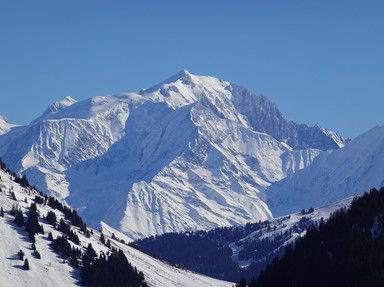
The highest peak in Europe's Alps presented quite a challenge to those who first attempted to climb it.

A multiple-choice quiz by looney_tunes. Estimated time: 3 mins.
  1. Home
  2. »
  3. Quizzes
  4. »
  5. People Trivia
  6. »
  7. Explorers

Author
looney_tunes
Time
3 mins
Type
Multiple Choice
Quiz #
422,564
Updated
Jan 07 26
# Qns
10
Difficulty
Tough
Avg Score
6 / 10
Plays
51
Last 3 plays: Emma-Jane (10/10), redwaldo (9/10), Nhoj_too (10/10).
- -
Question 1 of 10
1. In 1760, Horace de Saussure offered a reward to the first man to reach the summit of Mont Blanc. What was his nationality?

Hint


Question 2 of 10
2. In what year did Horace de Saussure make his first attempt to reach the peak of Mont Blanc? Hint


Question 3 of 10
3. Michel-Gabriel Paccard made a first, unsuccessful, attempt to reach the peak of Mont Blanc in 1783, accompanied by which French travel writer? Hint


Question 4 of 10
4. According to Gaston Rébuffat's 1975 book 'The Mont Blanc Massif: The 100 Finest Routes', what scientific instrument did Michel-Gabriel Paccard want to take with him to the peak of Mont blanc? Hint


Question 5 of 10
5. Which side of Mont Blanc was used in the first successful attempt to reach its peak in 1786? Hint


Question 6 of 10
6. Who was awarded the prize offered by Horace de Saussure for being the first to scale Mont Blanc? Hint


Question 7 of 10
7. Horace de Saussure did eventually reach the peak of Mont Blanc. Who was his guide for the ascent? Hint


Question 8 of 10
8. Who was the first woman to record reaching the peak of Mont Blanc? Hint


Question 9 of 10
9. The first successful attempt to reach the peak of Mont Blanc by way of what is now called the Goûter route was not made until what year? Hint


Question 10 of 10
10. In 1960, Henri Giraud took a bit of a shortcut to the top of Mont Blanc, arriving by means of what aeronautical device? Hint


(Optional) Create a Free FunTrivia ID to save the points you are about to earn:

arrow Select a User ID:
arrow Choose a Password:
arrow Your Email:


Most Recent Scores
Today : Emma-Jane: 10/10
Jan 07 2026 : redwaldo: 9/10
Jan 07 2026 : Nhoj_too: 10/10
Jan 07 2026 : workisboring: 2/10
Jan 07 2026 : wellenbrecher: 10/10
Jan 07 2026 : borimor: 3/10
Jan 06 2026 : Guest 94: 6/10
Jan 06 2026 : Guest 134: 5/10
Jan 06 2026 : Guest 90: 5/10

Quiz Answer Key and Fun Facts
1. In 1760, Horace de Saussure offered a reward to the first man to reach the summit of Mont Blanc. What was his nationality?

Answer: Swiss

As a point to note, he could not have been German, as there was no such political entity until 1815. Likewise, he could not have been Italian, as the nation of Italy did not exist until 1861. At the time (and still the case when the first ascent was completed), Mont Blanc was in the territory of the Duke of Savoy. The breaking up of the Savoyard later led to disputes about the ownership of Mont Blanc, with the northern slopes in French hands, and the southern Italian. The peak? That was, and remains, a matter of dispute. In 1796 the French claimed it in the Treaty of Paris, based on the traditional border between Savoy (on the south) and Piedmont (on the north). Several treaties later, the establishment of Italy saw the French-Italian border set as being on the watershed line - which would make the peak exactly on the border, and belonging to neither country. French maps continued to show the border just to the south of the peak.

Back to Horace Bénédict de Saussure (1740-1799), the man who started the race to the top of the mountain. A resident of Geneva, he was a geologist and meteorologist by profession, and a devoted mountaineer by avocation. In 1760 he undertook a trip to Chamonix (at the foot of Mont Blanc) to collect plant specimens for the Swiss botanist Albrecht von Haller. This was the first of many trips he was to make to the area, drawn back by his fascination with the glaciers and the seemingly-indomitable mountain. He offered a reward to the first person who could reach its summit, in the hope of encouraging others to share in the endeavour with their expertise.
2. In what year did Horace de Saussure make his first attempt to reach the peak of Mont Blanc?

Answer: 1774

Following his first visit in 1760, Saussure made numerous explorations of the slopes of Mont Blanc, collecting plant specimens and making geological observations. His first attempt to reach the summit took place in 1774, accompanied by the alpine guide Jean-Laurent Jordaney. They attacked the mountain from the southern (now Italian) side, by way of the Miage glacier, but were not successful.

The man did not give up easily, making another unsuccessful attempt in 1785 by way of Aiguille du Goûter, on the northern side. This route had previously been attempted by Jean Marie Couttet and François Cuidet, who used the Aiguille du Goûter to make their way to the Col du Dôme (one of the peaks in the Mont Blanc Massif) on 17 September 1784.

Between these two attempts, he had honed his mountaineering skills on a number of other peaks: Mont Crammont (1774, 1778), Buet (1776), Roche Michel (1780).
3. Michel-Gabriel Paccard made a first, unsuccessful, attempt to reach the peak of Mont Blanc in 1783, accompanied by which French travel writer?

Answer: Marc-Théodore Bourrit

Marc-Théodore Bourrit (1739-1819) was employed as precentor of the church of St Peter in Geneva, a post that gave him plenty of time to indulge in his passion for the mountains. He climbed his first Alpine peak in 1761, and recorded it (along with subsequent climbs) in travelogues in which he waxed lyrical about the majesty of the mountains. Unlike Paccard, he had no interest in the scientific aspects of their attempt, but his writing ensured that the trip was recorded for posterity. His writings were influential in reviving interest in a number of Alpine routes, but he never did reach the summit of Mont Blanc, despite making another attempt in 1788.

Saussure was the man who first set the challenge for the ascent, Balmat was subsequently to accompany Paccard on the first successful attempt, and Beaufoy was the first Englishman to reach the peak, arriving along with six guides and a personal servant in 1787.
4. According to Gaston Rébuffat's 1975 book 'The Mont Blanc Massif: The 100 Finest Routes', what scientific instrument did Michel-Gabriel Paccard want to take with him to the peak of Mont blanc?

Answer: barometer

Why a barometer? Paccard was a doctor with a passion for minerals and plants, who wanted to use a barometer to determine the exact height of the peak. Since air pressure decreases with altitude, this is indeed a way of getting an altitude measurement, albeit not nearly as accurate as modern methods. Paccard carried a number of other pieces of equipment to allow him to carry out scientific measurements on the journey - he was not just there for the scenery!

Michel-Gabriel Paccard (1757-1827) met Horace de Saussure due to their shared interests, and became entranced by the goal of scaling Mont Blanc. Although he was a keen amateur alpinist, he realised after his unsuccessful attempt with Marc-Théodore Bourrit that he needed more professional assistance, so undertook further expeditions accompanied by his fellow Chamonix resident, Jacques Balmat. They made several unsuccessful attempts in 1784, before finally becoming the first to reach the peak in 1786.
5. Which side of Mont Blanc was used in the first successful attempt to reach its peak in 1786?

Answer: North

Michel-Gabriel Paccard and Jacques Balmat (1762-1834) had made several attempts, starting in 1784, before they successfully reached the peak on 8 August 1786. Since both men were residents of Chamonix, it is not surprising that they determined on making their ascent from the French side. The fact that this side was seen as being a far more difficult approach only added to the praise they earned on their success. The fact that they were carrying Paccard's scientific equipment with them, and the fact that they were only two, also contributed to their acclaim.

The route they used, now called 'the historic itinerary', used the Bossons Glacier. A refuge hut, the Grands Mulets Hut, was first erected along the route in 1853, making access slightly easier. However, the route is still tricky, and more often used as a descent (for those wanting to finish their trip in Chamonix) than ascent.
6. Who was awarded the prize offered by Horace de Saussure for being the first to scale Mont Blanc?

Answer: Jacques Balmat

Somewhat controversially, Jacques Balmat accepted most of the glory for the ascent. He did provide the technical expertise (but would Everest have been surmounted without Sherpa assistance?), but it was felt that he could have been more generous in acknowledging Paccard's role. Not only did he accept the entire reward, but he also accepted an honorary title from King Victor Amadeus III, entitling him to style himself as Balmat du Mont Blanc.

The Saussure Monument, a statue erected in 1887 in Place Balmat of Chamonix, shows Balmat at Saussure's side, pointing upwards to Mont Blanc. Paccard fans have to settle for a monument erected on the banks of the Arve River in 1986. Despite the apparently inequitable treatment, the two men must have remained on at least civil terms - Paccard later married Balmat's sister.
7. Horace de Saussure did eventually reach the peak of Mont Blanc. Who was his guide for the ascent?

Answer: Jacques Balmat

In 1787, guided by Jacques Balmat and in a party of around 20, he reached the summit on 3 August. Why so many? Probably to assist with all his scientific equipment, as Saussure (like Paccard who had been inspired by him) was intent on making measurements to contribute to his research in geology and meteorology. His work in the Alps led him to believe that the earth was much older than was at the time generally accepted - which was to become an important piece of evidence supporting Darwin's Theory of Evolution.

During the course of seven Alpine journeys, Saussure produced enough data to fill four volumes, which he published between 1779 and 1796 as 'Voyages dans les Alpes'. The mineral aggregate Saussurite is named after him, as is a genus of plants which typically grow at extremely high altitudes.

Jean-Laurent Jordaney was his guide in 1784; Marc-Théodore Bourrit accompanied Paccard in 1783; Pierre Janssen built an observatory near the summit in 1893.
8. Who was the first woman to record reaching the peak of Mont Blanc?

Answer: Marie Paradis

In 1808, Chamonix resident Marie Paradis (1778-1839) was guided by Jacques Balmat along the route he and Paccard had used, reaching the summit on 14 July. Her experience has been reported in vastly different ways. According to some reports (written much later, and based on hearsay from members of the party), she was so debilitated by the final stages that she was virtually dragged and carried to the top. Her own account acknowledged struggling, possibly due to altitude sickness as much as to lack of fitness. Nevertheless, she made herself quite a reputation as Maria de Mont Blanc - she undisputedly did make it, one way or another.

In 1838 Henriette d'Angeville became the second woman to ascend Mont Blanc, and the first to do so unaided - she was not carried over any difficult patches, as had been the case for Marie Paradis. She did have six guides and six porters to help with all the gear. When she returned to Chamonix afterwards, she invited Paradis to the celebrations.
9. The first successful attempt to reach the peak of Mont Blanc by way of what is now called the Goûter route was not made until what year?

Answer: 1861

Although this is now seen as the most straightforward way to climb Mont Blanc, that is only because of the huts and support services that have been set up in the years following the first ascent. Before that, there were numerous obstacles, including the still-dangerous Couloir du Goûter, a gulley where the unstable rocks have led to numerous accidents.

As mentioned in another question, Saussure's attempt in 1784 only reached partway, stopping at the Col du Dôme. It was nearly 77 years later that Leslie Stephen and Francis Fox Tuckett, accompanied by the guides Melchior Anderegg, Johann-Josef Bennen and Peter Perren, made their way to the peak of Mont Blanc by way of the Aiguille du Goûter, the Dôme du Goûter and L'Arête des Bosses (Bosses Ridge) on 18 July 1861.

Today, ascending Mont Blanc by this route usually takes two days (and you need a permit). The journey officially starts at the top of the Mont Blanc Tramway, although you might choose to hike up there from the village of Saint-Gervais-les-Bains instead of riding the tram.
10. In 1960, Henri Giraud took a bit of a shortcut to the top of Mont Blanc, arriving by means of what aeronautical device?

Answer: airplane

Known as 'the pilot of the glaciers', Henri Giraud (1920-1999) gained a reputation for daredevil flying, but his supreme accomplishment is generally considered to be the (illegal) landing of his plane on the summit of Mont Blanc on 23 June 1960. Given that the summit only provided a runway path of about 30m, this was quite a feat! He needed two attempts, having to pull out of the first one because the plane had too much speed, but a slower second pass saw him land successfully at 6:30 am.

Giraud's feats led to the establishment of regulations governing mountain pilots, as imitators were putting themselves at risk. He pioneered techniques such as landing a plane with skis on a glacier, and established a network of pilots prepared to undertake mountain rescues. He also helped the French Alpine Club extend the number of safety and rescue huts in the mountains by flying in essential materials.
Source: Author looney_tunes

This quiz was reviewed by FunTrivia editor gtho4 before going online.
Any errors found in FunTrivia content are routinely corrected through our feedback system.
1/8/2026, Copyright 2026 FunTrivia, Inc. - Report an Error / Contact Us