FREE! Click here to Join FunTrivia. Thousands of games, quizzes, and lots more!
Quiz about Historical Depictions of Jesus

Historical Depictions of Jesus Quiz


Depictions of Jesus vary wildly across denominations, centuries, and artistic media. I'll give you the date and place, and you match the depiction. Our survey will take us through over 1,500 years. (This quiz is in no way a comprehensive study.)

by etymonlego. Estimated time: 3 mins.
  1. Home
  2. »
  3. Quizzes
  4. »
  5. Religion Trivia
  6. »
  7. Religious Figures
  8. »
  9. Bible People

Author
etymonlego
Time
3 mins
Type
Quiz #
422,084
Updated
Dec 02 25
# Qns
12
Difficulty
New Game
Plays
12
Last 3 plays: Rizeeve (10/12), lethisen250582 (12/12), GoodwinPD (12/12).
Remember to click the images to see them in their correct size. Naturally, all dates are AD. The letter "c." before a date means "circa", that is, "around that date."
Drag-Drop or Click from Right
Options
Greece/Spain - Disrobing of Christ - 1579 Ethiopia - Mary and Christ diptych - 15th century Rome - Magi sarcophagus - 3rd century Armenia - Noravank monastery relief - 13th century Italy - Plague crucifix - 11th century Ireland - Book of Kells - c. 800 Spain - Christ Crucified - 1780 Rome - Catacomb mural - 4th century Byzantine Empire - Gold solidus - c. 705 Syria - Christ with paralytic - c. 235 France - Death of Christ with Angels - 1864 Byzantine Empire - Christ Pantocrator (St. Catherine's Monastery) - 6th century


 View Image Attributions for This Quiz

Most Recent Scores
Today : Rizeeve: 10/12
Today : lethisen250582: 12/12
Today : GoodwinPD: 12/12
Today : Victortennis: 4/12
Today : TheQueenly1: 12/12
Today : FlicksBuff: 10/12
Today : bernie73: 1/12
Today : Guest 174: 12/12
Today : Guest 76: 7/12

Quiz Answer Key and Fun Facts
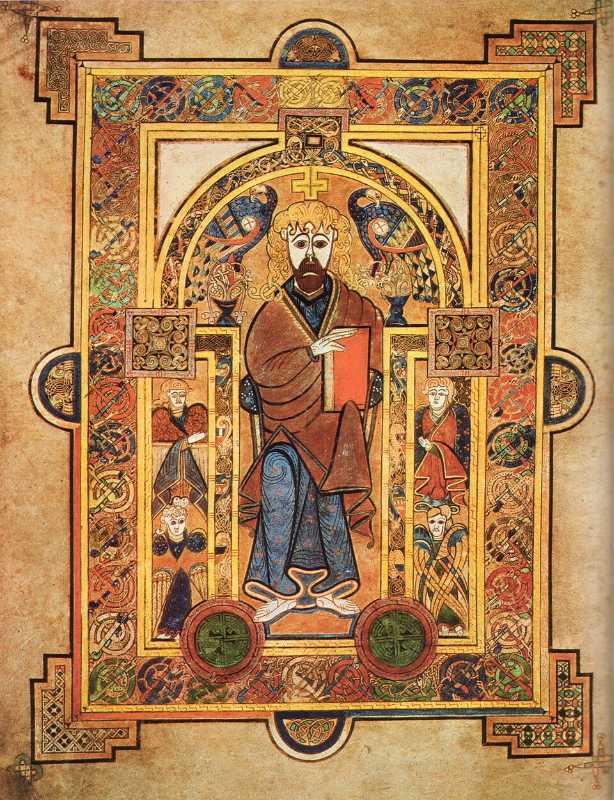
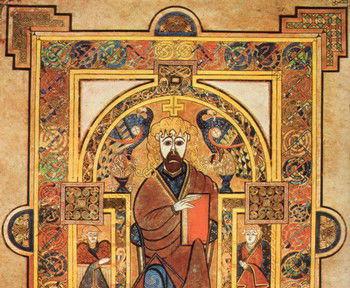
1. Ireland - Book of Kells - c. 800

678 of the 680 pages in the Book of Kells are illuminated with artwork. The work is a true anomaly. Originating from the Dark Ages that resulted in the fall of Rome, the Book of Kells is a lavishly illustrated Bible produced by Columban monks in Ireland. Fleeing from Viking conquerors, it was completed and safeguarded at the Abbey of Kells.

The illustration I've chosen is referred to as "Christ Enthroned," and depicts Christ in Heaven early in the Gospels (Matthew 1:18), before he was born as a mortal. Since this the supernal, heavenly Jesus, he appears older and more sagely than the young Jesus in the prime of his life, common in both ancient and modern art. The curly-haired, Irish-looking Jesus is one of several examples we'll see of Christ's image changing to match the look of those who produced the image.

The abstract motifs are Celtic in origin, while the objects chosen to surround Jesus are of Christian origin. Notice for example the peacocks: two above Jesus's head, under the arch, and eight more peacock-heads in the borders to his immediate left and right. While unfamiliar to us today compared to, say, the symbolic link to fish, the peacock often represented Christ in antiquity. Peacock flesh was believed to be impervious to decay, and the eyes around its feathers were interpreted as all-seeing.
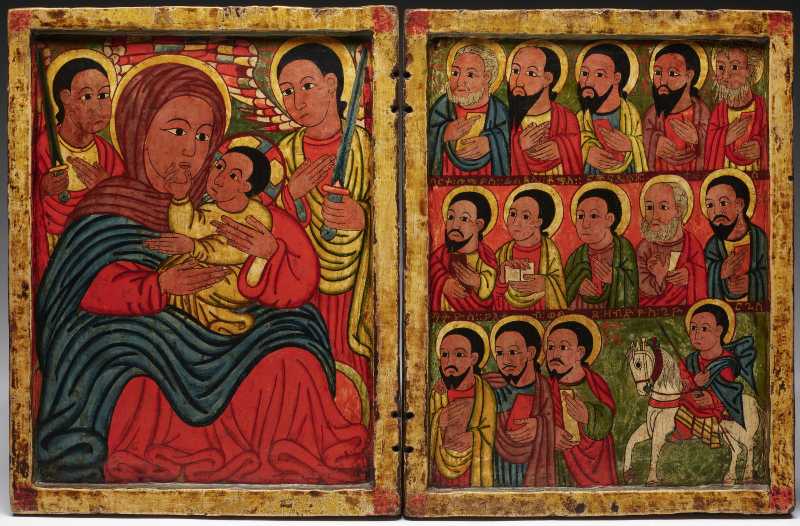
2. Ethiopia - Mary and Christ diptych - 15th century

This diptych is from the late 15th century, in the northern Tigray region. In the history of Ethiopia (where Muslims and Christians have vied for control for thousands of years), the 15th century marked the end of a golden age for Christian art, the early days of the Solomonic dynasty.

Given the figures' light brown skin, almond-shaped eyes, and broad foreheads, this is unmistakably an East African version of a Bible scene. The Waters Art Museum, whose online collection features an extensive array of Ethiopian icons, believes that Jesus placing his hand on Mary's chin may have been inspired by Italian Renaissance painting. Apparently, the inclusion of the saints on horseback is another example of a culture shaping the Christian stories more compelling for itself. Skilled Ethiopian horsemen found much to admire in pictures of victorious, horse-riding saints!
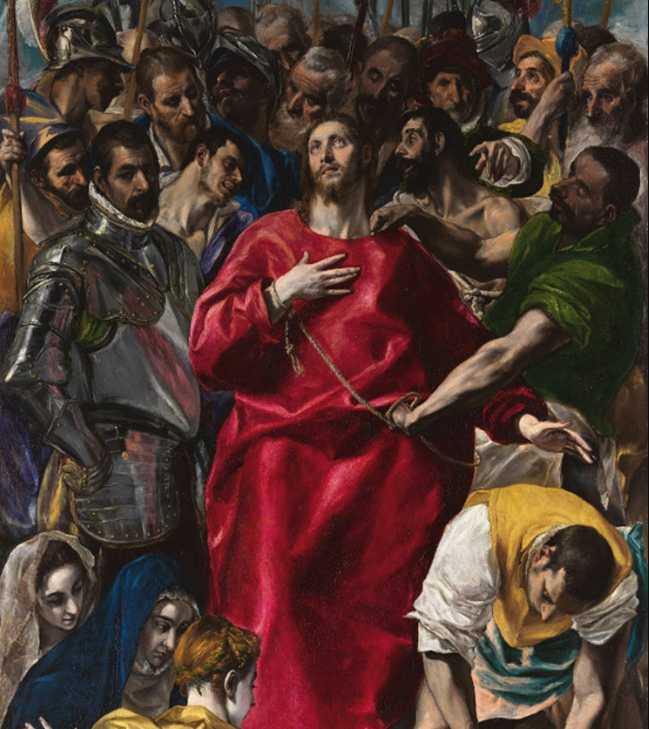
3. Greece/Spain - Disrobing of Christ - 1579

It is perhaps least accurate to call the paintings of El Greco "Greek," but as his sobriquet means "the Greek," I meant for that to be a clue. Actually El Greco's works belong to the school of his Renaissance teachers, particularly his master Titian and his muse, Michaelangelo. Many of El Greco's paintings were religious; he also depicted Jesus in "Christ Carrying the Cross," "The Entombment of Christ," and in the "Burial of the Count of Orgaz." "The Disrobing of Christ" is displayed at the Toledo Cathedral in Spain.

One of his early masterpieces, "The Disrobing of Christ" depicts Jesus standing serenely, his bright robe falling gently on him; meanwhile his disrobers bicker over who will get to keep his clothing. The scene features two "layers," emphasized through the use of Mannerist-style positioning. This makes them appear intersected, rather than merely separated. The illusory mass of the soldiers forms above the affairs of Christ, the man building the crucifix in the bottom right, and the three Marys (the mother of Jesus, the wife of Jacob, and Mary Magdalene) in the bottom left. Not only do they visually collide, the narrative sequence does too: none of the Marys were present at the crucifixion, for instance.
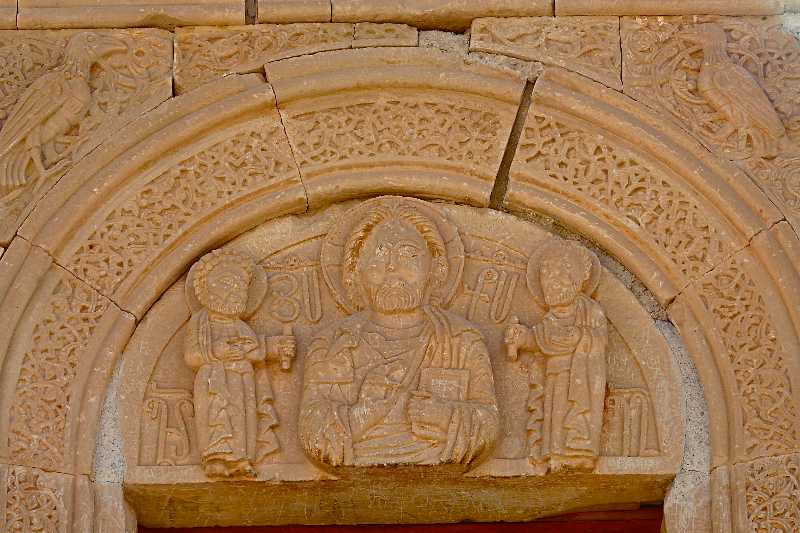
4. Armenia - Noravank monastery relief - 13th century

Noravank, nicknamed the "Red Monastery," is one of Armenia's many beautiful mountain cloisters. The monastery is the site of the Surb Astvatsatsin (or "Holy Mother of God") Church, where the featured image crowns its entrance. The sculptor is still known to us today: Momik, a master architect and artist who also produced many famous illuminated manuscripts on vellum.

The site is replete with carvings, including many example of Momik's famous khachkars, stelae depicting ornate crosses covered with foliage. Botanical imagery is characteristic of Armenian Christian art, literally depicting the cross as the "tree of life." From the position of his hands and the crossed-halo, you may recognize this relief as an image of Christ Pantocrator; if you don't recognize it as Christ Pantocrator yet, I have a few other examples to show you...
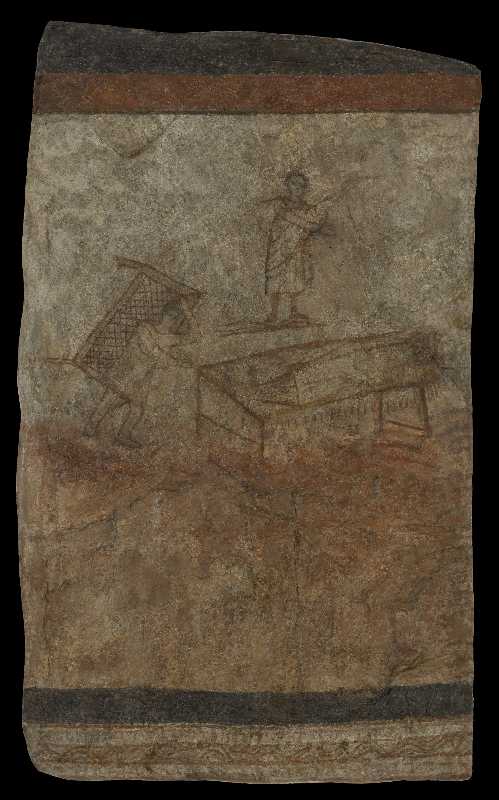
5. Syria - Christ with paralytic - c. 235

The oldest depiction of Jesus of any kind was mockery: a piece of Roman graffiti dated to 200 AD with a crude (in both senses) drawing of Christ with a donkey's head. The inscription reads: "Alexamenos worships god."

This painting, meanwhile, is (or possibly was) the oldest known reverential depiction. The painting shows Jesus curing a paralyzed man, thought to be the episode described in Mark 2:1-12. It comes from the ruins of Dura-Europos, a city in modern-day Syria that changed hands several times through history. The site is a curious mish-mosh of religions; it is also the site of older temples to Artemis, Bel, and Baal. The church that housed this image was renovated from an ordinary house on the outskirts of town. Fortunately, this resulted in the church's destruction: the besieged Romans buried the church when erecting a defensive ramp, preserving it through occupation by the Sasanian Empire.

Unfortunately, a less fortunate destruction has occurred more recently - the Islamic State ransacked the ruins, and the church is presumed to be destroyed.
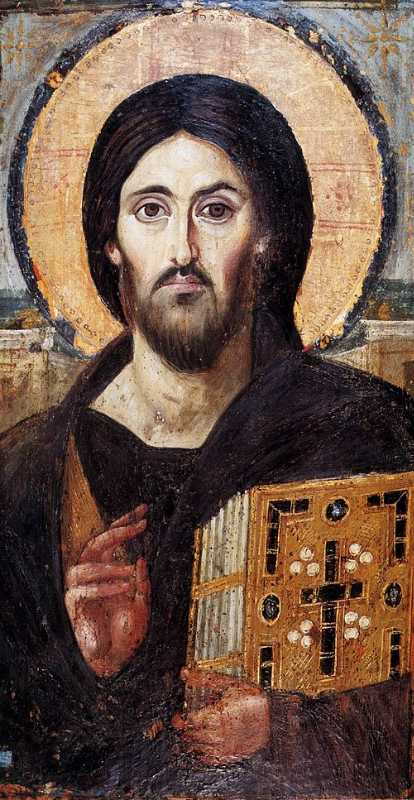
6. Byzantine Empire - Christ Pantocrator (St. Catherine's Monastery) - 6th century

"Christ Pantocrator," derived from the Greek for all-powerful, refers to one of the oldest iconographic representations of Jesus. Christ Pantocrators are front-facing, and depict a bearded Christ, a copy of the New Testament, and a halo that circumscribes a cross. Shown here is the oldest known example, taken from St. Catherine's Monastery at Mount Sinai (supposedly the site of the burning bush seen by Moses). Prior to the Christ Pantocrator, icons of Jesus most often depicted a young, clean-faced Jesus known as the "Good Shepherd."

The asymmetry of the two halves of the icon is intentional. It's meant to show the dual nature of Christ: the stern right half captures his divinity and the boyish left half demonstrates his humanity. Covering up one half of the image, then the other, feels like looking at two completely different images.

On the "divine" side of the image, he holds the New Testament. Like the New Testament, the original images of the Pantocrator are believed to be miraculously inspired - they are "acheiropoieton," to use the technical term. Thus, the Christ Pantocrator is commonly reproduced with all the same symbols. You can find examples on the the Holy Sepulchre at Jerusalem, the Hagia Sophia, and other places of worship through the Byzantine and Orthodox world.
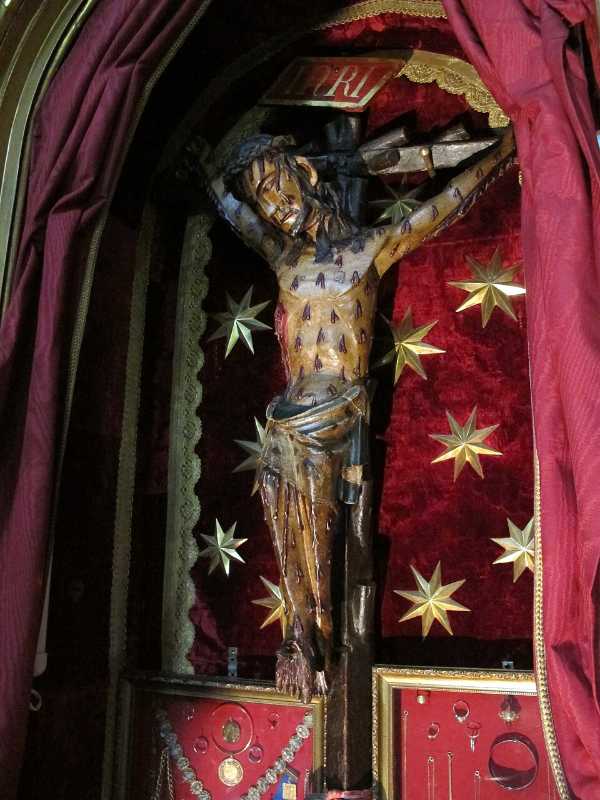
7. Italy - Plague crucifix - 11th century

This particular crucifix had an entire church built to house it. The Church and Sanctuary of the Holy Crucifix in Tuscany, Italy, only displays the crucifix of Castelvecchio periodically; most of the time it is hidden behind a 16th century screen that depicts the Ascension of Christ. Local folklore has it that the crucifix was left abandoned in the town of San Miniato, where it then miraculously protected the city from a 1628 bubonic plague outbreak. The crucifix was unveiled for five days at the height of the 2020 coronavirus pandemic.

The Liturgical Arts Journal's article on this crucifix, title below, notes that the temple is in a relatively more modern Baroque style, and says the juxtaposition is "a good reminder that the Church has always allowed different styles to intermix and intermingle, but always in a way that is complementary and consonant with the tradition."

Quote sourced from the Liturgical Arts Journal, "The Miraculous Eleventh Century Plague Crucifix."
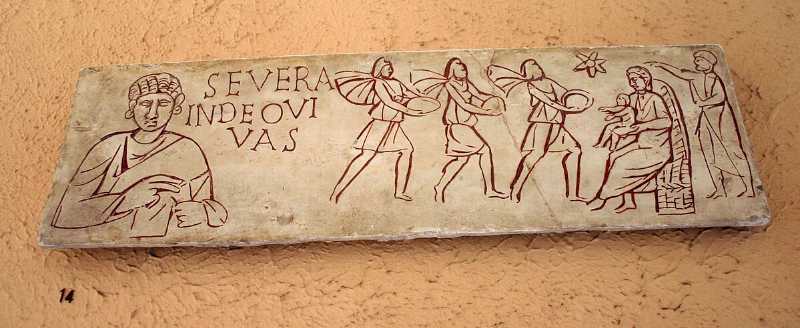
8. Rome - Magi sarcophagus - 3rd century

Under the Roman persecution of Christians, many Christians could only display their faith in the sanctity of their tombs. Accordingly, many old and notably ornate Christian artifacts are sarcophagi. What this particular sarcophagus lacks in detail (compared to its contemporaries, the Dogmatic Sarcophagus and Junius Brassus Sarcophagus), it makes up for in interest. As with many of the oldest images of Christ, he is depicted within a Biblical scene, in this case the Adoration of the Magi. Early iconography had to conceal Christ's appearance - the clean-shaven, curly-haired "Good Shepherd" was often shown carrying a lyre, so he could be easily mistaken for Orpheus.

This is a cast of the sarcophagus. The original is kept by the Vatican.
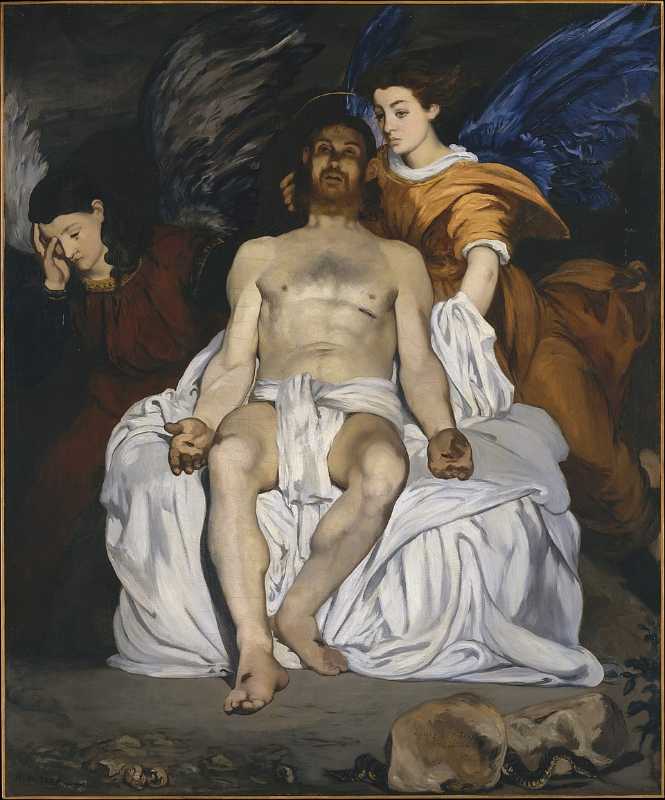
9. France - Death of Christ with Angels - 1864

Although Édouard Manet rarely produced religious paintings, he apparently found the imagery surrounding the crucifixion compelling. When it was first exhibited, the painting was compared to a bad parody of the works by Goya and El Greco that we've seen so far - that it went too far in showing Christ's wounded and pathetic state. It didn't help that, by the Gospels, the stab wound on his left side ought to be on his right. Others were more admiring. Emile Zola said of it: "We are told that this Christ is not a Christ, and I admit that it may be so. As far as I am concerned it is a corpse, painted boldly and vigorously, with the light full on it."

Caravaggio, Holbein the Younger, and Mantegna all produced works that made the dead Christ seem lifeless. But none cadaverized him as much as Manet, and no one else drew such ire. Manet has also been criticized for making Christ look suspiciously like the red-bearded Manet. Is this vanity? Sacrilege? Perhaps not - after all, as I've pointed out, cultures often changed Christ's image to match their appearance. Why not an individual? Thus, the painting can be seen as a reflection of Christ's particularity and universality. In other words, when we contemplate Jesus, we see ourselves - and reflect on our own sufferings and sacrifices.

Zola quote sourced from Manet.org.
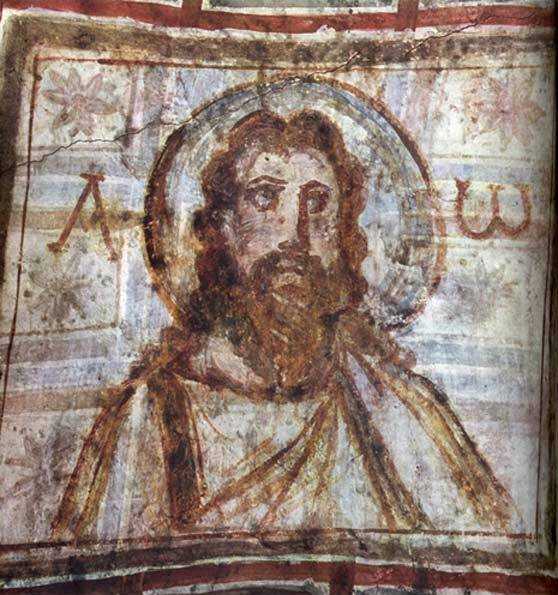
10. Rome - Catacomb mural - 4th century

Compared to the image at Dura-Europos and the Magi sarcophagus, this is an exceptionally modern depiction of Jesus Christ. In the 4th century, catacombs were carved out of the volcanic tuff beneath the Roman hills to bury Christian martyrs. Murals such as this one were then painted in the catacombs to honor the dead. This depiction comes from the Catacombs of Commodilla.

I have pointed out several times now that different regions alter the image of Christ to suit their appearances and their preferences. The Commodilla depiction is an excellent counterexample of this well-worn observation: featuring long hair and a straggly beard, it reflects the emerging tendency to make Christ appear more Hebrew than Roman. It is also unusual as it depicts Jesus as a front-facing icon rather than as part of a scene (like the mural at Dura-Europos). The symbols to the left and right are an alpha (the beginning) and omega (the end), making this image in many ways an anticipator of Christ Pantocrators. The most striking similarity is this: this happens to be the oldest known bearded image of Jesus.
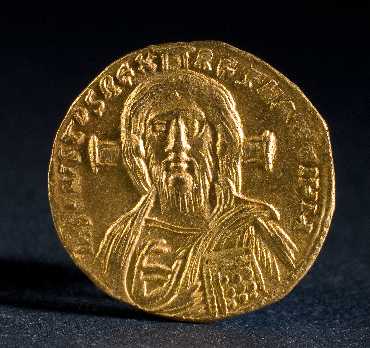
11. Byzantine Empire - Gold solidus - c. 705

The religious Byzantine Emperor Justinian II (who reigned from 705-711) was the first emperor to mint coins depicting Jesus. Coins featuring Jesus became regular fixtures after Michael III (reigned 840-867). Such coins are called solidi (sing. "solidus"), and were made of solid gold. You will find all the hallmarks of Christ Pantocrator on the coin: the cross-halo, the beard, the New Testament.

The pictured solidus belongs to the St. Louis Art Museum, but thousands more Byzantine coins are discovered every year, and many pass through the hands of numismatists.
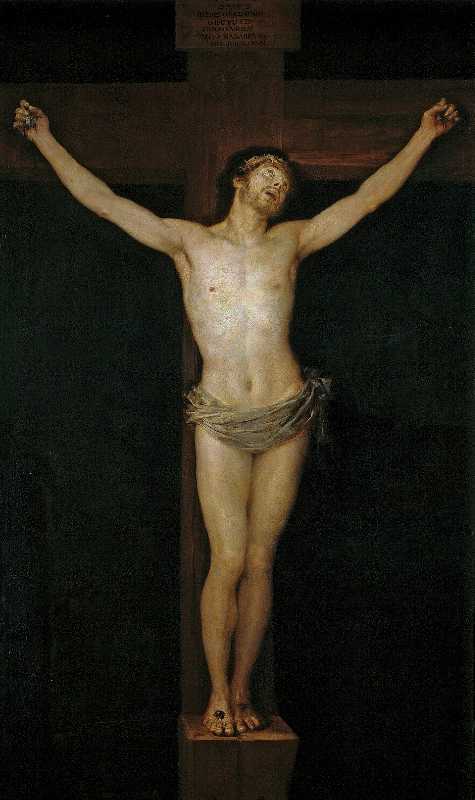
12. Spain - Christ Crucified - 1780

"Christ Crucified" is a 1780 painting by Francisco de Goya - after baroque's heyday in Spain, but definitely indebted to it. Very similar versions were produced by Diego Velázquez and Velázquez's master, Francisco Pacheco.

The Council of Trent, the Catholic Church's 19th ecumenical council - whose primary focus was to spur the Counter-Reformation against the new Protestantism - simultaneously set new rules for religious art, and invited new provocations. The Spanish baroque was a gory period (think "Saturn Devouring His Son"), shifting away from older Mannerist works that seemed to throw the psyche up on a projection-screen. Velázquez and Pacheco produced crucifixions that were notably bloody, intended to shock Catholics away from the sermons of those meddling Protestants. Filson Art History points out that "in an unprecedented frequency in the religious imagery displayed in churches, the moment which the artist chose to depict was intentionally the most shocking and bloodiest one of the narrative."

Goya's "Christ Crucified", therefore, shares the baroque form but avoids its gore. The painting seeks to provoke in other ways. Namely, Christ's loincloth leaves almost nothing to the imagination, apparently because Goya wanted a justification to show off his mastery of human anatomy.

Quote sourced from Filson Art History, "Baroque Painting and the Counter Reformation".
Source: Author etymonlego

This quiz was reviewed by FunTrivia editor looney_tunes before going online.
Any errors found in FunTrivia content are routinely corrected through our feedback system.
Related Quizzes
1. Famous Bible Characters Easier
2. Guess the Character Easier
3. Children in the Bible Easier
4. Bible Genealogy Average
5. A Biblical Whodunnit! Average
6. Biblical Whodunit Tough
7. Who am I? Average
8. Who am I? Tough
9. A Biblical Whodunnit 2 Average
10. Which Biblical Character am I? Average
11. Who Am I Again? Average
12. Love Can Be Found Online Easier

12/2/2025, Copyright 2025 FunTrivia, Inc. - Report an Error / Contact Us