FREE! Click here to Join FunTrivia. Thousands of games, quizzes, and lots more!
Quiz about Mercury the Winged Messenger

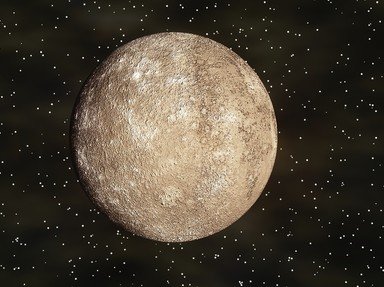
Mercury, the Winged Messenger Trivia Quiz


Inspired by Gustav Holst's orchestral suite "The Planets," here is the last of seven quizzes on the 'other' planets in our Solar System. What do you know of swift and elusive Mercury, the Sun's closest planet and Holst's "Winged Messenger"?

A photo quiz by reedy. Estimated time: 3 mins.
  1. Home
  2. »
  3. Quizzes
  4. »
  5. Science Trivia
  6. »
  7. Our Solar System
  8. »
  9. Mercury

Author
reedy
Time
3 mins
Type
Photo Quiz
Quiz #
424,258
Updated
Jul 21 26
# Qns
10
Difficulty
Average
Avg Score
8 / 10
Plays
30
Last 3 plays: Guest 172 (5/10), S4a4m4 (10/10), Kwizzard (3/10).
-
Question 1 of 10
1. In his orchestral suite "The Planets," Gustav Holst described Mercury as "The Winged Messenger," a nod to the swift-footed Roman god of that name. In astrology, which airy zodiac sign ruled by Mercury is best known for its curiosity, versatility, and talent for communication? Hint


Question 2 of 10
2. Visible to the naked eye, Mercury's existence has been known for millennia, although ancient Greeks originally thought it to be two different objects. What did they name these two objects? Hint


Question 3 of 10
3. Galileo may have been the first to observe Mercury through a telescope in the early 1600s, but which French astronomer, using predictions made by Johannes Kepler, became the first person to observe a transit of Mercury across the Sun in 1631? Hint


Question 4 of 10
4. Mercury is classified as a full planet, but there are moons in the Solar System that are bigger.


Question 5 of 10
5. Mercury is aptly named, speeding around our Sun more quickly than any other planet. How many Earth days does it take for Mercury to complete one year? Hint


Question 6 of 10
6. Mercury is the most dense of the terrestrial planets in our Solar System.


Question 7 of 10
7. Like its neighbouring planet Venus, Mercury retains very high temperatures due to its thick atmosphere and 'greenhouse effect.'


Question 8 of 10
8. Caloris Planitia is the largest impact crater on Mercury with an area of nearly 1.89 million square kilometres (730,000 square miles), which is approximately the same as which (3rd largest) African country? Hint


Question 9 of 10
9. The first spacecraft to visit Mercury was Mariner 10, which reached the planet in which year? Hint


Question 10 of 10
10. It took decades for a second spacecraft to visit Mercury, which finally took place in the new millennium. Which probe spent four years in Mercury's orbit from 2011 to 2015? Hint


(Optional) Create a Free FunTrivia ID to save the points you are about to earn:

arrow Select a User ID:
arrow Choose a Password:
arrow Your Email:


View Image Attributions for This Quiz

Most Recent Scores
Today : Guest 172: 5/10
Today : S4a4m4: 10/10
Today : Kwizzard: 3/10
Today : thomas1975: 7/10
Today : WesleyCrusher: 7/10
Today : Guest 174: 10/10
Today : cbushman: 7/10
Today : Guest 165: 5/10
Today : Guest 90: 6/10

Quiz Answer Key and Fun Facts
1. In his orchestral suite "The Planets," Gustav Holst described Mercury as "The Winged Messenger," a nod to the swift-footed Roman god of that name. In astrology, which airy zodiac sign ruled by Mercury is best known for its curiosity, versatility, and talent for communication?

Answer: Gemini

Mercury is traditionally associated with intellect, communication, and the exchange of ideas. In astrology, it rules both Gemini and Virgo, expressing different facets of the mind: Gemini through curiosity and connection, and Virgo through analysis and precision. And while both are associated with Mercury, it is Gemini that best matches the question. Mercury is closely linked with themes of:

Communication and language
Learning and knowledge
Adaptability and quick thinking
Logic and reasoning
Travel, trade, and the movement of information

As ruler of Gemini, one of the three air signs, Mercury governs conversation, curiosity, versatility, and the rapid sharing of ideas. Gemini reflects Mercury's role as a gatherer and messenger of information, always seeking new experiences and connections.

In Roman mythology, Mercury was the messenger of the gods, carrying news between the mortal and divine realms. This association with speed, movement, and communication is reflected both in the planet's rapid orbit around the Sun and in its astrological symbolism.

Holst's subtitle "The Winged Messenger" captures this symbolism perfectly. Mercury represents not peace, war, or grandeur, but motion itself: the quick transmission of thoughts, ideas, and messages. The music evokes agility, wit, and restless energy, mirroring the planet's reputation as the celestial bringer of communication and intellect.
2. Visible to the naked eye, Mercury's existence has been known for millennia, although ancient Greeks originally thought it to be two different objects. What did they name these two objects?

Answer: Apollo and Hermes

Because Mercury never strays far from the Sun in Earth's sky, it is usually seen either shortly before sunrise or just after sunset. The ancient Greeks originally believed these appearances were two different celestial bodies, naming the morning apparition Apollo and the evening apparition Hermes.

It was later recognized that both were the same planet. Hermes was the Greek messenger of the gods, and the Romans eventually adopted his counterpart's name, Mercury, for the fastest-moving planet visible to the naked eye.
3. Galileo may have been the first to observe Mercury through a telescope in the early 1600s, but which French astronomer, using predictions made by Johannes Kepler, became the first person to observe a transit of Mercury across the Sun in 1631?

Answer: Pierre Gassendi

On 7 November 1631, while in Paris, Pierre Gassendi successfully observed and recorded Mercury's tiny silhouette crossing the face of the Sun, becoming the first person known to witness a planetary transit.

Gassendi's observation confirmed the accuracy of Johannes Kepler's predictions and demonstrated the power of careful observation combined with mathematical astronomy. Cleverly, he projected the Sun's image onto a screen rather than looking directly at it, a technique that allowed him to track Mercury safely as it crept across the solar disk.

All of the other options (Brahe, Harriot, and Bayer) had died before 1631... and none of them were French.
4. Mercury is classified as a full planet, but there are moons in the Solar System that are bigger.

Answer: True

The photo depicts the four terrestrial planets in their order from the sun (left to right): Mercury, Venus, Earth, and Mars.

Although Mercury is the Solar System's smallest planet, it is actually smaller than two moons: Ganymede, which orbits Jupiter, and Titan, which orbits Saturn. Ganymede has a diameter of about 5,268 km (3,273 mi) and Titan about 5,150 km (3,200 mi), compared with Mercury's 4,879 km (3,031 mi). Despite their larger size, both remain classified as moons because they orbit planets, whereas Mercury directly orbits the Sun and therefore meets the definition of a planet.

Mercury is also only modestly larger than Earth's Moon, which has a diameter of about 3,475 km (2,159 mi). In fact, Mercury and the Moon share a similar appearance, with heavily cratered surfaces that preserve evidence of ancient impacts from the early Solar System.

Mercury is much denser than either Ganymede, Titan, or Earth's Moon. Its unusually large iron core gives it far more mass than a typical object of its size and makes it one of the densest bodies in the Solar System.
5. Mercury is aptly named, speeding around our Sun more quickly than any other planet. How many Earth days does it take for Mercury to complete one year?

Answer: 88

A year on Mercury lasts just 88 Earth days, making it the fastest-orbiting planet in the Solar System, racing around the Sun at an average speed of about 47 km/s (29 mi/s).

Even more remarkable is Mercury's unusual relationship between its day and year. While the planet completes an orbit in 88 Earth days, a full day-night cycle (from one sunrise to the next) lasts 176 Earth days - the equivalent of two Mercurian years! In other words, on Mercury, a year is only half as long as a day! This oddity is caused by the planet's unique 3:2 spin-orbit resonance, in which Mercury rotates three times on its axis for every two trips around the Sun.
6. Mercury is the most dense of the terrestrial planets in our Solar System.

Answer: False

Although Mercury has an exceptionally large iron core and is nearly as dense as Earth, Earth is actually the densest terrestrial planet - and the densest planet in the Solar System overall. Earth's average density is about 5.51 g/cm^3 (343.98 lb/ft^3), compared with 5.43 g/cm^3 (338.99 lb/ft^3) for Mercury.

The difference is partly due to gravitational compression. Earth's much greater mass squeezes its interior materials more tightly than Mercury can, slightly increasing its overall density. If the effects of gravity were removed and the planets compared in an uncompressed state, Mercury's unusually large metallic core might actually make it the denser of the two.

Mercury remains a remarkable world, however. Its iron-rich core occupies a far larger proportion of the planet than Earth's does, helping to explain why such a small planet is almost as dense as our own.
7. Like its neighbouring planet Venus, Mercury retains very high temperatures due to its thick atmosphere and 'greenhouse effect.'

Answer: False

Unlike Venus, Mercury has no substantial atmosphere and therefore lacks a significant greenhouse effect. Instead of a thick blanket of gas to trap heat, Mercury possesses only an extremely tenuous exosphere that is far too thin to retain warmth.

As a result, Mercury experiences some of the most extreme temperature swings in the Solar System. Surface temperatures can soar to about 430 degrees Celsius (800 Fahrenheit) during the day, but plunge to around ?180 C (?290 F) at night once the Sun sets and the heat rapidly escapes into space.

Consequently (and ironically), although Mercury is the closest planet to the Sun, it is not the hottest planet. That distinction belongs to Venus, whose dense atmosphere (noted in the question) creates a powerful runaway greenhouse effect that keeps surface temperatures around 465 C (869 F) day and night.
8. Caloris Planitia is the largest impact crater on Mercury with an area of nearly 1.89 million square kilometres (730,000 square miles), which is approximately the same as which (3rd largest) African country?

Answer: Sudan

Caloris Planitia is the largest impact basin on Mercury and one of the largest known impact structures in the Solar System. Covering an estimated 1.89 million square kilometres (730,000 square miles), it occupies an area roughly comparable to that of Sudan, Africa's third-largest country. Comparatively, however, that area is a much larger portion of Mercury's surface. Measuring about 1,550 km (960 mi) across, the basin spans nearly one-third of Mercury's diameter.

Scientists believe Caloris Planitia was created around 3.8 billion years ago when a massive asteroid struck Mercury during the Solar System's early history. The impact was so powerful that it sent shockwaves through the planet, producing a region of disrupted terrain on the opposite side of Mercury from the basin itself.

Its name comes from the Latin word caloris, meaning 'heat,' because the basin lies near one of Mercury's hottest regions. Later volcanic activity flooded much of the impact basin with lava, creating the vast plain seen today and preserving a remarkable record of Mercury's violent geological past.
9. The first spacecraft to visit Mercury was Mariner 10, which reached the planet in which year?

Answer: 1974

Mariner 10 was a true trailblazer in planetary exploration. Launched in November of 1973, it became the first spacecraft to visit Mercury and the first mission to explore two planets on the same journey, using a flyby of Venus to help steer it toward its ultimate destination. It also pioneered the use of a gravity assist, a technique that has since become a standard tool in deep-space exploration.

During its three encounters with Mercury in 1974 and 1975, Mariner 10 returned thousands of images and revolutionized our understanding of the planet. The spacecraft revealed Mercury's heavily cratered, Moon-like surface, discovered that the planet possesses a global magnetic field, and found that Mercury has only an extremely tenuous atmosphere.

One limitation of the mission was that Mariner 10 encountered Mercury under similar lighting conditions on each flyby, allowing it to photograph only about 45% of the planet's surface. It would take the next mission (more than three decades later) to map the remainder and provide a complete picture of the Solar System's innermost planet.
10. It took decades for a second spacecraft to visit Mercury, which finally took place in the new millennium. Which probe spent four years in Mercury's orbit from 2011 to 2015?

Answer: MESSENGER

MESSENGER (short for MErcury Surface, Space ENvironment, GEochemistry, and Ranging) was the first spacecraft ever to orbit Mercury, entering orbit in March of 2011 after a journey of nearly seven years that included flybys of Earth, Venus, and Mercury itself.

During its four years around the planet, MESSENGER transformed our understanding of Mercury. Among its major discoveries were evidence that Mercury's polar deposits are largely composed of water ice, detailed measurements of the planet's magnetic field, and a complete map of Mercury's surface.

Before MESSENGER, only about 45% of Mercury's surface had been photographed by Mariner 10. The orbiter filled in the missing pieces, revealing previously unseen craters, volcanic plains, and geological features that helped scientists reconstruct the history of the Solar System's innermost planet.

The mission came to an end on 30 April 2015, when MESSENGER exhausted its fuel and impacted Mercury's surface, as planned, concluding one of the most successful planetary exploration missions ever undertaken.

The other choices were also equipment acronyms:
MAVEN - Mars Atmosphere and Volatile EvolutioN
TESS - Transiting Exoplanet Survey Satellite
JUNO - JUpiter Near-polar Orbiter
Source: Author reedy

This quiz was reviewed by FunTrivia editor rossian before going online.
Any errors found in FunTrivia content are routinely corrected through our feedback system.
Related Quizzes
This quiz is part of series A Suite of Planets:

A quiz list inspired by Gustav Holst's "The Planets" orchestral suite... in reverse planetary order. Enjoy!

  1. Neptune, the Mystic Easier
  2. Uranus, the Magician Easier
  3. Saturn, the Bringer of Old Age Average
  4. Jupiter, the Bringer of Jollity Average
  5. Mars, the Bringer of War Easier
  6. Venus, the Bringer of Peace Average
  7. Mercury, the Winged Messenger Average

7/21/2026, Copyright 2026 FunTrivia, Inc. - Report an Error / Contact Us