FREE! Click here to Join FunTrivia. Thousands of games, quizzes, and lots more!
Quiz about The Male Leaders of Civilization VII

The Male Leaders of "Civilization VII" Quiz


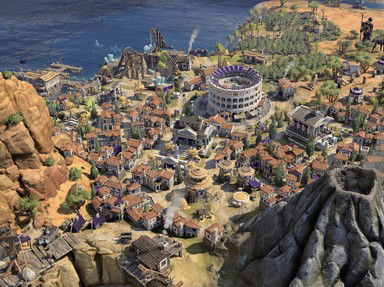
Leaders play an important role in "Civilization VII". Select the male Leaders that are part of the game. "Civilization VII" was developed by Praxis Games and published by 2K. It was released on several platforms including PlayStation 4 and 5.

A collection quiz by bernie73. Estimated time: 3 mins.
  1. Home
  2. »
  3. Quizzes
  4. »
  5. Video Game Trivia
  6. »
  7. Video Games A-C
  8. »
  9. Civilization

Author
bernie73
Time
3 mins
Type
Quiz #
425,359
Updated
Sep 13 26
# Qns
21
Difficulty
Tough
Avg Score
11 / 21
Plays
19
Last 3 plays: winston1 (7/21), pughmv (0/21), Guest 174 (21/21).
Select the male Leaders. Ignore the choices that are not Leaders.
There are 21 correct entries. Get 3 incorrect and the game ends.
Kamehameha Nelson Mandela Machiavelli Frederick Alexandre Dumas Qin Shi Huang Suharto William Shakespeare Ibn Battuta Touissant L'Ouvetuere Buddha Galileo Galilei Imhotep Napoleon Genghis Khan Thomas Edison Thomas Jefferson Lafayette Moses Mohandas Gandhi Augustus Gilgamesh Stalin Edward Teach Jose Rizal Ashoka Tecumseh Toyotomi Hideyoshi Joseph Goebbels Confucius Ludwig Van Beethoven Simon Bolivar Xerxes Pachacuti Alexander the Great Yi Sun-Sin Benjamin Franklin Charlemagne

Left click to select the correct answers.
Right click if using a keyboard to cross out things you know are incorrect to help you narrow things down.

Most Recent Scores
Today : winston1: 7/21
Today : pughmv: 0/21
Today : Guest 174: 21/21
Today : mazza47: 7/21
Today : Guest 99: 4/21
Today : PurpleComet: 3/21
Today : Alcoholic63: 10/21
Today : Guest 31: 10/21
Today : scottm: 2/21

Quiz Answer Key and Fun Facts
Answer:

Please note that the Leaders of "Civilization VII" are not assigned to a specific civilization as your civilization changes more than once in the game. You keep the same leader across each change, though.

The first leader is Alexander the Great (356 BC-323 BC). He was King of Macedonia and a short-lived empire that broke up after his death. Many lands were conquered by him including Egypt and Persia. After his death, his empire was divided among several rulers. In "Civilization VII", Alexander emphasizes cultural and militaristic accomplishments. He provides increased combat strength and speed for certain units. In the game, Alexander also has an increased relationship with smaller civilizations.

The second leader is Ashoka (304 BC-232 BC). He was a South Asian king and emperor that helped in the spread of Buddhism. He is associated with "The Edicts of Ashoka", inscribed on many a stone pillar. Initially more war-like, he became much more peaceful later in life. Ashoka emphasizes diplomatic and expansionist accomplishments in "Civilization VII". He provides increased amounts of food in cities which are happy enough. He has an increased relationship with the happiest civilizations.

The third leader is Augustus (63 BC-AD 14). He was the first emperor of the Roman Empire. He began the period known as the "Pax Romana" and ruled for over forty years. His descendants ruled the empire during the first century AD. In "Civilization VII", Augustus emphasizes cultural and expansionist traits. Augustus brings increased additional gold and production to cities. In general, he had an increased relationship with the cities of other civilizations.

The fourth leader is Benjamin Franklin (1706-1790). He served several roles in early America, including political leader, scientist, author, and inventor. He is associated with "Poor Richard's Almanac", studying the Gulf Stream, and the lightning rod. He was a signer of the Declaration of Independence and US Constitution. Franklin emphasizes diplomatic and scientific accomplishments in "Civilization VII". He gives increased science accomplishment and production in cities. He gains an increased relationship with the civilizations that share a government type with him.

The fifth leader is Charlemagne (742-814). He was a Frankish king and the first Holy Roman Emperor. His reign served as a rare period of unity in Western Europe during the Middle Ages. He was able to accomplish this despite a limited ability to read and write. In "Civilization VII", Charlemagne emphasizes scientific and militaristic accomplishments. He grants several improvements related to cavalry units. His relationship increases with civilizations that have more celebrations.

The sixth leader is Confucius (or Kong Qiu) (551 BC-479 BC). He was a Chinese moral philosopher and traditional author of the "Five Classics". His teachings emphasize personal and public morality. He described the relationships between individuals in one of five ways, usually involving a superior person and an inferior person. Confucius emphasizes the expansionist and scientific accomplishments in "Civilization VII". He provides increased population and scientific accomplishments. His relationship with other civilizations increases through having more specialists.

The seventh leader is Edward Teach ("Blackbeard the Pirate") (c. 1660-1718). He was an English pirate who terrorized the West Indies. As a sailor, he served as both a pirate and a privateer at different times. A significant part of his career took place in the Caribbean. In "Civilization VII", Edward Teach emphasizes militaristic and economic accomplishments. His abilities have to do with naval vessels. His relationships with other civilizations increases through due to naval vessels.

The eighth leader is Friedrich (1122 - 1190). He was a German king and Holy Roman Emperor known as "Barbarossa". He is considered among the greatest of rulers in Medieval Europe. He was involved with the third Crusade. Friedrich emphasizes militaristic and scientific accomplishments in "Civilization VII". He grants abilities related to the relative strength of military units. He has an increased relationship with the civilization with more military units.

The ninth leader is Genghis Khan (c. 1162-1227). He was the first Mongol khan. He assembled what might be the largest empire in history. Descendants of his include the Yuan Dynasty in China and the Golden Horde. He is a fascinating figure in history, emphasizing great generosity and great ruthlessness. In "Civilization VII". Genghis Khan emphasizes militaristic and expansionistic accomplishments. He grants increased strength in terms of combat units. He has an increased relationship with a civilization with fewer Cavalry units.

The tenth leader is Gilgamesh (c. 2500 BC). He was a semi-legendary god-king of the Sumerian city-state of Uruk. He was the subject of "The Epic of Gilgamesh". He is known for his fast friendship with Enkidu. Gilgamesh emphasizes diplomatic and militaristic accomplishments in "Civilization VII". His special abilities deal with the relative effects of allies. He has an increased relationship with a civilization that supports the most endeavors.

The eleventh leader is Ibn Battuta (1304-c. 1369). He was a North African scholar and explorer, who was employed as a religious judge. He is known for his travels through many parts of Africa, Asia, and Europe. His writings are still studied today by historians. In "Civilization VII", Ibn Battuta does not have a particular emphasis in his accomplishments. His special abilities are spread across multiple areas. He has an increased relationship with a civilization with which he has diminished the fog of war.

The twelfth leader is Jose Rizal (1861-1896). He was a Filipino writer and polymath from the period of Spanish colonial rule. He pushed for reforms of the Spanish colonial regime. He was a strong advocate for equal rights. Jose Rizal emphasizes cultural and diplomatic accomplishments in "Civilization VII". He is able to gain additional gold and culture. He has an increased relationship with the civilization that has the endeavors.

The thirteenth leader is Lafayette (1757-1834). He was a French military officer and politician who was a hero of two nations. He is a part of the story of the American Revolution and the French Revolution. He paid a return visit to the United States in 1824-1825. In "Civilization VII", Lafayette's achievements emphasize cultural and diplomatic accomplishments. He demonstrates Social Policies and Combat Strengths. He has an increased relationship with the civilization with the most cities.

The fourteenth leader is Machiavelli (1469-1527). He was an Italian political philosopher and author of "The Prince". The book is associated with duplicity and treachery. He is considered the father of modern political theory. Machiavelli emphasizes diplomatic and economic accomplishments in "Civilization VII". He benefits when civilizations other than his own are involved in war. There is an increased relationship with those civilizations with which one is not at war.

The fifteenth leader is Napoleon (1769-1821). He was a French general and emperor. He was the most important figure in France for nearly twenty years and developed the Napoleonic Code. He was finally defeated at the 1815 Battle of Waterloo. In "Civilization VII", Napoleon emphasizes diplomatic and economic accomplishments. He demonstrates a unique diplomatic action. He had an increased relationship for the civilization with the smallest army.

The sixteenth leader is Pachacuti (1403-1471). He was a Incan political and military leader. He originated in the Kingdom of Cuzco. Under his rule, the Incan Empire greatly expanded in size. Pachalcuti emphasizes economic and expansionist accomplishments in "Civilization VII". His abilities lead to a relative increase in food supply. He had an increased relationship with the civilization with the fewest mountains.

The seventeenth leader is Simon Bolivar (1783-1830). He was a Venezuelan political and military leader. He is considered "The Liberator" for much of northern South America. His "Gran Columbia" included much of the same. In "Civilization VII", Simon Bolivar emphasizes expansionist and militaristic accomplishments. He is able to gain some additional support in wars. He had an increased relationship with the civilization with the fewest unhappy cities.

The eighteenth leader is Tecumseh (1768-1813). He was a Native American political and military leader. He was a chief of the Shawnee nation. He was killed during the War of 1812. Tecumseh emphasizes diplomatic and militaristic accomplishments in "Civilization VII". He provides increased food production and increased combat strength. He has a decreased relationship with a civilization that disperses.

The nineteenth leader is Toyotomi Hideyoshi (1537-1598). He was a Japanese samurai of the feudal period. Holding the rank of daimyo, he played an important role in the unification of Japan. He began this period with a humble rank. In "Civilization VII", Toyotomi Hideyoshi emphasizes militaristic and cultural accomplishments. He brings greater damage caused by and received by military units. He has an increased relationship with a civilization that has minimal land.

The twentieth leader is Xerxes (518 BC-465 BC). He was a Persian emperor who attempted an invasion and conquest of Greece. He is known for leading the crossing of the Hellespont into Greece as welll as many peacetime accomplishments. These include a number of architectural wonders. Xerxes emphasizes militaristic and cultural accomplishments in "Civilization VII". His military units have increased combat strength. He has an increased relationship with a civilization that is at war.

The twenty-first leader is Yi Sun-Sin (1545-1598) was a Korean military general and admiral. He was known for his victories against the Japanese. He answered the call of duty from prison. In "Civilization VII", Yi Sun-Sin emphasizes militaristic and scientific accomplishments. He has the ability to train fleet commanders. He has an increased relationship with civilizations with naval units.

---------

The following individuals are NOT Leaders in "Civilization VII".

The first non-Leader is Alexandre Dumas (1802-1870). He was a French author of works such as "The Three Musketeers". He was one of the most read authors of French in history. If he appeared in the game, he would probably be known for cultural accomplishments.

The second non-Leader is Buddha (c. 563 BC-c. 483 BC). He was a South Asian ascetic and religious leader. Born as Siddhartha Gautama, he was a wealthy ruler who gave up his wealth in pursuit of the truth. If he appeared in the game, he would probably be known for cultural accomplishments.

The third non-Leader is Galileo Galilei (1564-1642). He was an Italian scientist and engineer. His accomplishments were in areas that include astronomy, physics, and mechanics. If he appeared in the game, he would probably be known for scientific accomplishments.

The fourth non-Leader is Imhotep (c. 2700 BC). He was an Egyptian political leader and architect. He was the possible designer of the step pyramid associated with the pharaoh Djoser. If he appeared in the game, he would probably be known for cultural accomplishments.

The fifth non-Leader is Joseph Goebbels (1897-1945). He was a German political leader and master of propaganda. His expertise includes controlling the use of radio and film. If he appeared in the game, he would probably be known for diplomatic accomplishments.

The sixth non-Leader is Kameahamea (1736-1819). He was a Hawaiian political and military leader. Under his leadership, the Hawaiian Islands were unified in the early 1800s. If he appeared in the game, he would probably be known for his expansionistic accomplishments.

The seventh non-Leader is Ludwig Van Beethoven (1770-1827). He was a German composer and conductor. A musical prodigy, he greatly developed the symphony as an art form. If he appeared in the game, he would probably be known for his cultural accomplishments.

The eighth non-Leader is Mohandas Gandhi (1869-1948). He was an Indian freedom fighter during the British Raj. Under his leadership, India gained independence from the British Empire. If he appeared in the game, he would probably be known for his diplomatic accomplishments.

The ninth non-Leader is Moses (c. 1300 BC). He was a Hebrew religious and political leader. He is traditionally described as the author of the first five books of the Old Testament. If he appeared in the game, he would probably be known for his cultural accomplishments.

The tenth non-Leader is Nelson Mandela (1918-2013) South African anti-apartheid fighter. He would later become the first President of an integrated South Africa. If he appeared in the game, he would probably be known for his diplomatic accomplishments.

The eleventh non-Leader is Qin Shi Huang (259 BC-210 BC). He was a Chinese emperor, associated with the Great Wall. He is considered the first ruler of a unified China. If he appeared in the game, he would probably be known for his expansionistic accomplishments.

The twelfth non-Leader is Stalin (1879-1953). He was a Soviet-Georgian political leader and dictator. He was the leader of the Soviet Union for nearly 30 years. If he appeared in the game, he would probably be known for his diplomatic accomplishments.

The thirteenth non-Leader is Suharto (1921-2008). He was Indonesian political and military leader. He served as president of Indonesia for over thirty years. If he appeared in the game, he would probably be known for his diplomatic accomplishments.

The fourteenth non-Leader is Thomas Edison (1847-1931). He was an American scientist and inventor many things, including the light bulb. All told, he is credited with holding over 1,000 patents. If he appeared in the game, he would probably be known for his scientific accomplishments.

The fifteenth non-Leader is Thomas Jefferson (1743-1826). He was the primary author of the "Declaration of Independence" and served as the third President of the United States. He also studied many other areas of human endeavor. If he appeared in the game, he would probably be known for his cultural accomplishments.

The sixteenth non-Leader is Touissant L'Ouverure (1743-1803). He was a Haitian military and political leader. Born into slavery, he would eventually work for its abolition. If he appeared in the game, he would probably be known for his diplomatic accomplishments.

The seventeenth non-Leader is William Shakespeare (1564-1616). He was an English author and dramatist of works such as "Romeo and Juliet". He also wrote over 150 classic sonnets. If he appeared in the game, he would probably be known for his cultural accomplishments.
Source: Author bernie73

This quiz was reviewed by FunTrivia editor kyleisalive before going online.
Any errors found in FunTrivia content are routinely corrected through our feedback system.
9/13/2026, Copyright 2026 FunTrivia, Inc. - Report an Error / Contact Us