FREE! Click here to Join FunTrivia. Thousands of games, quizzes, and lots more!
Quiz about Animal Watching in the UK

Animal Watching in the UK Trivia Quiz


I love animal watching and typically find their behaviors way more interesting than those of humans. The UK has an astonishing array of diverse animals and offers many opportunities for unique experiences. Maybe it's time to plan a trip?!

by ponycargirl. Estimated time: 3 mins.
  1. Home
  2. »
  3. Quizzes
  4. »
  5. Animal Trivia
  6. »
  7. Animals by Region
  8. »
  9. UK

Author
ponycargirl
Time
3 mins
Type
Quiz #
424,754
Updated
Jul 03 26
# Qns
10
Difficulty
Very Easy
Avg Score
10 / 10
Plays
38
Last 3 plays: bulldogBen1 (10/10), MalStone (10/10), Guest 80 (10/10).
First, let's decide which animals we want to watch. See if you can match the pictures with the animals' common names.
Drag-Drop or Click from Right
Options
Pine Martin Atlantic Puffin Scottish Wildcat Atlantic Salmon Hazel Dormouse West European Hedgehog European Badger Glow Worm Grey Seal Capercaillie


 View Image Attributions for This Quiz

Most Recent Scores
Today : bulldogBen1: 10/10
Today : MalStone: 10/10
Today : Guest 80: 10/10
Today : DeepHistory: 10/10
Today : Guest 76: 8/10
Today : Kalibre: 10/10
Today : Steelflower75: 10/10
Today : Isipingo: 10/10
Today : briarwoodrose: 10/10

Quiz Answer Key and Fun Facts
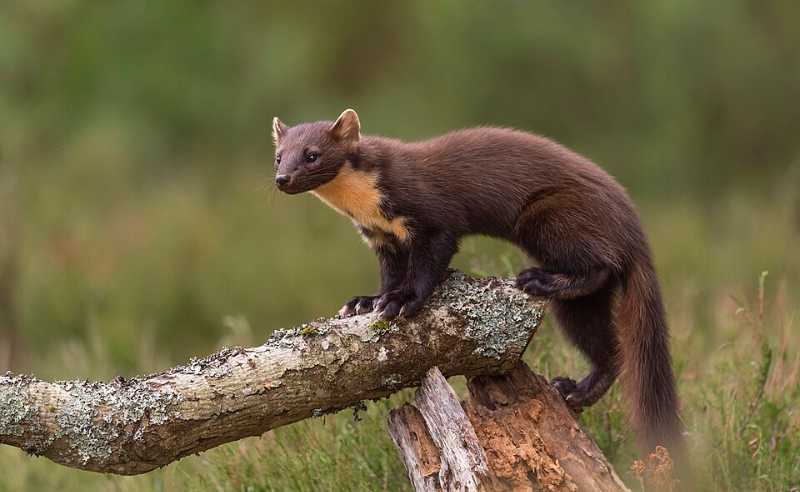
1. Pine Martin

You may have read some Scottish stories about pine martens, but please be assured that they are really just myths. They do not have a poisonous barb on their body nor do they go on sheep-killing sprees. They can, however, wreak havoc in a chicken coop! In fact, some birds are known to sing alarms when pine martens are near.

A member of the weasel family, a pine marten's size compares to that of a domestic cat. It has brown fur and a yellow or cream colored patch on its throat. As cute as it looks, however, it is advisable to keep a safe distance. Pine martens will not typically attack a human unless they feel cornered, but they are equipped with sharp teeth and claws that are mostly used in hunting for food, so be warned! They have been known to take down an occasional deer.

Pine martens are nocturnal animals that prefer to live in woodlands, eating small mammals, insects, berries, birds, and eggs. They lead a solitary life except for during their breeding season from July through August. Because the animal is so shy, it is very difficult to watch, and it is protected in the UK under the Wildlife and Countryside Act (1981). Why? It is good for the woodland environment. It helps to keep down the grey squirrel population, which in turn helps red squirrels. It also assists in seed distribution, and helps keep rodents in check.

The best way to watch pine martens is to book time at a wildlife hide, which is a camouflaged shelter usually placed in nature reserves that blends into the animal's environment. Hides are typically wooden or canvas structures that have openings for viewing the feeding stations that attract the animals. Some even have overnight accommodations available. The Scottish Highlands is probably the best place to view pine martens in the wild; the Aigas Field Centre near Inverness is known to be one of the best locations, but there are also populations in the Forest of Dean in England and Coed Hafod y Llyn in Wales.
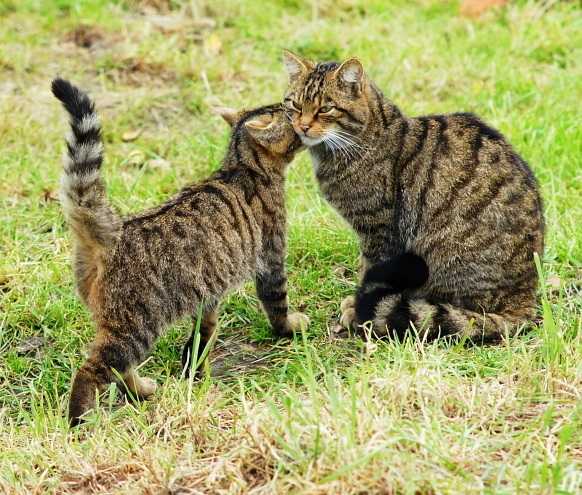
2. Scottish Wildcat

Scottish wildcats, also called Highland tigers, are believed to have crossed from the continent into parts of the UK about 10,000 years ago. They established themselves as apex predators in many regions, however, as the human population increased and forests were cleared during the Middle Ages, Scottish wildcats began to disappear from southern England.

They look a lot like tabby cats, don't they? In spite of their appearance, however, Scottish wildcats are much larger, heavier, and more muscular than the average domestic cat. They will never have white patches on their bodies like domestic tabbys do, and they do not have white spots on their rumps. Their tail is also different. It is thick and bushy and does not taper toward the end; the unbroken dark rings and black tip are the key features that identify whether the feline being watched is a purebred Scottish wildcat.

And - before you are thinking that you would like one for a pet, remember that it is impossible to tame; even if it is hand raised from birth, it remains instinctively wild. Its ferociousness is not a myth, as it has sharp teeth and claws that the wildcat will aggressively use to defend itself and its young. Scottish wildcats are not man killers, though, and are extremely shy, solitary creatures. They prefer a solitary lifestyle and really just want to be left alone. The only time a Scottish wildcat will seek company is during mating season, which occurs between January and March in the wild. Litter sizes may contain anywhere from one to eight kittens.

So where do they live in the UK now? Today the Scottish Highlands is their home. They inhabit woodland forests, where they enjoy the dense tree cover for resting and denning, as well as heather moorlands. They also require a nearby open field for hunting. And those sharp teeth and claws? They are needed when searching for food. A strict carnivore, the Scottish wildcat's favorite foods are rabbits and voles, but it will also eat rodents, birds, and frogs if necessary, always using a specialized killing technique. They sneak up and jump on their prey and bite the back of the neck, which immediately severs the spine.

Over time the Scottish wildcat population has historically suffered from inbreeding with domestic and feral cats. Estimates have put the number of purebred Scottish wildcats in the Scottish Highlands anywhere from 35 to a few hundred. In recent years several purebred wildcats have been released at Cairngorms National Park in order to encourage growth in the purebred population.

Are they easy to spot in the wild? No! A sighting is described as being possible, but unlikely. The best area to visit for a chance to see the Scottish wildcat is the Cairngorms National Park, and the best opportunity comes when they hunt, which is either at dusk or dawn. There are guides at the park who will help tourists try to spot the illusive creatures, but remember: There is a reason why they are called ghost cats!
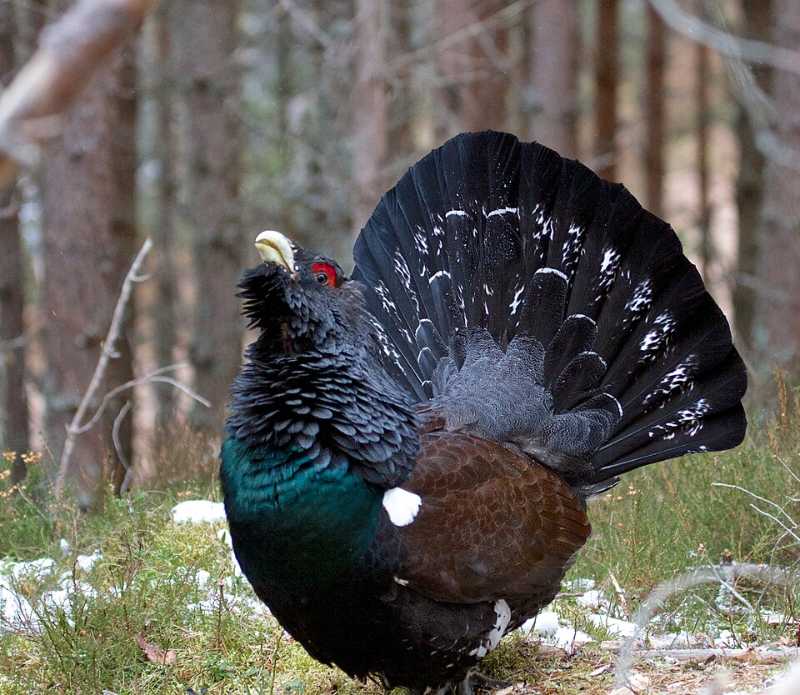
3. Capercaillie

The capercaillie, also called a western grouse in Scotland, prefers to live in old pine forests, and enjoys a variety of foods, such as insects, berries, and leaves. They are diurnal animals, and usually spend the night in trees, even though they aren't the best fliers. Hens with babies stay in ground nests until the chicks can fly.

The birds became extinct in Scotland in the late 1700s, and were re-introduced with a population from Sweden the following century. Even though they are found in other European countries, today they are considered to be critically endangered in Scotland, with an estimated population of only about 500-600 pairs in the wild. Because of their status, the Royal Society for the Protection of Birds asks viewers to adhere to strict guidelines when viewing the birds' ritual courtship, which is called a lek.

And who wouldn't want to watch the capercaillie at its lek, which takes place in the spring during its breeding season? The males put on quite a mating display for the females. They gather in pine forests and show off their feathers while the females watch from the trees or forest edge. During this time, the boys puff out their chests and raise their tails while making very distinct sounds that are called clics and whistles. The girls are very particular, and will only mate with the most dominant males; the others are left to wait until next year.

It is illegal to disturb a capercaillie lek in the UK during the April-May breeding season, as the slightest noise may result in the abandonment of the ritual. While some may suggest watching the virtual lek at Balmoral Castle, the RSPB Loch Garten Nature Centre in the Cairngorms offers guided caper-watches. Even with a guide, a sighting is never guaranteed, but it is a way to see the birds without disturbing them in any way.
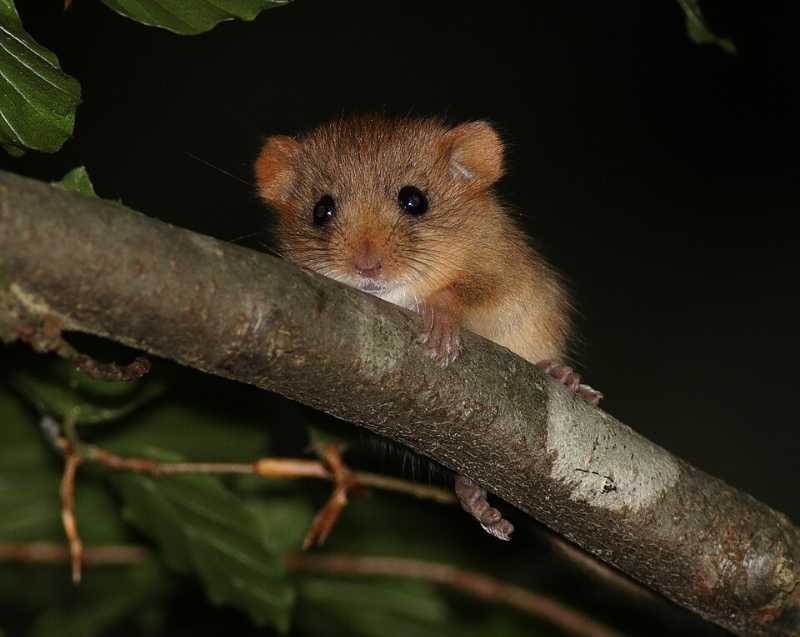
4. Hazel Dormouse

Keeping a dormouse for a pet was a very popular pastime during the Victorian Age in England. It would be housed in cages, boxes, or even in hay-lined teapots! There are even stories about how children would catch the little animals and take them to school to trade with their classmates. Beatrix Potter, known for her famous "Peter Rabbit" stories, had a pet dormouse named Xarifa.

In reality, the hazel dormouse, the only native species in the UK, prefers to live in a woodland, scrub, or hedgerow environment - not in a teapot. It really does not like to go out in open land, and rarely travels far from its nest. When it does, it would rather keep to the trees. A nocturnal animal, the dormouse is aided in hunting by its large eyes and whiskers, which help it to sense objects in the darkness. Berries, other fruit, insects like aphids and caterpillars, and nuts - especially hazelnuts - are its preferred diet.

The name dormouse means sleepy one, and the tiny creature really does sleep a lot, typically hibernating from October-May. In addition, if there happens to be a cold snap, there is difficulty finding food, or a predator is nearby, dormice will curl themselves up, slow down their heart rate and breathing, and go into a mini-hibernation called torpor. Torpor can last for a few hours or a few days with the dormouse waking up from time to time to see if conditions have changed. This is very important during summer months as the pause in the use of energy will allow the dormouse to store up body fat for the winter hibernation.

Today dormice in the UK are classified as endangered animals and are protected by the Wildlife and Countryside Act (1981). It is illegal to intentionally harm or disturb them in any way. In fact, it is even illegal to transport a dead dormouse without proper authorization. Failure to observe the statute can carry a heavy penalty or even time in jail.

The best time to see dormice is in the autumn when they are building their nests throughout southern England and Wales. If you want to see them in the wild, it is best to contact a conservation group at a Wildlife Trust Park like the Wildwood Trust in Kent or at the Rockingham Forest in Northamptonshire.
5. Grey Seal

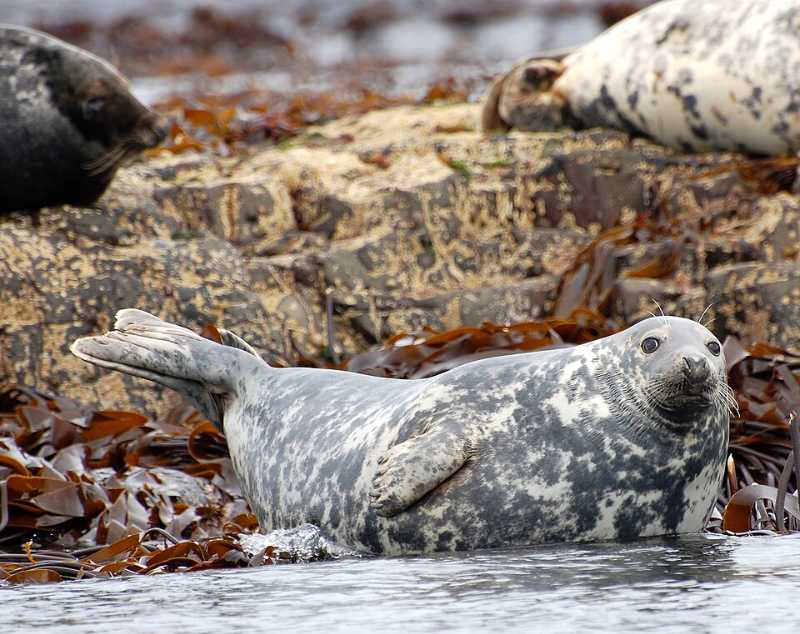
The largest carnivorous mammal in the UK, grey seal males can weigh 880 pounds (400 kg), and females weigh about 500 pounds (250 kg). In the UK they begin to congregate at their breeding areas, called rookeries, in September. The females arrive ready to give birth to their pups, after which the males compete for the right to mate. During this critical time both sexes rely on their store of blubber, and may not eat for as many as fifty days!

Did you know that grey seals don't drink water? They get hydration from the fish that they eat! They are great divers, and also feed on octopi, lobsters, and even harbor seals. They do not need to eat every day, and sometimes they even work together to herd fish.

Anyway - females give birth shortly after arriving at the rookery to one noisy pup, which is nursed for 18-20 days. The pups are said to sound a lot like human babies. Drinking their mother's milk, which is 60% fat, they gain about three pounds (1.4 kg) a day, while the mother may lose up to a third of her body weight. It takes about a month for pups to shed their white fur and grow their adult waterproof fur.

During this time, males, typically the most dominant ones, are busy establishing a territory nearby, keeping watch for the weaning of the pups. Weaning causes females to go into their estrus cycle. After weaning their pups, females head out to the sea. That is when males will begin their mating ritual of chasing the females, embracing, and biting their neck and flippers.

With mating complete, the females will go out to sea to hunt food and regain their body weight. Their bodies will go through a process called embryonic diapause, or delayed implantation. A fertilized egg will remain dormant for 2-4 months, and will only attach to the uterus when she regains her fat and strength.

While it is common to see grey seals at a variety of places in the UK year round, pupping and mating ritual watchers have a good chance of seeing them from September through January. Horsey Gap and Blakeney Point in Norfolk and the Orkney Islands in Scotland are good places to watch. There are an estimated 120,000 found in the UK, which makes up about 40% of the world's grey seal population. Special care needs to be taken when viewing, as females can become aggressive if they feel their pups are being threatened, and males can become dangerous during mating season.
6. West European Hedgehog

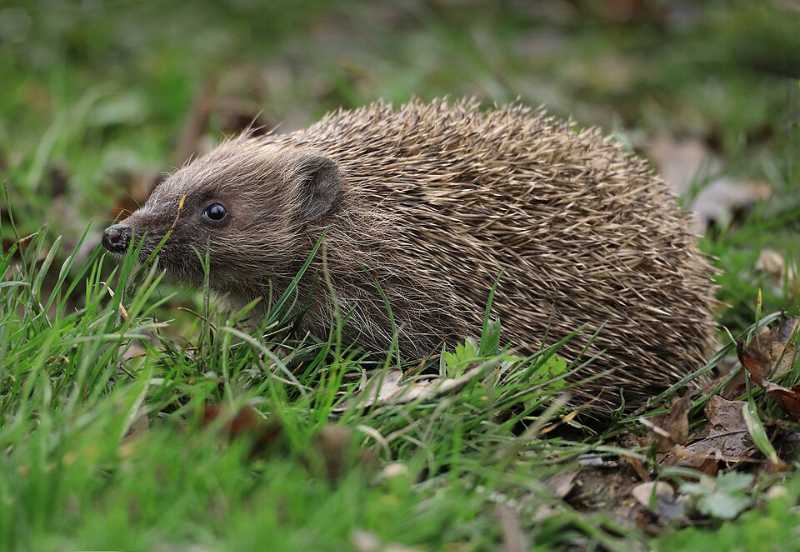
An adult West European hedgehog has somewhere between 5,000-7,000 spines, which are hollow hairs made of keratin. When threatened, it rolls itself into a tight ball, and the spines act as a shield of protection. They cannot shoot out their spines to defend themselves, but are pretty fast runners, clocking speeds of about 5 miles per hour (9.5 km/h) for short periods of time.

Living in a vast variety of habitats, including farmlands, woodlands, parks, and even your garden, hedgehogs even appear to enjoy urban life. While they are really carnivores, eating worms, snails, beetles, frogs, eggs, and small birds, they also appreciate and will eat food that has been left out for them. Don't leave out milk, though. They are lactose intolerant, but would enjoy either wet cat food or processed hedgehog food a lot more.

Hedgehogs are nocturnal, solitary animals, sleeping during the day and hunting at night. Their poor eyesight makes hearing and smell their most important senses. From November to March they hibernate, but it isn't a really sound sleep. It is more like the torpor that is experienced by dormice, as they drop their body temperate and slow down their breathing and heart rate.

Unfortunately the mortality rate of West European hedgehogs in the UK is quite high. Most of their deaths are accidental; they get hit by cars or lawnmowers or are poisoned by some of the chemicals that are used in lawn care. Like dormice, a good number of them also die during hibernation. If conditions aren't exactly the way they need them to be - like, for example, it is too warm or too cold - they won't wake up.

West European hedgehogs are found all across the UK, in many of the habitats that have already been mentioned. They are not nearly as elusive as some of the other animals in the quiz, and in some areas just talking a walk at dusk will help catch a look. They tend to be out more often in the weeks before hibernation as are preparing for it. There is a nocturnal house at the British Wildlife Centre in Surrey where hedgehogs can be viewed in a safe environment.
7. Glow Worm

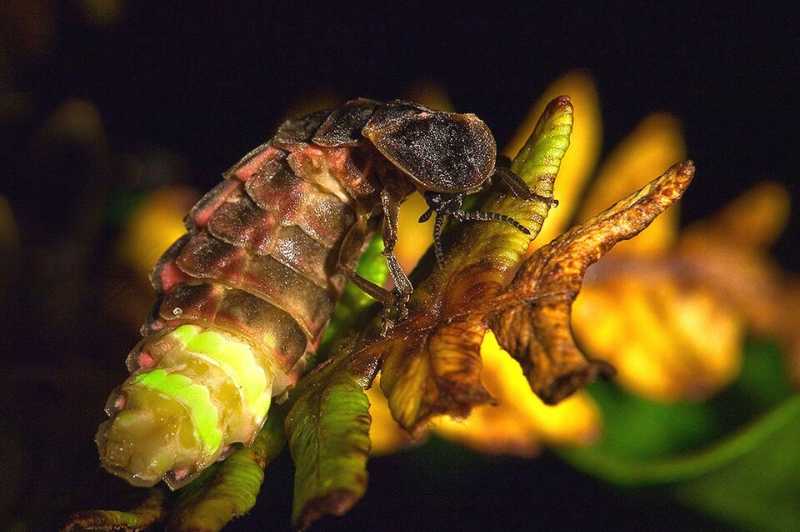
As you can tell by the picture, glow worms are beetles, not worms. While males have wings and can fly, females can only produce the luminescent greenish glow. Their mating ritual takes place in late May through July.

Glow worms begin as eggs that hatch after 2-3 weeks into the larval stage that can last as many as three years. During this time they live under rocks and look for slugs and snails to eat. When they find snails, glow worms inject them with a toxic saliva that liquefies the snail so that it can be eaten. In the spring, the larva will look for a safe place to pupate for 10-15 days, and then finally emerge as an adult.

Adult glow worms do not have a mouth or digestive system, so they do not eat. The females will climb up a stalk of grass, hoping to attract a mate. After mating, she will turn off her light, and lay 50-200 eggs in the soil. Then she and her mate will die after having lived for 14-21 days.

Glow worms like living in chalk meadows and railway embankments, but they suffer from habitat loss and light pollution, which can interrupt their mating cycle if it becomes difficult for the males to find the females. They need to live in dark sky areas. Salisbury Plain is a good place to watch the glow worm light up in Wiltshire, as well as the Cherry Hinton Chalk Pits in Cambridgeshire.
8. Atlantic Puffin

Most Atlantic puffins - an estimated 90% - live in Iceland or other European locations. The rest breed in Britain and Ireland. They are a bit difficult to find on islands or coastal regions as they spend so much time out at sea, but during the spring and summer months, usually May through July, they begin to gather in colonies.

Puffins mate for life and renew their vows at this time. Some have been documented as having returned to the same place to find their mate for over twenty years. They rub their beaks together in a ritual called billing. Then together they dig out a burrow, build a nest, and take turns incubating their eggs for 36-45 days after the female lays them.

Whens the eggs hatch, both parents work together to take care of their pufflings for 38-44 days. During this time they bring small fish for their pufflings to eat and protect their nest. When it is time, the pufflings leave the nest, swimming out into the open sea, which is where they spend most of their lives.

Puffins are great flyers, reaching speeds of 55 mph (88.5 km). When they become tired, they rest on top of the sea waves. They are also excellent swimmers, and their webbed feet help a lot. They can dive up to 200 feet (60 m), hunting for their food of choice - fish or sand eels. Because their beaks have serrated spines, they can carry lots of fish at one time; one puffin was documented as having 83 sand eels in its beak at one time!

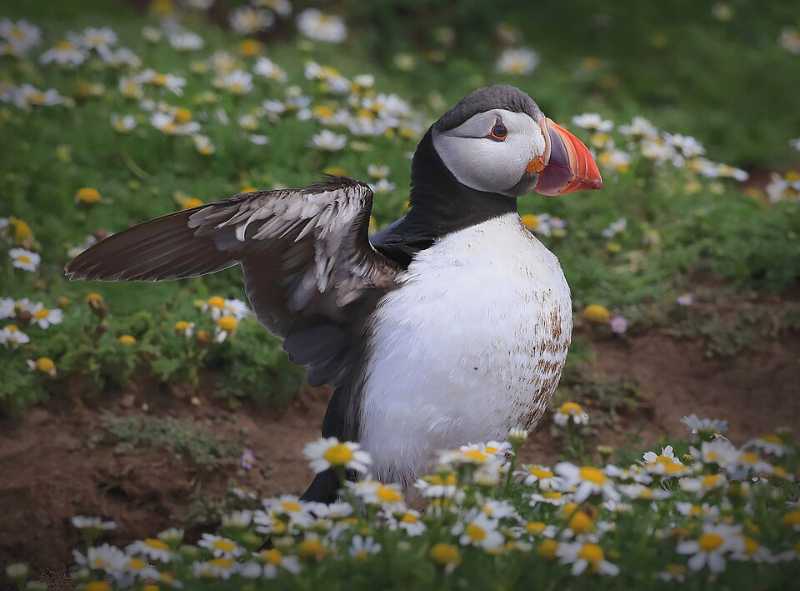
And what about those gorgeous beaks! They really make the puffins, or sea parrots, stand out! After mating, however, the outer layer of the beak falls off, and they are left with a dull gray beak during the winter months. Don't worry, though. The orange beak will be back in time for mating season!

There are quite a few locations all over the UK where these beautiful birds can be found for a few months every year. In Scotland, the Isle of May has a nature reserve located in the Firth of Forth; tourists may take boat trips to see the puffins up close. Skomer Island in Wales is also a good place to view puffins, but don't forget to apply for a landing permit in advance. Tens of thousands of puffins are seen in the Farne Islands in Northumberland. Be aware that there are strict rules for puffin watching. Viewers are expected to quietly maintain their distance and stay on marked paths.
9. Atlantic Salmon

Called the King of the Fish, the silver colored Atlantic salmon spends most of its life at sea. Born in the clean rivers of Wales, Scotland, and north and south west England, the salmon will stay in the freshwater rivers for approximately the first three years of its life before making its way to the ocean.

Eggs are laid in gravel streams in the late autumn. During the winter they develop and hatch in the spring becoming alevin. For several weeks, alevin will stay in the gravel while receiving nutrition from their attached yolk sac. When the yolk sac is absorbed, they become fry. By this time they are about an inch (2.54 cm) long. They become a parr as they grow longer and develop camouflage markings. This process may take months or years, depending on factors like water temperature and the available food.

The young parr become smolts when they undergo physical changes that allow them to survive in saltwater. By the time they reach the ocean, they are approximately 5-9 inches (12.7-23 cm) long. There they grow into adults as their ability to feed greatly multiplies. It is common for them to follow the currents, as that enables them to just float along rather swimming, which would be hard work.

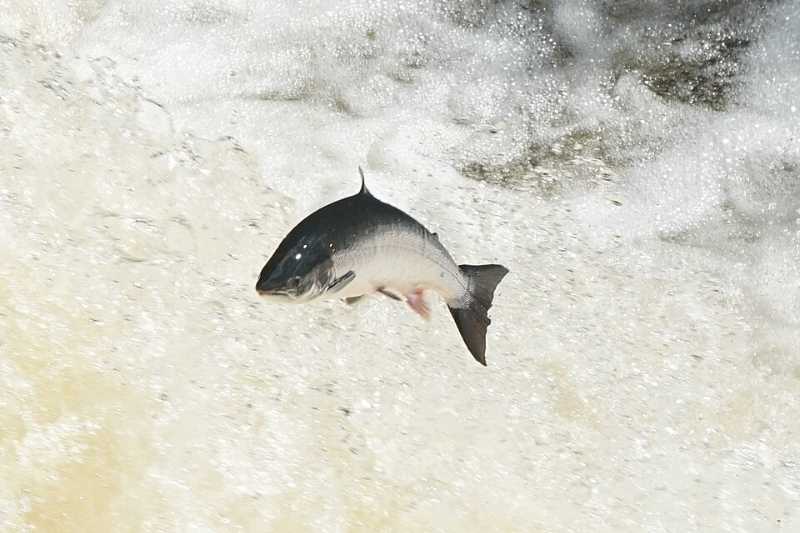
They become an apex predator, stuffing themselves on zooplankton, herring fry, and whatever other small fish they can find. While some will stay in the waters around the UK, others will migrate as far away as Iceland or Greenland. After spending three years at sea, they have grown to approximately 5 feet long (1.5 m) and can weigh up to 88 pounds (40 kg) or more. At some point they instinctively know to begin their trip back to the river where they were spawned; traveling upstream from November to February, Atlantic salmon can be spotted leaping as high as 11.5 feet (3.5 m) over weirs and waterfalls to get upstream. Unlike their Pacific salmon counterparts, they can survive spawning and return to the ocean, more than once if they are lucky. These survivors are called kelts.

Experts say that the best time to watch the Atlantic salmon runs is during October and November. There are several viewing locations all across the UK. In Scotland the Falls of Shin are a good place to watch the salmon leap over waterfalls. In Wales, at the Gilfach Nature Reserve, there is a platform near a waterfall where salmon watchers can stand, and in England there is a spot at Hexham Weir on the River Tyne that is a popular watching spot.

Wild Atlantic salmon is considered to be an endangered species in the UK, and what is sold in the stores there is farm-raised or imported from other countries. The sale of wild Atlantic salmon is strictly prohibited.
10. European Badger

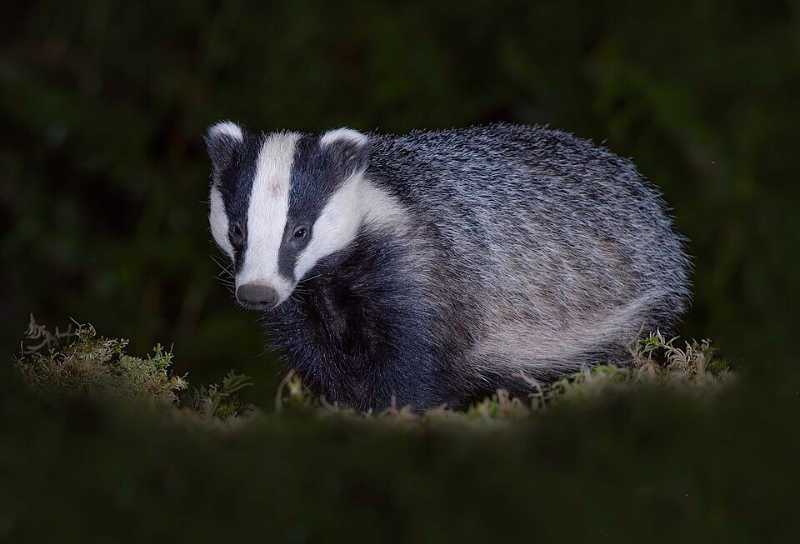
Unlike most of the animals on the list, European badgers are not solitary. They live in family burrows called setts; located underground, setts may contain as many as 4-12 individuals that live in a group called a clan or cetes. Some of the setts are passed down from generation to generation and have been maintained for over 100 years. They also like to visit badgers who live nearby, and have been known to share their setts with other animals like red foxes or rabbits.

Not only are they very sociable, they are also clean. These badgers will dig a latrine outside the entrance to their sett that the entire clan uses. They also periodically clean their homes by replacing the leaves and grass they use for their bedding.

European badgers are nocturnal hunters and tend to sleep away the day inside their setts. This means that they have very poor eyesight, but their sense of smell is said to be about 800 times more acute than humans! They emerge at dusk, looking for - earthworms! Yes, earthworms! An adult is capable of eating 200 a night. They will also eat small mammals, bird eggs, fruit, and some plants.

Females reproduce using a process called delayed implantation. While the animals can mate year round, the fertilized eggs don't attach until winter. That insures that cubs will be born in the spring, when the supply of food is typically more plentiful.

Badgers in the UK are protected by the Protection of Badgers Act in spite of the fact that they can carry bovine tuberculosis. They really pose little or no threat to humans as they are very shy and prefer to avoid contact. If cornered or threatened, they will become very aggressive. They are said to have a pretty mean bite.

Badger Watch Dorset is considered to be one of the best viewing sites for Europeans badgers in the UK. Because of the badger's sensitivity to smells and sounds, booking a local guide is highly recommended.
Source: Author ponycargirl

This quiz was reviewed by FunTrivia editor rossian before going online.
Any errors found in FunTrivia content are routinely corrected through our feedback system.
7/3/2026, Copyright 2026 FunTrivia, Inc. - Report an Error / Contact Us