FREE! Click here to Join FunTrivia. Thousands of games, quizzes, and lots more!
Quiz about Scottish Animals

Scottish Animals Trivia Quiz


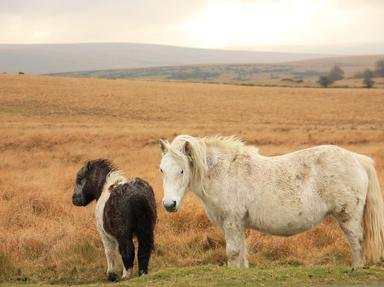
Scotland is home to a wide array of animals: common, rare and endemic to Scotland. How much do you know about Scotland's fauna?

A photo quiz by Joepetz. Estimated time: 2 mins.
  1. Home
  2. »
  3. Quizzes
  4. »
  5. Animal Trivia
  6. »
  7. Animals by Region
  8. »
  9. UK

Author
Joepetz
Time
2 mins
Type
Photo Quiz
Quiz #
425,042
Updated
Aug 08 26
# Qns
10
Difficulty
Easy
Avg Score
8 / 10
Plays
26
Last 3 plays: Guest 90 (7/10), Guest 195 (8/10), C30 (8/10).
-
Question 1 of 10
1. The iconic Scottish Highland cattle is characterized by its large horns and what other feature? Hint


Question 2 of 10
2. There are red-necked wallabies in Scotland.


Question 3 of 10
3. Historically, the Shetland pony was used for what task? Hint


Question 4 of 10
4. The Scottish wildcat, despite its name, is a domesticated cat that can be kept as a pet.


Question 5 of 10
5. Which of the following is a concern regarding the habits of the white-tailed sea eagle in Scotland? Hint


Question 6 of 10
6. What is the more common name of the Scottish bird called a bonxie? Hint


Question 7 of 10
7. Scotland's Cairngorms mountain range is the only place in Britain where which rare bird can be found? Hint


Question 8 of 10
8. The Scottish fish called a powan is facing threats from another fish, the ruffe, because the ruffe does which of these?


Question 9 of 10
9. What is another name for the blaeberry bumblebee found in Scotland? Hint


Question 10 of 10
10. All four of these Scottish animals have mythological legends attached to them but which one of them is a real animal? Hint


(Optional) Create a Free FunTrivia ID to save the points you are about to earn:

arrow Select a User ID:
arrow Choose a Password:
arrow Your Email:


View Image Attributions for This Quiz

Most Recent Scores
Today : Guest 90: 7/10
Today : Guest 195: 8/10
Today : C30: 8/10
Today : i-a-n: 7/10
Today : rupert774: 10/10
Today : Barca99: 5/10
Today : Kalibre: 10/10
Today : Guest 100: 7/10
Today : gwendylyn14: 6/10

Quiz Answer Key and Fun Facts
1. The iconic Scottish Highland cattle is characterized by its large horns and what other feature?

Answer: Shaggy coat

Scottish Highland cattle are characterized by their large horns and woolly, shaggy coats. Because they live in harsh climates, the cattle need a double coat of oily, woolly fur to survive. In fact, they have the longest fur of any cattle. They also have very long life spans compared to other cattle.

They are raised primarily as a source of beef.
2. There are red-necked wallabies in Scotland.

Answer: True

Despite their association with Australia, there is a small colony of red-necked wallabies living on the Scottish island of Inchconnachan. They are an introduced species, that is a species not normally native to a particular region. They were introduced in the 1940s by the Countess of Aran, Fiona Gore.

There are other colonies of wallabies scattered throughout England as well.
3. Historically, the Shetland pony was used for what task?

Answer: Carrying peat

The Shetland pony is a small, stocky horse found in Scotland. For centuries, it was used to transport peat, seaweed and other farm products across long distances. Their short and muscular bodies were perfect for the task.

Nowadays, Shetland ponies are more show ponies and used to teach children how to ride horses, since they are smaller and more manageable for children to ride than larger horses.
4. The Scottish wildcat, despite its name, is a domesticated cat that can be kept as a pet.

Answer: False

Despite resembling housecats, the Scottish wildcat is not domesticated and would not make a great house cat. Scottish wildcats live in wooded and shrubbed areas of Scotland, although their numbers have dropped dramatically. They have thick fur, sharp claws and are expert hunters and mousers. They are also fiercely territorial.

While they can be bred with domesticated cats, it is not recommended because they are very susceptible to diseases common in house cats. Due to habitat loss, Scottish wildcats are considered critically endangered.
5. Which of the following is a concern regarding the habits of the white-tailed sea eagle in Scotland?

Answer: Its predatory habits

The white-tailed sea eagle is a predatory bird and preys mostly on small mammals. However, the golden eagle has reappeared in Scotland through conservation efforts and shares a similar diet to the white-tailed sea eagle. As a result, the two birds compete for the same food sources which has forced the white-tailed sea eagle to expand which animals it preys on.

There are documented cases of the white-tailed sea eagle preying on both live and dead sheep and lambs, small pets and potentially even Shetland ponies.
6. What is the more common name of the Scottish bird called a bonxie?

Answer: Great skua

The great skua is called a bonxie in Scotland. They are seabirds that primarily eat fish. The Scottish landscape is ideal for the bonxie to breed because the birds breed primarily in marshy and rocky coastal areas.

The bonxie is probably best known for being territorial, frequently fighting with any animal, including humans, that threatens their homes.
7. Scotland's Cairngorms mountain range is the only place in Britain where which rare bird can be found?

Answer: Snow bunting

The snow bunting is a bird that lives primarily around the Arctic Circle including a few places below there, which includes Scotland's Cairngorms. The snow bunting makes its home on chilly mountaintops, making the Cairngorms perfect for them.

The species of snow bunting that lives in Scotland has a white head and a black rump.
8. The Scottish fish called a powan is facing threats from another fish, the ruffe, because the ruffe does which of these?

Answer: Eats powan eggs

The powan is larger in size than the ruffe so the ruffe cannot eat powans. However, ruffes eat powan eggs which has threatened the population of the powans that live in Loch Lomond and Loch Eck.

As a result, there have been efforts to relocate powans to other lakes in Scotland, including Loch Sloy where a colony thrived.
9. What is another name for the blaeberry bumblebee found in Scotland?

Answer: Mountain bumblebee

The blaeberry bumblebee has many different names including bilberry bumblebee and the mountain bumblebee. They are found primarily in the mountainous regions of Scotland and England and are considered rare but not endangered.

However, climate change is affecting their habitats as the mountains they live on are growing warmer. Conservation efforts are difficult because the bees are so rare and often difficult to find the nests.
10. All four of these Scottish animals have mythological legends attached to them but which one of them is a real animal?

Answer: Kellas Cat

A Kellas cat is a real animal which resembles a large black cat. It is a hybrid between wild and domestic cats. Kellas cats were long believed to be hoaxes and were the inspiration for the fairy cat or cat-sith, a ghost cat said to haunt the Scottish moorlands. Kellas cats were sometimes found depicted in ancient art found in the region. However, the animal was confirmed to be real when a specimen was captured in 1984.

The Loch Ness Monster is Scotland's most famous cryptid. It is allegedly a giant sea serpent that lives in Loch Ness. The Beast of Buchan is an alleged giant cat that is said to terrorize farm animals and eat them. Sightings are more prevalent in Eastern Scotland. The Stronsay Beast is a sea monster that lives around the island of Stronsay in the Orkney Islands. It is said to resemble the Loch Ness Monster but with wings.
Source: Author Joepetz

This quiz was reviewed by FunTrivia editor rossian before going online.
Any errors found in FunTrivia content are routinely corrected through our feedback system.
8/8/2026, Copyright 2026 FunTrivia, Inc. - Report an Error / Contact Us