FREE! Click here to Join FunTrivia. Thousands of games, quizzes, and lots more!
Quiz about Classification and Anatomy of Sea Stars

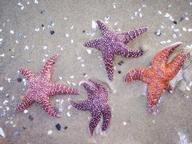
Classification and Anatomy of Sea Stars Quiz


Find out how much you know about these animals of the deep in this recreated, modernized quiz.
This is a renovated/adopted version of an old quiz by author stubbymaggie

A multiple-choice quiz by cavalier87. Estimated time: 2 mins.
  1. Home
  2. »
  3. Quizzes
  4. »
  5. Animal Trivia
  6. »
  7. Invertebrates
  8. »
  9. Echinoderms (Starfish, Sea Urchins, Etc.)

Author
cavalier87
Time
2 mins
Type
Multiple Choice
Quiz #
38,305
Updated
Jan 17 26
# Qns
10
Difficulty
New Game
Avg Score
6 / 10
Plays
12
Last 3 plays: Guest 174 (10/10), mjgrimsey (2/10), xchasbox (5/10).
- -
Question 1 of 10
1. Under what phylum is the sea star listed? Hint


Question 2 of 10
2. The sea star has which type of skeleton? Hint


Question 3 of 10
3. What type of breathing system does the sea star have? Hint


Question 4 of 10
4. The sea star has the ability to do what with most body parts? Hint


Question 5 of 10
5. The eye spot is located where on each ray? Hint


Question 6 of 10
6. Sea stars are carnivores, and have a very specific diet. What is one species sea stars may prey on? Hint


Question 7 of 10
7. As sea stars are rather small creatures, much bigger animals could see them as food. Which of these commonly prey on sea stars? Hint


Question 8 of 10
8. Which of the sea star species listed finds itself on the Invasive Species Specialist Group's list of the world's 100 most invasive species? Hint


Question 9 of 10
9. Most sea stars will live for about ten years. The Pisaster ochraceus can significantly outlive most other sea stars.


Question 10 of 10
10. Sea stars are considered 'keystone species'. In fact, the very term itself was coined in 1966, used to describe a particular type of sea star. Who developed the term as a means to describe the Pisaster ochraceus? Hint


(Optional) Create a Free FunTrivia ID to save the points you are about to earn:

arrow Select a User ID:
arrow Choose a Password:
arrow Your Email:


Most Recent Scores
Today : Guest 174: 10/10
Today : mjgrimsey: 2/10
Today : xchasbox: 5/10
Today : Baldfroggie: 6/10
Today : Joeldude1: 4/10
Today : Guest 162: 4/10
Today : Rizeeve: 9/10
Today : GoodwinPD: 10/10
Today : Guest 70: 5/10

Quiz Answer Key and Fun Facts
1. Under what phylum is the sea star listed?

Answer: Echinodermata

In addition to sea stars, brittle stars, sea urchins, sand dollars and sea cucumbers are also a part of this conglomerate. Among the many things they share in common are reproducing asexually and being capable of regenerating tissue within the body.
2. The sea star has which type of skeleton?

Answer: Flexible

A flexible skeleton helps the sea star survive in the wild. It allows it to more effectively regrow lost tissue around its body, and also to handle adverse weather conditions more easily. A sea star has an endoskeleton, inside the body like that of humans, enabling it to freely bend and maneuver its limbs at will.

Material found within the sea star is generally thin, silky and, upon death, will decay very quickly.
3. What type of breathing system does the sea star have?

Answer: Water Vascular

In general, the alignment of a sea star consists of a few different canals that it absorbs nutrients and, in this case, breathes from. Water that it uses to breathe enters from the madreporite, the main 'entrance system' of the water vascular system.

If looking at a sea star right-side up, this would be around the "head" area.
4. The sea star has the ability to do what with most body parts?

Answer: Regenerate

Sea stars can regenerate entire limbs if given the time to do so. That said, regrowth can take several months and, if a sea star is in a vulnerable position following a conflict or other damaging accident, it could have difficulty doing so.
5. The eye spot is located where on each ray?

Answer: Tip

Sea stars often maneuver about by turning the tips of their arms up, to best maintain awareness of their surroundings. These eye spots do not, however, respond very well to light. Sea stars will aim to use them as a means to gain external stimuli, explaining why they may seem to travel in spinning motions.
6. Sea stars are carnivores, and have a very specific diet. What is one species sea stars may prey on?

Answer: Sea Sponges

Sea stars will generally prey on small creatures but, as they themselves are rather small, the list isn't as extensive as they might like. Targets could include bivalves, algae, coral and a few different types of plankton.
7. As sea stars are rather small creatures, much bigger animals could see them as food. Which of these commonly prey on sea stars?

Answer: Crabs

Beyond crabs, sea stars could find themselves in peril around the likes of seagulls, tritons, bigger fish in general and sea otters. They do have a little bit of natural defense against predators, as they can briefly make themselves taste very unpleasant by producing toxins against their body walls. They are ultimately at the mercy of a lot of the ecosystem, however.
8. Which of the sea star species listed finds itself on the Invasive Species Specialist Group's list of the world's 100 most invasive species?

Answer: Asterias amurensis

After appearing in Tasmania, thought to be in the 1980s, this species grew in number to the point where it became a problem for the local ecosystem. Specifically, this species became a problem in overeating nearby bivalves and causing a shortage.
9. Most sea stars will live for about ten years. The Pisaster ochraceus can significantly outlive most other sea stars.

Answer: True

Whereas most sea stars mature at around two years and survive to ten, the Pisaster Ochraceus generally matures in five years and can survive as long as 34 years of age.
10. Sea stars are considered 'keystone species'. In fact, the very term itself was coined in 1966, used to describe a particular type of sea star. Who developed the term as a means to describe the Pisaster ochraceus?

Answer: Robert Paine

Paine came up with the term initially to describe the relationship between the Pisaster ochraceus and a particular species of mussel, the Mytilus californianus.

Paine was an ecologist who graduated from Harvard and spent his career teaching at the University of Washington.
Source: Author cavalier87

This quiz was reviewed by FunTrivia editor rossian before going online.
Any errors found in FunTrivia content are routinely corrected through our feedback system.
1/17/2026, Copyright 2026 FunTrivia, Inc. - Report an Error / Contact Us