FREE! Click here to Join FunTrivia. Thousands of games, quizzes, and lots more!
Quiz about Taxonomic Tangle  Birds

Taxonomic Tangle - Birds Trivia Quiz

Match the Bird Families

Here we have a tangle of twelve birds that need to find their families. Help match the correct ICZN (International Code of Zoological Nomenclature) family to each of these twelve creatures. (Click the images for a closer look!)

by trident. Estimated time: 3 mins.
  1. Home
  2. »
  3. Quizzes
  4. »
  5. Animal Trivia
  6. »
  7. Wild Birds

Author
trident
Time
3 mins
Type
Quiz #
416,906
Updated
May 04 26
# Qns
12
Difficulty
Very Easy
Avg Score
11 / 12
Plays
372
Awards
Top 5% quiz!
Last 3 plays: Guest 104 (12/12), Guest 107 (6/12), PDAZ (12/12).
Drag-Drop or Click from Right
Options
Spheniscidae Spheniscidae Falconidae Falconidae Corvidae Phasianidae Corvidae Spheniscidae Corvidae Phasianidae Falconidae Phasianidae


 View Image Attributions for This Quiz

Most Recent Scores
Jun 13 2026 : Guest 104: 12/12
Jun 07 2026 : Guest 107: 6/12
May 31 2026 : PDAZ: 12/12
May 22 2026 : Guest 181: 3/12
May 18 2026 : thomas1975: 12/12
May 17 2026 : sciencenerd05: 12/12
May 08 2026 : Guest 99: 12/12

Quiz Answer Key and Fun Facts
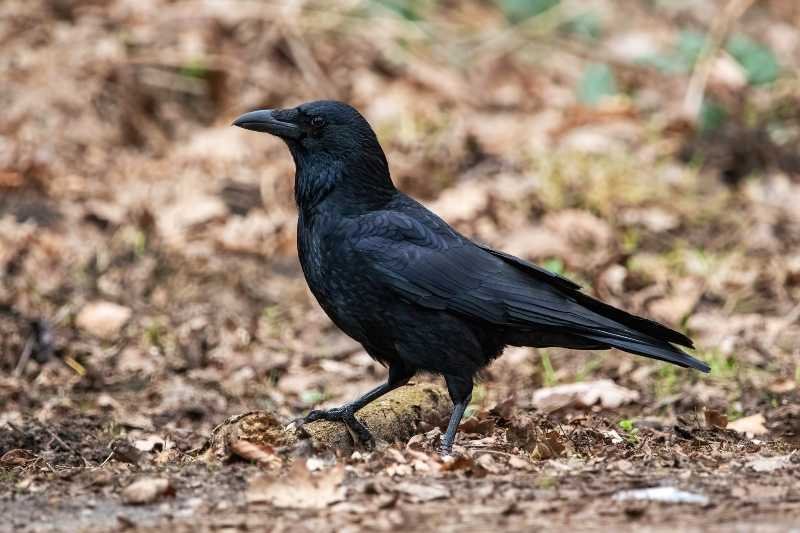
1. Corvidae

Across Europe and eastern Asia, the carrion crow turns up almost everywhere, from farmland and forests to city streets and coastal cliffs. That range is not accidental. Highly adaptable, this bird shifts easily between rural and urban settings, scavenging whatever is available.

Its diet includes carrion, insects, seeds, fruit, and discarded human food, which gives it a steady advantage in unpredictable environments. Known for intelligence, carrion crows use tools and show complex social behavior, though they are often seen alone or in pairs. During winter or in areas with abundant food, they gather in larger groups.
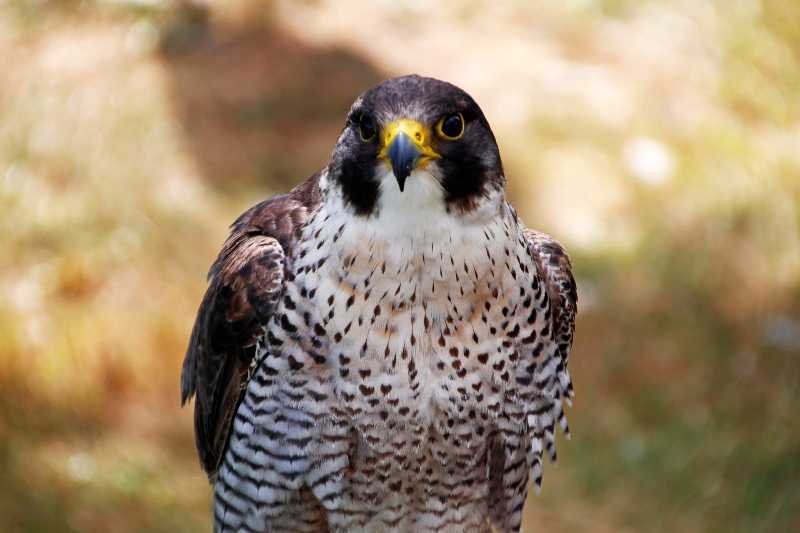
2. Falconidae

Few birds can match the peregrine falcon's speed. During a hunting dive, known as a stoop, it becomes the fastest animal on Earth. Found on every continent except Antarctica, it adapts to cliffs, wetlands, open countryside, and even dense cities, where tall buildings substitute for natural ledges.

Peregrines are solitary and territorial, especially when nesting. Their hunting is precise and aerial, targeting birds such as pigeons and ducks and striking them mid-flight. While they occasionally take small mammals or insects, birds make up the bulk of their diet, and their success depends on their impeccable speed, timing, and control in the air.
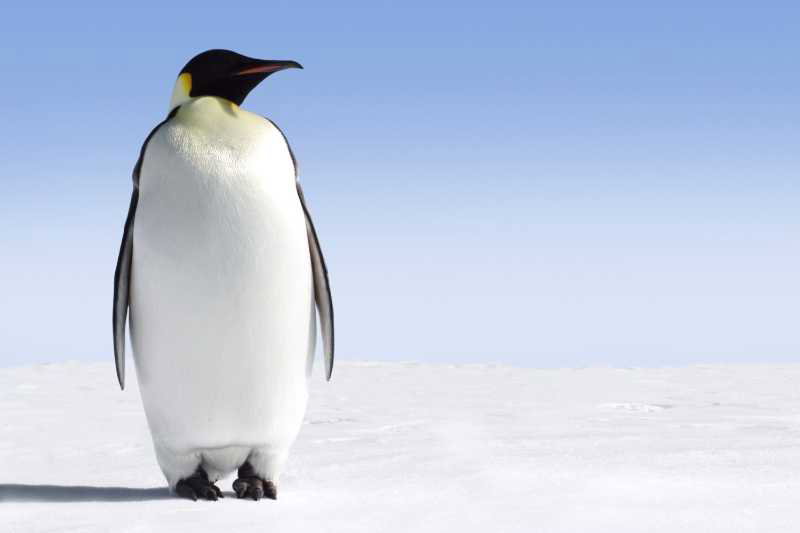
3. Spheniscidae

In Antarctica's extreme cold, the emperor penguin survives under conditions that would overwhelm most birds. It is the largest penguin species, and its breeding cycle is unusually demanding. Males incubate a single egg by balancing it on their feet under a brood pouch, standing on the ice for more than two months without eating while females hunt at sea.

Their diet centers on fish, with krill and squid as supplements. These penguins dive to depths exceeding 500 meters and can remain underwater for over 20 minutes. Their survival depends on pack ice, which serves as both a breeding platform and a base for reaching feeding areas; when that ice shrinks or shifts, the species loses both at once.
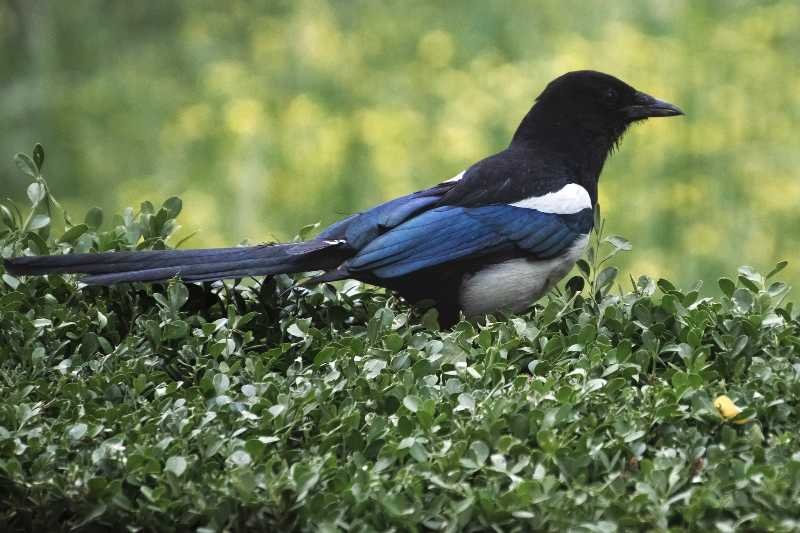
4. Corvidae

Recognizable by its black and white plumage and long tail, the Eurasian magpie appears across Europe, Asia, and parts of northwest Africa. It occupies a wide range of habitats, including woodlands, farmland, and urban areas, often foraging on the ground or perching in trees.

What sets it apart is its cognitive ability. Magpies solve problems, use tools, and can recognize themselves in mirrors. Their social behavior is equally complex, supported by a range of vocalizations and even mimicry. As omnivores, they eat insects, small mammals, eggs, fruit, seeds, and carrion, and they often store food for later use.
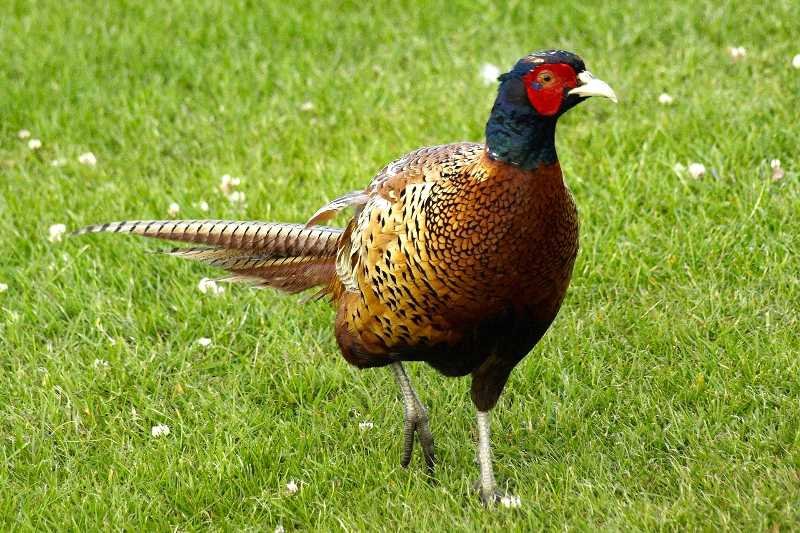
5. Phasianidae

Originally native to Asia, the common pheasant now appears across Europe and North America, largely because it was introduced for hunting. It adapts well to farmland, forests, grasslands, and wetlands, where cover and food are readily available. Males are brightly colored, with iridescent plumage, while females remain brown and subdued, which helps with camouflage.

These birds spend most of their time on the ground, running rather than flying when threatened, though they can burst into short flights if necessary. During mating season, males perform elaborate displays, combining movement and sound to attract females. Their diet includes seeds, grains, berries, insects, and small invertebrates, all gathered by foraging on the ground.
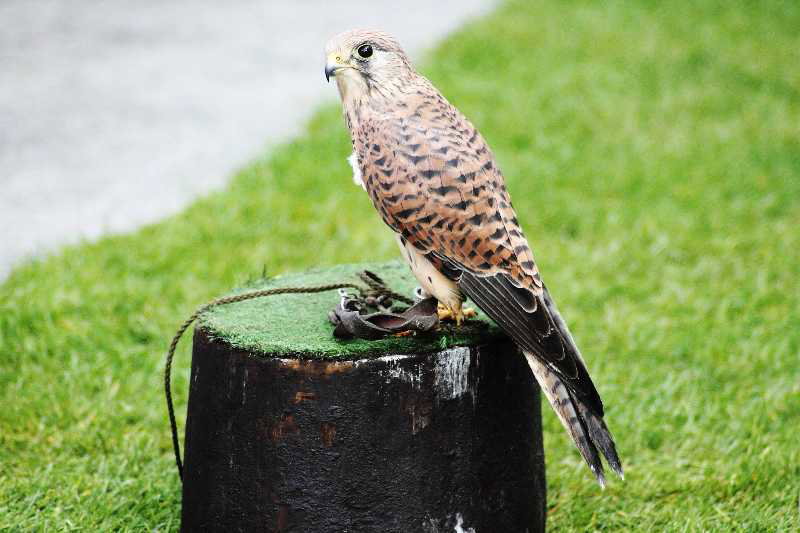
6. Falconidae

Often spotted hovering in place above open fields, the common kestrel relies on a distinctive hunting technique. It faces into the wind and beats its wings rapidly to stay suspended, scanning the ground below for movement; from that position, it can drop suddenly onto prey with a quick, direct strike.

This small falcon lives across Europe, Asia, Africa, and parts of North America, occupying habitats such as grasslands, marshes, and agricultural areas, where it hunts alone and maintains a relatively small territory. Prey includes small mammals, birds, insects, and reptiles, though kestrels will also take earthworms when available. They sometimes hunt from perches, but their ability to hover in place above open ground is what most clearly distinguishes them from other small falcons.
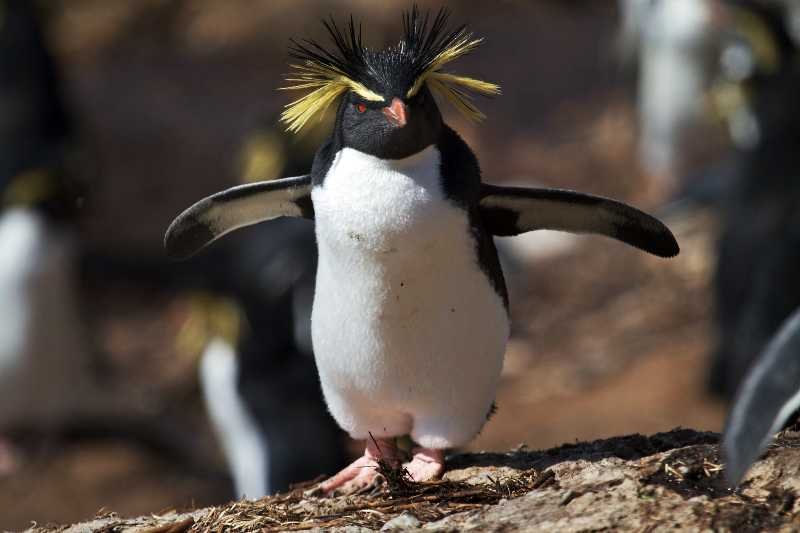
7. Spheniscidae

The northern rockhopper penguin has bright yellow crest feathers and red eyes, features that are mostly limited to the crested penguin group. It breeds on sub-Antarctic islands such as Tristan da Cunha, Gough Island, and Amsterdam Island, where steep cliffs and rocky ground shape where the birds can nest and move.

Navigating that terrain requires agility; these penguins hop from rock to rock to reach nesting sites, often located in dense colonies. They rely on vocal calls and physical displays to communicate and attract mates, especially within these crowded groups. Their diet consists mainly of krill, squid, and small fish, which they catch by diving into surrounding waters.
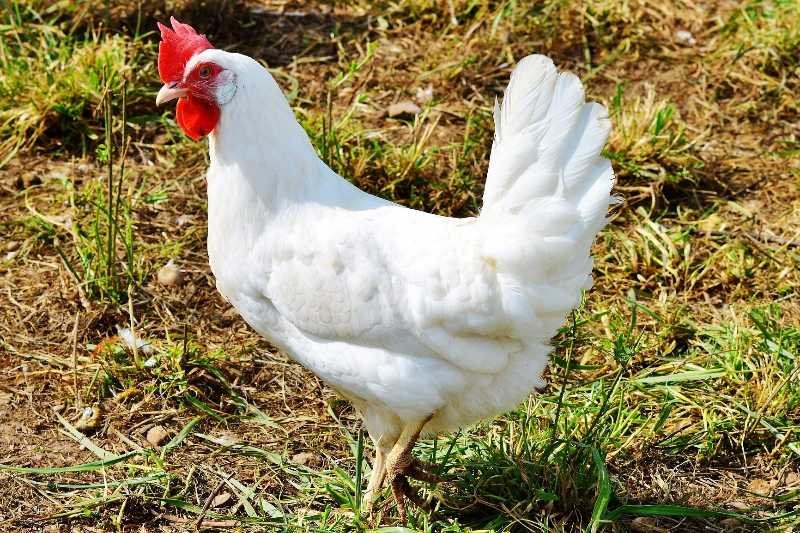
8. Phasianidae

Descended from the red junglefowl of Southeast Asia, the domestic chicken now appears worldwide, shaped by its role in agriculture. It is farmed in settings that range from small backyard coops to large-scale commercial operations.

Within a flock, chickens establish a clear hierarchy known as the pecking order, which governs access to food and space. Other behavior includes foraging, dust-bathing to clean their feathers and control parasites, and nesting to protect and incubate their eggs. Communication relies on a mix of vocal calls and visual signals.

Chickens eat grains, seeds, insects, and small invertebrates, often supplemented with formulated feed on farms. Their ability to reproduce consistently, with hens laying eggs on a regular cycle, makes them a reliable source of meat and eggs.
9. Spheniscidae

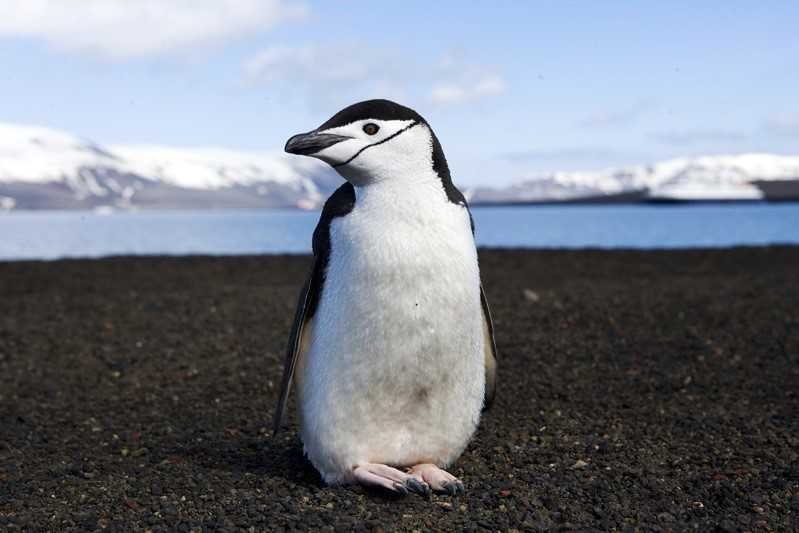
Named for the thin black band under its head, the chinstrap penguin lives in Antarctic and sub-Antarctic regions, particularly along rocky shores and islands such as the South Shetland and South Orkney groups. Colonies can grow dense, with thousands of birds nesting close together.

During breeding season, pairs build nests from stones and share responsibilities, alternating between incubation and feeding. Communication within these colonies depends on vocal signals that help individuals identify mates and chicks. Their diet centers on krill, which form dense swarms near the surface in Antarctic waters and are easier to catch than faster, deeper-swimming fish, though they also do eat small fish and other marine organisms if they can catch them.
10. Corvidae

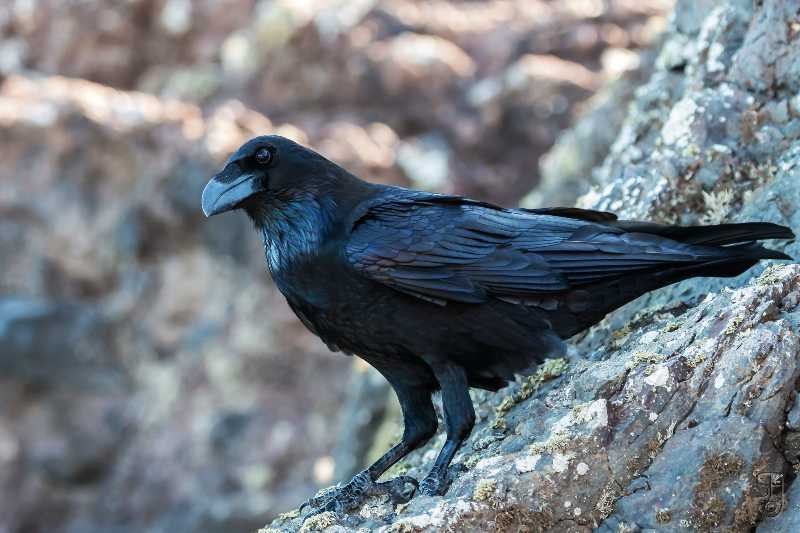
Because it adapts easily to both wild and urban environments, the common raven has a range that stretches across the Northern Hemisphere, from the Arctic tundra to deserts and mountain regions, and is often seen soaring overhead or scavenging on the ground.

Their vocal range is broad, including a wide variety of calls and the ability to mimic other birds and some environmental sounds. As opportunistic feeders, they consume carrion, small animals, insects, grains, fruit, and human waste, adjusting their diet to whatever is available.
11. Phasianidae

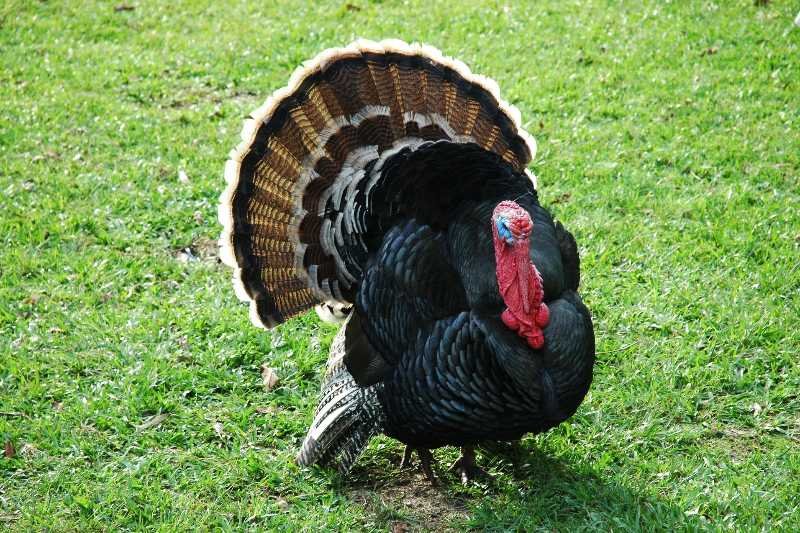
Native to North America, the wild turkey occupies forests, grasslands, and even swamps, with populations extending from southern Canada to Mexico. It also adapts to farmland and suburban areas, provided there is enough cover.

Outside the breeding season, turkeys form flocks and move together while foraging, but in spring that pattern breaks down as males separate and begin displaying through strutting, gobbling, and fanning their tails to attract females. Their diet changes with the seasons, including acorns, seeds, berries, insects, and small animals.
12. Falconidae

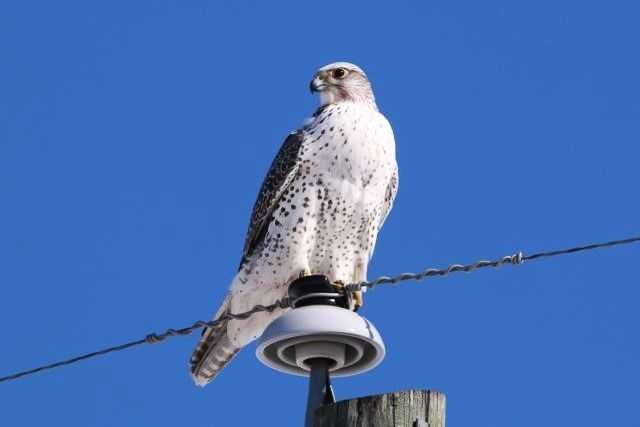
The gyrfalcon, the largest of the falcons, inhabits Arctic and subarctic regions across North America, Europe, and Asia. It nests on cliffs or rocky outcrops, returning to the same sites year after year. During the breeding season, pairs defend large swathes of territory from intruders.

Built for power and speed, the gyrfalcon hunts birds such as ptarmigans and waterfowl, pursuing them in sustained flight. It also takes small mammals, including hares and squirrels. It succeeds in harsh northern environments by relying on strength to overpower prey, endurance to sustain long pursuits, precise control in flight to track and strike moving targets, and sharp eyesight to detect prey at long distances.
Source: Author trident

This quiz was reviewed by FunTrivia editor rossian before going online.
Any errors found in FunTrivia content are routinely corrected through our feedback system.
6/18/2026, Copyright 2026 FunTrivia, Inc. - Report an Error / Contact Us