FREE! Click here to Join FunTrivia. Thousands of games, quizzes, and lots more!
Quiz about The Rosy Wolfsnail Euglandina rosea

The Rosy Wolfsnail (Euglandina rosea) Quiz


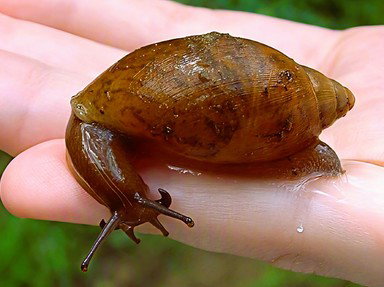
Slow, slimy, and lethal. Meet the rosy wolfsnail. Here are ten questions to test your knowledge of nature's most persistent mollusk predator and the ecological chaos it has caused around the world (with a little help from humans). Have fun!

A multiple-choice quiz by NeuralSpicy. Estimated time: 3 mins.
  1. Home
  2. »
  3. Quizzes
  4. »
  5. Animal Trivia
  6. »
  7. Invertebrates
  8. »
  9. Mollusks

Author
NeuralSpicy
Time
3 mins
Type
Multiple Choice
Quiz #
425,295
Updated
Aug 16 26
# Qns
10
Difficulty
New Game
Avg Score
8 / 10
Plays
10
Last 3 plays: Guest 174 (10/10), Dizart (10/10), kvanhoy (9/10).
-
Question 1 of 10
1. What is the primary diet of the rosy wolfsnail? Hint


Question 2 of 10
2. What method does the rosy wolfsnail use to locate prey? Hint


Question 3 of 10
3. How does the rosy wolfsnail typically capture its prey once it (eventually) catches up to it? Hint


Question 4 of 10
4. The rosy wolfsnail prefers moist terrestrial environments like forests and gardens.


Question 5 of 10
5. The rosy wolfsnail is native to the southeastern United States.


Question 6 of 10
6. How does reproduction typically occur in the rosy wolfsnail? Hint


Question 7 of 10
7. After mating, what does the rosy wolfsnail do with its eggs? Hint


Question 8 of 10
8. What type of development do young rosy wolfsnails exhibit after hatching? Hint


Question 9 of 10
9. Why was the rosy wolfsnail intentionally introduced to some tropical islands? Hint


Question 10 of 10
10. What behavior is typical of the rosy wolfsnail during periods of unfavorable environmental conditions? Hint


(Optional) Create a Free FunTrivia ID to save the points you are about to earn:

arrow Select a User ID:
arrow Choose a Password:
arrow Your Email:


Most Recent Scores
Today : Guest 174: 10/10
Today : Dizart: 10/10
Today : kvanhoy: 9/10
Today : daisygirl20: 10/10
Today : bradez: 3/10
Today : ramses22: 10/10
Today : fado72: 10/10
Today : xchasbox: 9/10
Today : mazza47: 3/10

Quiz Answer Key and Fun Facts
1. What is the primary diet of the rosy wolfsnail?

Answer: Other snails and slugs

The rosy wolfsnail earned its name honestly. Most land snails spend their days grazing - slowly - on plants, fungi, or decaying materials. This species is a predator. It follows the slime trails of other snails using special sensory organs near its mouth with tasty efficiency. Once it catches up, the hunt is usually over quickly.

It's definitely a mollusk's mollusk. In fact, things can become very problematic when rosy wolfsnails are introduced outside their native habitat, but we'll get into that later.
2. What method does the rosy wolfsnail use to locate prey?

Answer: It follows mucus trails using chemosensory abilities

If you want to find a snail, follow a snail trail. The rosy wolfsnail has specialized sensory structures near its mouth that allow it to detect chemical signs left behind by other snails and slugs. Researchers have discovered that the snail can distinguish and track these mucus trails with great accuracy, proving that everybody is good at something.

In any event, this little talent helped make the rosy wolfsnail famous among biologists studying animal behavior. Land snails are not usually associated with active predation, but this guy is all about the chase.
3. How does the rosy wolfsnail typically capture its prey once it (eventually) catches up to it?

Answer: It grasps and eats using its mouthparts and radula

The rosy wolfsnail does not rely on venom, sticky traps, or anything else you might find in a biological assassin's toolkit. Once it catches a snail or slug, it uses its mouthparts and a specialized radula to grab and eat its prey. The radula is a ribbon-like eating organ covered with tiny teeth that would be downright creepy on a larger animal. In fact, it's pretty creepy on rosy wolfsnails.

Small snails may be swallowed whole, shell included, because these guys like a little crunch. Larger victims suffer a worse fate. The predator can extend part of its feeding apparatus into the prey's shell and scrape away soft tissue with that toothy radula. They're not very welcome at the fancier restaurants, but they are definitely good at what they do.
4. The rosy wolfsnail prefers moist terrestrial environments like forests and gardens.

Answer: True

The rosy wolfsnail loves moist terrestrial habitats. These include forests, woodland edges, gardens, plantations, and any other place where humidity remains relatively high. Moisture is paramount for land snails because their bodies can lose water rapidly in dry conditions. Damp soil, leaf litter, and shaded vegetation provide wonderful conditions for movement, feeding, and reproduction. A rosy wolfsnail wandering across a dry, sun-baked landscape is generally not a happy rosy wolfsnail.

This preference for humid environments has helped the species establish itself in many tropical and subtropical regions around the world. Gardens can be particularly attractive because they often contain both moisture and an abundant supply of prey snails and slugs.
5. The rosy wolfsnail is native to the southeastern United States.

Answer: True

The rosy wolfsnail naturally occurs in the southeastern United States, especially along the Gulf Coast. In its native habitat, it's a predator of other land snails and slugs, occupying a fairly ordinary niche in the food web, in a nightmare sort of way. Life for the species remained relatively uneventful until people came along and decided it might be useful elsewhere. That decision gave this killer snail a bit of an international career and conservationists a big headache.
6. How does reproduction typically occur in the rosy wolfsnail?

Answer: Two individuals exchange sperm during mating

Like a lot of land snails, the rosy wolfsnail is a hermaphrodite. That means twice the fun, with each individual possessing both male and female reproductive organs. That does not mean it usually reproduces alone. Instead, when two snails mate, they swap sperm, fertilizing each other's eggs.

Hermaphroditism is useful for a creature that can only manage a few inches or centimeters per minute if it's feeling particularly limber that day. Any adult rosy wolfsnail encountered in the wild is a potential mate, which improves its odds of reproduction and doubles the size of its contacts list. Despite possessing both sets of reproductive organs, self-fertilization is not the normal reproductive strategy for these snails. The exchange of genetic material between two individuals helps maintain genetic diversity.
7. After mating, what does the rosy wolfsnail do with its eggs?

Answer: It deposits them in moist soil or leaf litter

Rosy wolfsnails lay their eggs in moist, protected places. Such places may include damp soil, leaf litter, or any other damp ground cover. These environments help prevent the eggs from drying out while giving them a relatively stable setting for development. Like most land snails, they provide no love after laying the eggs. They're done. The eggs develop on their own, relying entirely on surrounding conditions to remain suitable.

Moisture is a big theme in the life of a land snail, if you haven't noticed. The adults need it to move efficiently and avoid dehydration, and their eggs need it as well. A patch of leaf litter or other moist area offers our murderous friends shelter, humidity, and some protection from temperature swings.
8. What type of development do young rosy wolfsnails exhibit after hatching?

Answer: They emerge as miniature versions of the adults

Young rosy wolfsnails hatch as tiny versions of the adults, wearing a full shell and having the same basic body plan. Just tiny. As they grow, their shells enlarge and their reproductive organs mature, but they do not undergo any big changes. This pattern is known as direct development and is the usual for terrestrial snails.

Many marine snails release larvae that swim freely in the ocean before settling down, but land snails generally bypass that stage entirely. The rosy wolfsnail's young hatch ready to begin a very small-scale version of adulthood. They are not immediately tackling large prey, but the essentials are there and ready for duty.
9. Why was the rosy wolfsnail intentionally introduced to some tropical islands?

Answer: It was hoped that it would control populations of the giant African land snail

The rosy wolfsnail was deliberately introduced to several tropical islands, including Hawaii and other islands across the Pacific. People hoped it would control populations of the invasive giant African land snail. I don't have to tell you that the giant African land snail had become a serious pest, damaging crops and gardens. Since the rosy wolfsnail naturally preys on other snails, it seemed like a good idea at the time.

The snails were introduced. Time passed.

Long story short, the plan became a cautionary tale in conservation biology. Instead of focusing primarily on giant African land snails, rosy wolfsnails often preyed on native snail species. Not good. These poor native critters had evolved in isolation and lacked defenses against such a predator. Numerous endemic snail populations crashed, and some species disappeared entirely. The introduction is now widely given as an example of why you don't introduce non-native species to solve ecological problems.
10. What behavior is typical of the rosy wolfsnail during periods of unfavorable environmental conditions?

Answer: It may become inactive and shelter in protected locations

When conditions become too dry, too hot, or otherwise too unpleasant, the rosy wolfsnail will reduce its activity and seek shelter. I think many humans do the same, although they probably do it faster. The snail can hide beneath leaf litter, logs, rocks, and other places where moisture levels are higher and temperatures are more stable. As I've said, moisture is a matter of life and death for land snails.

It conserves energy and moisture by remaining inactive until conditions improve. In tropical and subtropical environments, where rainfall and humidity can fluctuate by large amounts, sheltered retreats are important hangouts. A casual observer might assume the snails have disappeared entirely, when in reality they are just waiting out the weather.
Source: Author NeuralSpicy

This quiz was reviewed by FunTrivia editor rossian before going online.
Any errors found in FunTrivia content are routinely corrected through our feedback system.
8/16/2026, Copyright 2026 FunTrivia, Inc. - Report an Error / Contact Us