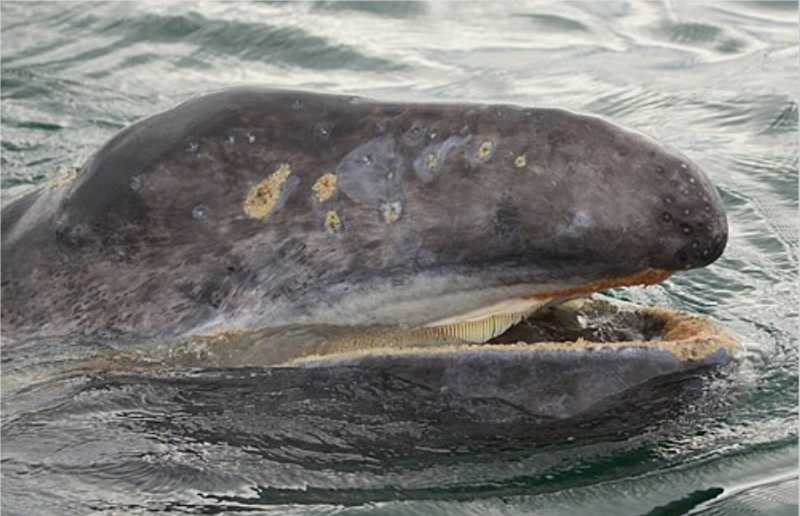
The main identification factor here is the gray colouring, and the barnacles and whale lice covering the skin. Gray whales are the lone extant (living) species in their family, with any other members being extinct. Gray whales can be fiercely protective of their calves, but tend to be friendly to non-threatening humans.
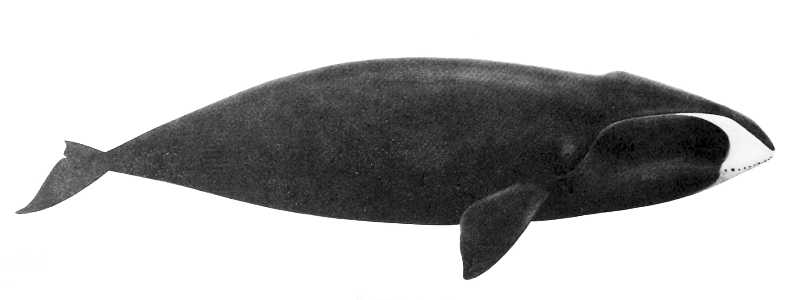
2. Bowhead whale
The strongly arched mouth and white chin make identification easy here. It also displays the 'necklace' (pattern of black spots) of a classic bowhead whale. However, not all bowheads have a white chin or 'necklace', so always check for mouth shape as a reliable factor.
These large whales live solely in Arctic waters, and reach up to 18 metres (59 feet). Their flukes can reach up to half this length, commonly measuring 7 m (23 feet) across.
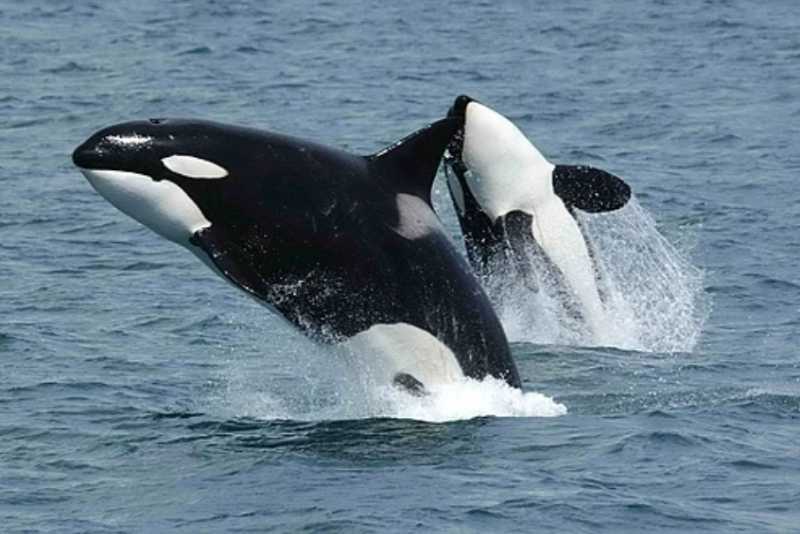
3. Orca
These distinctive cetaceans are hard to get confused, and are very well known, featuring in pop culture often. However, not many people know that these are actually the largest species of dolphin. Their nickname, "killer whale" comes from their habit of attacking large baleen whales, rather than their taxonomic status.
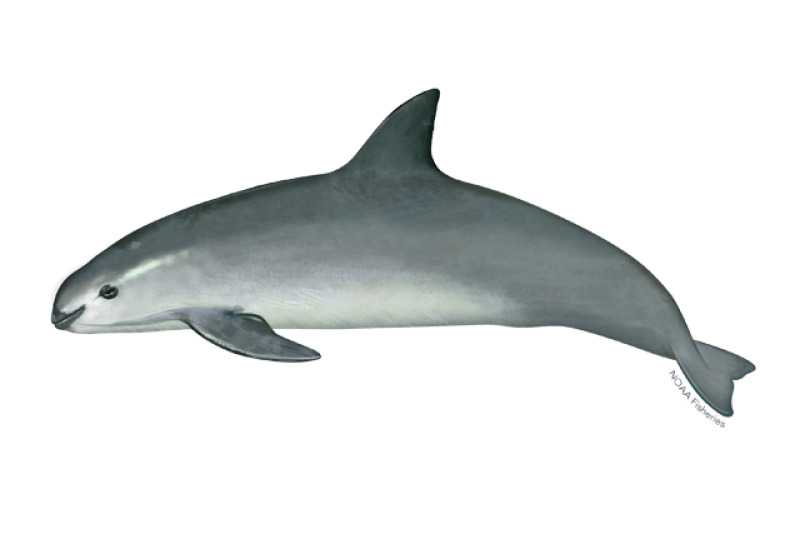
4. Vaquita
The eye spots and dark nose of this cute porpoise reveal its true identity of vaquita. These small cetaceans are critically endangered. At the time of writing this quiz (July 2026), it is thought that there are only 10-20 left in the Gulf of California, their sole habitat. Extensive measures are being undertaken to prevent their extinction, but they are still commonly caught as bycatch.
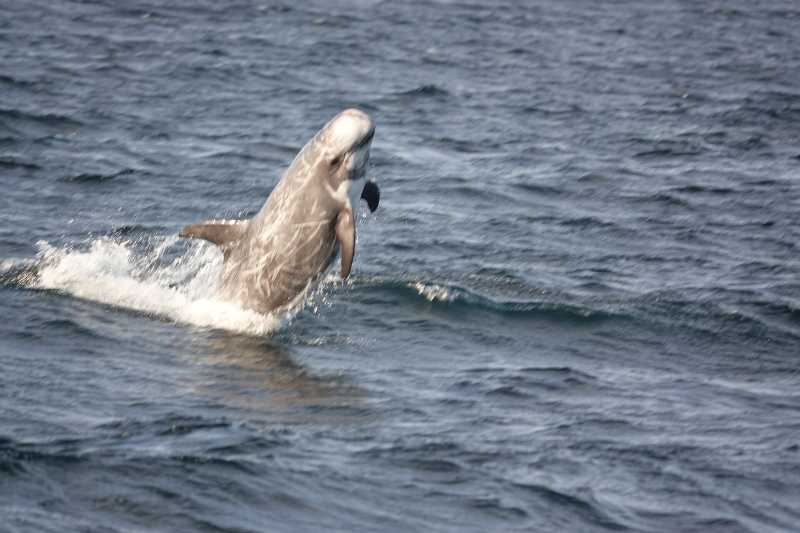
5. Risso's dolphin
These large dolphins are fairly distinctive, with their gray body colour covered in white scars. Older individuals are much paler and more scarred than younger ones. They often reach up to 4 m (13 feet) and enjoy bow riding. Their scars are most often caused by the teeth of other male Risso's dolphins, caused during fighting over food or females.
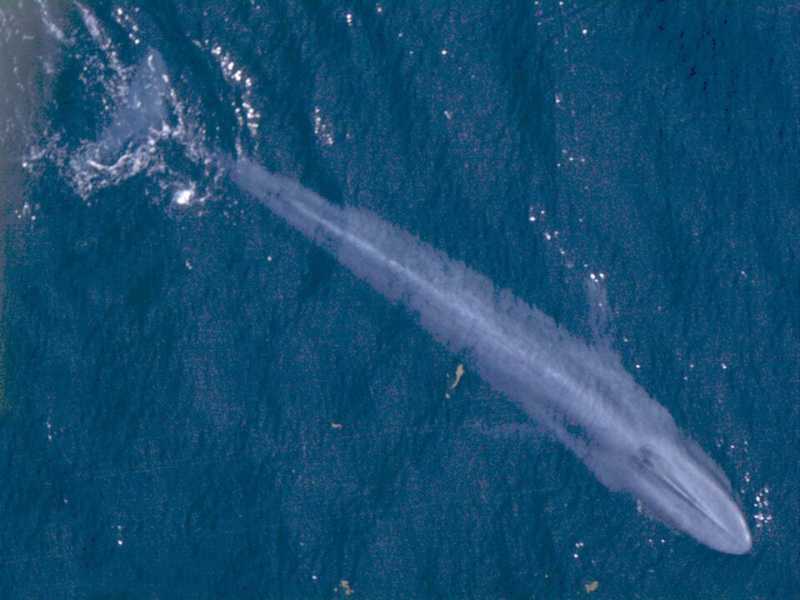
6. Blue whale
The colouration and sheer size of this beautiful animal distinguishes it from most other cetaceans. They reach around 30 m (98 feet) in length, though the longest one observed was 33 m (108 feet). They are the largest animals to ever exist on Earth (to current knowledge).
Their tongue weighs as much as a small car, and an adult human could fit inside their aorta (largest artery). Even calves are born around 7 m (23 feet).
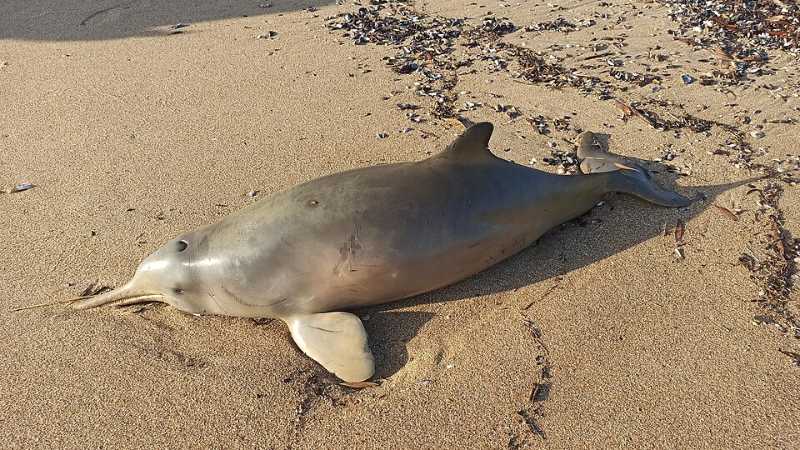
7. La Plata dolphin/Franciscana
This small cetacean looks similar to the related river dolphins, and it is indeed a member of that family. However, it lives exclusively in the ocean and salty estuaries of South America. The paddle shaped fins, distinctive shaped beak and small size make it a very recognisable dolphin. They only reach lengths of around 1.6-1.8 m (5.2-5.9 feet).
8. Burmeister's porpoise
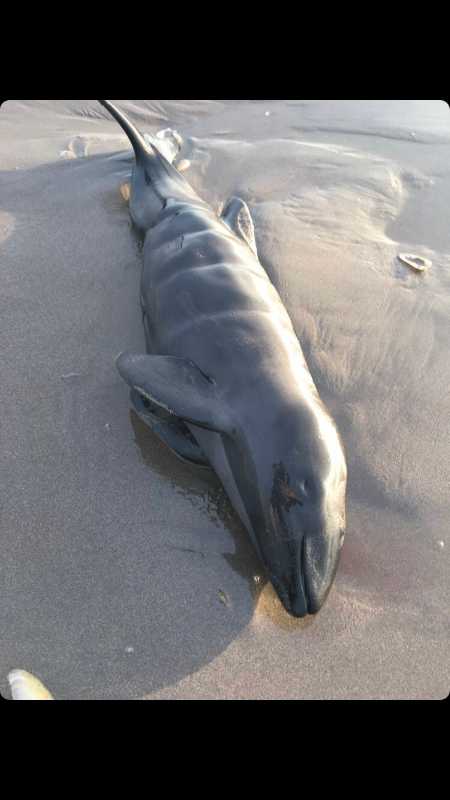
This porpoise has a uniquely shaped, sloping dorsal fin set very far back along their dark body. They grow to about 1.5 m (5 feet) and are endemic to South American coasts. Not much is known about this animal, as they are very shy. Most photos are of dead individuals, showing their black colouring, though in life they are a lighter gray colour.
The rings on the body of this individual are called "birth rings" and indicate that it was only born very recently. They exist because they are very squashed in the uterus, leading to lines on the skin.
9. Southern right whale dolphin
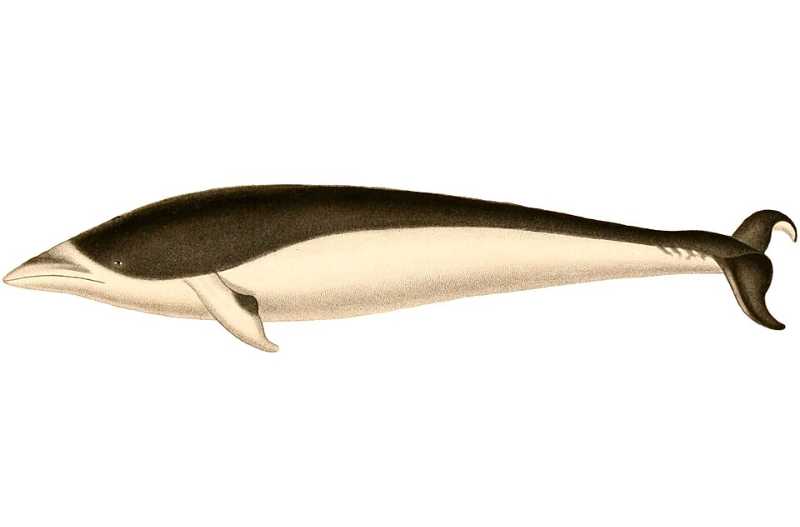
The lack of a dorsal fin and the striking colours of this unique dolphin serve to distinguish it from all other cetaceans. There are two species of right whale dolphin, the other being the northern right whale dolphin. They are difficult to get confused, as the northern animals are slightly larger, tend to be black with a small white patch on the stomach, and do not overlap in range with the southern animals.
They grow to 2.5 m (8.2 feet), while the northern animals reach 3 m (9.8 feet).
10. Right whale
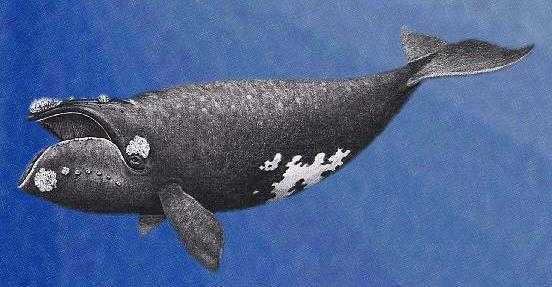
This whale is difficult to mistake, with its wide flippers, large callosities and lack of a dorsal fin. There are actually three separate species of right whale, though they cannot be distinguished by sight. There is the North Atlantic (Eubalaena glacialis), North Pacific (E. japonica), and Southern (E. australis).
These whales measure at lengths of 13-17 m (42.7-55.8 feet). Their name comes from early whalers, who decided this is the "right" whale to kill; they were friendly and slow-moving, sometimes swimming right up to boats, they floated when killed, and provided decent amounts of oil and other products.
They also lend their name to the right whale dolphins, who are so named for their lack of a dorsal fin (just like a right whale).
11. Narwhal
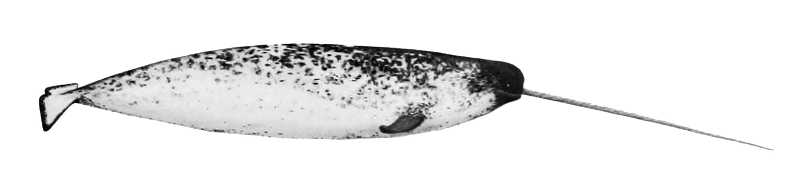
This whale does not take an expert to recognise; they are famous for the males long tusk, often sold as unicorn horns in medieval Europe. This meant that they were hunted and killed for their expensive tusks. Some males grow two tusks; females occasionally grow one and there is a singular recorded instance of a female with two tusks. The tusks are actually modified teeth that erupt through the upper lip as they grow, usually the left tooth.
These tusks are the only teeth that the narwhals have, and they always spiral to the left (when viewed from the root). These whales are larger than people give them credit for; their tusk alone can reach up to 3 m (9.8 feet), and the rest of their body (excluding tusk) up to 6 m (19.7 feet).
12. Beluga whale
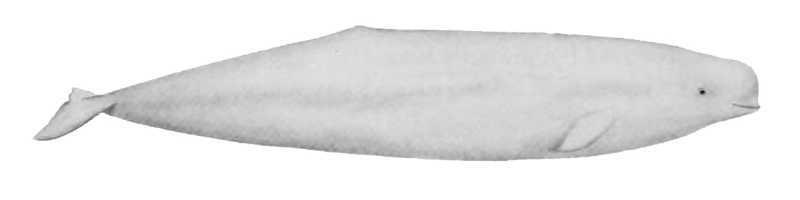
These playful and often friendly whales are easily recognisable by their bulbous melon and paddle like flippers. They are one of the few cetaceans whose neck vertebrae remain unfused, allowing them to nod and turn their head side to side. Their specialised facial muscles also allow them to make faces by moving their lip position.
They are also known as canaries of the sea, for their vocalisations above and below the water. They tend to grow to about 5.5 m (18 feet). They also commonly make bubble rings, seemingly as a form of play.
13. Hector's dolphin
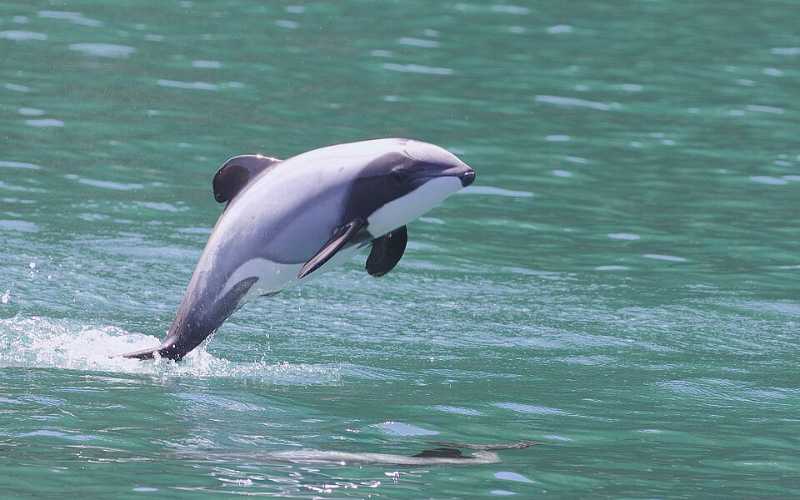
Immediately recognisable by the rounded dorsal fin and unique colouring, this small cetacean is endemic to New Zealand. They reach around 1.2-1.6 m (4-5.2 feet) long. They are the only cetacean native to NZ waters. There are two subspecies, the South Island Hector's dolphin, which is more populous, and the Maui's dolphin, which is critically endangered.
14. Common dolphin
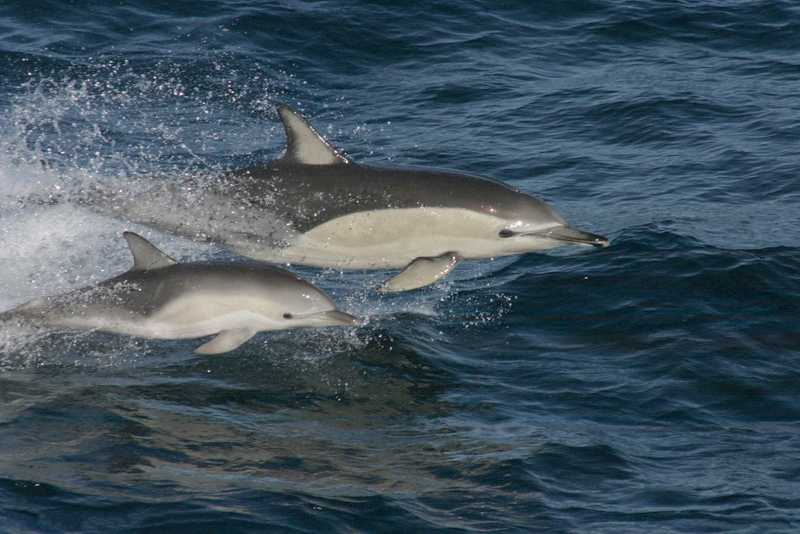
The position and colour of the tan side stripe distinguish this dolphin from the Atlantic white-sided dolphin, whose yellow patch is towards the tail and is also more plain. These dolphins have an estimated population of 6 million (the world's most abundant cetacean).
They range from 1.9-2.5 m (6.2-8.2 feet). They often associate with other dolphin species, such as pilot whales, striped and Risso's dolphins.
15. Rough-toothed dolphin
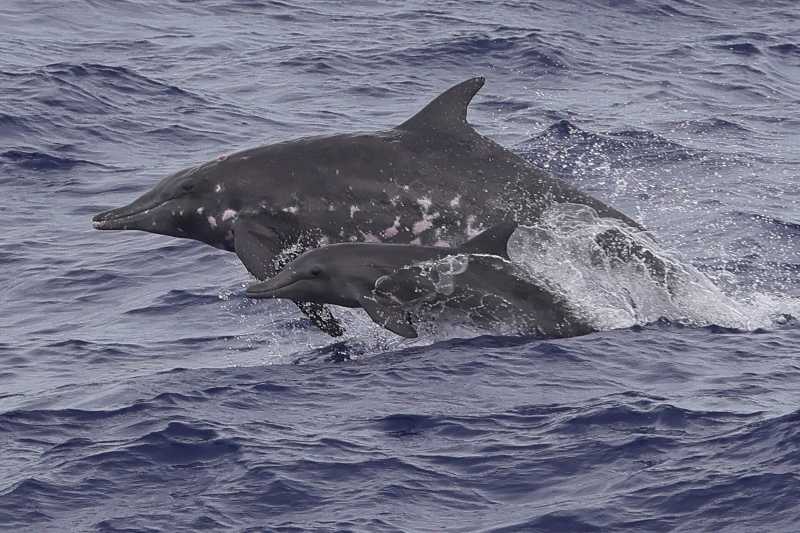
This dolphin's dark colour, sloping forehead and black sclera (whites of the eyes) usually allow it to be distinguished from other cetaceans. These dolphins can grow quite large, from 2-2.8 m (6.6-9.2 feet). Just like other dolphins, they only have one calf at a time. Twins are not impossible, but often die during pregnancy or soon after birth, because they are underdeveloped.
This quiz was reviewed by FunTrivia editor rossian before going online.
Any errors found in FunTrivia content are routinely corrected through our feedback system.