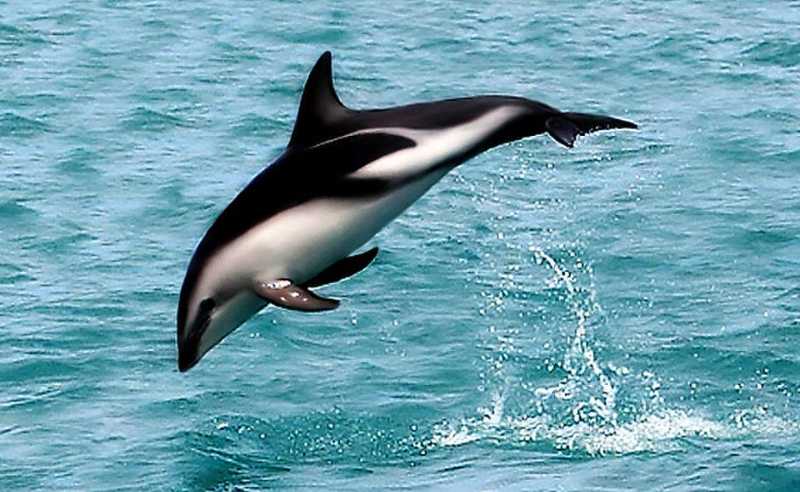
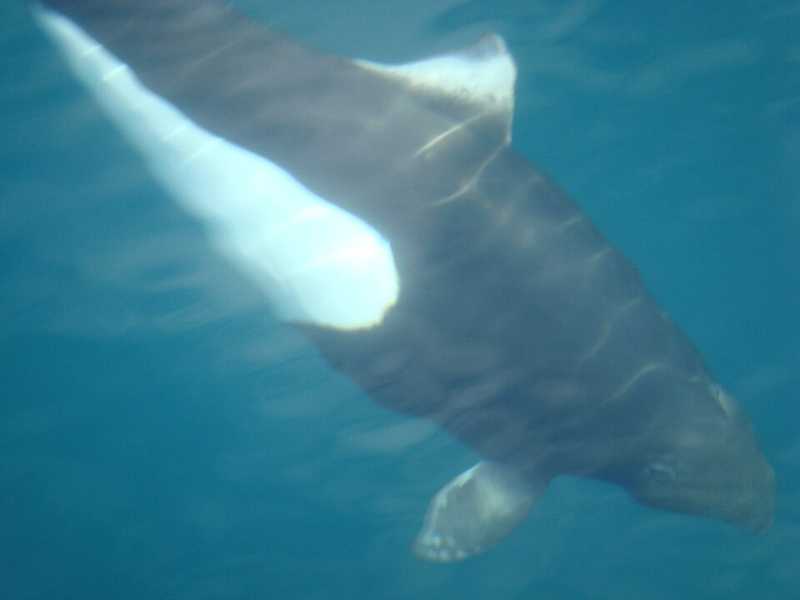
This dolphin appears somewhat similar to the hourglass dolphin, but the colouring is slightly different and the grey patch extends further to the stomach. They are quite small, at around 1.8 m (5.9 feet) adult length. They live in the Southern hemisphere, around New Zealand, southern Peru, Falkland Islands, South Africa, and occasionally around Tasmania.
They have been known to socialise with common dolphins, southern right whales, southern right whale dolphins, pilot whales and Risso's dolphins.
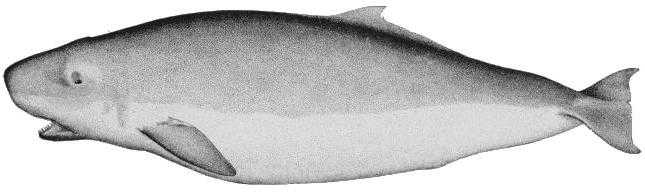
2. Pygmy sperm whale
This whale's distinctive head shape, similar to the more famous sperm whale's, distinguishes it. When they wash up on the beach, they can be mistaken for sharks, because of their underslung jaw and "false gill" (a curve of pale grey colouring behind their eyes).
The pygmy and dwarf sperm whales are both members of the Kogia family, and it can be nearly impossible to distinguish them at sea, though there are slight differences in dorsal fin and body size. They grow to 3.5-3.8 m (11.48-12.47 feet). Both the dwarf and pygmy sperm whale have an interesting defence mechanism; when startled, they release a reddish-brown coloured intestinal fluid as a diversion, similar to cuttlefish ink.
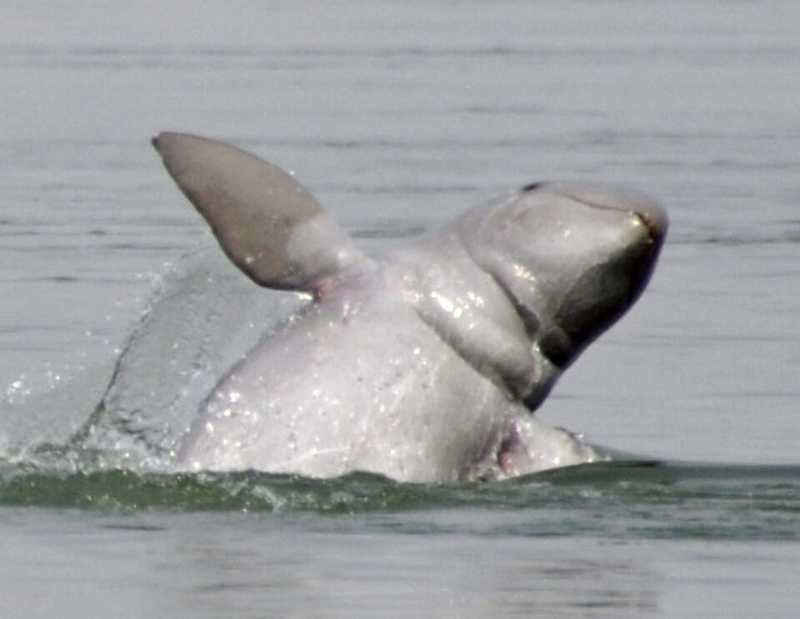
3. Irrawaddy dolphin
This dolphin has the body shape of a beluga with a dorsal fin (not visible in this image), and pale grey colouring. It is euryhaline, meaning it can adapt to a wide range of salinities. It has similar colouring and shape to the finless porpoises, but is distinguished by the presence of the dorsal fin.
They grow to about 2.3 m (7.5 feet), though the maximum recorded length was 2.75 m (9 feet) in an adult male.
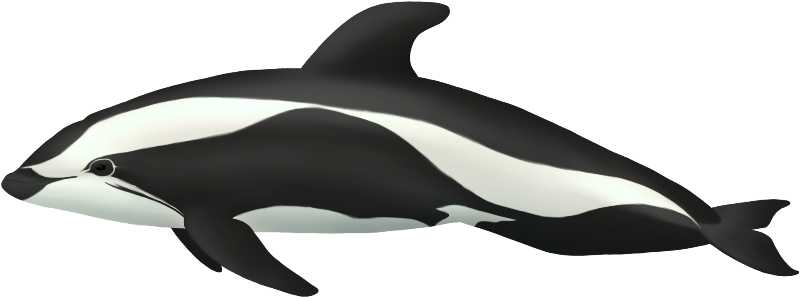
4. Hourglass dolphin
The characteristic white patches along their side make these dolphins easy to identify, and the shape of the patches gives the dolphin their name. They grow to 1.8 m (5.9 feet). They are found very far south, below 36 degrees latitude. There have been no verified sightings of their calves, so not much is known about them.
They tend to travel in small groups of around 15, though up to 100 have been observed together.
5. Dall's porpoise
This large porpoise has unique colouring, though its shy behaviour, common in porpoises, means they are not seen often. They are the largest species of porpoise, reaching 2.3 m (7.5 feet). There are two distinct colourmorphs; The one shown in the photo is a dalli type (bonus points if you knew that already), and the other is the truei type porpoise; in these the white stomach patch extends forward beyond the pectoral fins; this is the least common of the types.
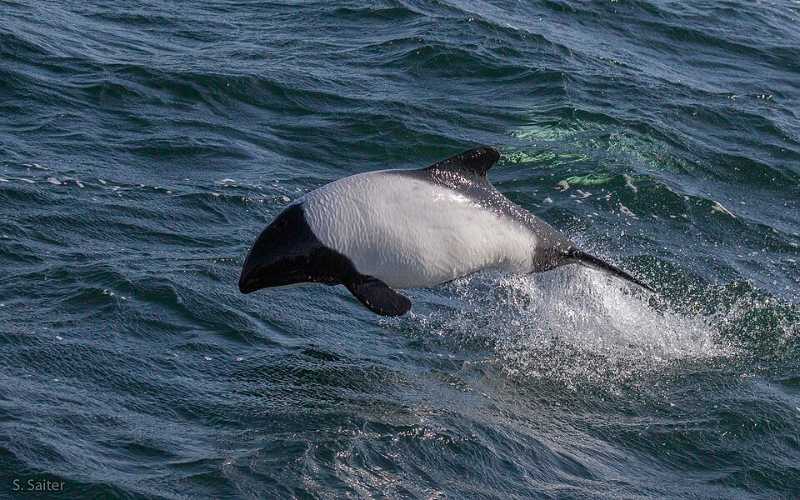
6. Commerson's dolphin
This distinctive cetacean is relatively easy to identify at sea, and this photo clearly shows its unique colouring. These dolphins have the body shape of a porpoise, but the friendly, active behaviour of a dolphin. They only reach about 1.5 m (4.9 feet) in adulthood.
There are two subspecies; Cephalorhyncus commersonii commersonii, and C.c.kerguelenensis. They are similar in appearance, though C.c.kerguelenensis is slightly larger. They differ extremely in habitat; C.c.commersonii lives in the waters of southern South America, and C.c.kerguelenensis only occurs near the Kerguelen islands of Africa.
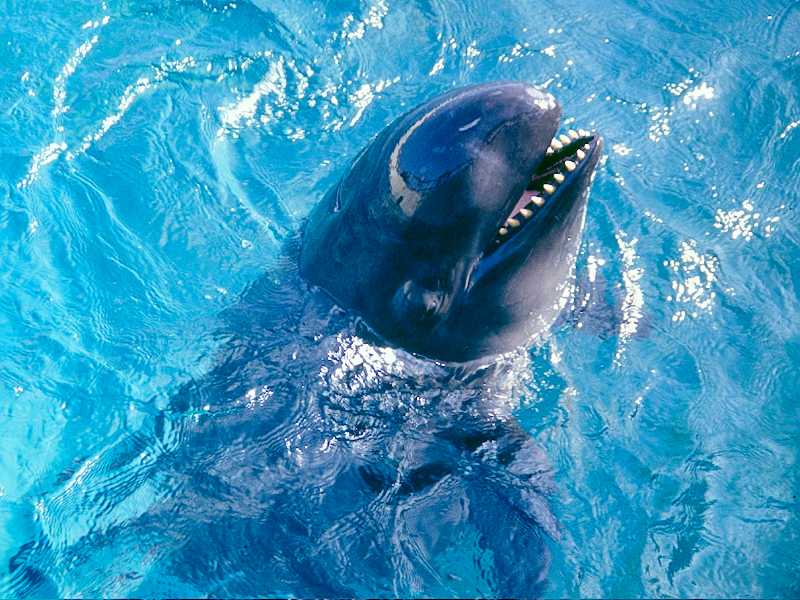
7. False killer whale
The dark color and head shape easily identifies this cetacean. Despite its name, it is actually a species of oceanic dolphin. They reach up to 6 m (19.7 feet), a similar size to the largest great white shark recorded at the time of writing, Deep Blue.
It is related to the orca, short- and long-finned pilot whales, pygmy killer whale and melon-headed whale, all of which are dolphins. They all (excepting the orca) have a white anchor shaped patch on their stomach. Apart from the orca, the members of this group can be difficult to distinguish at sea.
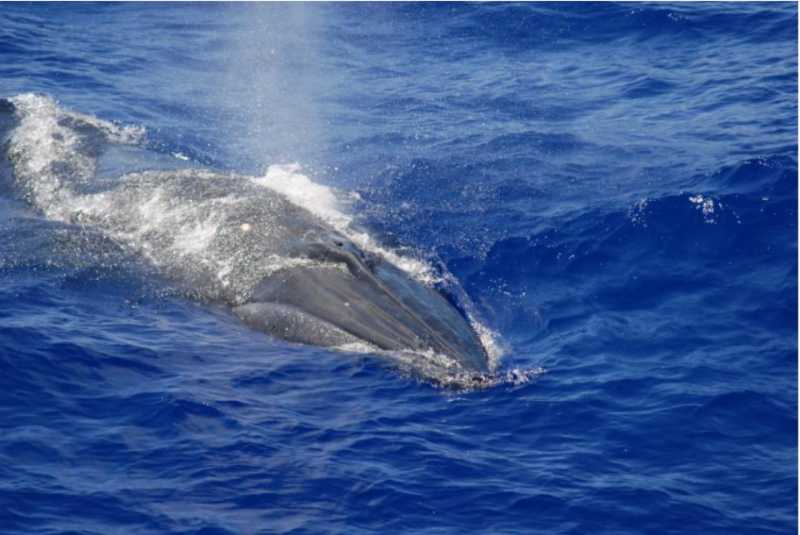
8. Bryde's whale
The three prominent ridges on the head reveal this whale's true identity; most baleen whales only have one. Bryde's whale (pronounced broo-dus) is named after a 19th century Norwegian whaler, John Bryde. Taxonomically, there are 3 or even 4 separate species in the Bryde's whale species complex. They grow to 11.9-15.5 m (39-50.9 feet), depending on the species.
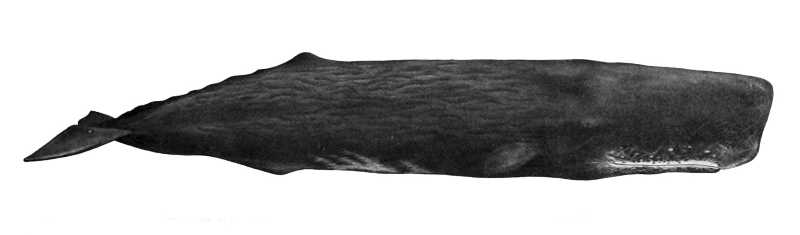
9. Sperm whale
This whale's square head and wrinkled body make it indistinguishable with other whales. They were made famous by Herman Melville's book Moby Dick, which featured an albino sperm whale. These whales were so named by early whalers, who reported that the substance inside their head reminded them of sperm.
They reach up to 18 m (59 feet) long. Their blowhole is situated on the front left of their head, producing a distinctive angled blow. These whales dive deeper than any other mammal (except Cuvier's beaked whale), and often feed on giant squid.
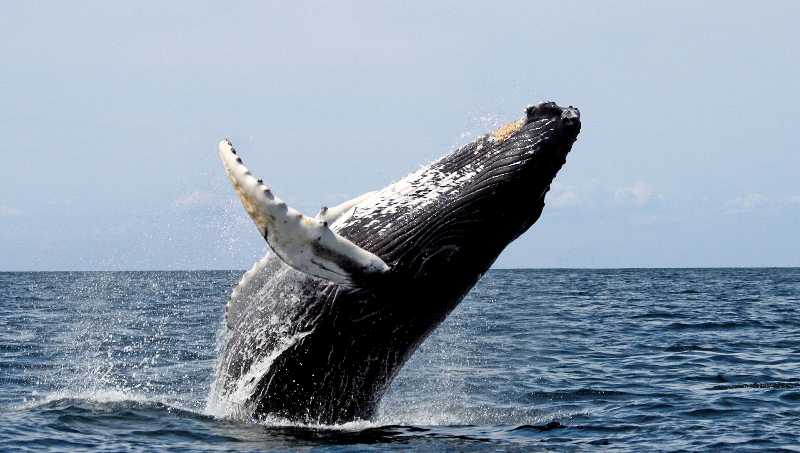
10. Humpback whale
These whales are possibly the most well known of any cetacean on Earth. Their long flippers (around one-third of body length), lumps on face and fins, and acrobatic behaviour make them nearly impossible to confuse. They are also known for the complicated and musical songs sung by the males at breeding time.
The colouration of these whales varies depending on where they live. Their stomach can be black, white, or a mix. The flippers tend to be white on the underside, but the upper side can be white, black or a mix. They grow 14-17 m (46-56 feet) long as adults. Albino humpbacks have been observed, most famously Migaloo in Australian waters. Recently, a humpback without a tail was sighted by a drone in Australian waters. It is unsure whether the whale was born this way, or had an encounter with a boat or fishing net, but the rising incidence of tailless whales is worrying for conservationists.
This quiz was reviewed by FunTrivia editor rossian before going online.
Any errors found in FunTrivia content are routinely corrected through our feedback system.