FREE! Click here to Join FunTrivia. Thousands of games, quizzes, and lots more!
Quiz about Lights Camera Silence

Lights, Camera, Silence! Trivia Quiz


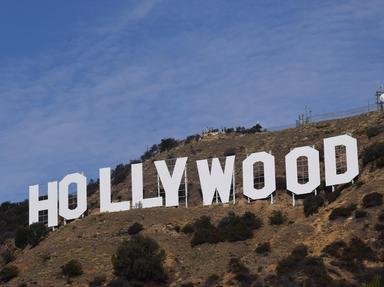
Before dialogue changed everything, silent film stars captivated audiences with expression alone. How much do you know about the legends who lit up the silver screen in Hollywood's earliest era? Good luck!

A multiple-choice quiz by Kalibre. Estimated time: 4 mins.
  1. Home
  2. »
  3. Quizzes
  4. »
  5. Celebrity Trivia
  6. »
  7. Movie Stars Mixed

Author
Kalibre
Time
4 mins
Type
Multiple Choice
Quiz #
424,879
Updated
Aug 03 26
# Qns
10
Difficulty
New Game
Avg Score
8 / 10
Plays
12
Last 3 plays: Sharky2 (9/10), amarie94903 (5/10), Guest 174 (10/10).
-
Question 1 of 10
1. Charlie Chaplin was one of the biggest stars of the silent era. What was unusual about his role in founding United Artists in 1919? Hint


Question 2 of 10
2. Mary Pickford was a founding member of which organisation? Hint


Question 3 of 10
3. Rudolph Valentino's sudden death in 1926 at age 31 triggered an extraordinary public reaction. What happened in New York following his death? Hint


Question 4 of 10
4. Known for performing his own dangerous physical stunts without special effects, what happened to Buster Keaton's career after the arrival of sound films? Hint


Question 5 of 10
5. Lillian Gish was a leading star of silent films. Unlike many of her contemporaries, what set her apart when sound arrived? Hint


Question 6 of 10
6. Clara Bow was known as the original It Girl, and defined the flapper image of the 1920s. What happened to her career and personal life as the decade ended? Hint


Question 7 of 10
7. Swashbuckling action star Douglas Fairbanks was married to which of these from 1920 to 1936? Hint


Question 8 of 10
8. Gloria Swanson played a faded silent-era star in a famous 1950 film about Hollywood's relationship with its own past. What was this film? Hint


Question 9 of 10
9. Theda Bara was one of early cinema's first manufactured studio personas, marketed as a screen vamp. What was notable about the public backstory the studio invented for her? Hint


Question 10 of 10
10. John Gilbert's silent-era career collapsed after the arrival of sound, and a popular legend blames it on a squeaky voice. What do film historians believe was the real reason? Hint


(Optional) Create a Free FunTrivia ID to save the points you are about to earn:

arrow Select a User ID:
arrow Choose a Password:
arrow Your Email:


Most Recent Scores
Today : Sharky2: 9/10
Today : amarie94903: 5/10
Today : Guest 174: 10/10
Today : Guest 82: 6/10
Today : colavs33: 10/10
Today : Guest 104: 10/10
Today : Guest 107: 8/10
Today : bernie73: 8/10
Today : toffles99: 4/10

Quiz Answer Key and Fun Facts
1. Charlie Chaplin was one of the biggest stars of the silent era. What was unusual about his role in founding United Artists in 1919?

Answer: He co-founded it alongside fellow actors and a director

In 1919, Charlie Chaplin joined Mary Pickford, Douglas Fairbanks and D.W. Griffith to establish United Artists. At the time, major studios controlled film distribution, budgets and creative decisions. By forming their own company, the four bypassed the studio system, which gave them direct control over their own work.

The move followed rumours that major studios were planning to cap the salaries of top talent. It prompted Richard A. Rowland, head of Metro Pictures, to remark that 'the inmates are taking over the asylum'. For Charlie, United Artists allowed him to produce, direct, and star in his own films, including 'The Gold Rush' (1925) and 'City Lights' (1931).
2. Mary Pickford was a founding member of which organisation?

Answer: The Motion Picture Relief Fund

Dubbed America's Sweetheart, Mary Pickford was one of the most popular and highest-paid actresses of the silent era. She was known for playing young, spirited heroines in films such as 'Pollyanna' (1920) and 'Rebecca of Sunnybrook Farm' (1917), despite often being well into her twenties or thirties by the time she played them.

Mary later co-founded the Motion Picture Relief Fund, which provided support to industry workers facing financial hardship. She retired from acting in the early 1930s and largely withdrew from public life in her later years, though she remained one of the wealthiest women in Hollywood.
3. Rudolph Valentino's sudden death in 1926 at age 31 triggered an extraordinary public reaction. What happened in New York following his death?

Answer: Riots broke out among crowds trying to view his body

The death of Rudolph Valentino in August 1926 was sudden and unexpected. He passed away aged 31 after developing peritonitis following surgery for a ruptured gastric ulcer. When his body was placed in a Manhattan funeral home for public viewing, an estimated crowd of over 100,000 people gathered in the surrounding streets, overwhelming local police.

The crowd's grief turned to chaos: mourners smashed windows, clashed with mounted police, and trampled one another trying to see his casket. Medical staff treated dozens of injured people at the scene, and unverified rumours of grief-related suicides spread in newspapers at the time.
4. Known for performing his own dangerous physical stunts without special effects, what happened to Buster Keaton's career after the arrival of sound films?

Answer: His career declined sharply, compounded by alcoholism

By the late 1920s, Buster Keaton had spent years running his own independent studio, choreographing, and performing his own stunts. In 1928, he signed a contract with MGM, a decision he later called the biggest mistake of his life, as it meant giving up creative control over his films.

MGM placed him in dialogue-driven films that didn't suit his visual, pantomime-based style. Alongside a divorce, he developed alcoholism, and MGM dropped him in 1933. He went through a period of poverty and was briefly institutionalised before later working as a comedy consultant and character actor.
5. Lillian Gish was a leading star of silent films. Unlike many of her contemporaries, what set her apart when sound arrived?

Answer: She successfully continued her career into the sound era and beyond

When sound arrived in the late 1920s, many silent-era stars saw their careers end because their acting style or voice didn't suit the new format. However, Lillian Gish, a leading dramatic actress in D.W. Griffith's silent films, had a background in live theatre, and her vocal delivery suited the new format.

She moved between stage and screen in the years that followed, continuing a screen career that included a role as the matriarch in the 1955 film 'The Night of the Hunter'. She continued acting into her nineties and received an Honorary Academy Award in 1971.
6. Clara Bow was known as the original It Girl, and defined the flapper image of the 1920s. What happened to her career and personal life as the decade ended?

Answer: She walked away from Hollywood permanently

Clara Bow became a major star in 1927 with the film 'It', and became closely associated with the flapper image of the 1920s. As the decade ended, the pressure of the studio system and intense media attention took a toll on her wellbeing.

She successfully transitioned to sound films, and her Brooklyn accent didn't decrease her popularity with audiences, though she struggled with performance anxiety. Her private life was the subject of frequent tabloid coverage and several legal disputes with former staff.

Clara experienced a mental health crisis and chose to walk away from Hollywood permanently in 1933 at just 28 years old.
7. Swashbuckling action star Douglas Fairbanks was married to which of these from 1920 to 1936?

Answer: Mary Pickford

Douglas Fairbanks was a leading action star of the silent era, known for stunt work in films such as 'The Mark of Zorro' (1920) and 'The Thief of Bagdad' (1924). He performed many of his own physical feats rather than using a stunt double, which was unusual for major stars at the time. He married fellow star Mary Pickford in 1920, and they became one of Hollywood's first widely publicised celebrity couples.

For over a decade, they were seen by the public as a model Hollywood marriage. The pressures of fame, the industry's shift to sound and Douglas's frequent travel strained the relationship. After Douglas had an affair with a British socialite, Mary filed for divorce, finalised in 1936.
8. Gloria Swanson played a faded silent-era star in a famous 1950 film about Hollywood's relationship with its own past. What was this film?

Answer: Sunset Boulevard

During the silent film era, Gloria Swanson was a major star who was known for her fashion and dramatic roles. As this era ended, her career moved away from the mainstream. In 1950, director Billy Wilder cast her in 'Sunset Boulevard', playing Norma Desmond, a former silent film star attempting a comeback.

The role drew on parallels with Gloria's own career and earned her an Academy Award nomination. The film, including her delivery of the line 'I am big. It's the pictures that got small', became closely associated with Hollywood's relationship with its own past.
9. Theda Bara was one of early cinema's first manufactured studio personas, marketed as a screen vamp. What was notable about the public backstory the studio invented for her?

Answer: It was entirely fabricated

Theda Bara's public image was created by the Fox Film Corporation in the 1910s. The studio told journalists that her name was an anagram of 'Arab Death', and claimed she was born in the Sahara, the daughter of an Egyptian father and French mother.

In reality, she was born Theodosia Goodman, the daughter of a Jewish tailor from Cincinnati, Ohio. The studio also arranged publicity photographs in which she posed with human skeletons and was presented as communicating with spirits. The campaign is regarded as an early example of a studio constructing a star's public identity.
10. John Gilbert's silent-era career collapsed after the arrival of sound, and a popular legend blames it on a squeaky voice. What do film historians believe was the real reason?

Answer: His feud with MGM head Louis B. Mayer damaged his career

John Gilbert, known as The Great Lover, was one of MGM's biggest silent film stars. He was frequently paired on screen with Greta Garbo. When sound arrived, his career collapsed within a couple of years, and a popular legend has long blamed this on a squeaky or high-pitched voice.

A surviving recording of Gilbert contradicts this claim. His voice was unremarkable and, according to film historian Kevin Brownlow, compared well with contemporaries considered to have good voices for sound. The real problems were his stiff, theatrical delivery in his early talkies, and a documented feud with MGM head Louis B. Mayer.

The two men had a serious feud. After a physical altercation, Gilbert was given a string of poor scripts, assigned to weaker directors and his career never recovered. He died of a heart attack in 1936, aged 38.
Source: Author Kalibre

This quiz was reviewed by FunTrivia editor ponycargirl before going online.
Any errors found in FunTrivia content are routinely corrected through our feedback system.
8/3/2026, Copyright 2026 FunTrivia, Inc. - Report an Error / Contact Us